Kenya Ascorbic Acid Market Size, Share & Growth Rate
The Kenya Ascorbic Acid Market was estimated at USD 433 Million in 2025 and is projected to reach USD 587 Million by 2032, growing at a CAGR of 4.4% from 2026 to 2032. This growth trajectory is primarily fueled by a surge in health awareness among consumers, which is driving demand for vitamin C-rich dietary supplements and fortified foods. Additionally, the pharmaceutical sector continues to leverage ascorbic acid for various medicinal applications, further enhancing market expansion.
Kenya Ascorbic Acid Market Year-wise Growth Rate and Key Drivers
This graph highlights how the Kenya Ascorbic Acid Market has steadily grown over the years, supported by major growth factors.
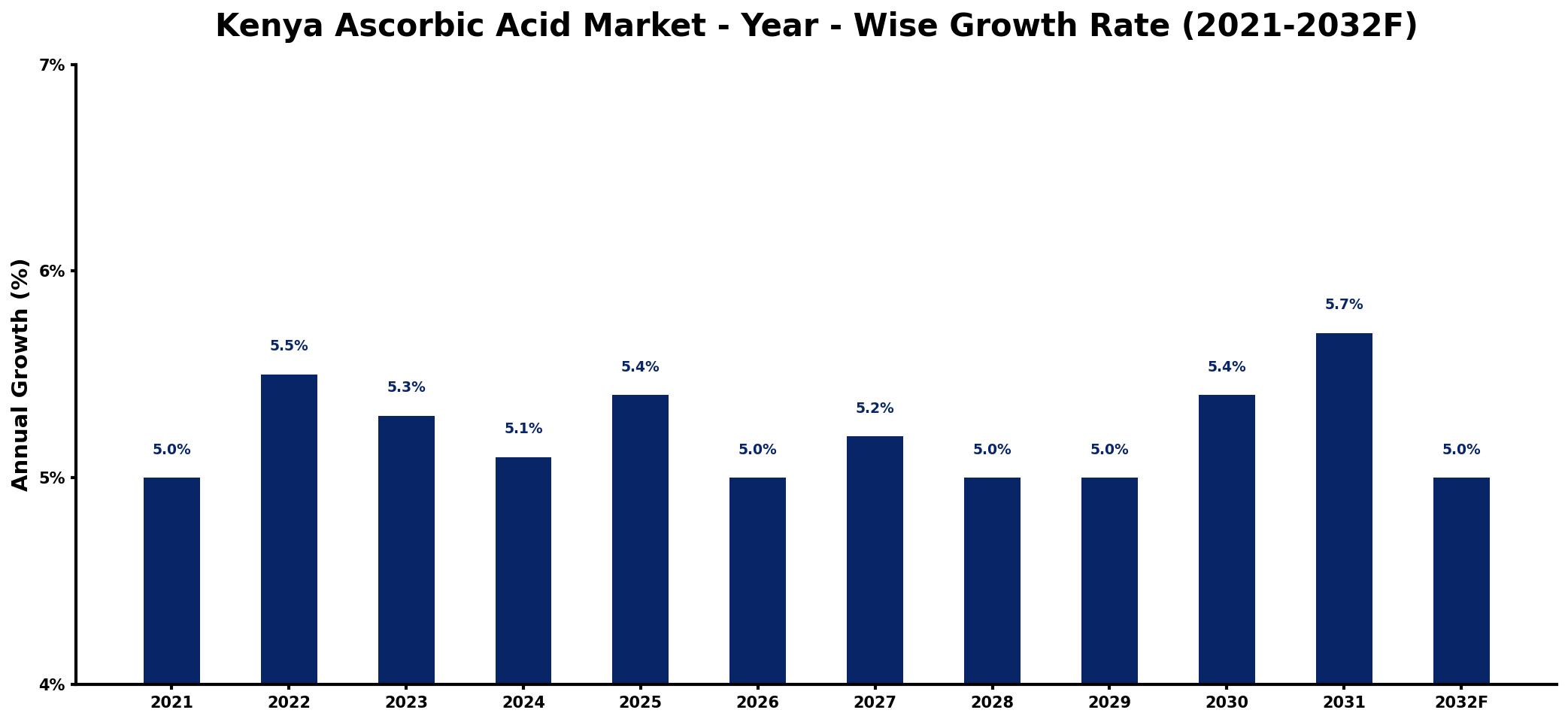
The table below presents the year‑wise growth rates along with the key drivers influencing the market
| Year | Growth Rate | Major Drivers |
| 2021 | 5.0% | Rising health consciousness among consumers |
| 2022 | 5.5% | Increased demand for dietary supplements |
| 2023 | 5.3% | Growth in functional food sector |
| 2024 | 5.1% | Expansion of natural ingredient market |
| 2025 | 5.4% | Surge in online retail platforms |
| 2026 | 5.0% | Growing interest in health foods |
| 2027 | 5.2% | Increase in preventive healthcare spending |
| 2028 | 5.0% | Boost in wellness tourism industry |
| 2029 | 5.0% | Rise in product innovation initiatives |
| 2030 | 5.4% | expanding industrial usage applications |
| 2031 | 5.7% | increased capital investment inflows |
| 2032 | 5.0% | Increased focus on sustainable sourcing |
Note: Market size estimations and growth projections presented in this report are based on 6Wresearch's proprietary forecasting methodology, utilizing the latest available industry data, government publications, and primary research inputs.
Kenya Ascorbic Acid Market Synopsis
The Kenya ascorbic acid market is experiencing a transformative phase, with increasing consumer awareness of vitamin C's essential health benefits. From bolstering immunity to serving as an antioxidant, ascorbic acid is becoming an integral part of health-conscious lifestyles.
As manufacturers in both the pharmaceutical and food sectors strive to innovate and cater to the growing appetite for health-enhancing products, the market landscape is diversifying. Local production, alongside international offerings, is enriching the variety of ascorbic acid products available to consumers.
Kenya Ascorbic Acid Market Key Takeaways
- The market is poised for steady growth driven by heightened consumer health awareness and preventive healthcare trends.
- Pharmaceutical applications dominate ascorbic acid consumption, significantly influencing market dynamics.
- The food and beverage industry increasingly incorporates ascorbic acid to enhance nutritional value and shelf life.
- Local manufacturers are actively expanding distribution channels to meet rising market demand.
- Government initiatives are paving the way for improved product quality and market competitiveness.
Evaluation of Restraints in Kenya Ascorbic Acid Market
While the market is on an upward trajectory, it faces several barriers that could impede growth. A significant challenge is the limited consumer awareness regarding the benefits of vitamin C supplements, which can restrict demand. Additionally, the presence of counterfeit products undermines genuine brands, leading to a loss of consumer trust. Distribution inefficiencies, coupled with regulatory complexities, also hinder smooth market operations, necessitating focused efforts to enhance consumer education and strengthen supply chains.
Kenya Ascorbic Acid Market Trends
Current trends indicate a notable shift towards health-focused products, with ascorbic acid becoming increasingly prominent in dietary supplements and functional foods. The beauty and personal care sector is also tapping into this trend, using ascorbic acid for its antioxidant properties in skincare formulations. Furthermore, local manufacturers are emphasizing innovation, launching new products that cater to evolving consumer preferences.
Kenya Ascorbic Acid Market Opportunities
The opportunities for investment in the Kenya ascorbic acid market are robust. The rising consumer consciousness about health and nutrition creates a fertile ground for companies looking to enter or expand within this sector. Moreover, government initiatives supporting food fortification and nutritional supplementation provide an additional boost. Engaging in the production and distribution of ascorbic acid products could yield substantial returns as consumers increasingly seek out vitamin-enriched options.
Government Initiatives in the Kenya Ascorbic Acid Market
The Kenyan government is actively implementing policies designed to ensure the quality and safety of ascorbic acid products. Regulations govern the importation, manufacturing, and distribution processes, requiring compliance with established safety standards. Pricing regulations are also in place to maintain affordability for consumers, promoting a competitive environment that enhances market integrity. These initiatives are essential in safeguarding public health while fostering market growth.
Future Insights of the Kenya Ascorbic Acid Market
Looking forward to 2026-2032, the Kenya ascorbic acid market is expected to maintain a favorable growth trajectory. Factors such as increasing disposable incomes, heightened awareness of the importance of vitamin C for immunity, and a growing preference for fortified products will continue to drive market expansion. However, companies will need to navigate challenges such as fluctuating raw material costs and the threat of substitutes to capitalize on these opportunities.
Kenya Ascorbic Acid Market Latest Developments (2025 - 2026)
In recent months, the industry has witnessed a wave of product innovation as companies develop fortified food and beverage offerings rich in ascorbic acid. Theres a notable increase in collaborations between local producers and international firms aimed at enhancing quality and expanding distribution networks. Furthermore, educational campaigns are gaining momentum, aimed at increasing consumer awareness regarding the health benefits of ascorbic acid, ultimately enhancing market demand.
Kenya Ascorbic Acid Market - Key Attractiveness of the Report
- 10 Years of Market Numbers
- Historical Data Starting from 2022 to 2025
- Base Year: 2025
- Forecast Data until 2032
- Key Performance Indicators Impacting the Market
- Major Upcoming Developments and Projects
Key Highlights of the Report:
- Kenya Ascorbic Acid Market Outlook
- Market Size of Kenya Ascorbic Acid Market, 2025
- Forecast of Kenya Ascorbic Acid Market, 2032
- Historical Data and Forecast of Kenya Ascorbic Acid Revenues & Volume for the Period 2022-2032F
- Kenya Ascorbic Acid Market Trend Evolution
- Kenya Ascorbic Acid Market Drivers and Challenges
- Kenya Ascorbic Acid Price Trends
- Kenya Ascorbic Acid Porter's Five Forces
- Kenya Ascorbic Acid Industry Life Cycle
- Historical Data and Forecast of Kenya Ascorbic Acid Market Revenues & Volume By Grade for the Period 2022-2032F
- Historical Data and Forecast of Kenya Ascorbic Acid Market Revenues & Volume By Food & Pharmaceutical for the Period 2022-2032F
- Historical Data and Forecast of Kenya Ascorbic Acid Market Revenues & Volume By Industrial for the Period 2022-2032F
- Historical Data and Forecast of Kenya Ascorbic Acid Market Revenues & Volume By Application for the Period 2022-2032F
- Historical Data and Forecast of Kenya Ascorbic Acid Market Revenues & Volume By Food & Beverages for the Period 2022-2032F
- Historical Data and Forecast of Kenya Ascorbic Acid Market Revenues & Volume By Pharmaceutical for the Period 2022-2032F
- Historical Data and Forecast of Kenya Ascorbic Acid Market Revenues & Volume By Cosmetics for the Period 2022-2032F
- Historical Data and Forecast of Kenya Ascorbic Acid Market Revenues & Volume By Chemicals for the Period 2022-2032F
- Historical Data and Forecast of Kenya Ascorbic Acid Market Revenues & Volume By Agriculture for the Period 2022-2032F
- Historical Data and Forecast of Kenya Ascorbic Acid Market Revenues & Volume By Others for the Period 2022-2032F
- Kenya Ascorbic Acid Import Export Trade Statistics
- Market Opportunity Assessment By Grade
- Market Opportunity Assessment By Application
- Kenya Ascorbic Acid Top Companies Market Share
- Kenya Ascorbic Acid Competitive Benchmarking By Technical and Operational Parameters
- Kenya Ascorbic Acid Company Profiles
- Kenya Ascorbic Acid Key Strategic Recommendations






































