Kenya Automotive Brake Pads Market Size Growth Rate
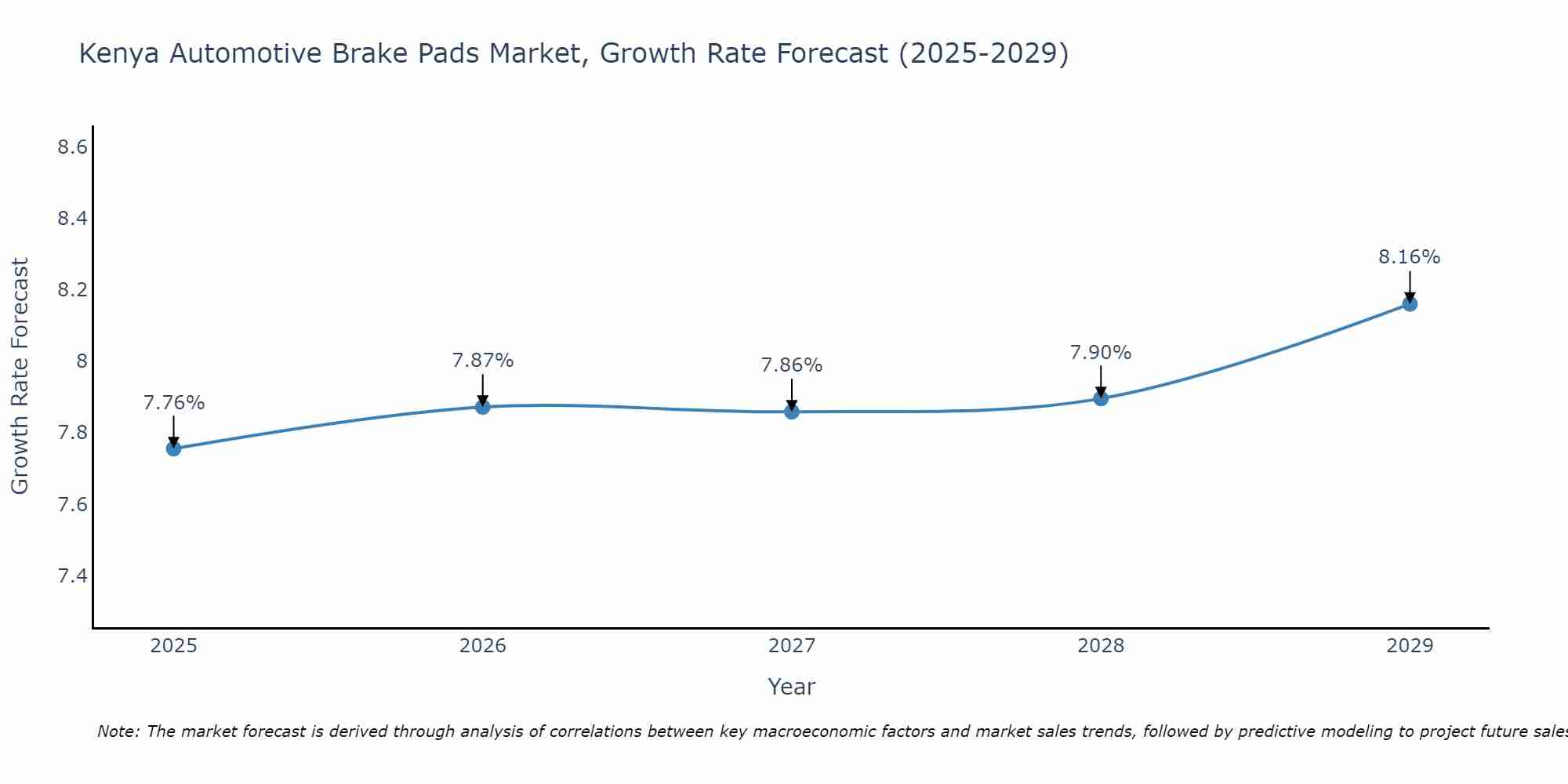
The Kenya Automotive Brake Pads Market is projected to witness mixed growth rate patterns during 2025 to 2029. The growth rate starts at 7.76% in 2025 and reaches 8.16% by 2029.
Automotive Brake Pads Market: Kenya vs Top 5 Major Economies in 2027 (Africa)
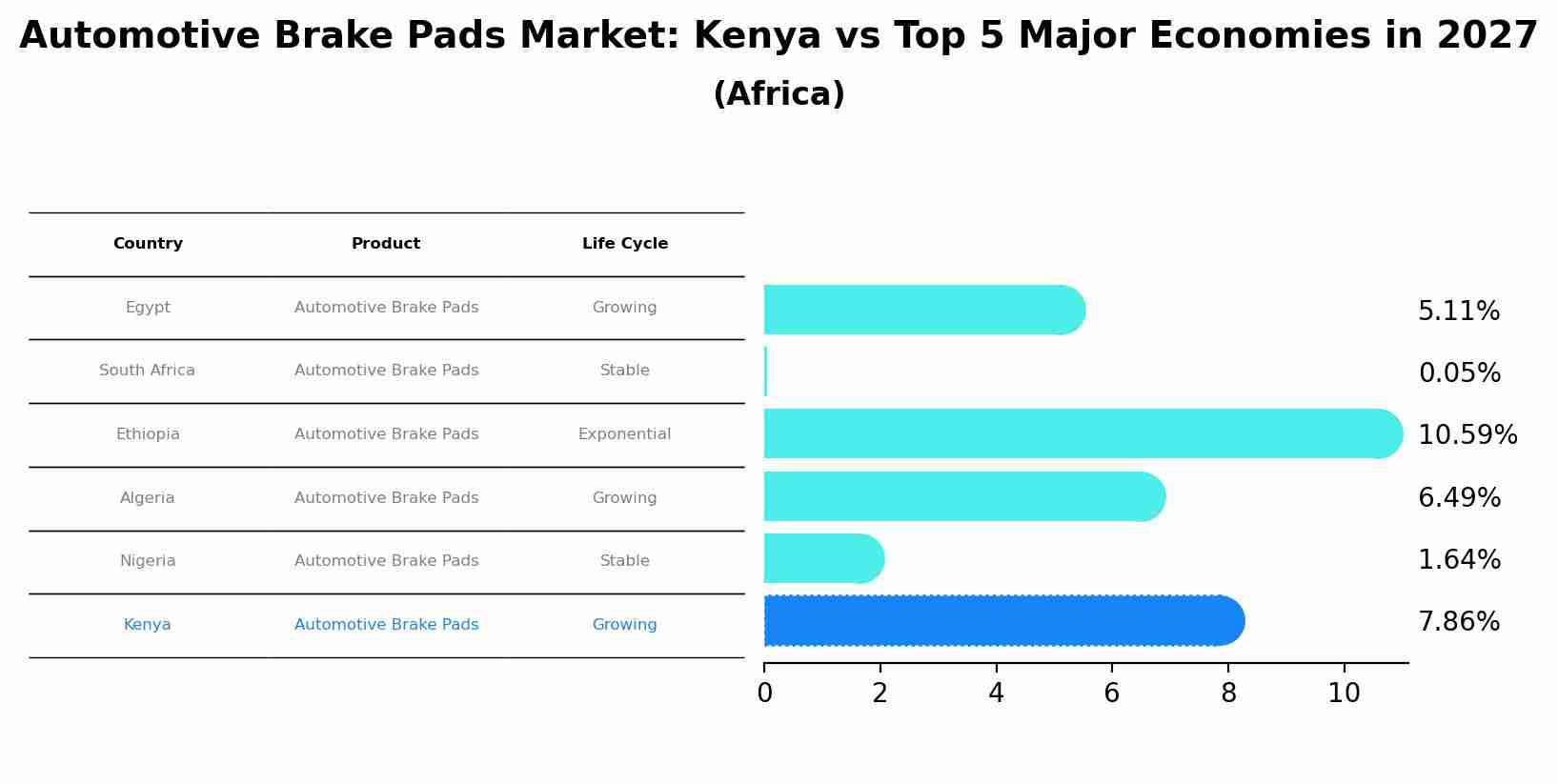
The Automotive Brake Pads market in Kenya is projected to grow at a growing growth rate of 7.86% by 2027, within the Africa region led by Egypt, along with other countries like South Africa, Ethiopia, Algeria and Nigeria, collectively shaping a dynamic and evolving market environment driven by innovation and increasing adoption of emerging technologies.
Kenya Automotive Brake Pads Market Overview
The Kenya Automotive Brake Pads Market is experiencing steady growth due to increasing vehicle sales and a growing awareness of road safety. The market is primarily driven by the demand for high-quality brake pads that ensure optimal performance and safety for vehicles. Both OEM and aftermarket segments are witnessing growth, with aftermarket sales being fueled by the need for replacement pads due to wear and tear. Key players in the market are focusing on product innovations, such as ceramic and semi-metallic brake pads, to cater to the diverse needs of customers. The market is also influenced by factors such as government regulations on vehicle safety standards and the rise in commercial vehicle fleet size. Overall, the Kenya Automotive Brake Pads Market is poised for further expansion in the coming years.
Kenya Automotive Brake Pads Market Trends
In the Kenya Automotive Brake Pads Market, there is a growing trend towards the adoption of eco-friendly and high-performance brake pads. Consumers are increasingly seeking brake pads that are not only durable and efficient but also environmentally sustainable. This trend is driven by a greater awareness of environmental issues and a desire for products that reduce pollution and carbon emissions. Additionally, there is a rising demand for ceramic and low-metallic brake pads due to their superior performance characteristics such as reduced noise, dust, and longer lifespan. Market players are focusing on innovation to develop advanced brake pad solutions that meet both performance and sustainability requirements, catering to the evolving preferences of consumers in the Kenyan automotive sector.
Kenya Automotive Brake Pads Market Challenges
In the Kenya Automotive Brake Pads Market, one of the key challenges faced is the presence of counterfeit products. These counterfeit brake pads are often of inferior quality and can pose serious safety risks to consumers. Another challenge is the lack of awareness among consumers regarding the importance of using high-quality, genuine brake pads for their vehicles. Price competition from low-quality, cheap imports also hinders the market growth for genuine brake pad manufacturers. Additionally, the fragmented nature of the market with numerous small and unorganized players makes it difficult for established brands to maintain market share and brand reputation. Overall, addressing these challenges requires stringent enforcement of regulations, increased consumer education, and strategic marketing efforts by genuine brake pad manufacturers in Kenya.
Kenya Automotive Brake Pads Market Investment Opportunities
The Kenya automotive brake pads market presents promising investment opportunities due to the country`s growing automotive industry and increasing vehicle ownership rates. With a focus on safety and performance, there is a rising demand for high-quality brake pads in the market. Investing in the manufacturing or distribution of brake pads in Kenya can be lucrative, especially with the government`s efforts to improve road infrastructure and enhance vehicle safety standards. Additionally, the growing awareness among consumers about the importance of regular maintenance and replacement of brake pads further drives the market growth. Collaborating with local automotive manufacturers or establishing partnerships with retailers can help investors capitalize on this growing market segment and benefit from the expanding automotive industry in Kenya.
Kenya Automotive Brake Pads Market Government Policy
The Kenyan government has implemented various policies to regulate the automotive industry, including the automotive brake pads market. These policies focus on ensuring safety standards, environmental sustainability, and consumer protection. The government has set requirements for the quality and performance of brake pads to enhance road safety and reduce accidents. Additionally, there are regulations in place to promote the use of environmentally friendly materials in brake pads to minimize pollution. Consumer protection measures include mandatory labeling requirements for brake pads to provide consumers with information on product specifications and performance. Overall, these policies aim to create a competitive and sustainable automotive brake pads market in Kenya while safeguarding the interests of consumers and the environment.
Kenya Automotive Brake Pads Market Future Outlook
The future outlook for the Kenya Automotive Brake Pads Market appears promising, driven by factors such as increasing demand for vehicles due to rising income levels, expanding urbanization, and a growing emphasis on road safety. Additionally, advancements in brake pad technology to enhance performance, durability, and eco-friendliness are expected to fuel market growth. The market is likely to witness a shift towards high-quality and long-lasting brake pads to cater to the evolving consumer preferences for efficient braking systems. Furthermore, government regulations mandating regular vehicle maintenance and safety inspections are projected to bolster market demand for brake pads in Kenya. Overall, the Kenya Automotive Brake Pads Market is anticipated to experience steady growth in the coming years, offering opportunities for industry players to innovate and expand their product offerings.
Key Highlights of the Report:
- Kenya Automotive Brake Pads Market Outlook
- Market Size of Kenya Automotive Brake Pads Market, 2021
- Forecast of Kenya Automotive Brake Pads Market, 2031
- Historical Data and Forecast of Kenya Automotive Brake Pads Revenues & Volume for the Period 2018 - 2031
- Kenya Automotive Brake Pads Market Trend Evolution
- Kenya Automotive Brake Pads Market Drivers and Challenges
- Kenya Automotive Brake Pads Price Trends
- Kenya Automotive Brake Pads Porter's Five Forces
- Kenya Automotive Brake Pads Industry Life Cycle
- Historical Data and Forecast of Kenya Automotive Brake Pads Market Revenues & Volume By Vehicle for the Period 2018 - 2031
- Historical Data and Forecast of Kenya Automotive Brake Pads Market Revenues & Volume By Passenger Car for the Period 2018 - 2031
- Historical Data and Forecast of Kenya Automotive Brake Pads Market Revenues & Volume By LCV for the Period 2018 - 2031
- Historical Data and Forecast of Kenya Automotive Brake Pads Market Revenues & Volume By HCV for the Period 2018 - 2031
- Historical Data and Forecast of Kenya Automotive Brake Pads Market Revenues & Volume By Two-wheelers for the Period 2018 - 2031
- Historical Data and Forecast of Kenya Automotive Brake Pads Market Revenues & Volume By Material for the Period 2018 - 2031
- Historical Data and Forecast of Kenya Automotive Brake Pads Market Revenues & Volume By Semi-metallic for the Period 2018 - 2031
- Historical Data and Forecast of Kenya Automotive Brake Pads Market Revenues & Volume By Non-asbestos Organic (NAO) for the Period 2018 - 2031
- Historical Data and Forecast of Kenya Automotive Brake Pads Market Revenues & Volume By Low-metallic NAO for the Period 2018 - 2031
- Historical Data and Forecast of Kenya Automotive Brake Pads Market Revenues & Volume By Ceramic for the Period 2018 - 2031
- Historical Data and Forecast of Kenya Automotive Brake Pads Market Revenues & Volume By Sales Outlet for the Period 2018 - 2031
- Historical Data and Forecast of Kenya Automotive Brake Pads Market Revenues & Volume By OEM for the Period 2018 - 2031
- Historical Data and Forecast of Kenya Automotive Brake Pads Market Revenues & Volume By Aftermarket for the Period 2018 - 2031
- Historical Data and Forecast of Kenya Automotive Brake Pads Market Revenues & Volume By Position for the Period 2018 - 2031
- Historical Data and Forecast of Kenya Automotive Brake Pads Market Revenues & Volume By Front for the Period 2018 - 2031
- Historical Data and Forecast of Kenya Automotive Brake Pads Market Revenues & Volume By Front & Rear for the Period 2018 - 2031
- Kenya Automotive Brake Pads Import Export Trade Statistics
- Market Opportunity Assessment By Vehicle
- Market Opportunity Assessment By Material
- Market Opportunity Assessment By Sales Outlet
- Market Opportunity Assessment By Position
- Kenya Automotive Brake Pads Top Companies Market Share
- Kenya Automotive Brake Pads Competitive Benchmarking By Technical and Operational Parameters
- Kenya Automotive Brake Pads Company Profiles
- Kenya Automotive Brake Pads Key Strategic Recommendations






































