Kenya Decentralized Identity Market Size & Growth Rate (2026-2032)
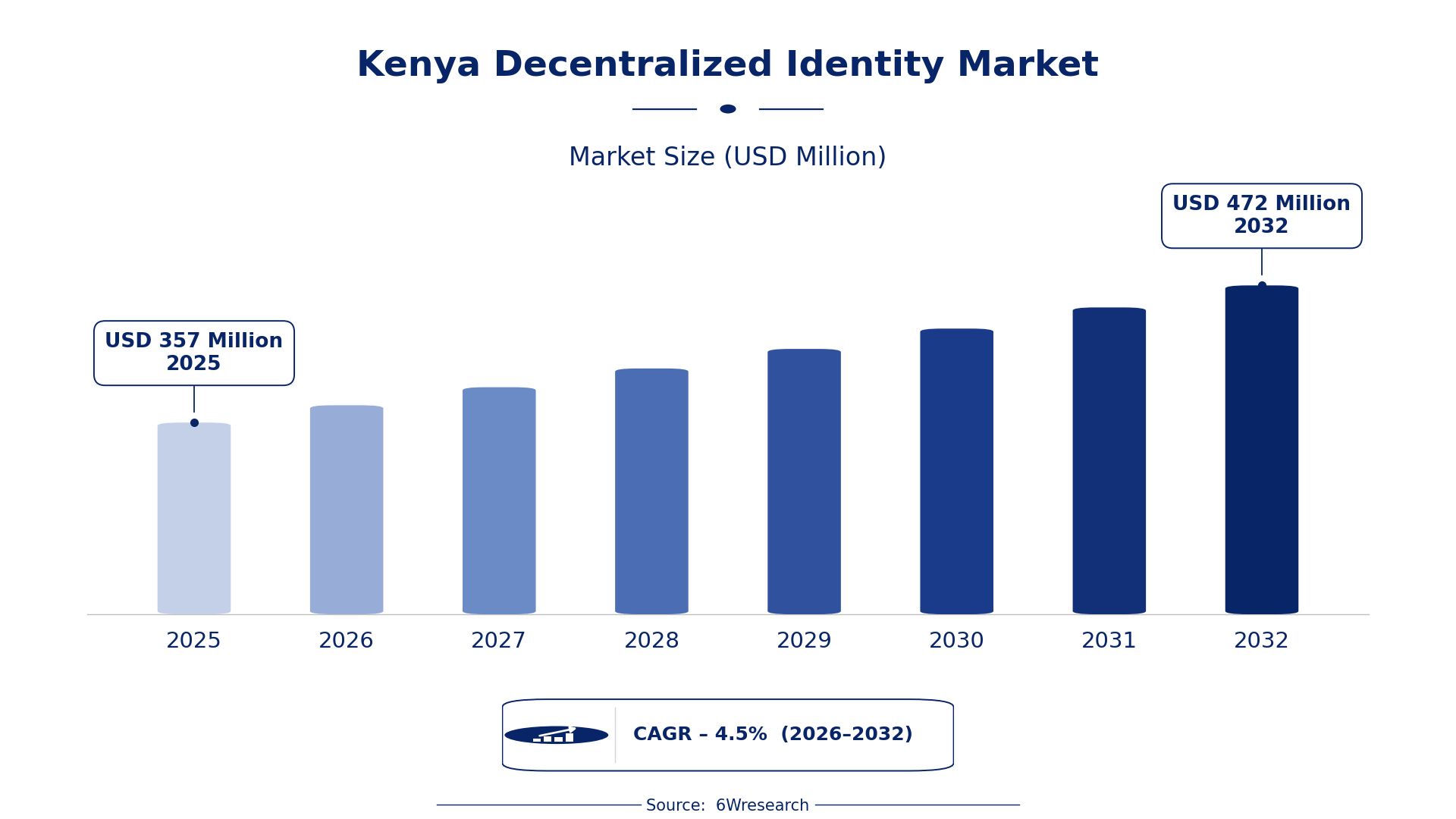
The Kenya Decentralized Identity Market was estimated at USD 357 Million in 2025 and is projected to reach USD 472 Million by 2032, growing at a CAGR of 4.5% from 2026 to 2032.
Kenya Decentralized Identity Market Synopsis
The Kenya Decentralized Identity Market is experiencing a pivotal shift, moving from traditional, centralized identity frameworks to more secure, user-centric decentralized solutions. This shift is driven by increasing digitalization and a public demand for better security and privacy in personal data management.
Looking ahead, this market is set for steady growth, propelled by the adoption of blockchain technologies and a rising need for innovative identity verification systems. Organizations are recognizing that decentralized identity offers them a sustainable way to improve security and manage user consent effectively.
Kenya Decentralized Identity Market Year-wise Growth Rate and Key Drivers
This graph illustrates the annual growth rates of the Kenya Decentralized Identity Market from 2021 to 2032, highlighting a steady upward trajectory and projected expansion over the forecast period.
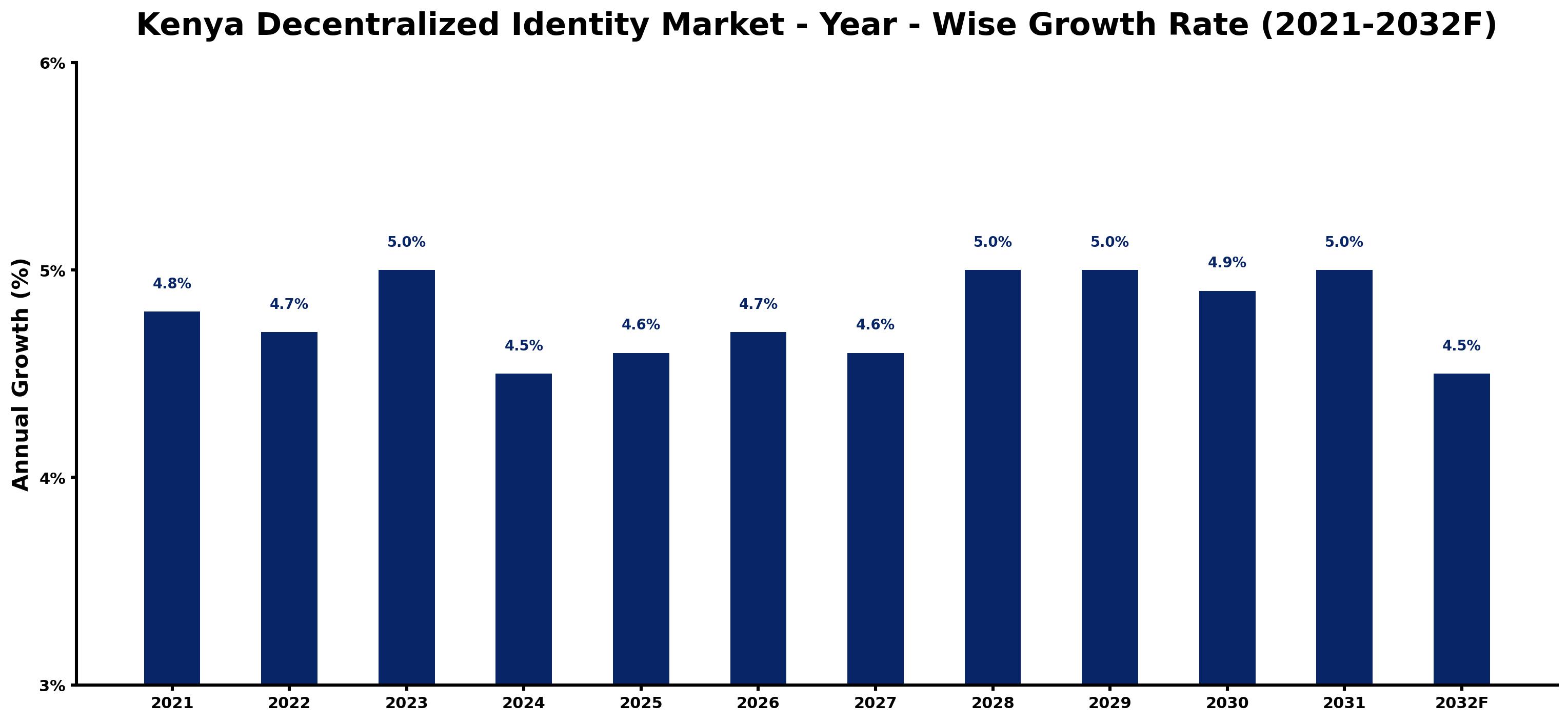
The table below presents the year‑wise growth rates along with the key drivers influencing the market
| Year | Growth Rate | Major Drivers |
| 2021 | 4.8% | National Digital ID program boosts adoption rates. |
| 2022 | 4.7% | Increased smartphone penetration enhances access to services. |
| 2023 | 5.0% | Government implements biometric ID regulations for security. |
| 2024 | 4.5% | Public awareness campaigns highlight benefits of digital identity. |
| 2025 | 4.6% | Growth in fintech drives demand for secure identities. |
| 2026 | 4.7% | Adoption of blockchain for transparent identity verification. |
| 2027 | 4.6% | Rising digital transactions necessitate improved identity solutions. |
| 2028 | 5.0% | Partnerships with NGOs promote decentralized identity access. |
| 2029 | 5.0% | Regulatory support for data privacy fosters user trust. |
| 2030 | 4.9% | Emerging tech accelerates innovations in digital identity. |
| 2031 | 5.0% | Local startups innovate in decentralized authentication technologies. |
| 2032 | 4.5% | Increased urbanization demands scalable identity verification systems. |
Note: Market size estimations and growth projections presented in this report are based on 6Wresearch's proprietary forecasting methodology, utilizing the latest available industry data, government publications, and primary research inputs.
Kenya Decentralized Identity Market Key Takeaways
Below are some of the specific key takeaways from the market, including:
- The market emphasizes user control and privacy over personal data.
- Adoption of blockchain technology is a primary driver of market growth.
- Decentralized identity solutions are increasingly utilized in finance and healthcare sectors.
- Interoperability remains a critical challenge to widespread adoption.
- Government initiatives are actively promoting decentralized identity frameworks.
Evaluation of Restraints in Kenya Decentralized Identity Market
Despite the promising growth trajectory, several restraints hinder the Kenya Decentralized Identity Market's full potential. Interoperability issues among various decentralized identity systems pose significant barriers, limiting seamless integration and user experience. Furthermore, concerns around user privacy and data protection continue to challenge public trust. The absence of standardized protocols can complicate implementation efforts, leading to skepticism about the security and reliability of these emerging solutions.
Kenya Decentralized Identity Market Trends
A growing trend in this market is the integration of decentralized identity solutions with existing digital services like e-government platforms and online financial services. Organizations are focusing on creating interoperable systems that enhance user experience while prioritizing data privacy. Another emerging trend is the rise of partnerships between public and private sectors to develop comprehensive identity solutions, addressing both technical and regulatory challenges.
Kenya Decentralized Identity Market Opportunities
There are substantial opportunities for growth within specific sectors. The financial services sector stands out, with a pressing need for secure identity verification mechanisms to prevent fraud. Additionally, healthcare organizations are exploring decentralized identity solutions to improve patient data management and privacy. The recent governmental push towards digital infrastructure upgrades further opens avenues for investment and innovation in decentralized identity technologies.
Government Initiatives in the Kenya Decentralized Identity Market
The Kenyan government is actively fostering a favorable environment for decentralized identity solutions, aiming to improve security and privacy in digital transactions. With policies designed to enhance user-centric identity management, the government seeks to establish a regulatory framework that supports innovation while ensuring user protection. These public sector priorities play a crucial role in shaping the market's future.
- A national digital infrastructure upgrade programme launched in early 2025 to enhance connectivity and security.
- Current pilot projects exploring decentralized identity applications in government services, focused on improving citizen access.
- A regulatory framework planned for introduction by mid-2026, aiming to standardize identity verification processes.
- Public-private partnerships initiated in 2025 to promote innovation in decentralized identity technologies.
- Workshops and training sessions ongoing, aimed at educating stakeholders about the benefits and applications of decentralized identity solutions.
Future Insights of the Kenya Decentralized Identity Market
From 2026 to 2032, the Kenya Decentralized Identity Market is expected to witness a transformation fueled by user demand for greater control over personal information. Companies will likely innovate more around blockchain technologies to ensure user privacy while maintaining compliance with emerging regulations. As businesses and government entities recognize the strategic value of decentralized identities, investments in these solutions will accelerate, paving the way for a more secure digital economy.
Kenya Decentralized Identity Market Latest Developments
Recent developments in the Kenya Decentralized Identity Market indicate a surge in interest and activity, particularly in the wake of new government policies. Organizations are ramping up efforts to develop user-friendly decentralized identity solutions while ensuring compliance with evolving regulations. This momentum signals a significant shift toward embracing decentralized identity frameworks.
- A major technology vendor initiated a partnership in early 2025 to develop decentralized identity solutions aimed at the financial sector.
- A product rollout by a regional operator focused on implementing decentralized identity for e-government services is currently underway, enhancing user access.
- A pilot program launched in mid-2025 to explore decentralized identity applications in healthcare is showing promising results.
- An upcoming workshop series expected to begin in Q3 2026 will focus on educating businesses about the benefits of decentralized identity systems.
- Collaborative research initiatives between public institutions and tech companies are ongoing, aimed at addressing interoperability challenges.
Kenya Decentralized Identity Market - Key Attractiveness of the Report
- 10 Years of Market Numbers
- Historical Data Starting from 2022 to 2025
- Base Year: 2025
- Forecast Data until 2032
- Key Performance Indicators Impacting the Market
- Major Upcoming Developments and Projects
Key Highlights of the Report:
- Kenya Decentralized Identity Market Outlook
- Market Size of Kenya Decentralized Identity Market, 2025
- Forecast of Kenya Decentralized Identity Market, 2032
- Historical Data and Forecast of Kenya Decentralized Identity Revenues & Volume for the Period 2022-2032F
- Kenya Decentralized Identity Market Trend Evolution
- Kenya Decentralized Identity Market Drivers and Challenges
- Kenya Decentralized Identity Price Trends
- Kenya Decentralized Identity Porter's Five Forces
- Kenya Decentralized Identity Industry Life Cycle
- Historical Data and Forecast of Kenya Decentralized Identity Market Revenues & Volume By Vertical for the Period 2022-2032F
- Historical Data and Forecast of Kenya Decentralized Identity Market Revenues & Volume By BFSI for the Period 2022-2032F
- Historical Data and Forecast of Kenya Decentralized Identity Market Revenues & Volume By Government for the Period 2022-2032F
- Historical Data and Forecast of Kenya Decentralized Identity Market Revenues & Volume By Healthcare and Life Sciences for the Period 2022-2032F
- Historical Data and Forecast of Kenya Decentralized Identity Market Revenues & Volume By Retail and eCommerce for the Period 2022-2032F
- Historical Data and Forecast of Kenya Decentralized Identity Market Revenues & Volume By Telecom and IT for the Period 2022-2032F
- Historical Data and Forecast of Kenya Decentralized Identity Market Revenues & Volume By Transport and Logistics for the Period 2022-2032F
- Historical Data and Forecast of Kenya Decentralized Identity Market Revenues & Volume By Real Estate for the Period 2022-2032F
- Historical Data and Forecast of Kenya BFSI Decentralized Identity Market Revenues & Volume By Others for the Period 2022-2032F
- Historical Data and Forecast of Kenya Decentralized Identity Market Revenues & Volume By Identity Type for the Period 2022-2032F
- Historical Data and Forecast of Kenya Decentralized Identity Market Revenues & Volume By Non- biometrics for the Period 2022-2032F
- Historical Data and Forecast of Kenya Decentralized Identity Market Revenues & Volume By Biometrics for the Period 2022-2032F
- Historical Data and Forecast of Kenya Decentralized Identity Market Revenues & Volume By End User for the Period 2022-2032F
- Historical Data and Forecast of Kenya Decentralized Identity Market Revenues & Volume By Enterprises for the Period 2022-2032F
- Historical Data and Forecast of Kenya Decentralized Identity Market Revenues & Volume By Individual for the Period 2022-2032F
- Historical Data and Forecast of Kenya Decentralized Identity Market Revenues & Volume By Organization Size for the Period 2022-2032F
- Historical Data and Forecast of Kenya Decentralized Identity Market Revenues & Volume By Large Enterprises for the Period 2022-2032F
- Historical Data and Forecast of Kenya Decentralized Identity Market Revenues & Volume By SMEs for the Period 2022-2032F
- Kenya Decentralized Identity Import Export Trade Statistics
- Market Opportunity Assessment By Vertical
- Market Opportunity Assessment By Identity Type
- Market Opportunity Assessment By End User
- Market Opportunity Assessment By Organization Size
- Kenya Decentralized Identity Top Companies Market Share
- Kenya Decentralized Identity Competitive Benchmarking By Technical and Operational Parameters
- Kenya Decentralized Identity Company Profiles
- Kenya Decentralized Identity Key Strategic Recommendations






































