Kenya Digital Market Size & Growth Rate (2026-2032)
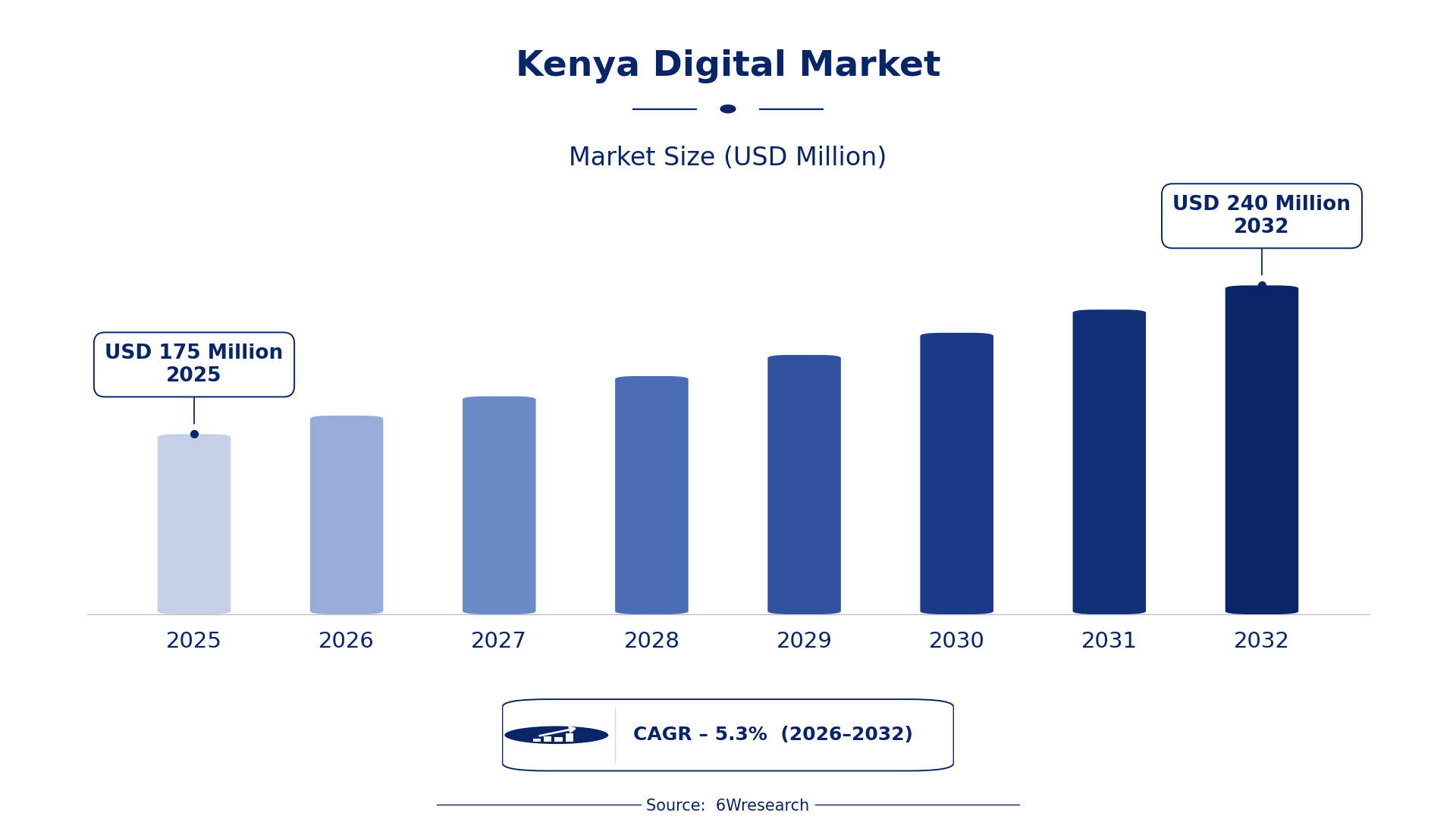
The Kenya Digital Market was estimated at USD 175 Million in 2025 and is projected to reach USD 240 Million by 2032, growing at a CAGR of 5.3% from 2026 to 2032.
Kenya Digital Market Synopsis
The surge in internet penetration is the most powerful force currently shaping the Kenya Digital Market. As more consumers gain access to the internet via smartphones, e-commerce is experiencing unprecedented growth, fundamentally changing shopping behaviors.
Mobile money services, particularly M-Pesa, have transformed financial transactions, making them more accessible and secure. This shift not only enhances financial inclusion but also encourages new business models, driving the overall digital economy forward.
Kenya Digital Market Year-wise Growth Rate and Key Drivers
This graph illustrates the annual growth rates of the Kenya Digital Market from 2021 to 2032, highlighting a steady upward trajectory and projected expansion over the forecast period.
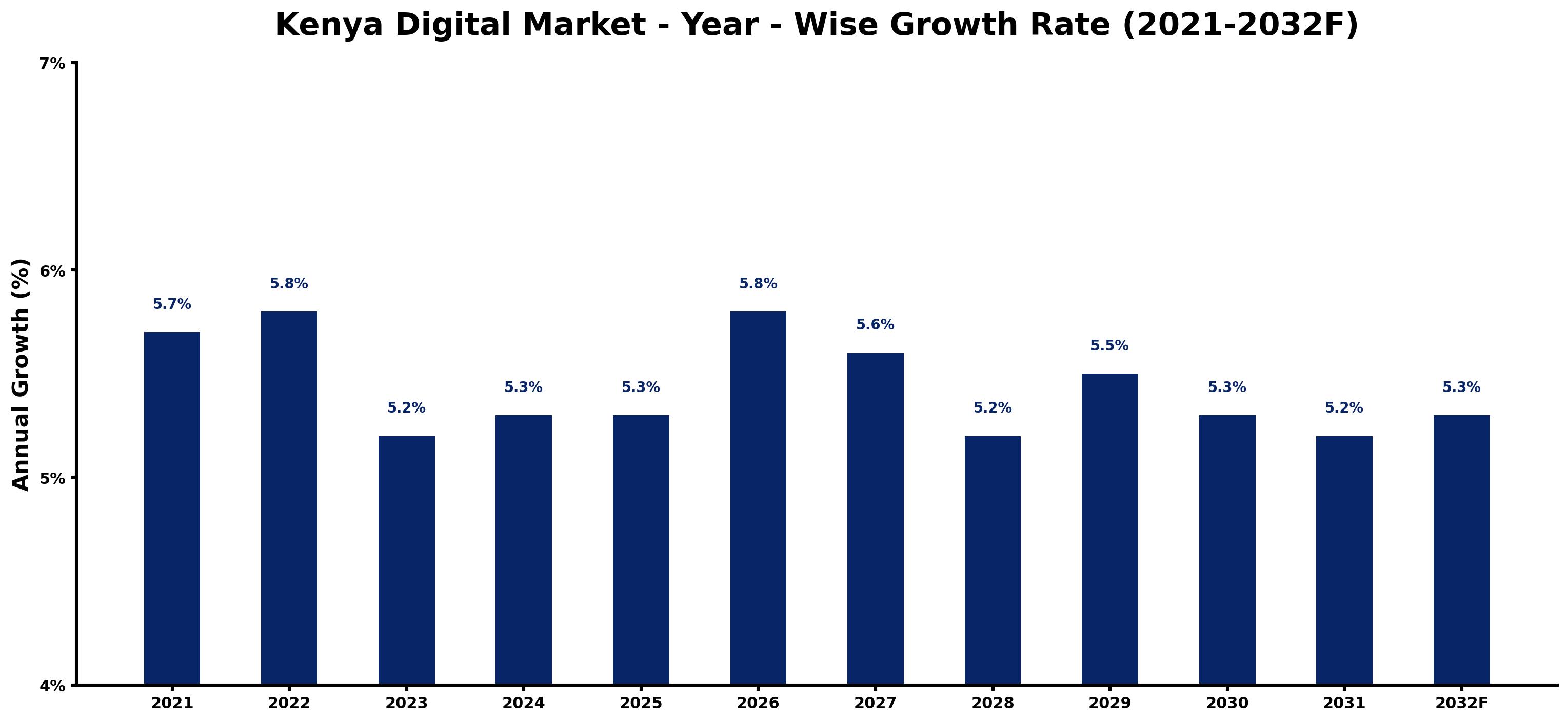
The table below presents the year‑wise growth rates along with the key drivers influencing the market
| Year | Growth Rate | Major Drivers |
| 2021 | 5.7% | Increasing mobile money adoption through M-Pesa expansion. |
| 2022 | 5.8% | Government support for tech startups via Digital Economy Strategy. |
| 2023 | 5.2% | Rise in online commerce due to improved logistics services. |
| 2024 | 5.3% | Growing cybersecurity regulations boosting digital trust initiatives. |
| 2025 | 5.3% | Youth demographic driving demand for online education platforms. |
| 2026 | 5.8% | Enhanced broadband coverage stimulating e-commerce growth. |
| 2027 | 5.6% | Mobile penetration increasing access to digital services. |
| 2028 | 5.2% | E-Government services attracting citizens to digital platforms. |
| 2029 | 5.5% | Local fintech innovations enhancing financial inclusion efforts. |
| 2030 | 5.3% | Partnerships with firms improving digital marketing effectiveness. |
| 2031 | 5.2% | Emergence of digital content creators gaining audience. |
| 2032 | 5.3% | Regulatory reforms facilitating digital payment systems growth. |
Note: Market size estimations and growth projections presented in this report are based on 6Wresearch's proprietary forecasting methodology, utilizing the latest available industry data, government publications, and primary research inputs.
Kenya Digital Market Key Takeaways
Below are some of the specific key takeaways from the market, including:
- Internet penetration is fueling e-commerce growth, with more consumers preferring online shopping.
- Mobile money solutions, led by M-Pesa, continue to dominate the digital payment space.
- Digital content consumption, including streaming and gaming, is on the rise among Kenyan users.
- Investment in fintech and digital marketing is increasing, targeting the tech-savvy population.
- Government initiatives are focused on improving infrastructure and regulatory frameworks for digital services.
Evaluation of Restraints in Kenya Digital Market
Despite its rapid growth, the Kenya Digital Market faces several challenges that impede its full potential. A significant barrier is the limited internet access in rural areas, where connectivity issues prevent many individuals from participating in the digital economy. High data costs further restrict access, making it difficult for consumers to engage in e-commerce activities. Additionally, concerns about cybersecurity and fraud create a lack of trust in online transactions, deterring potential customers from embracing digital services.
Kenya Digital Market Trends
Several trends are currently influencing the Kenya Digital Market. The shift towards online shopping is being accelerated by the increasing availability of smartphones and improved internet connectivity. As digital payment systems gain traction, businesses are rapidly adapting to these changes by enhancing their online platforms. Additionally, the appetite for digital content is leading to an uptick in streaming services and online gaming, reflecting a broader shift in consumer preferences. Marketers are recognizing the importance of social media influencers and targeted advertising as they seek to connect with a more digitally engaged audience.
Kenya Digital Market Opportunities
The landscape presents a myriad of investment opportunities, especially in sectors like e-commerce, fintech, and digital advertising. E-commerce platforms are thriving, attracting significant interest from investors keen on capitalizing on the growing online consumer base. Fintech innovations are addressing critical needs for financial inclusion, while digital advertising is evolving as companies look to engage with an increasingly online audience. on top of that, the rise of mobile technology continues to open doors for new applications and services tailored to local consumers.
Government Initiatives in the Kenya Digital Market
The Kenyan government is actively shaping the digital market through various initiatives aimed at fostering growth and innovation. Regulatory frameworks are being enhanced to ensure fair competition while protecting consumer rights. Efforts to expand internet access are a top priority, with public policies focusing on improving infrastructure to support the digital economy.
- A national broadband strategy launched in 2023 aims to enhance connectivity across urban and rural areas.
- Current initiatives include the rollout of public Wi-Fi hotspots in key urban centers to boost internet access.
- A regulatory framework established in 2022 mandates transparency in digital transactions to build consumer trust.
- Upcoming plans involve a public-private partnership expected to expand mobile service infrastructure by 2026.
- Implementation of the Data Protection Act continues to evolve, ensuring personal data is safeguarded as digital services expand.
Future Insights of the Kenya Digital Market
Looking ahead, the Kenya Digital Market is set for continued growth. The combination of a young, tech-savvy population and increasing smartphone penetration will likely drive e-commerce to new heights. The ongoing development of digital payment solutions will further stimulate consumer spending online. With the government's commitment to enhancing digital infrastructure and regulatory support for startups, innovation will flourish, creating new avenues for growth. Businesses that adapt to these changes will find significant opportunities to engage with a burgeoning digital consumer base.
Kenya Digital Market Latest Developments
Over the past year, the Kenya Digital Market has seen a flurry of activity as companies and the government seek to capitalize on emerging opportunities. The emphasis has been on enhancing digital services and expanding access to technology. With the rise of mobile apps and online platforms, businesses are increasingly focused on reaching consumers through digital channels.
- A leading regional operator launched a new mobile app in early 2023, aimed at streamlining e-commerce transactions for users.
- An initiative to develop a digital skills training program began in Q2 2023 and remains underway, targeting youth in urban and rural areas.
- A major technology vendor announced plans for a rollout of 5G services expected to start by mid-2024, enhancing internet speeds significantly.
- A partnership between several fintech startups was established in late 2022 to create a unified digital payment platform, currently in the development phase.
- Plans for a nationwide digital literacy campaign are set to launch in early 2024, aimed at educating consumers on safe online practices.
Kenya Digital Market - Key Attractiveness of the Report
- 10 Years of Market Numbers
- Historical Data Starting from 2022 to 2025
- Base Year: 2025
- Forecast Data until 2032
- Key Performance Indicators Impacting the Market
- Major Upcoming Developments and Projects
Key Highlights of the Report:
- Kenya Digital Market Outlook
- Market Size of Kenya Digital Market, 2025
- Forecast of Kenya Digital Market, 2032
- Historical Data and Forecast of Kenya Digital Revenues & Volume for the Period 2022-2032F
- Kenya Digital Market Trend Evolution
- Kenya Digital Market Drivers and Challenges
- Kenya Digital Price Trends
- Kenya Digital Porter's Five Forces
- Kenya Digital Industry Life Cycle
- Historical Data and Forecast of Kenya Digital Market Revenues & Volume By Software for the Period 2022-2032F
- Historical Data and Forecast of Kenya Digital Market Revenues & Volume By CRM Software for the Period 2022-2032F
- Historical Data and Forecast of Kenya Digital Market Revenues & Volume By Email Marketing Software for the Period 2022-2032F
- Historical Data and Forecast of Kenya Digital Market Revenues & Volume By Social Media Advertising for the Period 2022-2032F
- Kenya Digital Import Export Trade Statistics
- Market Opportunity Assessment By Software
- Kenya Digital Top Companies Market Share
- Kenya Digital Competitive Benchmarking By Technical and Operational Parameters
- Kenya Digital Company Profiles
- Kenya Digital Key Strategic Recommendations






































