Kenya Kefir Market Size, Share & Growth Rate
The Kenya Kefir Market was estimated at USD 248 Million in 2025 and is projected to reach USD 325 Million by 2032, growing at a CAGR of 3.9% from 2026 to 2032. This robust growth trajectory is underpinned by an increasing consumer preference for health-oriented products and a heightened awareness of the benefits associated with probiotic foods. Additionally, the expanding availability of kefir through various retail channels such as supermarkets and online platforms is significantly contributing to the market's positive outlook.
Kenya Kefir Market Year-wise Growth Rate and Key Drivers
This graph highlights how the Kenya Kefir Market has steadily grown over the years, supported by major growth factors.
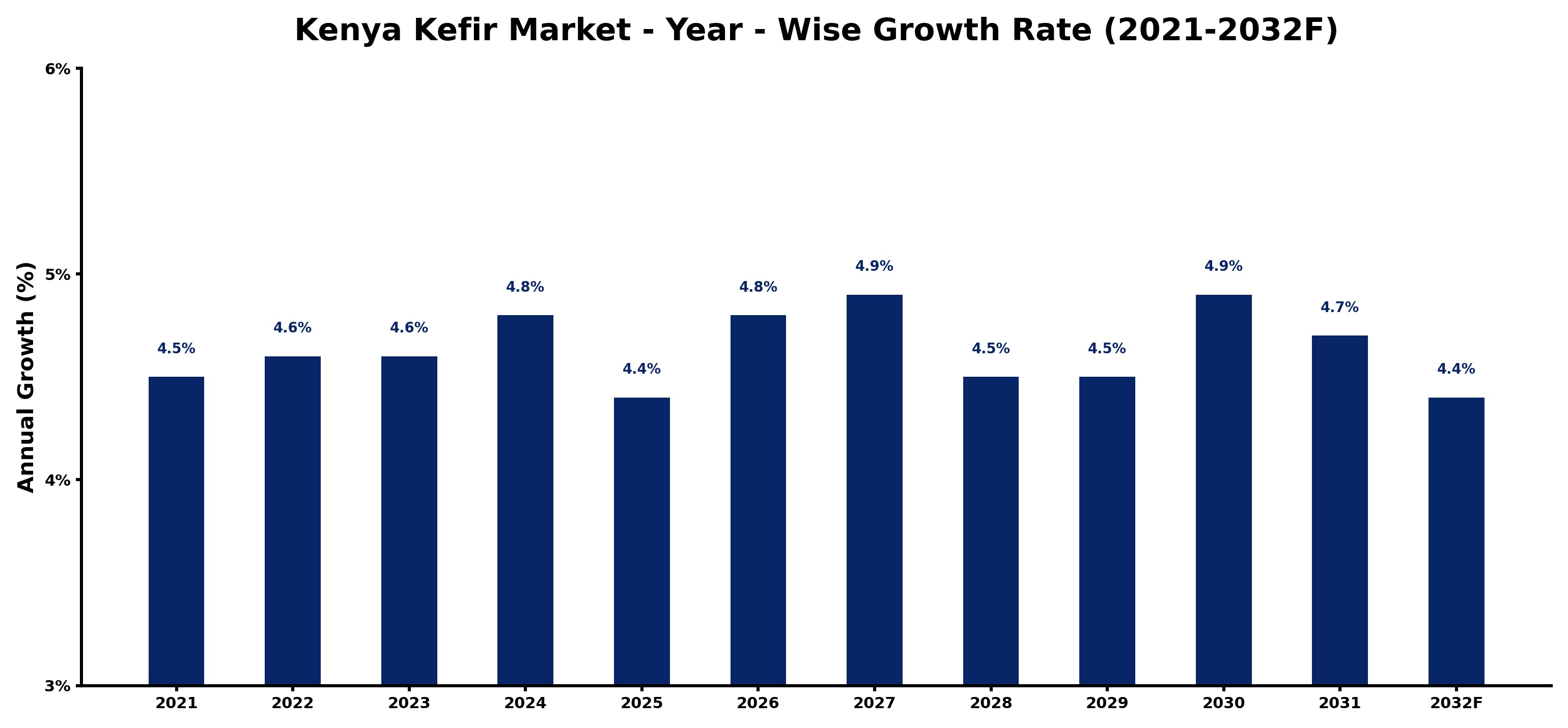
The table below presents the year‑wise growth rates along with the key drivers influencing the market
| Year | Growth Rate | Major Drivers |
| 2021 | 4.5% | Health awareness drove kefir popularity |
| 2022 | 4.6% | Increased consumer interest in probiotics |
| 2023 | 4.6% | Diverse flavor offerings attracted consumers |
| 2024 | 4.8% | Retail partnerships enhanced product visibility |
| 2025 | 4.4% | Local production improved supply chain |
| 2026 | 4.8% | Innovative marketing strategies engaged consumers |
| 2027 | 4.9% | Kefir education programs expanded reach |
| 2028 | 4.5% | Sustainable packaging attracted eco-conscious buyers |
| 2029 | 4.5% | Social media campaigns increased awareness |
| 2030 | 4.9% | Health trends favored fermented products |
| 2031 | 4.7% | Collaborations with fitness influencers grew |
| 2032 | 4.4% | Convenience packaging met consumer demands |
Note - Market size estimations and growth projections presented in this report are based on 6Wresearch's advanced forecasting approach, validated with industry datasets as of June 2026.
Kenya Kefir Market Synopsis
Recently, the Kenya kefir market has witnessed a surge in popularity as more consumers become health-conscious and embrace probiotic-rich foods. This momentum is likely to be sustained as demand grows for gut-friendly beverages that offer both flavor and health benefits.
Looking ahead, the market is expected to evolve with innovative product offerings and expanded distribution channels. As consumers become increasingly aware of the various health benefits of kefir, including its positive effects on digestion and immunity, the market stands poised for significant development.
Kenya Kefir Market Key Takeaways
- The market is experiencing sustained growth driven by rising health awareness and demand for functional foods.
- Increasing availability of kefir products in diverse retail formats is expanding consumer access.
- Probiotic-rich beverages, including kefir, are becoming a staple among health-conscious individuals.
- Consumer education remains vital for building brand loyalty within this niche market.
- Government policies are supporting dairy processing standards, enhancing product safety and quality.
Evaluation of Restraints in Kenya Kefir Market
Despite its promising trajectory, the Kenya kefir market faces notable challenges that could impede growth. Chief among these is the need for greater consumer education about kefir's health benefits and uses, as many potential customers remain unaware of its advantages. Additionally, the perishability of kefir products can limit their distribution and accessibility in certain regions, thus affecting sales. Furthermore, increasing competition from alternative probiotic beverages may create hurdles for brands trying to establish a solid market presence and build loyalty in this niche segment.
Kenya Kefir Market Trends
Current trends indicate a rising consumer inclination towards natural and organic products, driving demand for kefir made from high-quality ingredients. Additionally, innovative flavors and variations, including plant-based kefir alternatives, are emerging to cater to diverse consumer preferences. Health and wellness trends are also influencing product development, as brands increasingly position their kefir offerings as solutions for enhanced digestion and immunity. This evolution is fostering a more competitive landscape where quality and innovation play pivotal roles in capturing consumer attention.
Kenya Kefir Market Opportunities
The Kenya kefir market presents several lucrative opportunities for growth and investment. As more consumers seek health-conscious options, there is significant potential for introducing new product lines, including flavored and fortified kefir options. Furthermore, expanding online sales channels can help reach a broader audience, particularly among younger, tech-savvy consumers. Collaborations with health and wellness influencers may also amplify brand awareness and drive consumer engagement, positioning kefir as an essential component of a healthy lifestyle.
Government Initiatives in the Kenya Kefir Market
The Kenyan government is actively promoting initiatives aimed at enhancing dairy production and processing standards. These efforts are focused on ensuring the safety and quality of kefir products available in the market. Moreover, public funding directed towards research and development in fermentation technologies is helping to foster innovation within the industry. Such government support not only boosts product quality but also helps in diversifying offerings to meet the evolving consumer demands in the kefir market.
Future Insights of the Kenya Kefir Market
Looking toward the future, the Kenya kefir market is anticipated to continue its growth trajectory through 2026-2032. Increased health consciousness among consumers, coupled with ongoing innovations in product development, will likely drive demand. As more retailers adopt diversified distribution strategies, including online platforms, consumer access to kefir will expand significantly. Additionally, the ongoing commitment to quality and safety standards will enhance consumer trust, further solidifying kefir's role in the healthy beverage segment of the market.
Kenya Kefir Market Latest Developments (May 2025 - June 2026)
Recent developments in the Kenya kefir market indicate a growing trend towards product diversification, with brands exploring various flavors and packaging options to appeal to a broader audience. Additionally, increased marketing efforts aimed at educating consumers on the health benefits of kefir are becoming commonplace. Collaborative efforts between dairy producers and technology firms are fostering innovations in fermentation processes, promising to enhance product quality and shelf-life. Overall, the sector is witnessing a dynamic shift as it adapts to changing consumer preferences and market demands.
Kenya Kefir Market - Key Attractiveness of the Report
- 10 Years of Market Numbers
- Historical Data Starting from 2022 to 2025
- Base Year: 2025
- Forecast Data until 2032
- Key Performance Indicators Impacting the Market
- Major Upcoming Developments and Projects
Key Highlights of the Report:
- Kenya Kefir Market Outlook
- Market Size of Kenya Kefir Market, 2025
- Forecast of Kenya Kefir Market, 2032
- Historical Data and Forecast of Kenya Kefir Revenues & Volume for the Period 2022-2032F
- Kenya Kefir Market Trend Evolution
- Kenya Kefir Market Drivers and Challenges
- Kenya Kefir Price Trends
- Kenya Kefir Porter's Five Forces
- Kenya Kefir Industry Life Cycle
- Historical Data and Forecast of Kenya Kefir Market Revenues & Volume By Nature for the Period 2022-2032F
- Historical Data and Forecast of Kenya Kefir Market Revenues & Volume By Organic for the Period 2022-2032F
- Historical Data and Forecast of Kenya Kefir Market Revenues & Volume By Conventional for the Period 2022-2032F
- Historical Data and Forecast of Kenya Kefir Market Revenues & Volume By Product Types for the Period 2022-2032F
- Historical Data and Forecast of Kenya Kefir Market Revenues & Volume By Flavored for the Period 2022-2032F
- Historical Data and Forecast of Kenya Kefir Market Revenues & Volume By Unflavored for the Period 2022-2032F
- Historical Data and Forecast of Kenya Kefir Market Revenues & Volume By Applications for the Period 2022-2032F
- Historical Data and Forecast of Kenya Kefir Market Revenues & Volume By Foods and beverages for the Period 2022-2032F
- Historical Data and Forecast of Kenya Kefir Market Revenues & Volume By Pharmaceutical for the Period 2022-2032F
- Historical Data and Forecast of Kenya Kefir Market Revenues & Volume By Source for the Period 2022-2032F
- Historical Data and Forecast of Kenya Kefir Market Revenues & Volume By Animal milk for the Period 2022-2032F
- Historical Data and Forecast of Kenya Kefir Market Revenues & Volume By Soy milk for the Period 2022-2032F
- Historical Data and Forecast of Kenya Kefir Market Revenues & Volume By Coconut milk for the Period 2022-2032F
- Historical Data and Forecast of Kenya Kefir Market Revenues & Volume By Others for the Period 2022-2032F
- Kenya Kefir Import Export Trade Statistics
- Market Opportunity Assessment By Nature
- Market Opportunity Assessment By Product Types
- Market Opportunity Assessment By Applications
- Market Opportunity Assessment By Source
- Kenya Kefir Top Companies Market Share
- Kenya Kefir Competitive Benchmarking By Technical and Operational Parameters
- Kenya Kefir Company Profiles
- Kenya Kefir Key Strategic Recommendations






































