Kenya Nail Polish Market Size, Share & Growth Rate
The Kenya Nail Polish Market was estimated at USD 988 Million in 2025 and is projected to reach USD 1731 Million by 2032, growing at a CAGR of 8.3% from 2026 to 2032. This remarkable growth trajectory is primarily fueled by the increasing disposable income of the Kenyan population, which has led to greater spending on beauty and personal care products. Additionally, the rising influence of fashion trends and innovative product offerings, such as long-lasting and quick-dry formulas, are further propelling demand.
Kenya Nail Polish Market Year-wise Growth Rate and Key Drivers
This graph highlights how the Kenya Nail Polish Market has steadily grown over the years, supported by major growth factors.
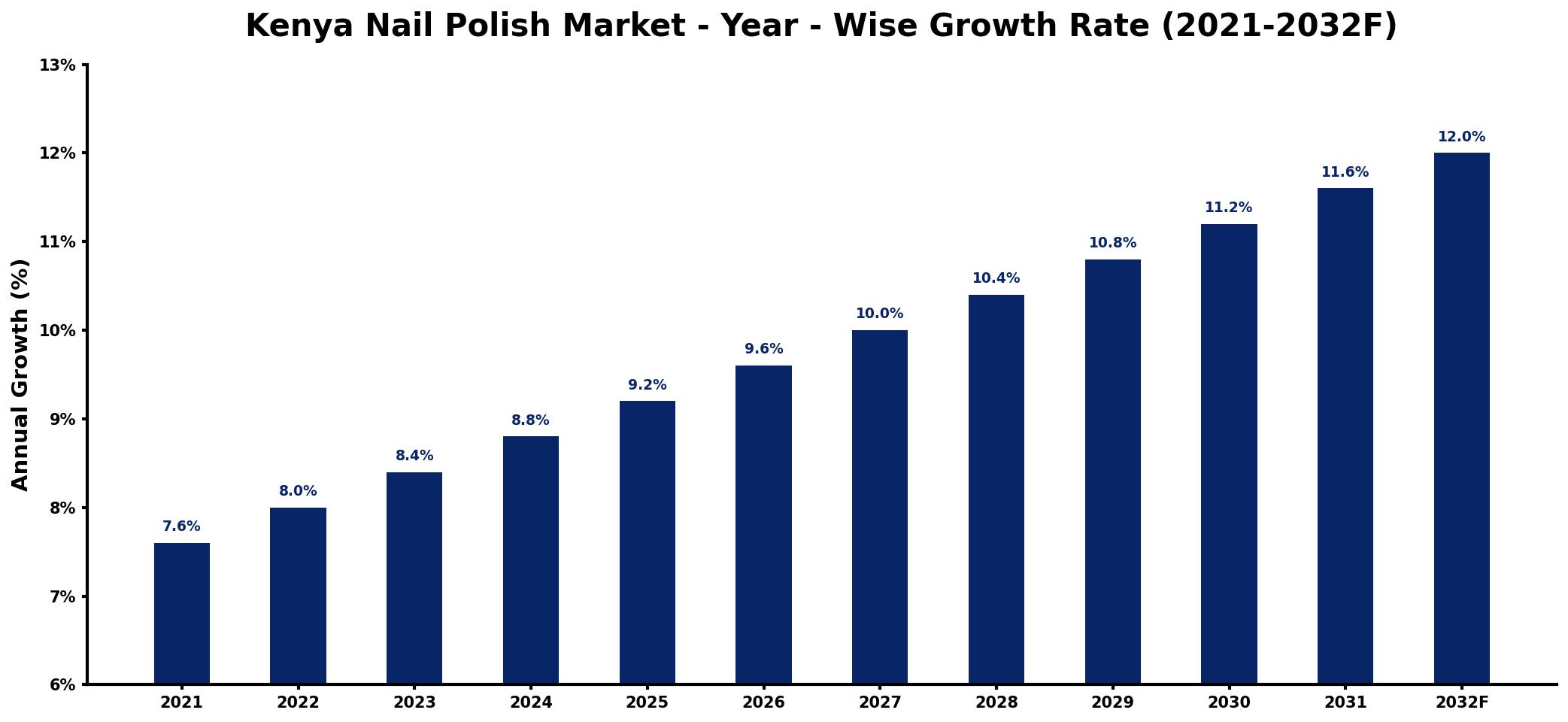
The table below presents the year‑wise growth rates along with the key drivers influencing the market
| Year | Growth Rate | Major Drivers |
| 2021 | 7.6% | Rising beauty consciousness among consumers |
| 2022 | 8.0% | Increase in disposable income levels |
| 2023 | 8.4% | Growth of online retail platforms |
| 2024 | 8.8% | Expansion of beauty salons nationwide |
| 2025 | 9.2% | Surge in social media influence |
| 2026 | 9.6% | Emergence of eco-friendly products |
| 2027 | 10.0% | Introduction of innovative product lines |
| 2028 | 10.4% | Heightened focus on self-care trends |
| 2029 | 10.8% | Growing demand for premium brands |
| 2030 | 11.2% | growing regional consumption patterns |
| 2031 | 11.6% | strengthening underlying market demand |
| 2032 | 12.0% | enhanced product quality standards |
Note: Market size estimations and growth projections presented in this report are based on 6Wresearch's proprietary forecasting methodology, utilizing the latest available industry data, government publications, and primary research inputs.
Kenya Nail Polish Market Synopsis
The rising trend of nail art and manicures among Kenyan consumers signifies a robust demand for nail polish products. As beauty standards evolve, there is a notable shift towards premium nail polish brands that offer a wider variety of colors and formulations. This growing interest is complemented by the expansion of retail channels, including beauty stores and online shopping platforms, which provide easier access to these products.
Moreover, seasonal variations significantly impact consumer preferences, driving fluctuations in product demand. For instance, during festive seasons or holidays, there is typically a spike in sales as individuals seek to enhance their appearance. This seasonal influence, combined with the overall trend toward self-care and personal grooming, provides a favorable outlook for the market.
Kenya Nail Polish Market Key Takeaways
- The Kenya Nail Polish Market is rapidly expanding, with significant growth projected through 2032.
- Consumer preferences are increasingly shifting towards long-lasting and chip-resistant formulas.
- The rise of e-commerce is enhancing accessibility to a diverse range of nail products.
- Fashion trends play a pivotal role in shaping demand, with seasonal variations influencing sales patterns.
- Concerns regarding counterfeit products highlight the need for greater consumer education and brand transparency.
Evaluation of Restraints in Kenya Nail Polish Market
Despite the promising growth, the Kenya Nail Polish Market faces several key restraints. A notable concern is the competition from counterfeit and low-quality products, which not only undermine consumer trust but also limit market growth. Additionally, high prices of branded nail products may alienate budget-conscious consumers, further constraining market potential. There is also a prevalent lack of awareness regarding the benefits of high-quality nail polishes, which diminishes the appeal of premium offerings. The market suffers from inadequate distribution networks, which can restrict availability and access to desired products.
Kenya Nail Polish Market Trends
Current trends in the Kenya Nail Polish Market highlight a growing consumer inclination towards innovative formulations that offer durability and ease of use. Quick-dry options are becoming increasingly popular, catering to the fast-paced lifestyles of consumers. Furthermore, eco-friendly and cruelty-free products are gaining traction as consumers become more environmentally conscious. The introduction of nail art accessories and the burgeoning influence of social media are also shaping consumer preferences, leading to a demand for unique and customizable nail designs.
Kenya Nail Polish Market Opportunities
The Kenya Nail Polish Market presents lucrative opportunities for growth and investment. As consumer spending on beauty and personal care continues to rise, businesses can capitalize on this trend by introducing innovative products that align with modern consumer needs. Expanding distribution channels, particularly through online platforms, can enhance accessibility. Furthermore, educating consumers about the advantages of high-quality nail polish can foster brand loyalty and encourage a shift away from counterfeit products.
Government Initiatives in the Kenya Nail Polish Market
The Kenyan government has been active in promoting local industries, including cosmetics and beauty products. Initiatives aimed at fostering entrepreneurship and supporting small businesses in the beauty sector can lead to an expansion of the nail polish market. Additionally, government regulations focused on consumer safety and product quality standards are essential for establishing a trustworthy market environment, which can enhance consumer confidence and drive growth.
Future Insights of the Kenya Nail Polish Market
Looking ahead to 2026-2032, the Kenya Nail Polish Market is poised for significant evolution. As disposable incomes rise, consumers are likely to increasingly prioritize quality over price, favoring brands that offer unique features and safety assurances. The integration of technology in product development, such as advancements in formulation science, will further meet consumer demands. Additionally, the growth of social media and online beauty communities will continue to influence trends, making the market increasingly dynamic and receptive to emerging consumer preferences.
Kenya Nail Polish Market Latest Developments (2025 - 2026)
Recent developments within the Kenya Nail Polish Market indicate a strong shift towards digital retailing, with many brands enhancing their online presence to reach a broader audience. Innovations in formulation, particularly regarding health-conscious ingredients, are gaining traction. The focus on sustainability is also shaping product offerings, with brands beginning to explore eco-friendly packaging solutions. Additionally, the influence of beauty influencers on social media is driving the popularity of niche brands and unique product lines.
Kenya Nail Polish Market - Key Attractiveness of the Report
- 10 Years of Market Numbers
- Historical Data Starting from 2022 to 2025
- Base Year: 2025
- Forecast Data until 2032
- Key Performance Indicators Impacting the Market
- Major Upcoming Developments and Projects
Key Highlights of the Report:
- Kenya Nail Polish Market Outlook
- Market Size of Kenya Nail Polish Market, 2025
- Forecast of Kenya Nail Polish Market, 2032
- Historical Data and Forecast of Kenya Nail Polish Revenues & Volume for the Period 2022-2032F
- Kenya Nail Polish Market Trend Evolution
- Kenya Nail Polish Market Drivers and Challenges
- Kenya Nail Polish Price Trends
- Kenya Nail Polish Porter's Five Forces
- Kenya Nail Polish Industry Life Cycle
- Historical Data and Forecast of Kenya Nail Polish Market Revenues & Volume By Product for the Period 2022-2032F
- Historical Data and Forecast of Kenya Nail Polish Market Revenues & Volume By Regular Nail Polish for the Period 2022-2032F
- Historical Data and Forecast of Kenya Nail Polish Market Revenues & Volume By Gel Nail Polish for the Period 2022-2032F
- Historical Data and Forecast of Kenya Nail Polish Market Revenues & Volume By Others for the Period 2022-2032F
- Historical Data and Forecast of Kenya Nail Polish Market Revenues & Volume By Distribution Channel for the Period 2022-2032F
- Historical Data and Forecast of Kenya Nail Polish Market Revenues & Volume By Hypermarkets & Supermarkets for the Period 2022-2032F
- Historical Data and Forecast of Kenya Nail Polish Market Revenues & Volume By Specialty Stores for the Period 2022-2032F
- Historical Data and Forecast of Kenya Nail Polish Market Revenues & Volume By E-commerce for the Period 2022-2032F
- Historical Data and Forecast of Kenya Nail Polish Market Revenues & Volume By Others for the Period 2022-2032F
- Kenya Nail Polish Import Export Trade Statistics
- Market Opportunity Assessment By Product
- Market Opportunity Assessment By Distribution Channel
- Kenya Nail Polish Top Companies Market Share
- Kenya Nail Polish Competitive Benchmarking By Technical and Operational Parameters
- Kenya Nail Polish Company Profiles
- Kenya Nail Polish Key Strategic Recommendations






































