Kenya Nylon Market Size Growth Rate
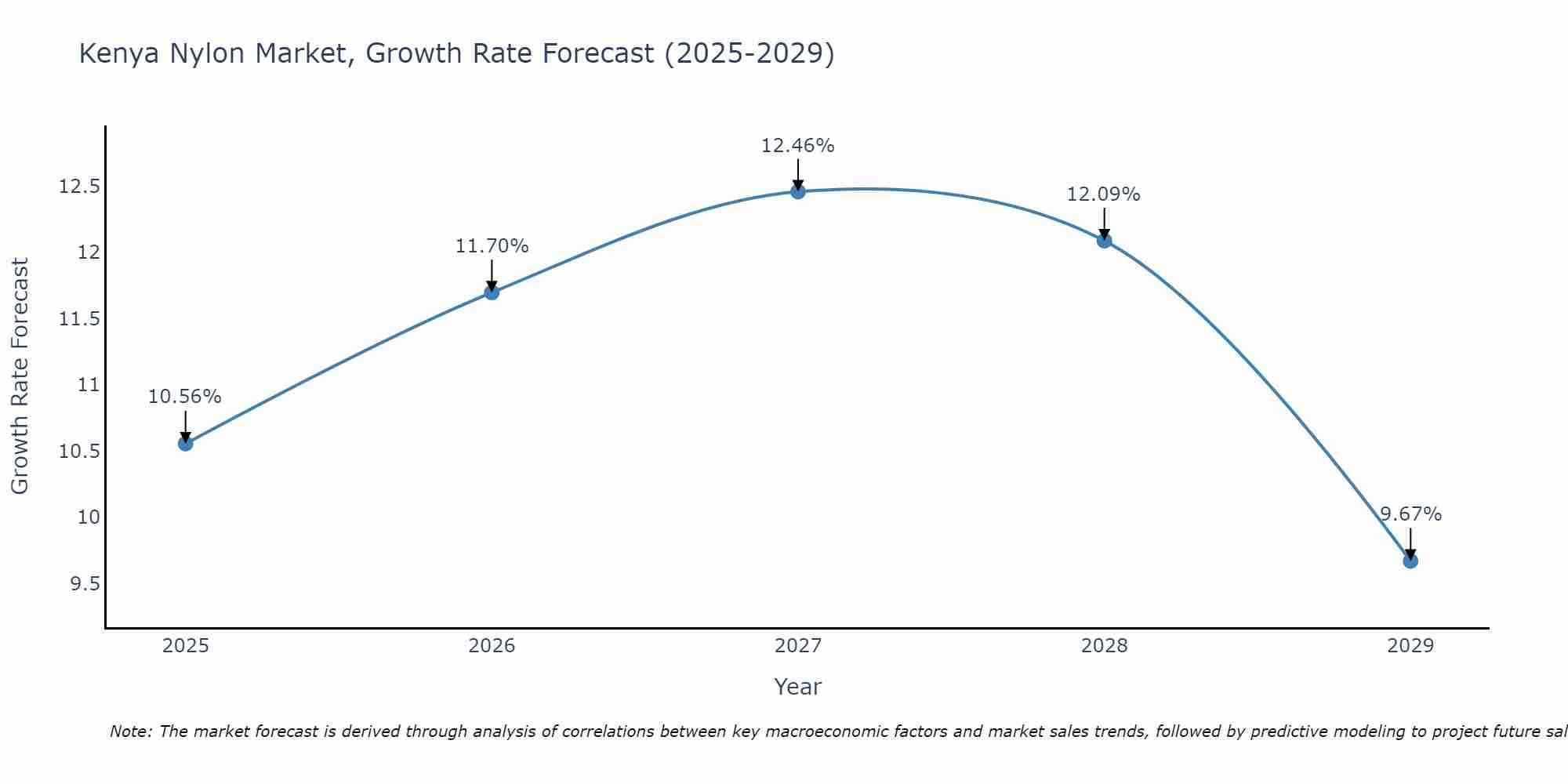
The Kenya Nylon Market is projected to witness mixed growth rate patterns during 2025 to 2029. The growth rate begins at 10.56% in 2025, climbs to a high of 12.46% in 2027, and moderates to 9.67% by 2029.
Nylon Market: Kenya vs Top 5 Major Economies in 2027 (Africa)
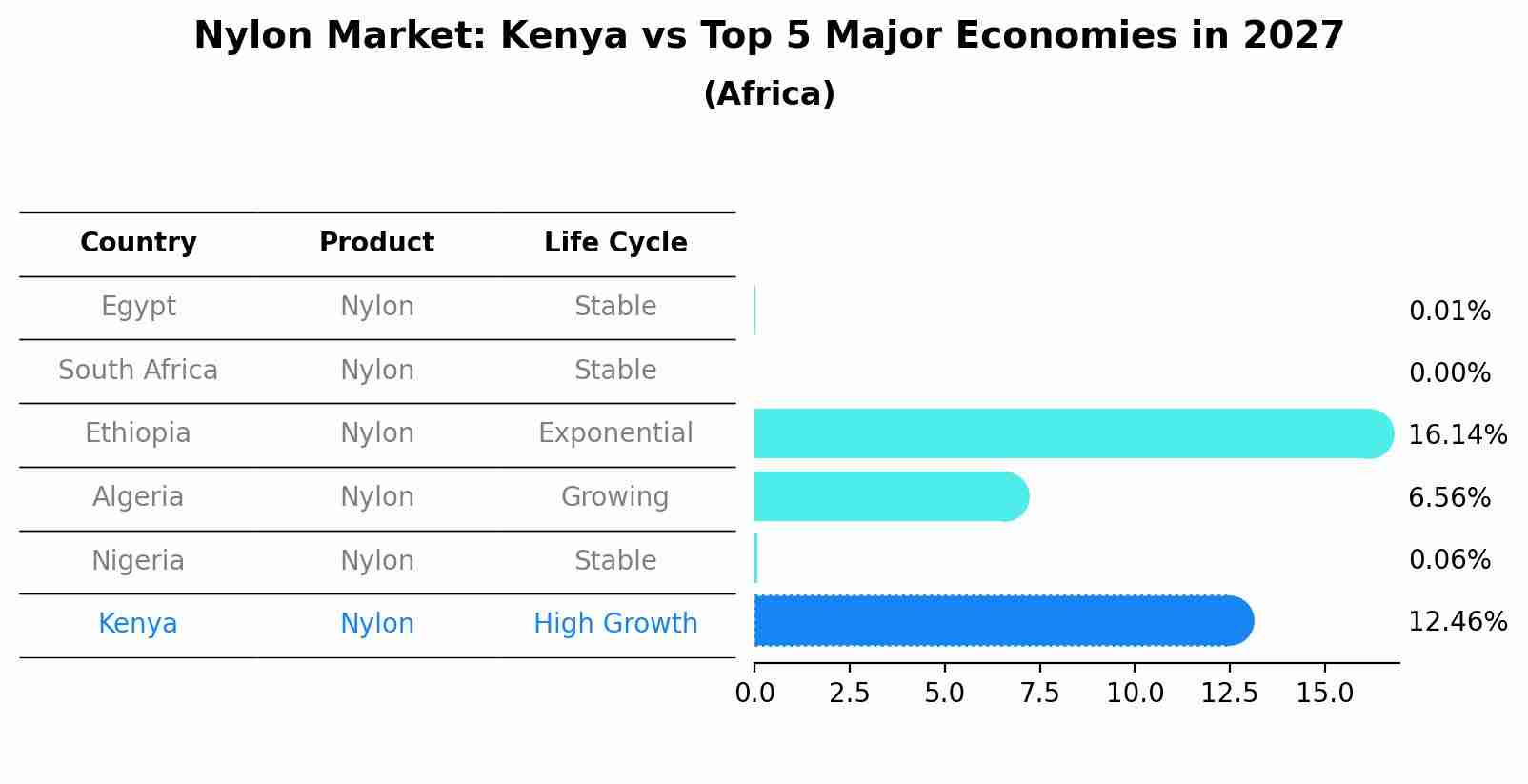
The Nylon market in Kenya is projected to grow at a high growth rate of 12.46% by 2027, highlighting the country's increasing focus on advanced technologies within the Africa region, where Egypt holds the dominant position, followed closely by South Africa, Ethiopia, Algeria and Nigeria, shaping overall regional demand.
Kenya Nylon Market Overview
The Kenya nylon market is experiencing steady growth driven by increasing demand across various sectors such as packaging, agriculture, construction, and textiles. The market is characterized by a wide range of products including nylon films, fibers, and resins, catering to diverse applications. Growing urbanization, infrastructure development, and rising disposable incomes are fueling the demand for nylon products in the country. Additionally, the agriculture sector`s adoption of nylon for greenhouse farming and crop protection has further boosted market growth. Local manufacturers and international players are actively participating in the market, offering competitive pricing and product innovation. However, challenges such as fluctuating raw material prices and environmental concerns regarding plastic waste management are influencing market dynamics and driving the adoption of sustainable practices within the industry.
Kenya Nylon Market Trends
Currently, the Kenya Nylon Market is experiencing a shift towards sustainable and eco-friendly alternatives as consumers become more conscious of environmental impact. There is a growing demand for biodegradable and recycled nylon products that reduce plastic waste and carbon footprint. Manufacturers are increasingly investing in sustainable production practices and materials to meet this demand. Additionally, technological advancements in nylon production are leading to innovations in performance and durability, catering to diverse consumer needs. The market is also witnessing a rise in collaborations between companies and environmental organizations to promote sustainability and responsible consumption. Overall, the Kenya Nylon Market is moving towards a more sustainable and environmentally friendly direction to align with global trends and consumer preferences.
Kenya Nylon Market Challenges
In the Kenya Nylon Market, some challenges faced include competition from low-cost imported nylon products, fluctuating raw material prices, and inconsistent quality control standards. The market also struggles with inadequate infrastructure for manufacturing and distribution, leading to supply chain inefficiencies and higher production costs. Additionally, environmental concerns related to the disposal of nylon products and increasing consumer demand for eco-friendly alternatives pose a challenge for traditional nylon manufacturers. To remain competitive and sustainable in the market, companies in the Kenya Nylon Market need to focus on product innovation, cost efficiency, and sustainability practices while also navigating the complexities of a rapidly changing market landscape.
Kenya Nylon Market Investment Opportunities
The Kenya Nylon Market presents promising investment opportunities due to the growing demand for nylon products in various industries such as packaging, textiles, automotive, and construction. With the country`s expanding economy and increasing consumer purchasing power, the demand for nylon materials is expected to rise further. Investors can explore opportunities in manufacturing and supplying nylon resins, fibers, and films to cater to the diverse needs of these industries. Additionally, investing in research and development to innovate new nylon products with improved properties and sustainability features can also be a lucrative venture in the Kenya Nylon Market. Overall, the market offers potential for growth and profitability for investors looking to capitalize on the increasing demand for nylon materials in Kenya.
Kenya Nylon Market Government Policy
The Kenyan government has implemented policies to regulate the nylon market, focusing on environmental sustainability and consumer protection. The ban on single-use plastic bags in 2017 aimed to reduce plastic pollution and promote the use of biodegradable alternatives, impacting the nylon market. Additionally, the government has introduced quality standards and regulations to ensure the safety and durability of nylon products sold in the country. These policies have encouraged the adoption of eco-friendly practices and the development of sustainable nylon products in Kenya, aligning with global efforts to combat plastic waste and protect the environment.
Kenya Nylon Market Future Outlook
The future outlook for the Kenya Nylon Market appears promising, driven by factors such as increasing demand for nylon-based products in various industries including textiles, packaging, automotive, and consumer goods. The market is expected to witness steady growth due to the rising population, urbanization, and disposable income levels in the country. Additionally, advancements in nylon production technologies and a shift towards sustainable and eco-friendly materials are likely to further propel market growth. However, challenges such as fluctuating raw material prices and competition from alternative materials may impact market dynamics. Overall, with a strong industrial base, growing consumer demand, and evolving manufacturing landscape, the Kenya Nylon Market is poised for growth in the coming years.
Key Highlights of the Report:
- Kenya Nylon Market Outlook
- Market Size of Kenya Nylon Market, 2021
- Forecast of Kenya Nylon Market, 2031
- Historical Data and Forecast of Kenya Nylon Revenues & Volume for the Period 2018 - 2031
- Kenya Nylon Market Trend Evolution
- Kenya Nylon Market Drivers and Challenges
- Kenya Nylon Price Trends
- Kenya Nylon Porter's Five Forces
- Kenya Nylon Industry Life Cycle
- Historical Data and Forecast of Kenya Nylon Market Revenues & Volume By Product for the Period 2018 - 2031
- Historical Data and Forecast of Kenya Nylon Market Revenues & Volume By Nylon 6 for the Period 2018 - 2031
- Historical Data and Forecast of Kenya Nylon Market Revenues & Volume By Nylon 66 for the Period 2018 - 2031
- Historical Data and Forecast of Kenya Nylon Market Revenues & Volume By Application for the Period 2018 - 2031
- Historical Data and Forecast of Kenya Nylon Market Revenues & Volume By Automobile for the Period 2018 - 2031
- Historical Data and Forecast of Kenya Nylon Market Revenues & Volume By Electrical & Electronics for the Period 2018 - 2031
- Historical Data and Forecast of Kenya Nylon Market Revenues & Volume By Engineering Plastics for the Period 2018 - 2031
- Historical Data and Forecast of Kenya Nylon Market Revenues & Volume By Textiles for the Period 2018 - 2031
- Historical Data and Forecast of Kenya Nylon Market Revenues & Volume By Others for the Period 2018 - 2031
- Kenya Nylon Import Export Trade Statistics
- Market Opportunity Assessment By Product
- Market Opportunity Assessment By Application
- Kenya Nylon Top Companies Market Share
- Kenya Nylon Competitive Benchmarking By Technical and Operational Parameters
- Kenya Nylon Company Profiles
- Kenya Nylon Key Strategic Recommendations






































