Kenya Virtual Mobile Infrastructure Market Size & Growth Rate (2026-2032)
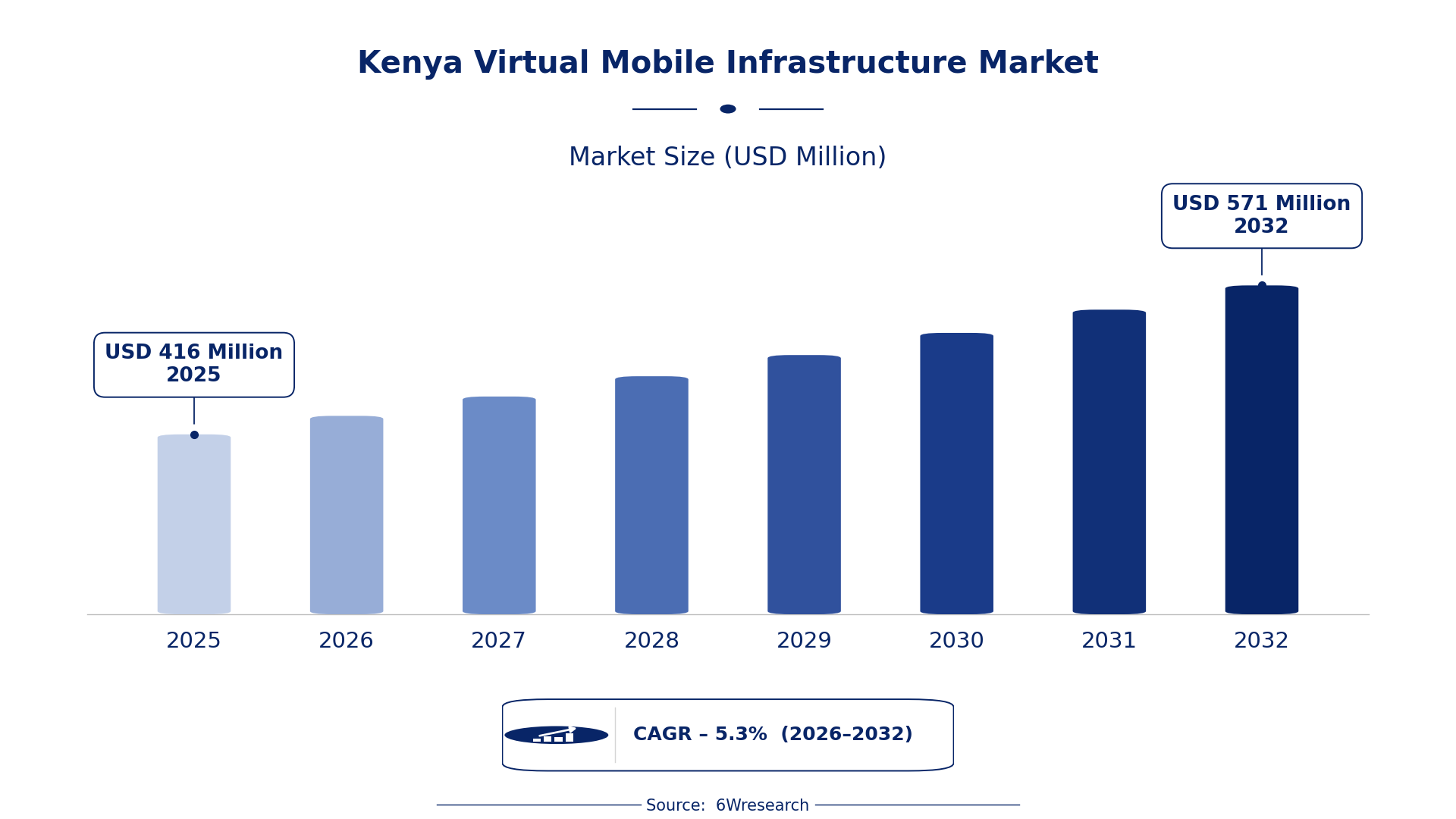
The Kenya Virtual Mobile Infrastructure Market was estimated at USD 416 Million in 2025 and is projected to reach USD 571 Million by 2032, growing at a CAGR of 5.3% from 2026 to 2032.
Kenya Virtual Mobile Infrastructure Market Synopsis
One of the most significant forces currently shaping the Kenya Virtual Mobile Infrastructure Market is the rise in remote work adoption. Organizations are increasingly prioritizing secure access to corporate applications via mobile devices to accommodate a diverse workforce. This shift not only boosts productivity but also highlights the urgent need for effective cybersecurity measures.
As mobile device penetration surges across Kenya, virtual mobile infrastructure solutions have gained traction. These solutions provide a secure and efficient way to manage corporate data and applications, catering to the growing bring-your-own-device (BYOD) policies in various sectors. Companies are recognizing that the right infrastructure can make or break their mobile strategy.
Kenya Virtual Mobile Infrastructure Market Year-wise Growth Rate and Key Drivers
This graph illustrates the annual growth rates of the Kenya Virtual Mobile Infrastructure Market from 2021 to 2032, highlighting a steady upward trajectory and projected expansion over the forecast period.
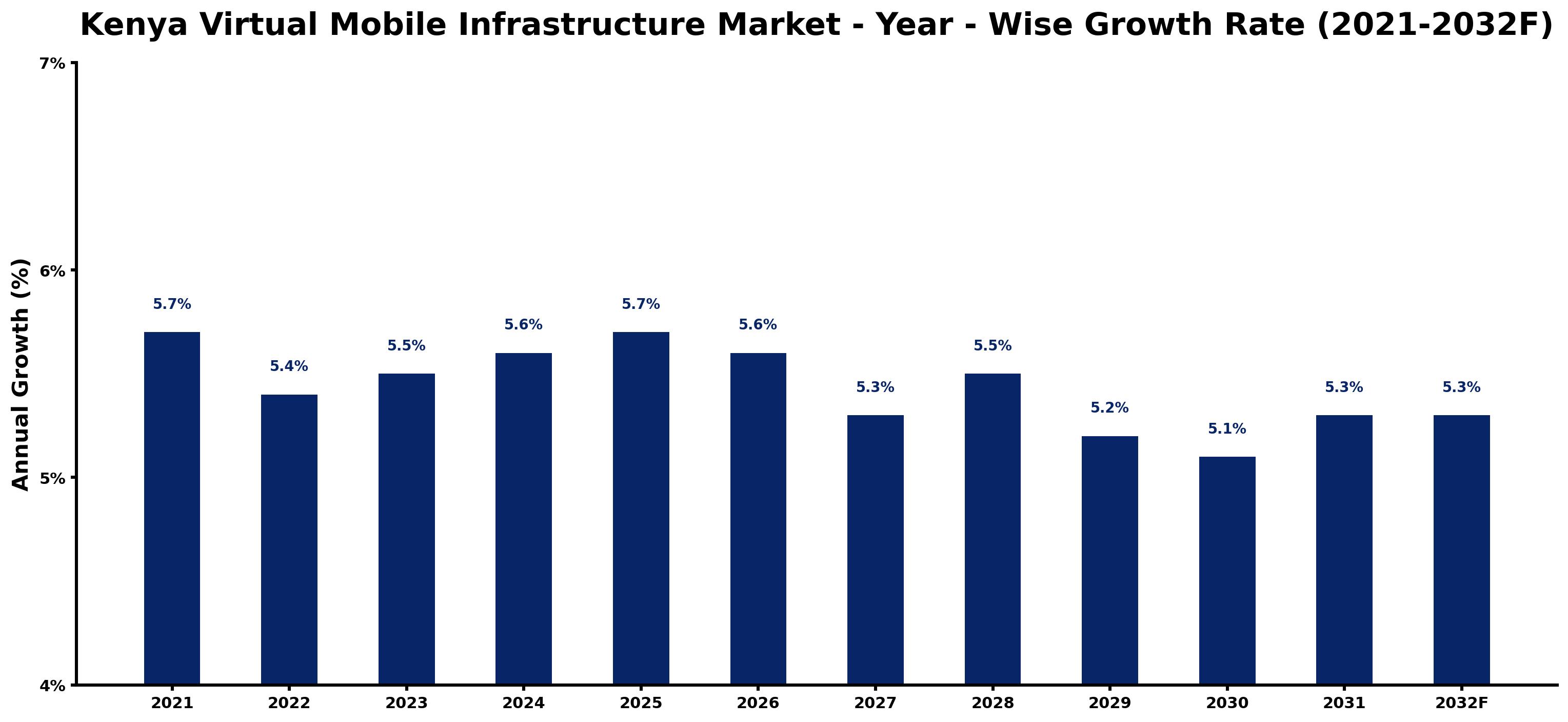
The table below presents the year‑wise growth rates along with the key drivers influencing the market
| Year | Growth Rate | Major Drivers |
| 2021 | 5.7% | Growth of mobile money services drives virtual infrastructure demand. |
| 2022 | 5.4% | Government's Digital Economy Strategy boosts mobile technology adoption. |
| 2023 | 5.5% | High smartphone penetration increases demand for virtual services. |
| 2024 | 5.6% | Rising e-learning initiatives prompt virtual mobile infrastructure expansion. |
| 2025 | 5.7% | Increased foreign investment in tech firms enhances infrastructure. |
| 2026 | 5.6% | Kenya's 5G rollout accelerates virtual mobile infrastructure deployment. |
| 2027 | 5.3% | Increased remote work boosts demand for mobile virtual solutions. |
| 2028 | 5.5% | Local fintech startups drive innovation in mobile services market. |
| 2029 | 5.2% | Cybersecurity regulations promote secure virtual mobile infrastructure growth. |
| 2030 | 5.1% | Growth in digital agriculture requires enhanced mobile solutions. |
| 2031 | 5.3% | Government incentives for tech startups expand virtual service offerings. |
| 2032 | 5.3% | Increased digital literacy drives demand for mobile virtual services. |
Note: Market size estimations and growth projections presented in this report are based on 6Wresearch's proprietary forecasting methodology, utilizing the latest available industry data, government publications, and primary research inputs.
Kenya Virtual Mobile Infrastructure Market Key Takeaways
Below are some of the specific key takeaways from the market, including:
- The market is responding actively to the demand for enhanced mobile security as remote work becomes the norm.
- Increased smartphone adoption is driving the need for virtual mobile infrastructure solutions.
- Cost-related challenges are impacting the pace of infrastructure development.
- Regulatory frameworks are evolving to support virtual mobile infrastructure initiatives.
- Public sector investments are crucial for expanding mobile network accessibility in underserved areas.
Evaluation of Restraints in Kenya Virtual Mobile Infrastructure Market
Several factors are constraining growth in the Kenya Virtual Mobile Infrastructure Market. Chief among them is the high cost associated with developing and maintaining the necessary infrastructure. This burden often limits the ability of smaller organizations to invest in advanced solutions. Additionally, inconsistent 4G and 5G coverage, particularly in rural regions, further complicates efforts to deliver reliable mobile services. Regulatory hurdles can also stifle innovation, making it challenging for businesses to adapt swiftly to changing market dynamics.
Kenya Virtual Mobile Infrastructure Market Trends
Current trends in the market reveal a growing emphasis on cybersecurity as cyber threats become increasingly sophisticated. Organizations are not only investing in virtual mobile infrastructure but also focusing on compliance with data protection regulations. Remote work policies are becoming more formalized, leading to a greater dependency on virtual solutions. Additionally, there’s a noticeable shift toward integrating advanced analytics and artificial intelligence within mobile infrastructure to improve user experience and operational efficiency.
Kenya Virtual Mobile Infrastructure Market Opportunities
Significant opportunities lie in the public sector's push for improved digital infrastructure, particularly in rural areas. Government initiatives aimed at expanding mobile connectivity can create avenues for investment and collaboration. As more organizations recognize the importance of securing their mobile ecosystems, there’s an increasing demand for tailored virtual infrastructure solutions. This market dynamic presents a fertile ground for technology vendors to innovate and offer specialized products that meet specific client needs.
Government Initiatives in the Kenya Virtual Mobile Infrastructure Market
The regulatory environment in Kenya is becoming increasingly conducive to the growth of the virtual mobile infrastructure market. With a focus on promoting efficiencies in mobile network infrastructure through virtualization, the government is facilitating innovation. The Communications Authority of Kenya (CA) plays a critical role in ensuring compliance with licensing and data protection regulations, creating a framework that supports market development.
- A national digital infrastructure upgrade program is currently in its rollout phase, focusing on improving connectivity in remote regions.
- The CA has launched an ongoing initiative to enhance the regulatory framework governing mobile service providers, aimed at encouraging competition.
- In 2026, a policy framework is planned to address billing transparency and data protection compliance.
- A public-private partnership initiative is expected to be announced in 2027, intended to expand telecom infrastructure access.
Future Insights of the Kenya Virtual Mobile Infrastructure Market
Looking ahead to 2026-2032, the Kenya Virtual Mobile Infrastructure Market is positioned for substantial growth. The anticipated increase in smartphone penetration will fuel demand for secure mobile solutions. As businesses navigate the complexities of remote work and data security, the need for effective virtual infrastructure will continue to rise. Strategic partnerships between the public and private sectors will likely emerge, enabling investments that enhance technological capabilities and expand access.
Kenya Virtual Mobile Infrastructure Market Latest Developments
Recent activity in the Kenya Virtual Mobile Infrastructure Market indicates a period of dynamic changes and developments. Companies are increasingly investing in solutions that enhance mobile security, while regulatory bodies are adapting their policies to meet emerging challenges. This evolving environment is fostering innovation and collaboration across various sectors.
- A major technology vendor launched a new mobile security platform in early 2025, aimed at protecting corporate applications from potential cyber threats.
- A partnership between local telecom operators and tech firms is currently underway to develop a virtualized infrastructure solution for small businesses.
- In Q3 2025, a pilot project was initiated to test a new cloud-based service aimed at improving mobile data management for enterprises.
- Upcoming in 2026 is a collaborative initiative focused on increasing internet accessibility in rural areas, set to enhance mobile infrastructure capabilities.
Kenya Virtual Mobile Infrastructure Market - Key Attractiveness of the Report
- 10 Years of Market Numbers
- Historical Data Starting from 2022 to 2025
- Base Year: 2025
- Forecast Data until 2032
- Key Performance Indicators Impacting the Market
- Major Upcoming Developments and Projects
Key Highlights of the Report:
- Kenya Virtual Mobile Infrastructure Market Outlook
- Market Size of Kenya Virtual Mobile Infrastructure Market, 2025
- Forecast of Kenya Virtual Mobile Infrastructure Market, 2032
- Historical Data and Forecast of Kenya Virtual Mobile Infrastructure Revenues & Volume for the Period 2022-2032F
- Kenya Virtual Mobile Infrastructure Market Trend Evolution
- Kenya Virtual Mobile Infrastructure Market Drivers and Challenges
- Kenya Virtual Mobile Infrastructure Price Trends
- Kenya Virtual Mobile Infrastructure Porter's Five Forces
- Kenya Virtual Mobile Infrastructure Industry Life Cycle
- Historical Data and Forecast of Kenya Virtual Mobile Infrastructure Market Revenues & Volume By Component for the Period 2022-2032F
- Historical Data and Forecast of Kenya Virtual Mobile Infrastructure Market Revenues & Volume By Platforms for the Period 2022-2032F
- Historical Data and Forecast of Kenya Virtual Mobile Infrastructure Market Revenues & Volume By Services for the Period 2022-2032F
- Historical Data and Forecast of Kenya Virtual Mobile Infrastructure Market Revenues & Volume By Deployment Type for the Period 2022-2032F
- Historical Data and Forecast of Kenya Virtual Mobile Infrastructure Market Revenues & Volume By Cloud for the Period 2022-2032F
- Historical Data and Forecast of Kenya Virtual Mobile Infrastructure Market Revenues & Volume By On-premises for the Period 2022-2032F
- Historical Data and Forecast of Kenya Virtual Mobile Infrastructure Market Revenues & Volume By Vertical for the Period 2022-2032F
- Historical Data and Forecast of Kenya Virtual Mobile Infrastructure Market Revenues & Volume By BFSI for the Period 2022-2032F
- Historical Data and Forecast of Kenya Virtual Mobile Infrastructure Market Revenues & Volume By Healthcare for the Period 2022-2032F
- Historical Data and Forecast of Kenya Virtual Mobile Infrastructure Market Revenues & Volume By Manufacturing for the Period 2022-2032F
- Historical Data and Forecast of Kenya Virtual Mobile Infrastructure Market Revenues & Volume By IT and Telecom for the Period 2022-2032F
- Historical Data and Forecast of Kenya Virtual Mobile Infrastructure Market Revenues & Volume By Government for the Period 2022-2032F
- Historical Data and Forecast of Kenya Virtual Mobile Infrastructure Market Revenues & Volume By Others (defense, travel and hospitality, education, and retail) for the Period 2022-2032F
- Kenya Virtual Mobile Infrastructure Import Export Trade Statistics
- Market Opportunity Assessment By Component
- Market Opportunity Assessment By Deployment Type
- Market Opportunity Assessment By Vertical
- Kenya Virtual Mobile Infrastructure Top Companies Market Share
- Kenya Virtual Mobile Infrastructure Competitive Benchmarking By Technical and Operational Parameters
- Kenya Virtual Mobile Infrastructure Company Profiles
- Kenya Virtual Mobile Infrastructure Key Strategic Recommendations






































