Kuwait Bulk Food Ingredients Market: Import Trend Analysis
In the Kuwait bulk food ingredients market, import trends showed a notable growth trajectory from 2020 to 2024, with a compound annual growth rate (CAGR) of 10.5%. This import momentum suggests a sustained demand shift towards foreign food ingredients, indicating market stability and a favorable trade performance during the period analyzed.
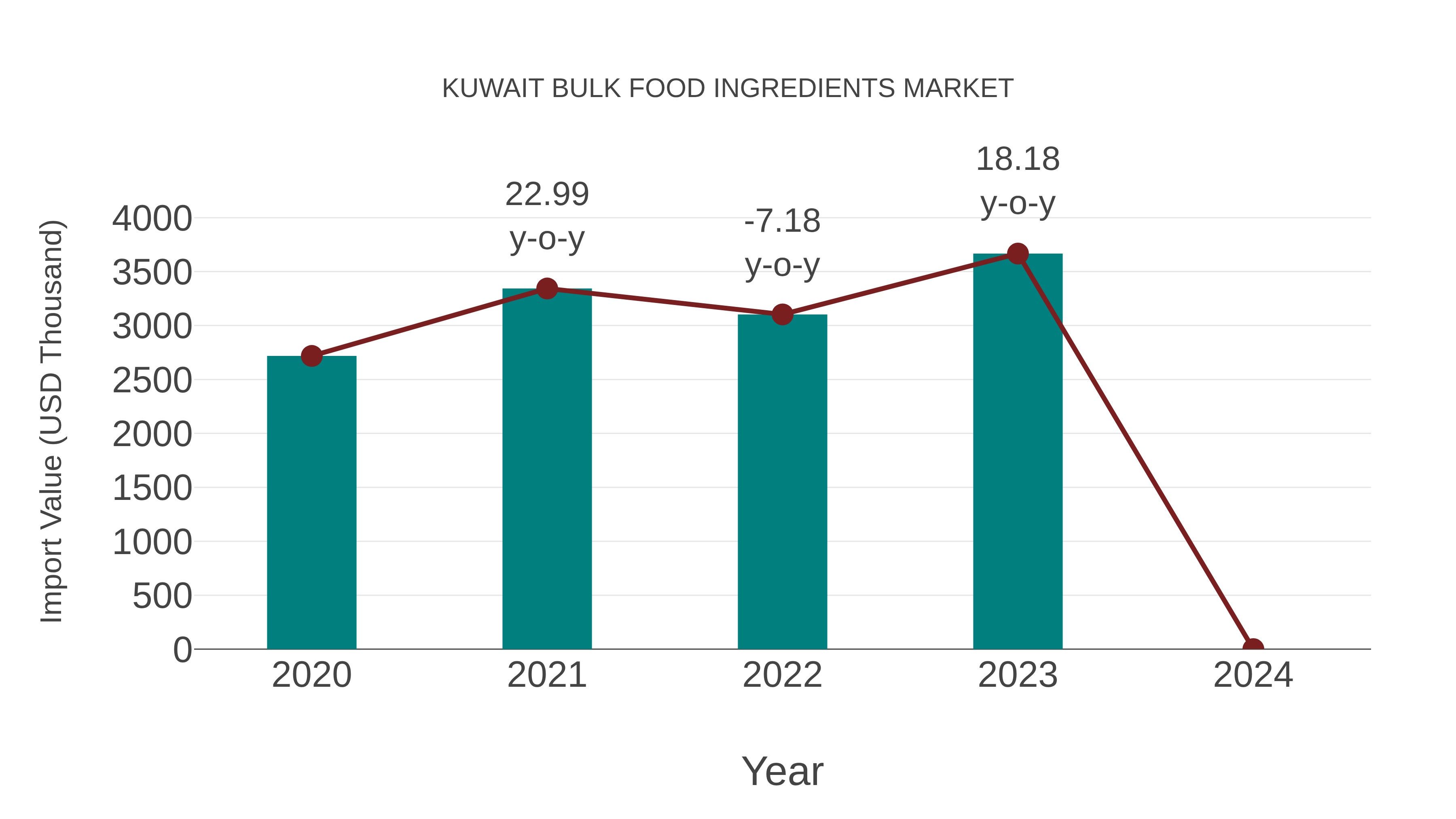
Kuwait Bulk Food Ingredients Market
The bulk food ingredients market in Kuwait is driven by the food processing industry`s demand for raw materials such as grains, spices, and sweeteners. This market is influenced by trends in food consumption, health and wellness, and the need for high-quality ingredients. Import dependence, supply chain efficiency, and food safety regulations are key factors shaping this market.
Drivers of the market
The Kuwait Bulk Food Ingredients market is driven by the expanding food and beverage industry and the growing consumer demand for convenience and nutrition. Bulk food ingredients, such as grains, spices, and additives, are essential for food processing and manufacturing. Kuwait increasing population and changing dietary preferences are driving the demand for diverse food ingredients, influencing the growth of the bulk food ingredients market.
Challenges of the market
The Kuwait Bulk Food Ingredients market confronts challenges such as the reliance on imports due to limited local production capabilities. Fluctuations in commodity prices and supply chain disruptions further impact market dynamics, necessitating robust supply chain management and strategic sourcing practices.
Government Policy of the market
Kuwait government has implemented policies to regulate and support the bulk food ingredients market. Regulations focus on ensuring food safety, quality standards, and supply chain transparency. The government promotes the use of sustainable and locally sourced ingredients where possible. Policies support research and development in food processing technologies to enhance product quality and nutritional value. Regulations ensure that ingredients meet international standards for hygiene and safety. These measures are designed to promote Kuwait food security and support the growth of the food manufacturing sector.
Key Highlights of the Report:
- Kuwait Bulk Food Ingredients Market Outlook
- Market Size of Kuwait Bulk Food Ingredients Market, 2025
- Forecast of Kuwait Bulk Food Ingredients Market, 2032
- Historical Data and Forecast of Kuwait Bulk Food Ingredients Revenues & Volume for the Period 2022-2032F
- Kuwait Bulk Food Ingredients Market Trend Evolution
- Kuwait Bulk Food Ingredients Market Drivers and Challenges
- Kuwait Bulk Food Ingredients Price Trends
- Kuwait Bulk Food Ingredients Porter's Five Forces
- Kuwait Bulk Food Ingredients Industry Life Cycle
- Historical Data and Forecast of Kuwait Bulk Food Ingredients Market Revenues & Volume By Application for the Period 2022-2032F
- Historical Data and Forecast of Kuwait Bulk Food Ingredients Market Revenues & Volume By Food for the Period 2022-2032F
- Historical Data and Forecast of Kuwait Bulk Food Ingredients Market Revenues & Volume By Beverages for the Period 2022-2032F
- Historical Data and Forecast of Kuwait Bulk Food Ingredients Market Revenues & Volume By Distribution Channel for the Period 2022-2032F
- Historical Data and Forecast of Kuwait Bulk Food Ingredients Market Revenues & Volume By Direct From Manufacturers for the Period 2022-2032F
- Historical Data and Forecast of Kuwait Bulk Food Ingredients Market Revenues & Volume By Distributors for the Period 2022-2032F
- Kuwait Bulk Food Ingredients Import Export Trade Statistics
- Market Opportunity Assessment By Application
- Market Opportunity Assessment By Distribution Channel
- Kuwait Bulk Food Ingredients Top Companies Market Share
- Kuwait Bulk Food Ingredients Competitive Benchmarking By Technical and Operational Parameters
- Kuwait Bulk Food Ingredients Company Profiles
- Kuwait Bulk Food Ingredients Key Strategic Recommendations






































