Kuwait Critical Infrastructure Protection Market Size & Growth Rate (2026-2032)
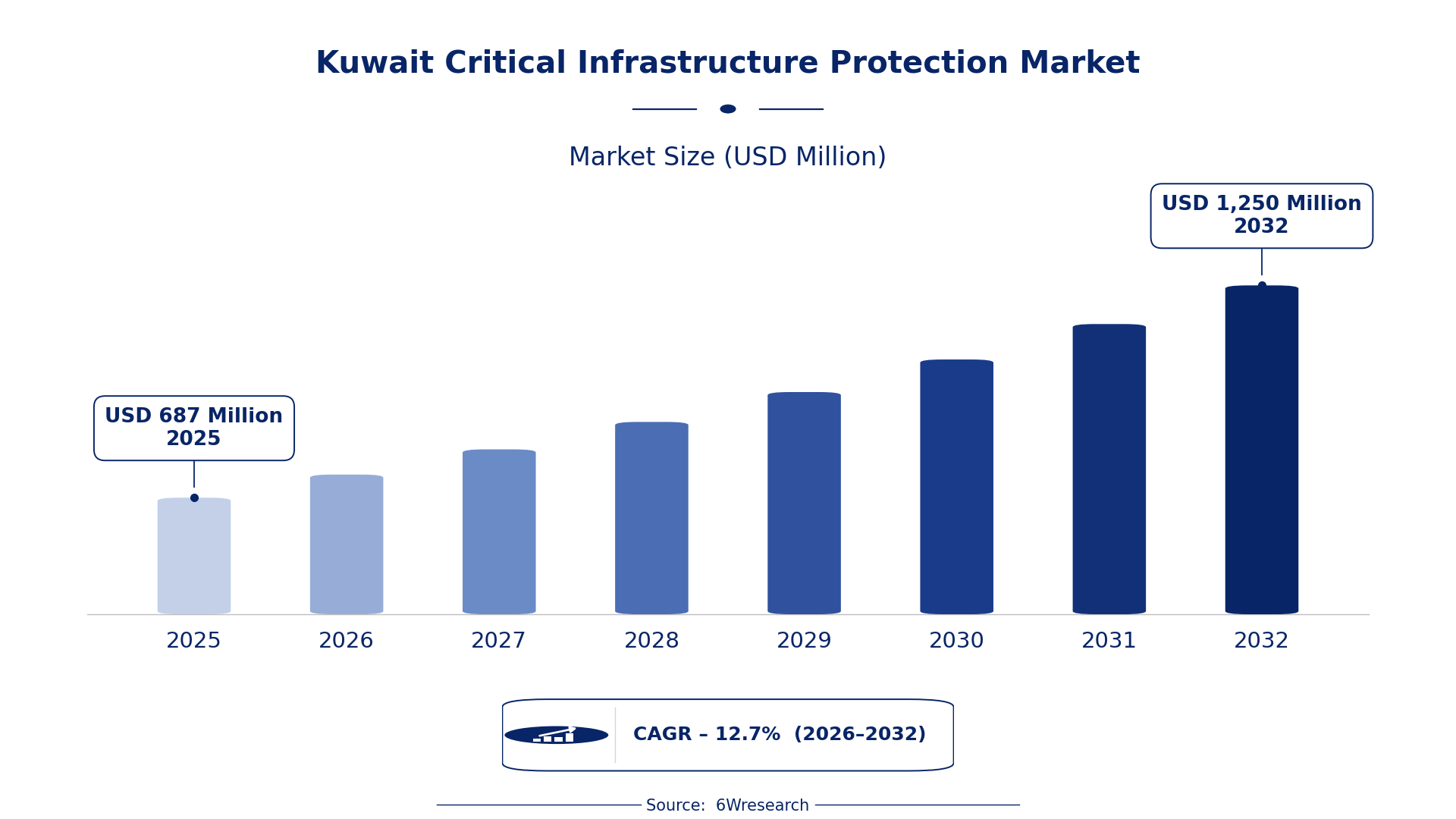
The Kuwait Critical Infrastructure Protection Market was estimated at USD 687 Million in 2025 and is projected to reach USD 1250 Million by 2032, growing at a CAGR of 12.7% from 2026 to 2032.
Kuwait Critical Infrastructure Protection Market Synopsis
The critical infrastructure in Kuwait is under increasing scrutiny as the nation prioritizes the safeguarding of essential assets like oil refineries and transportation networks. With recent global trends in cyber threats and terrorism, the urgency for enhanced protective measures has escalated, driving significant investments in security solutions across various sectors.
Security providers are stepping up, offering a range of advanced technologies and services aimed at mitigating risks associated with both physical and digital threats. The government's active role in establishing regulations and frameworks further underlines the commitment to infrastructure resilience, making the market a focal point for strategic security initiatives.
Kuwait Critical Infrastructure Protection Market Year-wise Growth Rate and Key Drivers
This graph illustrates the annual growth rates of the Kuwait Critical Infrastructure Protection Market from 2021 to 2032, highlighting a steady upward trajectory and projected expansion over the forecast period.
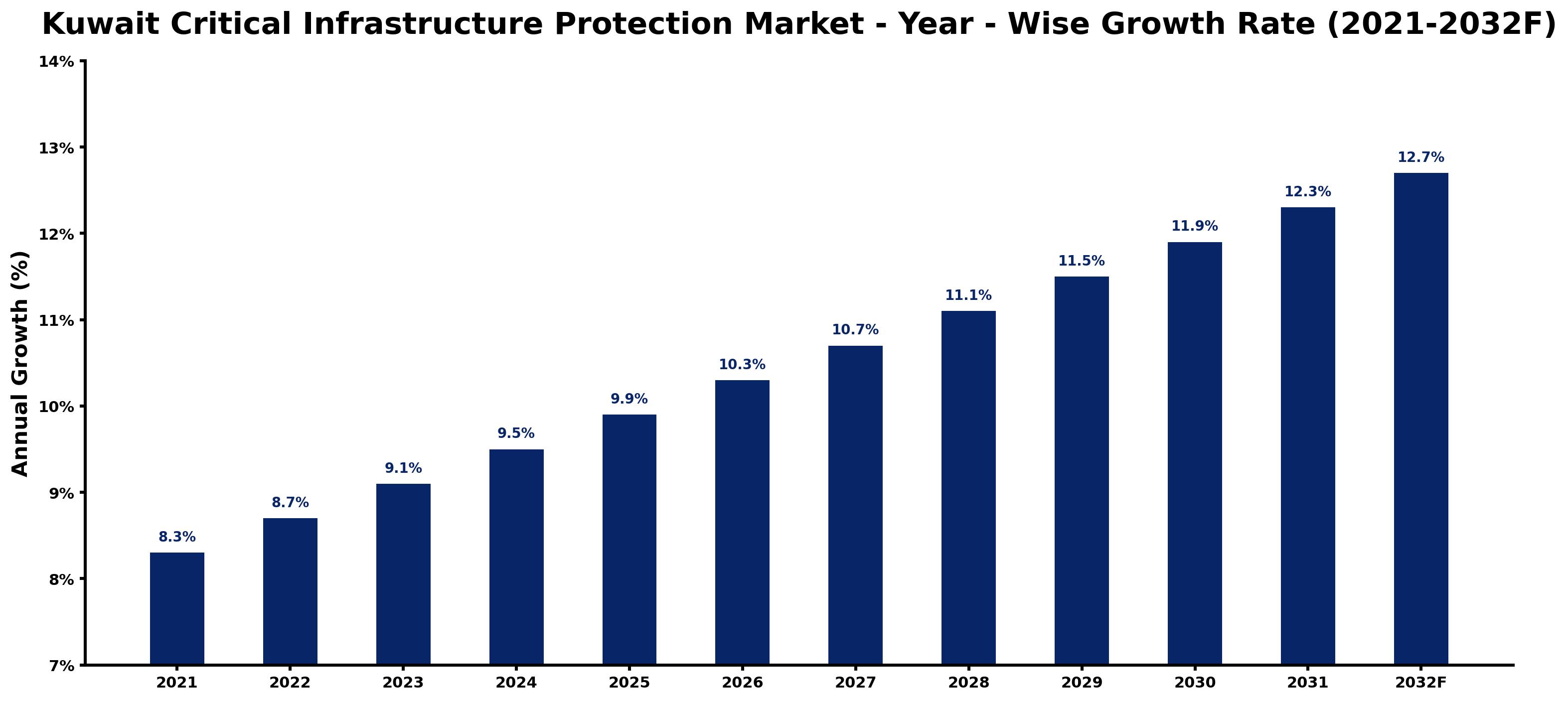
The table below presents the year‑wise growth rates along with the key drivers influencing the market
| Year | Growth Rate | Major Drivers |
| 2021 | 8.3% | Kuwait National Security Strategy prioritizing critical infrastructure safeguards. |
| 2022 | 8.7% | Growing cybersecurity regulations from Kuwait's Ministry of Interior. |
| 2023 | 9.1% | Increased investments in oil and gas facility security upgrades. |
| 2024 | 9.5% | Rising geopolitical tensions driving security enhancements for infrastructure. |
| 2025 | 9.9% | Adoption of advanced surveillance technologies by local firms. |
| 2026 | 10.3% | Government funding for public safety in urban development projects. |
| 2027 | 10.7% | National grid modernization initiatives requiring enhanced protection systems. |
| 2028 | 11.1% | Emerging threats highlighting vulnerabilities in existing infrastructure systems. |
| 2029 | 11.5% | Collaboration with international security firms boosting local capabilities. |
| 2030 | 11.9% | Implementation of new emergency response protocols mandated by law. |
| 2031 | 12.3% | Growing awareness of disaster recovery plans among businesses. |
| 2032 | 12.7% | Kuwait's Vision 2035 emphasizing resilience in critical infrastructures. |
Note: Market size estimations and growth projections presented in this report are based on 6Wresearch's proprietary forecasting methodology, utilizing the latest available industry data, government publications, and primary research inputs.
Kuwait Critical Infrastructure Protection Market Key Takeaways
Below are some of the specific key takeaways from the market, including:
- The market is fueled by rising concerns over cyberattacks and physical threats to essential services.
- Organizations are investing in integrated security measures that combine physical and cybersecurity protocols.
- Government initiatives are pushing for compliance with international standards for infrastructure security.
- Investment opportunities are expanding in areas such as surveillance systems and risk assessment services.
- Ongoing digital transformation across sectors is driving demand for advanced security technologies.
Evaluation of Restraints in Kuwait Critical Infrastructure Protection Market
Despite the positive outlook, the Kuwait Critical Infrastructure Protection Market faces several hurdles. Limited investment in cybersecurity, coupled with a shortage of skilled professionals, hampers the development of comprehensive security measures. Existing infrastructure vulnerabilities must also be addressed to keep pace with evolving threats. Effective coordination among various stakeholders remains a challenge, necessitating a concerted effort to elevate the security framework throughout the region.
Kuwait Critical Infrastructure Protection Market Trends
A key trend in the market is the growing focus on cybersecurity solutions designed to protect critical sectors. As digitization becomes more prevalent, the need for robust threat detection and secure communications has intensified. Additionally, organizations are recognizing the importance of synchronizing physical and cyber defenses, aiming for a unified security approach that addresses vulnerabilities from all angles.
There is also a noticeable shift towards investing in training and development programs aimed at cultivating a skilled workforce in security technology. Partnerships between governmental bodies and private companies are emerging, reinforcing a collaborative approach to enhancing the overall security posture of Kuwait's critical infrastructure.
Kuwait Critical Infrastructure Protection Market Opportunities
The demand for sophisticated security solutions represents a fertile ground for investment. Key areas for growth include advanced cybersecurity software, cutting-edge surveillance technologies, and access control systems. Companies that can provide tailored risk management consultancy services are well-positioned to capitalize on the increasing need for infrastructure security as Kuwait intensifies its focus on protecting vital assets.
Government Initiatives in the Kuwait Critical Infrastructure Protection Market
The Kuwaiti government plays a crucial role in shaping the Critical Infrastructure Protection Market through a series of targeted policies and initiatives. With an eye toward fortifying key assets against threats, the government has outlined a strategic framework that emphasizes resilience and responsiveness to both natural and man-made risks. This approach highlights the necessity for collaboration between public and private sectors to elevate infrastructure security.
- A recently launched initiative focuses on enhancing cybersecurity protocols across energy and transportation sectors, reinforcing defenses against digital threats.
- Ongoing efforts include the establishment of a National Framework for Critical Infrastructure Protection aimed at standardizing security practices across various industries.
- A planned public-private partnership program seeks to upgrade physical security measures in government facilities by 2027.
- Upcoming regulatory guidelines are expected to mandate regular risk assessments for critical infrastructure, enhancing compliance and security readiness.
- Current investments are being made in training programs designed to improve the skills of professionals working in the security sector.
Future Insights of the Kuwait Critical Infrastructure Protection Market
From 2026 to 2032, the Kuwait Critical Infrastructure Protection Market is on a trajectory of steady growth. As threats from cyberattacks and natural disasters remain persistent, the demand for comprehensive security solutions will continue to rise. The government’s commitment to modernizing critical infrastructure, particularly in vital sectors like energy and transportation, will be a primary driver for investment in advanced technologies and systems.
Kuwait Critical Infrastructure Protection Market Latest Developments
Recent activity within the Kuwait Critical Infrastructure Protection Market indicates a proactive shift toward strengthening security measures across various sectors. In the last year, stakeholders have increasingly recognized the need for integrated solutions that address both physical and cybersecurity threats, leading to notable advancements in protective technologies and strategies.
- A new cybersecurity framework was rolled out in early 2025, aimed at enhancing the security posture of national critical infrastructure.
- Current initiatives include the deployment of state-of-the-art intrusion detection systems across key transportation hubs, which is ongoing and slated for completion by late 2025.
- An upcoming training program for security personnel is scheduled to commence in mid-2026, designed to address skill gaps in critical security technologies.
- A major technology vendor has begun pilot testing a cutting-edge surveillance solution in various public facilities, which is expected to continue into early 2026.
- An initiative to integrate AI-driven risk assessment tools into existing security frameworks is set to begin in Q3 2025.
Kuwait Critical Infrastructure Protection Market - Key Attractiveness of the Report
- 10 Years of Market Numbers
- Historical Data Starting from 2022 to 2025
- Base Year: 2025
- Forecast Data until 2032
- Key Performance Indicators Impacting the Market
- Major Upcoming Developments and Projects
Key Highlights of the Report:
- Kuwait Critical Infrastructure Protection Market Outlook
- Market Size of Kuwait Critical Infrastructure Protection Market, 2025
- Forecast of Kuwait Critical Infrastructure Protection Market, 2032
- Historical Data and Forecast of Kuwait Critical Infrastructure Protection Revenues & Volume for the Period 2022-2032F
- Kuwait Critical Infrastructure Protection Market Trend Evolution
- Kuwait Critical Infrastructure Protection Market Drivers and Challenges
- Kuwait Critical Infrastructure Protection Price Trends
- Kuwait Critical Infrastructure Protection Porter's Five Forces
- Kuwait Critical Infrastructure Protection Industry Life Cycle
- Historical Data and Forecast of Kuwait Critical Infrastructure Protection Market Revenues & Volume By Solution for the Period 2022-2032F
- Historical Data and Forecast of Kuwait Critical Infrastructure Protection Market Revenues & Volume By Physical Safety for the Period 2022-2032F
- Historical Data and Forecast of Kuwait Critical Infrastructure Protection Market Revenues & Volume By Security Video Surveillance Systems for the Period 2022-2032F
- Historical Data and Forecast of Kuwait Critical Infrastructure Protection Market Revenues & Volume By Screening for the Period 2022-2032F
- Historical Data and Forecast of Kuwait Critical Infrastructure Protection Market Revenues & Volume By Scanning for the Period 2022-2032F
- Historical Data and Forecast of Kuwait Critical Infrastructure Protection Market Revenues & Volume By Cybersecurity for the Period 2022-2032F
- Historical Data and Forecast of Kuwait Critical Infrastructure Protection Market Revenues & Volume By Encryption for the Period 2022-2032F
- Historical Data and Forecast of Kuwait Critical Infrastructure Protection Market Revenues & Volume By Threat Intelligence for the Period 2022-2032F
- Historical Data and Forecast of Kuwait Critical Infrastructure Protection Market Revenues & Volume By Component for the Period 2022-2032F
- Historical Data and Forecast of Kuwait Critical Infrastructure Protection Market Revenues & Volume By Solution for the Period 2022-2032F
- Historical Data and Forecast of Kuwait Critical Infrastructure Protection Market Revenues & Volume By Services for the Period 2022-2032F
- Historical Data and Forecast of Kuwait Critical Infrastructure Protection Market Revenues & Volume By Vertical for the Period 2022-2032F
- Historical Data and Forecast of Kuwait Critical Infrastructure Protection Market Revenues & Volume By Financial Institutions for the Period 2022-2032F
- Historical Data and Forecast of Kuwait Critical Infrastructure Protection Market Revenues & Volume By Government for the Period 2022-2032F
- Historical Data and Forecast of Kuwait Critical Infrastructure Protection Market Revenues & Volume By Defense for the Period 2022-2032F
- Historical Data and Forecast of Kuwait Critical Infrastructure Protection Market Revenues & Volume By Transport and Logistics for the Period 2022-2032F
- Historical Data and Forecast of Kuwait Critical Infrastructure Protection Market Revenues & Volume By Energy and Power for the Period 2022-2032F
- Historical Data and Forecast of Kuwait Critical Infrastructure Protection Market Revenues & Volume By Commercial Sector for the Period 2022-2032F
- Historical Data and Forecast of Kuwait Critical Infrastructure Protection Market Revenues & Volume By Telecom for the Period 2022-2032F
- Historical Data and Forecast of Kuwait Critical Infrastructure Protection Market Revenues & Volume By Chemicals and Manufacturing for the Period 2022-2032F
- Kuwait Critical Infrastructure Protection Import Export Trade Statistics
- Market Opportunity Assessment By Solution
- Market Opportunity Assessment By Cybersecurity
- Market Opportunity Assessment By Component
- Market Opportunity Assessment By Vertical
- Kuwait Critical Infrastructure Protection Top Companies Market Share
- Kuwait Critical Infrastructure Protection Competitive Benchmarking By Technical and Operational Parameters
- Kuwait Critical Infrastructure Protection Company Profiles
- Kuwait Critical Infrastructure Protection Key Strategic Recommendations






































