Kuwait MVNO Market Size & Growth Rate (2026-2032)
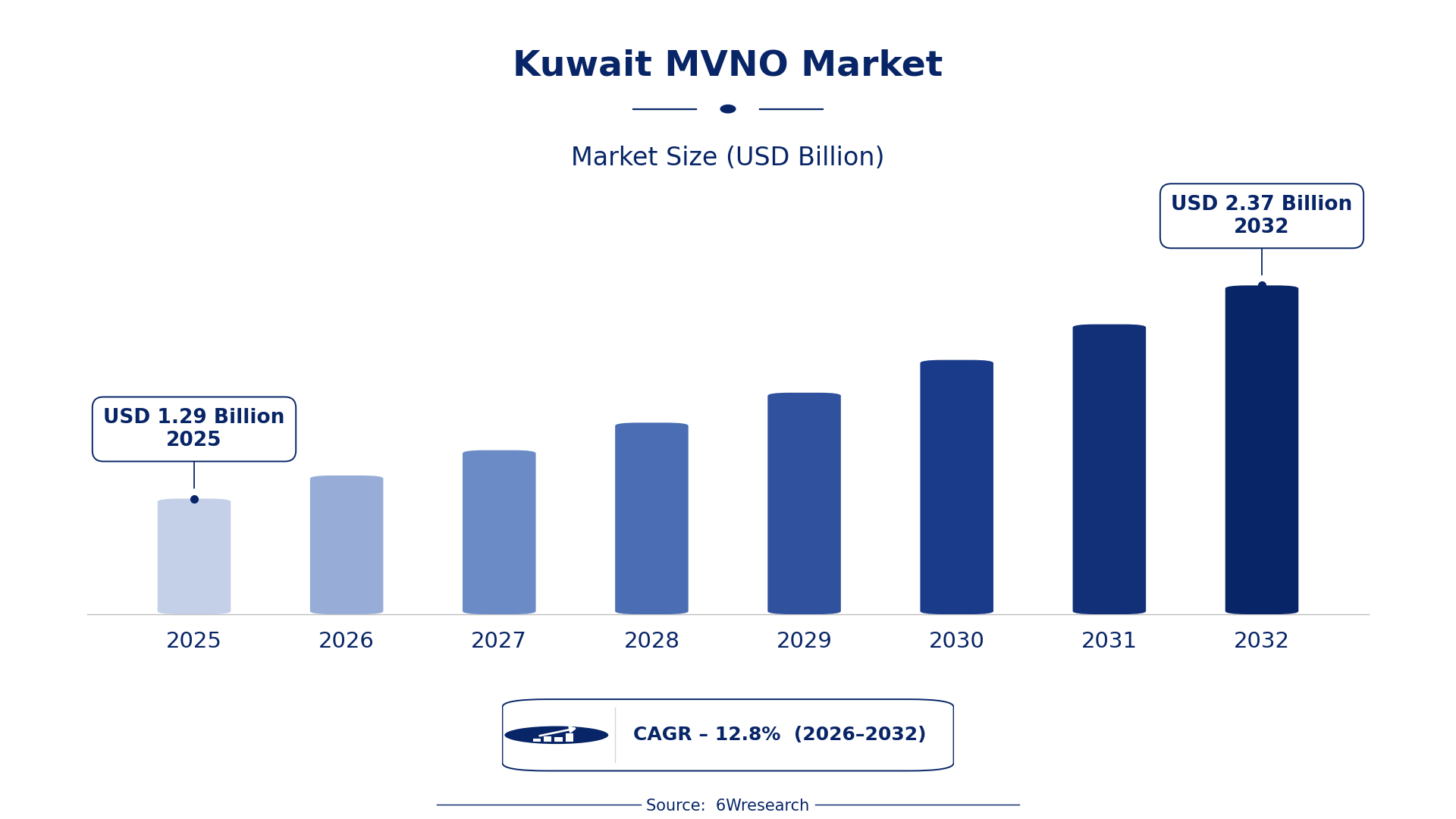
The Kuwait MVNO Market was estimated at USD 1293 Million in 2025 and is projected to reach USD 2366 Million by 2032, growing at a CAGR of 12.8% from 2026 to 2032.
Kuwait MVNO Market Synopsis
The Kuwait MVNO market is on an upward trajectory, showing promising signs of growth amidst intense competition. With a high mobile penetration rate, the existing MVNOs are actively vying for consumer attention, presenting tailored offerings that cater to diverse customer needs.
Looking ahead, the market's dynamics are set to shift as new entrants bring innovative services and pricing models to the forefront. This competition is expected to foster an environment ripe for expansion, particularly as digital technologies and enhanced customer experiences become key differentiators.
Kuwait MVNO Market Year-wise Growth Rate and Key Drivers
This graph illustrates the annual growth rates of the Kuwait MVNO Market from 2021 to 2032, highlighting a steady upward trajectory and projected expansion over the forecast period.
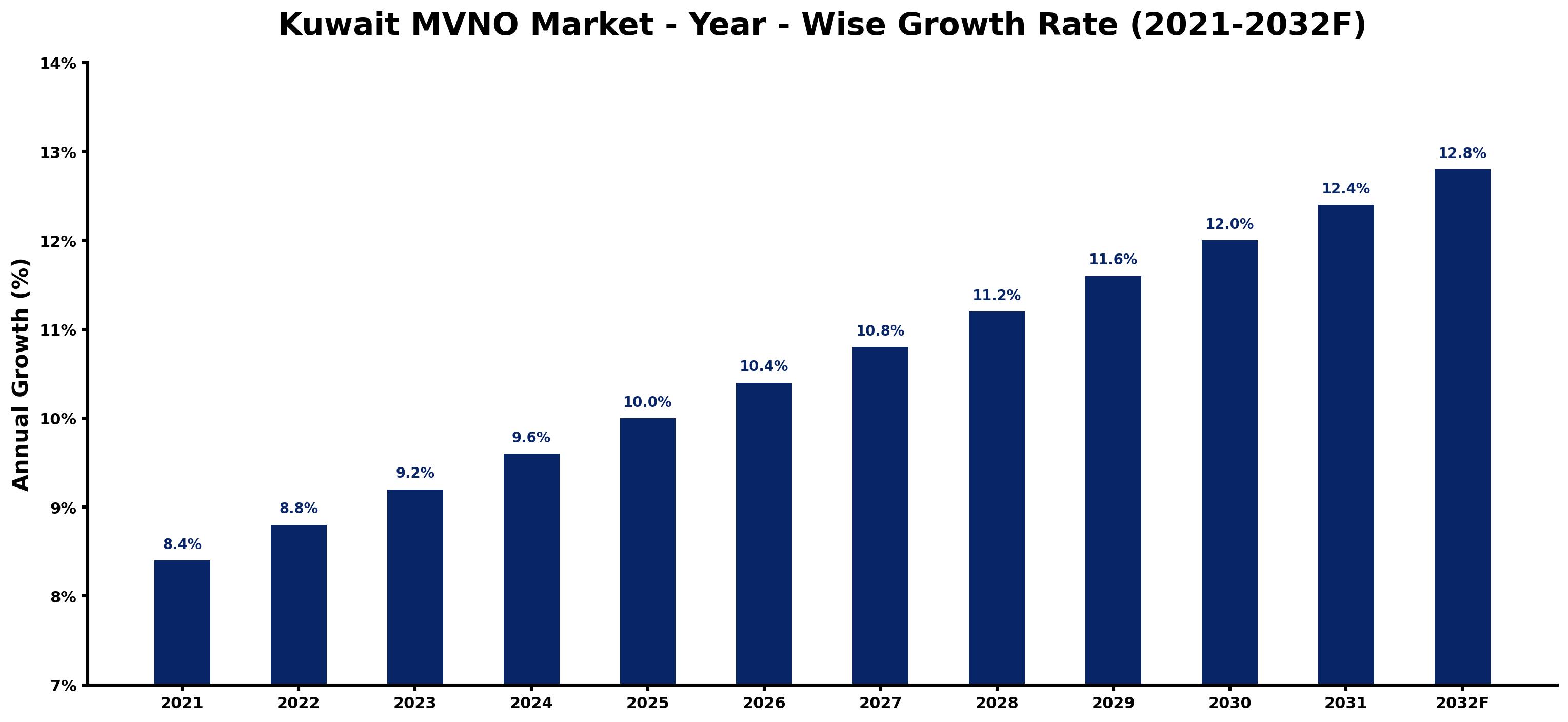
The table below presents the year‑wise growth rates along with the key drivers influencing the market
| Year | Growth Rate | Major Drivers |
| 2021 | 8.4% | Hinging on TRA's regulatory support for market entrants. |
| 2022 | 8.8% | Increased smartphone penetration driving data plan subscriptions. |
| 2023 | 9.2% | Youth-centric initiatives promoting digital engagement strategies. |
| 2024 | 9.6% | Government policies enhancing telecommunications competition landscape. |
| 2025 | 10.0% | Emerging trends in social media usage increase data demand. |
| 2026 | 10.4% | Local firms investing in customized MVNO branding experiences. |
| 2027 | 10.8% | Rising expatriate population boosting diverse service offerings. |
| 2028 | 11.2% | Partnerships with entertainment platforms expanding bundled services. |
| 2029 | 11.6% | E-sports popularity fueling demand for high-speed mobile data. |
| 2030 | 12.0% | Launch of 5G services attracting tech-savvy consumers. |
| 2031 | 12.4% | Regulatory frameworks fostering innovation in telecommunication solutions. |
| 2032 | 12.8% | Sustainable practices attracting environmentally-conscious consumer segments. |
Note: Market size estimations and growth projections presented in this report are based on 6Wresearch's proprietary forecasting methodology, utilizing the latest available industry data, government publications, and primary research inputs.
Kuwait MVNO Market Key Takeaways
Below are some of the specific key takeaways from the market, including:
- The market is experiencing a surge in competition with new MVNOs entering to target niche segments.
- Innovative pricing strategies and value-added services are vital for capturing market share.
- Expatriates and youth segments present lucrative opportunities for MVNOs.
- The Kuwaiti government is actively promoting competition through supportive regulatory policies.
- Technological advancements, including the rollout of 5G, will influence service offerings significantly.
Evaluation of Restraints in Kuwait MVNO Market
Several restraints hold back the growth of the Kuwait MVNO market. The dominance of established mobile network operators (MNOs) creates formidable barriers for new entrants, limiting their ability to gain traction. Regulatory hurdles and licensing requirements can further complicate market entry, stifling innovation. Additionally, Kuwait’s relatively small population constrains the potential customer base, making differentiation and market penetration more challenging for MVNOs.
Kuwait MVNO Market Trends
Emerging trends in the Kuwait MVNO market reflect a shift towards greater personalization and customization of mobile services. As competition intensifies, MVNOs are increasingly focused on innovative pricing structures and attractive data packages to appeal to budget-conscious consumers. The growing prevalence of digital services is prompting operators to enhance their mobile offerings, integrating advanced technology to meet evolving consumer expectations.
Kuwait MVNO Market Opportunities
Opportunities for growth in the Kuwait MVNO market lie in the ability of operators to tap into specific consumer demographics, such as expatriates seeking affordable international calling plans. Additionally, partnerships with established telecom operators can facilitate market entry and service enhancement. The anticipated rollout of 5G technology presents another avenue for MVNOs to differentiate their offerings, making it essential for operators to innovate and adapt to consumer demands.
Government Initiatives in the Kuwait MVNO Market
Government policies in Kuwait are shaping the MVNO market by fostering a competitive and innovative environment. The Communications and Information Technology Regulatory Authority (CITRA) plays a crucial role in regulating the sector, ensuring fair practices and consumer protection. These initiatives not only encourage new market entrants but also enhance service quality across the board.
- A regulatory framework introduced in 2025 mandating billing transparency to enhance consumer trust.
- Ongoing initiatives by CITRA to streamline licensing processes for new MVNOs, promoting market entry.
- A national digital infrastructure upgrade programme now in its rollout phase to support enhanced mobile services.
- Upcoming public-private partnerships expected to expand telecom infrastructure access by 2028.
Future Insights of the Kuwait MVNO Market
As we look towards 2026-2032, the Kuwait MVNO market is likely to witness substantial growth driven by increasing consumer demand for flexible and affordable mobile services. The ongoing support from the government to boost competition will create new opportunities for MVNOs to innovate and expand. on top of that, the rising adoption of smartphones and digital services is expected to further accelerate market growth, making it an attractive landscape for both existing players and new entrants.
Kuwait MVNO Market Latest Developments
In the past year, the Kuwait MVNO market has seen various developments indicating a vibrant and competitive atmosphere. Operators are not only looking to enhance their service offerings but also to better cater to the distinct needs of their customer segments.
- A major technology vendor launched an advanced data analytics platform in Q1 2025 to help MVNOs better understand consumer behavior.
- An initiative that began in mid-2025 and remains underway focuses on improving customer service through enhanced training programs for support staff.
- In early 2025, a prominent MVNO introduced a loyalty program aimed at expatriates, providing them with incentives for frequent usage.
- A rollout expected to begin in the second half of 2026 aims to introduce 5G services across major urban areas, enhancing user experience.
Kuwait MVNO Market - Key Attractiveness of the Report
- 10 Years of Market Numbers
- Historical Data Starting from 2022 to 2025
- Base Year: 2025
- Forecast Data until 2032
- Key Performance Indicators Impacting the Market
- Major Upcoming Developments and Projects
Key Highlights of the Report:
- Kuwait MVNO Market Outlook
- Market Size of Kuwait MVNO Market, 2025
- Forecast of Kuwait MVNO Market, 2032
- Historical Data and Forecast of Kuwait MVNO Revenues & Volume for the Period 2022-2032F
- Kuwait MVNO Market Trend Evolution
- Kuwait MVNO Market Drivers and Challenges
- Kuwait MVNO Price Trends
- Kuwait MVNO Porter's Five Forces
- Kuwait MVNO Industry Life Cycle
- Historical Data and Forecast of Kuwait MVNO Market Revenues & Volume By Operational Model for the Period 2022-2032F
- Historical Data and Forecast of Kuwait MVNO Market Revenues & Volume By Reseller for the Period 2022-2032F
- Historical Data and Forecast of Kuwait MVNO Market Revenues & Volume By Service Operator for the Period 2022-2032F
- Historical Data and Forecast of Kuwait MVNO Market Revenues & Volume By Full MVNO for the Period 2022-2032F
- Historical Data and Forecast of Kuwait MVNO Market Revenues & Volume By Organization Size for the Period 2022-2032F
- Historical Data and Forecast of Kuwait MVNO Market Revenues & Volume By SMES for the Period 2022-2032F
- Historical Data and Forecast of Kuwait MVNO Market Revenues & Volume By Large Enterprise for the Period 2022-2032F
- Historical Data and Forecast of Kuwait MVNO Market Revenues & Volume By Subscriber for the Period 2022-2032F
- Historical Data and Forecast of Kuwait MVNO Market Revenues & Volume By Consumer for the Period 2022-2032F
- Historical Data and Forecast of Kuwait MVNO Market Revenues & Volume By Enterprise for the Period 2022-2032F
- Kuwait MVNO Import Export Trade Statistics
- Market Opportunity Assessment By Operational Model
- Market Opportunity Assessment By Organization Size
- Market Opportunity Assessment By Subscriber
- Kuwait MVNO Top Companies Market Share
- Kuwait MVNO Competitive Benchmarking By Technical and Operational Parameters
- Kuwait MVNO Company Profiles
- Kuwait MVNO Key Strategic Recommendations






































