Kuwait Small Wind Turbine Market: Import Trend Analysis
Kuwait small wind turbine market experienced a significant import trend with a Compound Annual Growth Rate (CAGR) of 104.08% from 2020 to 2024. This surge in imports indicates a strong demand shift towards renewable energy sources, reflecting positive market stability and potential for continued growth in the sector.
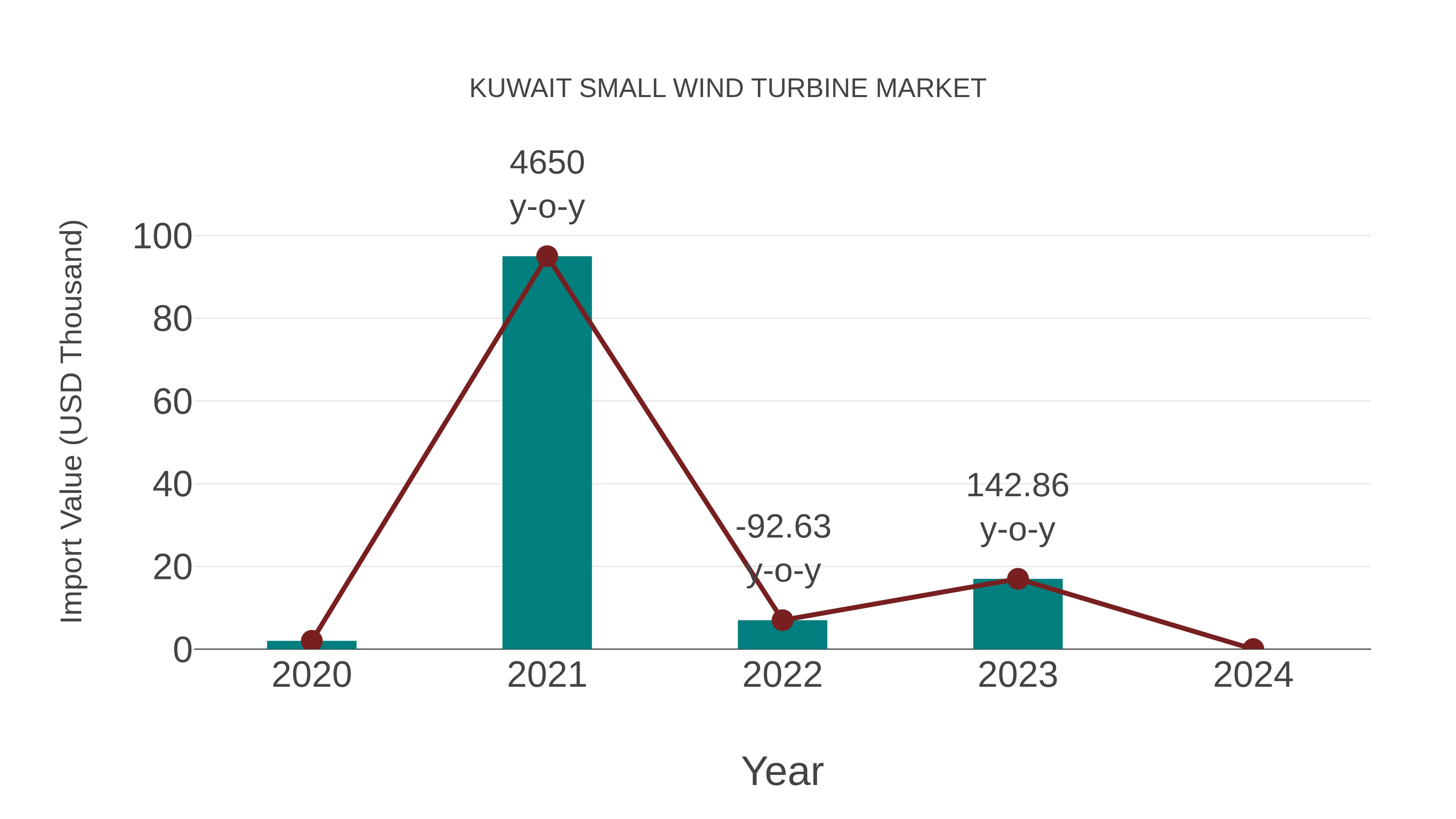
Kuwait Small Wind Turbine Market Overview
The Kuwait small wind turbine market is currently in a nascent stage with growing potential for development. Factors driving the market include the country`s increasing focus on renewable energy sources, government initiatives promoting clean energy, and a desire to reduce reliance on traditional fossil fuels. Small wind turbines are seen as a viable option for decentralized power generation, especially in remote areas where grid connectivity is limited. Key players in the market are focusing on technological advancements to improve efficiency and durability of small wind turbines. However, challenges such as high initial costs, regulatory barriers, and limited awareness among consumers hinder the market growth. Overall, the Kuwait small wind turbine market presents opportunities for growth in the coming years as the country strives to achieve its renewable energy targets.
Kuwait Small Wind Turbine Market Trends
The Kuwait Small Wind Turbine Market is experiencing growth driven by increasing awareness of renewable energy sources and a push towards sustainability. Key trends in the market include a rising demand for off-grid power solutions in remote areas, government initiatives to promote clean energy generation, and advancements in technology leading to more efficient and cost-effective small wind turbines. Additionally, the growing focus on reducing carbon emissions and diversifying the energy mix in Kuwait is further fueling the adoption of small wind turbines. Market players are also focusing on product innovation and strategic partnerships to capitalize on the opportunities presented by the market trend towards renewable energy solutions.
Kuwait Small Wind Turbine Market Challenges
In the Kuwait Small Wind Turbine Market, several challenges are faced, including the high initial investment costs associated with installing wind turbines, limited availability of suitable land for wind projects, inconsistent wind patterns in the region, and a lack of government incentives or policies to promote renewable energy sources like wind power. Additionally, a lack of awareness and understanding among consumers about the benefits of small wind turbines hinders market growth. Furthermore, the dominance of traditional energy sources and the relatively low electricity prices in Kuwait pose challenges for the competitiveness of small wind turbines in the market. Overcoming these challenges will require strategic investments, regulatory support, public awareness campaigns, and technological advancements to improve the efficiency and cost-effectiveness of small wind turbines in Kuwait.
Kuwait Small Wind Turbine Market Investment Opportunities
In the Kuwait Small Wind Turbine Market, there are significant investment opportunities for companies operating in the renewable energy sector. With a growing focus on sustainability and reducing reliance on traditional fossil fuels, the demand for small wind turbines in Kuwait is on the rise. Investors can capitalize on this trend by entering the market with innovative and efficient small wind turbine technologies that cater to the specific needs and conditions of Kuwait. Additionally, government incentives and initiatives to promote renewable energy adoption further enhance the investment potential in this sector. By strategically positioning themselves in the Kuwait Small Wind Turbine Market, investors can benefit from the country`s commitment to clean energy transition and contribute to its renewable energy goals.
Kuwait Small Wind Turbine Market Government Policy
The Kuwaiti government has implemented various policies to support the development of the small wind turbine market in the country. These policies include the Renewable Energy Project (REP), which aims to increase the share of renewable energy sources in the country`s energy mix. The government offers incentives such as feed-in tariffs and tax exemptions to encourage investments in small wind turbines. Additionally, the Kuwait Institute for Scientific Research (KISR) plays a key role in research and development initiatives to promote the adoption of small wind turbines. Overall, these policies demonstrate the government`s commitment to fostering the growth of the small wind turbine market in Kuwait and transitioning towards a more sustainable energy future.
Kuwait Small Wind Turbine Market Future Outlook
The future outlook for the Kuwait Small Wind Turbine Market appears promising due to increasing government focus on renewable energy and sustainability. With Kuwait`s commitment to reducing its carbon footprint and diversifying its energy sources, there is a growing interest in small wind turbines as a decentralized energy solution. The market is expected to benefit from favorable government policies, incentives, and investments in renewable energy infrastructure. Additionally, rising awareness about the benefits of clean energy and the potential cost savings associated with small wind turbines are likely to drive market growth. Overall, the Kuwait Small Wind Turbine Market is projected to expand steadily in the coming years, presenting opportunities for market players to capitalize on the country`s shift towards sustainable energy practices.
Key Highlights of the Report:
- Kuwait Small Wind Turbine Market Outlook
- Market Size of Kuwait Small Wind Turbine Market, 2025
- Forecast of Kuwait Small Wind Turbine Market, 2032
- Historical Data and Forecast of Kuwait Small Wind Turbine Revenues & Volume for the Period 2022 - 2032F
- Kuwait Small Wind Turbine Market Trend Evolution
- Kuwait Small Wind Turbine Market Drivers and Challenges
- Kuwait Small Wind Turbine Price Trends
- Kuwait Small Wind Turbine Porter's Five Forces
- Kuwait Small Wind Turbine Industry Life Cycle
- Historical Data and Forecast of Kuwait Small Wind Turbine Market Revenues & Volume By Axis Type for the Period 2022 - 2032F
- Historical Data and Forecast of Kuwait Small Wind Turbine Market Revenues & Volume By Horizontal Axis Wind Turbine for the Period 2022 - 2032F
- Historical Data and Forecast of Kuwait Small Wind Turbine Market Revenues & Volume By Vertical Axis Wind Turbine for the Period 2022 - 2032F
- Historical Data and Forecast of Kuwait Small Wind Turbine Market Revenues & Volume By Application for the Period 2022 - 2032F
- Historical Data and Forecast of Kuwait Small Wind Turbine Market Revenues & Volume By On-grid for the Period 2022 - 2032F
- Historical Data and Forecast of Kuwait Small Wind Turbine Market Revenues & Volume By Off-grid for the Period 2022 - 2032F
- Kuwait Small Wind Turbine Import Export Trade Statistics
- Market Opportunity Assessment By Axis Type
- Market Opportunity Assessment By Application
- Kuwait Small Wind Turbine Top Companies Market Share
- Kuwait Small Wind Turbine Competitive Benchmarking By Technical and Operational Parameters
- Kuwait Small Wind Turbine Company Profiles
- Kuwait Small Wind Turbine Key Strategic Recommendations






































