Lithuania Nickel Market Size (2020-2030)
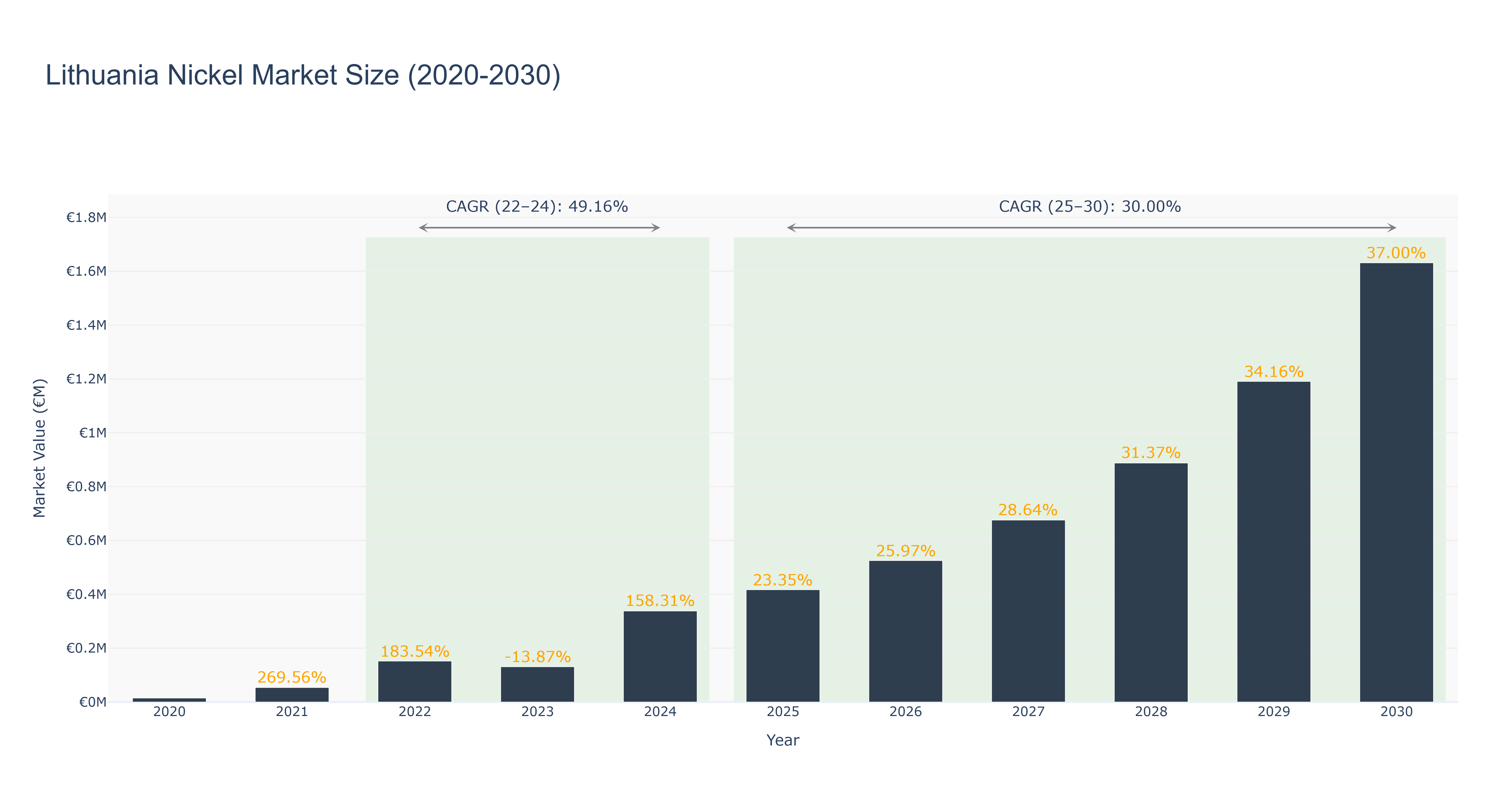
The Lithuania Nickel Market has demonstrated significant volatility and growth between 2020 and 2024, peaking at a market size of €337.93 thousand in 2024, following a remarkable actual CAGR of 49.16% during the 2022-2024 period. Despite a sharp decline of 13.87% in 2023, driven by market corrections and potential supply chain disruptions, the market rebounded robustly in 2024 with a growth rate of 158.31%. Looking ahead, the forecasted period from 2025 to 2030 projects a more stable growth trajectory, with a projected CAGR of 30.00% and market sizes reaching €1.63 million by 2030. This growth will likely be fueled by increasing demand for nickel in electric vehicle batteries and renewable energy technologies, alongside rising investments in mining and processing infrastructure in Lithuania to capitalize on its mineral resources.
Lithuania Nickel Market: Production & Trade Performance (2019-2025)
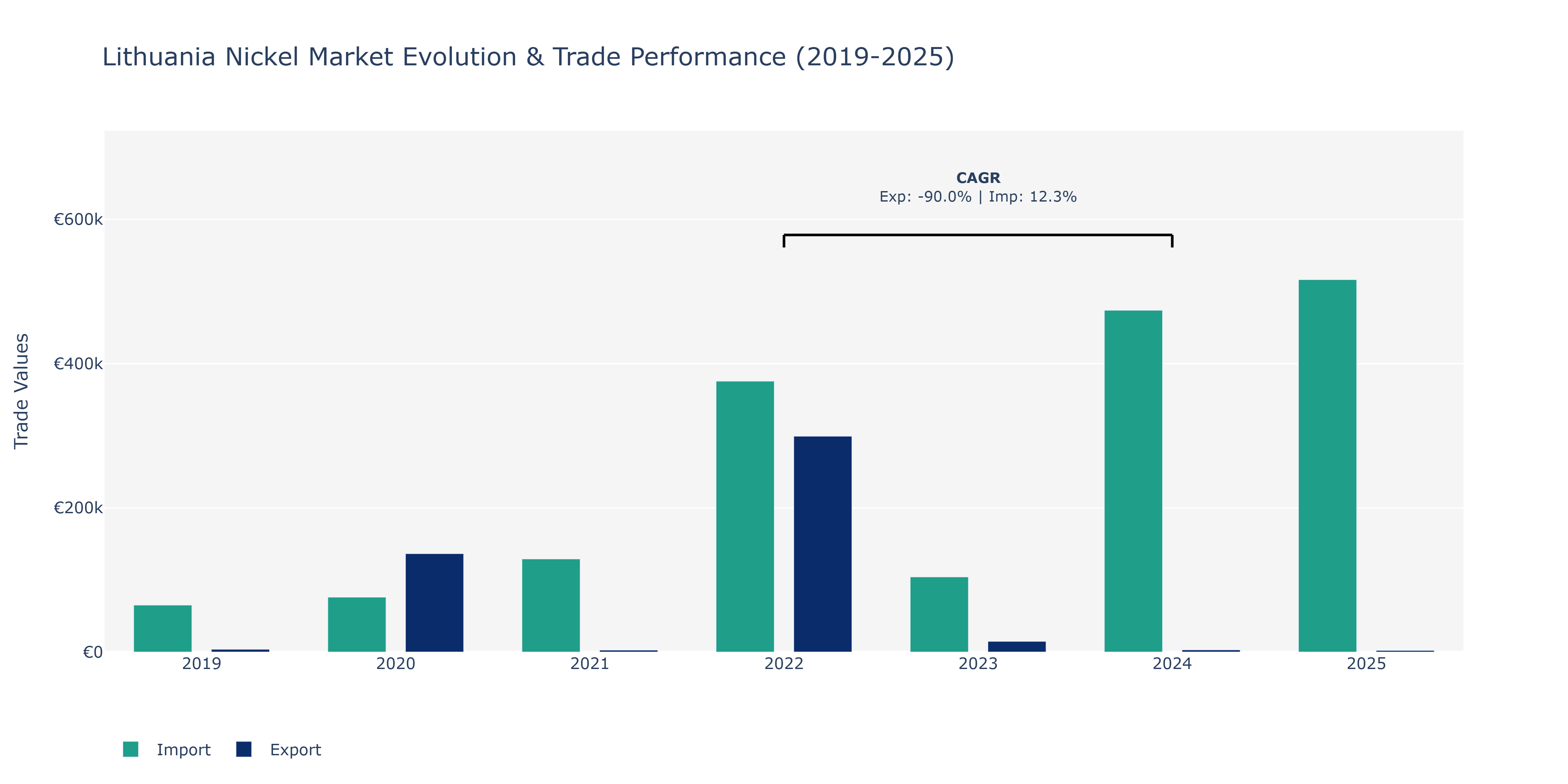
Between 2019 and 2025, Lithuania's Nickel Market saw notable fluctuations in exports and imports. In 2022, both exports and imports peaked, with €299.24 thousand in exports and €375.58 thousand in imports, showcasing a substantial increase from previous years. However, a sharp decline in exports to €3.02 thousand was observed in 2024, while imports surged to €473.9 thousand. This significant decrease in exports could be attributed to factors such as changes in global demand for nickel products or fluctuations in market prices. Conversely, the notable increase in imports might indicate a strategic decision to meet domestic demand or a shift in supply chains. The following year, 2025, showed a slight improvement in exports to €2.27 thousand and a continued rise in imports to €516.39 thousand, potentially influenced by evolving trade agreements or market dynamics. Such fluctuations emphasize the market's sensitivity to external factors and the need for strategic planning to navigate uncertainties in the global nickel market.
Key Highlights of the Report:
- Lithuania Nickel Market Outlook
- Market Size of Lithuania Nickel Market, 2025
- Forecast of Lithuania Nickel Market, 2032
- Historical Data and Forecast of Lithuania Nickel Revenues & Volume for the Period 2022 - 2032F
- Lithuania Nickel Market Trend Evolution
- Lithuania Nickel Market Drivers and Challenges
- Lithuania Nickel Price Trends
- Lithuania Nickel Porter`s Five Forces
- Lithuania Nickel Industry Life Cycle
- Historical Data and Forecast of Lithuania Nickel Market Revenues & Volume By Applications for the Period 2022 - 2032F
- Historical Data and Forecast of Lithuania Nickel Market Revenues & Volume By Stainless Steel for the Period 2022 - 2032F
- Historical Data and Forecast of Lithuania Nickel Market Revenues & Volume By Super Magnets for the Period 2022 - 2032F
- Historical Data and Forecast of Lithuania Nickel Market Revenues & Volume By Electroplating Chemicals for the Period 2022 - 2032F
- Historical Data and Forecast of Lithuania Nickel Market Revenues & Volume By Rechargeable Batteries for the Period 2022 - 2032F
- Historical Data and Forecast of Lithuania Nickel Market Revenues & Volume By Others for the Period 2022 - 2032F
- Lithuania Nickel Import Export Trade Statistics
- Market Opportunity Assessment By Applications
- Lithuania Nickel Top Companies Market Share
- Lithuania Nickel Competitive Benchmarking By Technical and Operational Parameters
- Lithuania Nickel Company Profiles
- Lithuania Nickel Key Strategic Recommendations






































