Malaysia Alternative Building Materials Market Size, Share & Growth Rate
The Malaysia Alternative Building Materials Market was estimated at USD 191 Million in 2025 and is projected to reach USD 249 Million by 2032, growing at a CAGR of 3.9% from 2026 to 2032. This growth is largely driven by increasing awareness of sustainability and energy efficiency among builders and developers, alongside government initiatives that promote the use of green materials. As Malaysia's construction sector embraces innovation, the demand for alternative materials such as bamboo and recycled composites is expected to rise significantly.
Malaysia Alternative Building Materials Market Year-wise Growth Rate and Key Drivers
This graph highlights how the Malaysia Alternative Building Materials Market has steadily grown over the years, supported by major growth factors.
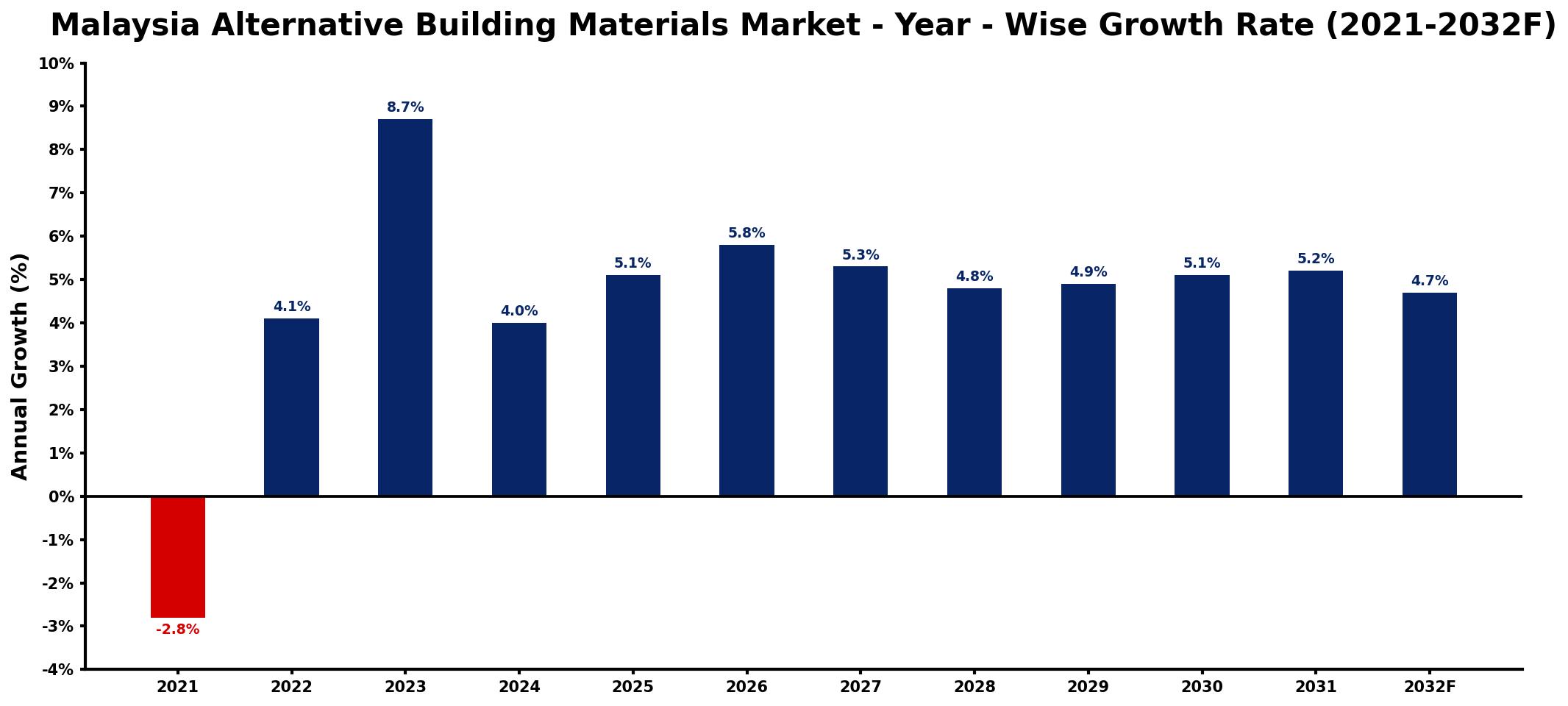
The table below presents the year‑wise growth rates along with the key drivers influencing the market
| Year | Growth Rate | Major Drivers |
| 2021 | -2.8% | decrease in construction investments |
| 2022 | 4.1% | rise in eco-friendly projects |
| 2023 | 8.7% | increased urbanization and infrastructure |
| 2024 | 4.0% | growing demand for sustainable solutions |
| 2025 | 5.1% | expansion of green certification programs |
| 2026 | 5.8% | higher government funding initiatives |
| 2027 | 5.3% | surge in residential construction activities |
| 2028 | 4.8% | increased adoption of innovative technologies |
| 2029 | 4.9% | growing awareness of environmental impact |
| 2030 | 5.1% | rising interest in energy efficiency |
| 2031 | 5.2% | increased foreign investment opportunities |
| 2032 | 4.7% | growing collaboration in research initiatives |
Note: Market size estimations and growth projections presented in this report are based on 6Wresearch's proprietary forecasting methodology, utilizing the latest available industry data, government publications, and primary research inputs.
Malaysia Alternative Building Materials Market Synopsis
In recent years, the Malaysian construction landscape has been evolving, with a noticeable shift towards alternative building materials. This transition is set against a backdrop of rising environmental concerns and the need for sustainable practices in construction. Looking ahead, the market is poised for substantial growth as stakeholders increasingly recognize the benefits of eco-friendly materials.
The demand for materials such as recycled plastics and sustainable composites is gaining momentum, fueled by both consumer awareness and regulatory measures. As these materials offer enhanced energy efficiency and reduced carbon footprints, their integration into building practices is becoming not only preferable but essential for the future of construction in Malaysia.
Malaysia Alternative Building Materials Market Key Takeaways
- The market is on an upward trajectory, driven by sustainability and government policies.
- Recycled and eco-friendly materials are becoming increasingly popular among construction firms.
- Investor interest in innovative building solutions is expected to rise significantly.
- Quality consistency and supply chain management remain crucial for market players.
- The recovery from the COVID-19 pandemic is likely to enhance the growth prospects of the market.
Evaluation of Restraints in Malaysia Alternative Building Materials Market
Despite the favorable outlook, the Malaysian Alternative Building Materials Market faces notable restraints. A deeply entrenched adherence to traditional construction practices poses a significant barrier to the adoption of alternative materials. Stakeholders often need to be educated about the long-term benefits that these materials can offer, not just in terms of sustainability but also regarding cost-effectiveness and performance. Furthermore, the variability in quality and availability of these materials, particularly from smaller manufacturers, can create uncertainty in the marketplace. Addressing these challenges will require collaborative efforts among industry players and regulatory bodies to ensure a smoother transition towards sustainable building solutions.
Malaysia Alternative Building Materials Market Trends
Current trends indicate a strong shift towards materials that not only fulfill functional requirements but also align with eco-conscious consumer preferences. Innovations in technology are enhancing the performance characteristics of alternative building materials, making them more competitive against traditional options. Additionally, digital platforms are gaining traction, allowing stakeholders to connect and exchange insights on sustainable practices and solutions, thereby fostering a community centered around green building.
Malaysia Alternative Building Materials Market Opportunities
The landscape for investment and growth in the Malaysia Alternative Building Materials Market is promising. Opportunities exist for companies that can introduce high-quality, sustainable materials to meet the rising demand. As government incentives for green building practices continue to evolve, there will be a greater need for suppliers who can navigate regulatory frameworks effectively. Furthermore, the ongoing recovery from the pandemic presents a chance for businesses to innovate and introduce cost-effective solutions tailored to the changing market dynamics.
Government Initiatives in the Malaysia Alternative Building Materials Market
The Malaysian government is actively promoting sustainable construction through various initiatives aimed at enhancing the adoption of alternative building materials. These include incentives for green building certifications, funding programs for eco-friendly projects, and public awareness campaigns focused on the benefits of sustainable practices. Regulatory frameworks are being updated to facilitate the use of alternative materials, thereby creating a supportive environment for innovation and investment in the sector.
Future Insights of the Malaysia Alternative Building Materials Market
As we look toward the future from 2026 to 2032, the Malaysia Alternative Building Materials Market is likely to see a robust expansion driven by a confluence of consumer demand for sustainability and stringent regulatory support. With innovations emerging that enhance both the performance and aesthetic appeal of alternative materials, the construction industry is expected to increasingly incorporate these solutions into mainstream practices. Furthermore, collaboration among stakeholders will be pivotal in overcoming existing barriers and fully realizing the market's potential.
Malaysia Alternative Building Materials Market Latest Developments (2025 - 2026)
Recent developments indicate that the Malaysian Alternative Building Materials Market is entering a phase of heightened activity and innovation. Industry players are increasingly focused on R&D efforts to improve material properties and sustainability profiles. Moreover, strategic partnerships and collaborations are on the rise, aimed at fostering shared expertise in green building technologies. As these trends evolve, the market is expected to attract greater investment and commitment from both public and private sectors, laying the groundwork for long-term growth.
Malaysia Alternative Building Materials Market - Key Attractiveness of the Report
- 10 Years of Market Numbers
- Historical Data Starting from 2022 to 2025
- Base Year: 2025
- Forecast Data until 2032
- Key Performance Indicators Impacting the Market
- Major Upcoming Developments and Projects
Key Highlights of the Report:
- Malaysia Alternative Building Materials Market Outlook
- Market Size of Malaysia Alternative Building Materials Market, 2025
- Forecast of Malaysia Alternative Building Materials Market, 2032
- Historical Data and Forecast of Malaysia Alternative Building Materials Revenues & Volume for the Period 2022-2032F
- Malaysia Alternative Building Materials Market Trend Evolution
- Malaysia Alternative Building Materials Market Drivers and Challenges
- Malaysia Alternative Building Materials Price Trends
- Malaysia Alternative Building Materials Porter's Five Forces
- Malaysia Alternative Building Materials Industry Life Cycle
- Historical Data and Forecast of Malaysia Alternative Building Materials Market Revenues & Volume By Material for the Period 2022-2032F
- Historical Data and Forecast of Malaysia Alternative Building Materials Market Revenues & Volume By Bamboo for the Period 2022-2032F
- Historical Data and Forecast of Malaysia Alternative Building Materials Market Revenues & Volume By Recycled Plastic for the Period 2022-2032F
- Historical Data and Forecast of Malaysia Alternative Building Materials Market Revenues & Volume By Wood for the Period 2022-2032F
- Historical Data and Forecast of Malaysia Alternative Building Materials Market Revenues & Volume By Others for the Period 2022-2032F
- Historical Data and Forecast of Malaysia Alternative Building Materials Market Revenues & Volume By End User for the Period 2022-2032F
- Historical Data and Forecast of Malaysia Alternative Building Materials Market Revenues & Volume By Residential for the Period 2022-2032F
- Historical Data and Forecast of Malaysia Alternative Building Materials Market Revenues & Volume By Non-residential for the Period 2022-2032F
- Historical Data and Forecast of Malaysia Alternative Building Materials Market Revenues & Volume By Application for the Period 2022-2032F
- Historical Data and Forecast of Malaysia Alternative Building Materials Market Revenues & Volume By Construction for the Period 2022-2032F
- Historical Data and Forecast of Malaysia Alternative Building Materials Market Revenues & Volume By Furniture for the Period 2022-2032F
- Historical Data and Forecast of Malaysia Alternative Building Materials Market Revenues & Volume By Flooring for the Period 2022-2032F
- Malaysia Alternative Building Materials Import Export Trade Statistics
- Market Opportunity Assessment By Material
- Market Opportunity Assessment By End User
- Market Opportunity Assessment By Application
- Malaysia Alternative Building Materials Top Companies Market Share
- Malaysia Alternative Building Materials Competitive Benchmarking By Technical and Operational Parameters
- Malaysia Alternative Building Materials Company Profiles
- Malaysia Alternative Building Materials Key Strategic Recommendations






































