Mexico Automotive Engine Market Size, Share & Growth Rate
The Mexico Automotive Engine Market was estimated at USD 156 Million in 2025 and is projected to reach USD 179 Million by 2032, growing at a CAGR of 2.0% from 2026 to 2032. This steady growth trajectory is largely fueled by increasing vehicle production, technological advancements in engine design, and a shift towards more fuel-efficient and environmentally friendly engine options. As both local and international manufacturers ramp up their operations, the market is set to benefit from innovations that align with evolving consumer preferences and regulatory pressures.
Mexico Automotive Engine Market Year-wise Growth Rate and Key Drivers
This graph highlights how the Mexico Automotive Engine Market has steadily grown over the years, supported by major growth factors.
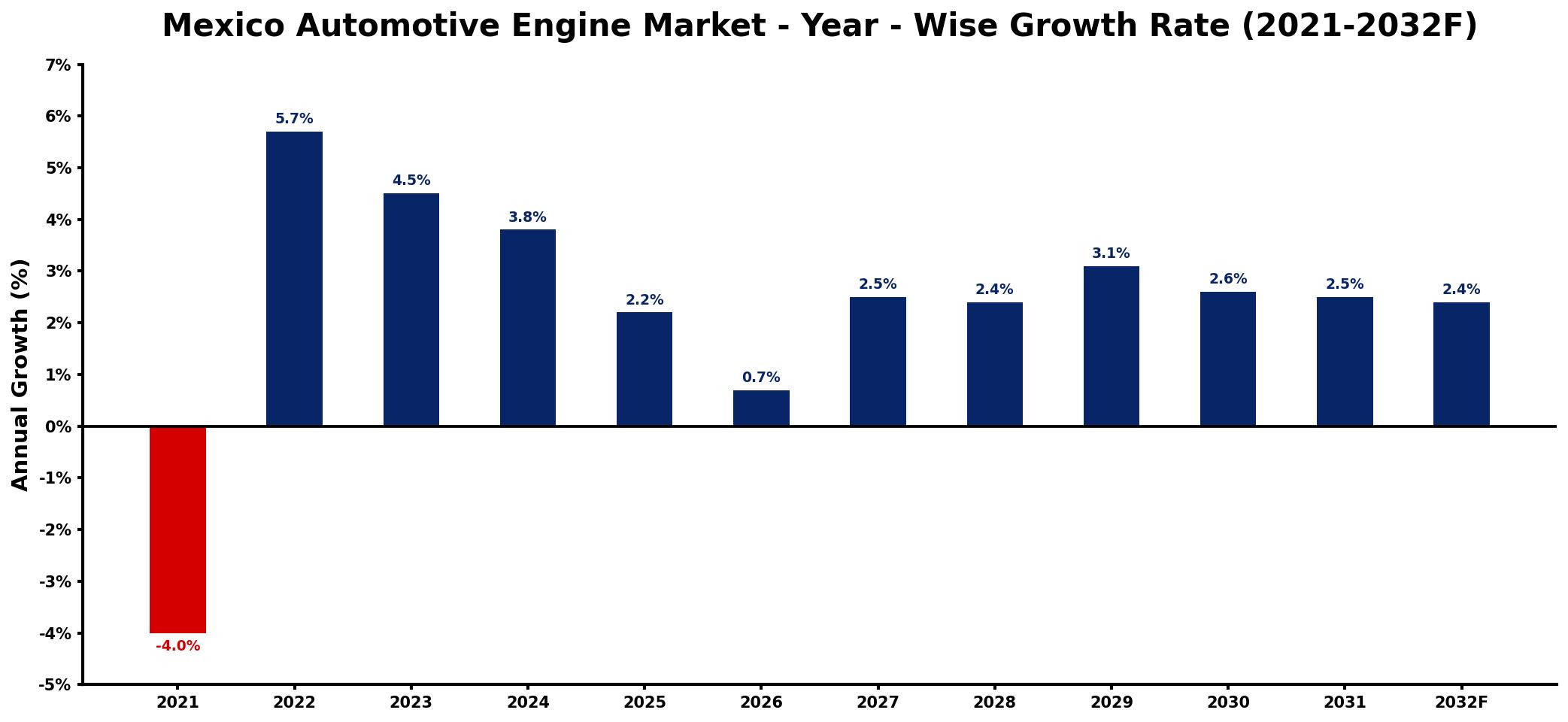
The table below presents the year‑wise growth rates along with the key drivers influencing the market
| Year | Growth Rate | Major Drivers |
| 2021 | -4.0% | Supply chain disruptions affecting production |
| 2022 | 5.7% | Rising consumer demand for vehicles |
| 2023 | 4.5% | Increased investments in technology |
| 2024 | 3.8% | Expansion of manufacturing facilities |
| 2025 | 2.2% | Growing interest in electric vehicles |
| 2026 | 0.7% | Enhanced fuel efficiency regulations |
| 2027 | 2.5% | Rising popularity of hybrid models |
| 2028 | 2.4% | Strengthening partnerships with suppliers |
| 2029 | 3.1% | Boost in export opportunities abroad |
| 2030 | 2.6% | Advancements in renewable energy sources |
| 2031 | 2.5% | Increased focus on sustainability initiatives |
| 2032 | 2.4% | Growth in aftermarket service demand |
Note: Market size estimations and growth projections presented in this report are based on 6Wresearch's proprietary forecasting methodology, utilizing the latest available industry data, government publications, and primary research inputs.
Mexico Automotive Engine Market Synopsis
The Mexican automotive engine landscape is currently defined by a blend of tradition and innovation. With a longstanding preference for diesel engines in commercial vehicles, the market is increasingly witnessing a pivot towards gasoline and alternative fuel engines in response to environmental concerns and government regulations. This transformation is not merely reactive; it is a proactive shift towards sustainability and efficiency.
Additionally, advancements in technology are fostering a more competitive environment, pushing manufacturers to innovate continuously. Engine performance enhancements through turbocharging and direct injection are becoming the norm, while the rise of electric and hybrid vehicles underscores the market's transition towards cleaner energy solutions.
Mexico Automotive Engine Market Key Takeaways
- Growing consumer demand for environmentally friendly engines is reshaping product offerings.
- Technological innovations are leading to enhanced fuel efficiency and performance across engine types.
- A strong focus on research and development is driving the transition towards electric and hybrid engines.
- Government regulations play a crucial role in promoting cleaner engines and sustainability initiatives.
- Increased competition is pushing local manufacturers to enhance their technological capabilities.
Evaluation of Restraints in Mexico Automotive Engine Market
Despite the growth potential, the Mexico Automotive Engine Market faces several constraints that could impede progress. Heightened competition from international manufacturers is intensifying pricing pressures, compelling local firms to invest heavily in technology and innovation. Additionally, fluctuations in raw material prices and currency exchange rates pose risks to production costs and profit margins. Stricter government regulations regarding emissions standards and fuel efficiency also necessitate a swift adaptation by manufacturers, who must keep pace with evolving consumer expectations and technological advancements.
Mexico Automotive Engine Market Trends
The market is currently trending towards greater efficiency, with a clear preference for smaller displacement engines equipped with turbocharging technology. This trend is driven by the dual demands of improving power output while optimizing fuel economy. Furthermore, the growing consumer awareness regarding sustainability is prompting automakers to invest in electric and hybrid engines, signaling a significant shift in production priorities.
As emissions regulations become more stringent, manufacturers are also exploring advanced technologies that facilitate lower emissions without sacrificing performance. The focus on integrating smart technologies into engine design continues to redefine consumer expectations in the Mexican automotive sector.
Mexico Automotive Engine Market Opportunities
Investment opportunities in the Mexico Automotive Engine Market are robust, particularly in the context of rising vehicle production and the push for sustainable automotive solutions. With the demand for electric and hybrid engines gaining momentum, there is considerable scope for investors interested in research and development within this niche. Collaborating with local manufacturers or establishing production facilities in Mexico could yield significant returns, given the country's strategic position and favorable trade agreements that facilitate export and import activities.
Government Initiatives in the Mexico Automotive Engine Market
The Mexican government has implemented several initiatives aimed at fostering a sustainable automotive environment. These include stringent emissions and fuel efficiency regulations designed to minimize the ecological impact of automotive engines. To stimulate innovation, there are also incentives and subsidies in place that support the production of electric and hybrid engines. Additionally, the government is actively working to strengthen intellectual property rights, encouraging further research and development in the sector.
Future Insights of the Mexico Automotive Engine Market
The future of the Mexico Automotive Engine Market appears promising as technological innovations and a shift towards sustainable practices continue to take center stage. With increasing demand for fuel-efficient vehicles and an anticipated rise in electric and hybrid models, the market is well-positioned for growth. Government initiatives aimed at reducing emissions and promoting cleaner alternatives will also play a pivotal role in shaping the landscape from 2026 to 2032. However, stakeholders must remain vigilant regarding potential disruptions from fluctuating raw material prices and evolving trade policies.
Mexico Automotive Engine Market Latest Developments (2025 - 2026)
Recent developments in the Mexico Automotive Engine Market highlight a significant uptick in the adoption of advanced engine technologies. Numerous manufacturers are ramping up production capabilities to meet the increasing demand for efficient engines, driven largely by consumer preferences for greener alternatives. Simultaneously, ongoing collaborations between local and international companies have sparked innovation, resulting in new engine designs that prioritize both performance and environmental sustainability. These shifts are emblematic of a broader trend toward modernization within the automotive sector.
Mexico Automotive Engine Market - Key Attractiveness of the Report
- 10 Years of Market Numbers
- Historical Data Starting from 2022 to 2025
- Base Year: 2025
- Forecast Data until 2032
- Key Performance Indicators Impacting the Market
- Major Upcoming Developments and Projects
Key Highlights of the Report:
- Mexico Automotive Engine Market Outlook
- Market Size of Mexico Automotive Engine Market, 2025
- Forecast of Mexico Automotive Engine Market, 2032
- Historical Data and Forecast of Mexico Automotive Engine Revenues & Volume for the Period 2022-2032F
- Mexico Automotive Engine Market Trend Evolution
- Mexico Automotive Engine Market Drivers and Challenges
- Mexico Automotive Engine Price Trends
- Mexico Automotive Engine Porter's Five Forces
- Mexico Automotive Engine Industry Life Cycle
- Historical Data and Forecast of Mexico Automotive Engine Market Revenues & Volume By Placement Type for the Period 2022-2032F
- Historical Data and Forecast of Mexico Automotive Engine Market Revenues & Volume By In-line Engine for the Period 2022-2032F
- Historical Data and Forecast of Mexico Automotive Engine Market Revenues & Volume By W Engine for the Period 2022-2032F
- Historical Data and Forecast of Mexico Automotive Engine Market Revenues & Volume By V-Type for the Period 2022-2032F
- Historical Data and Forecast of Mexico Automotive Engine Market Revenues & Volume By Vehicle Type for the Period 2022-2032F
- Historical Data and Forecast of Mexico Automotive Engine Market Revenues & Volume By Passenger Car for the Period 2022-2032F
- Historical Data and Forecast of Mexico Automotive Engine Market Revenues & Volume By Commercial Vehicle for the Period 2022-2032F
- Historical Data and Forecast of Mexico Automotive Engine Market Revenues & Volume By Fuel Type for the Period 2022-2032F
- Historical Data and Forecast of Mexico Automotive Engine Market Revenues & Volume By Gasoline for the Period 2022-2032F
- Historical Data and Forecast of Mexico Automotive Engine Market Revenues & Volume By Diesel for the Period 2022-2032F
- Historical Data and Forecast of Mexico Automotive Engine Market Revenues & Volume By Other Fuel Types for the Period 2022-2032F
- Mexico Automotive Engine Import Export Trade Statistics
- Market Opportunity Assessment By Placement Type
- Market Opportunity Assessment By Vehicle Type
- Market Opportunity Assessment By Fuel Type
- Mexico Automotive Engine Top Companies Market Share
- Mexico Automotive Engine Competitive Benchmarking By Technical and Operational Parameters
- Mexico Automotive Engine Company Profiles
- Mexico Automotive Engine Key Strategic Recommendations






































