Mexico Fennel Seeds Market Size, Share & Growth Rate
The Mexico Fennel Seeds Market was estimated at USD 121 Million in 2025 and is projected to reach USD 139 Million by 2032, growing at a CAGR of 2.0% from 2026 to 2032. This growth trajectory is fueled by a rising interest in natural ingredients and health-promoting foods among consumers. The integration of fennel seeds into various culinary practices, coupled with their acknowledged health benefits, particularly in digestive health and anti-inflammatory properties, further enhances their appeal in the Mexican market.
Mexico Fennel Seeds Market Year-wise Growth Rate and Key Drivers
This graph highlights how the Mexico Fennel Seeds Market has steadily grown over the years, supported by major growth factors.
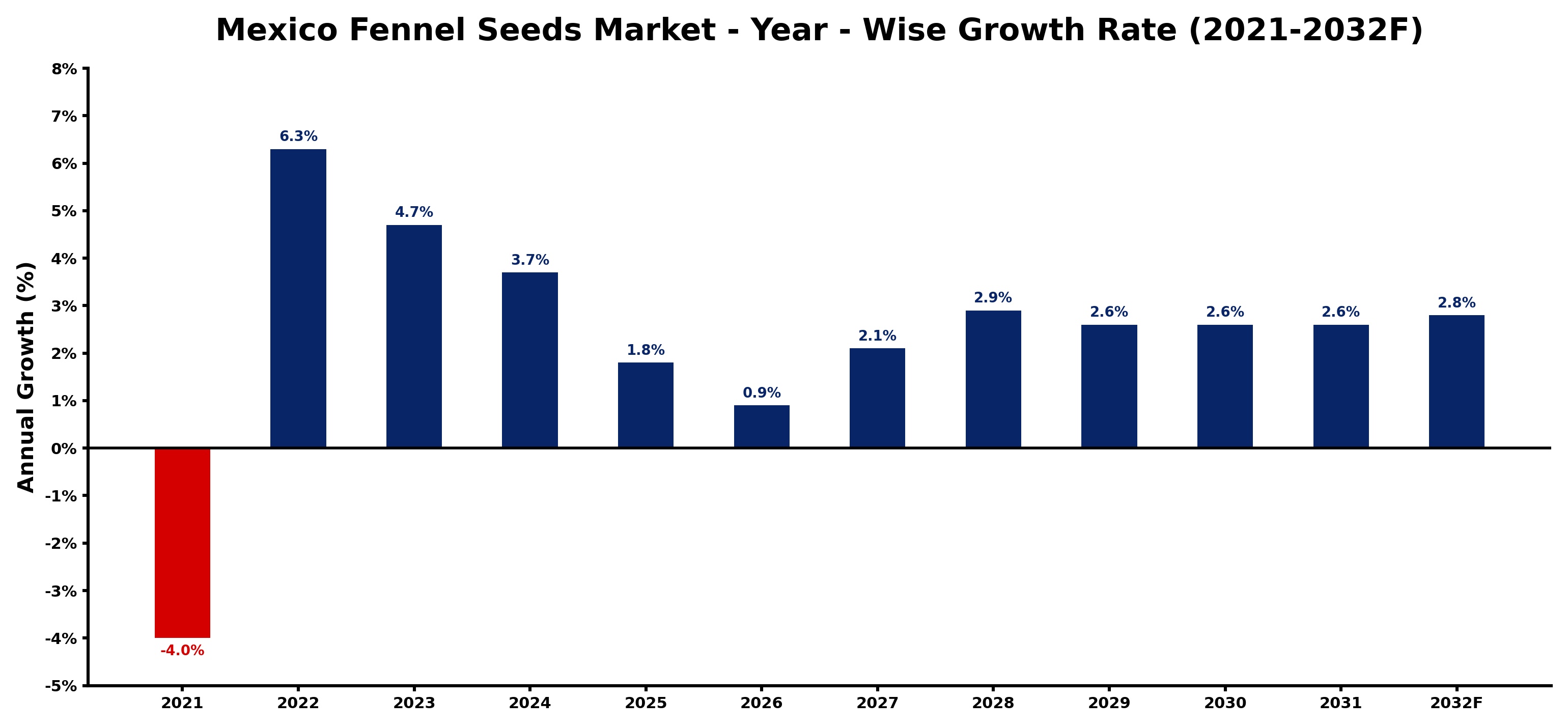
The table below presents the year‑wise growth rates along with the key drivers influencing the market
| Year | Growth Rate | Major Drivers |
| 2021 | -4.0% | Supply chain disruptions impacted availability |
| 2022 | 6.3% | Increased culinary interest drove demand |
| 2023 | 4.7% | Health benefits awareness expanded market |
| 2024 | 3.7% | Organic product popularity surged growth |
| 2025 | 1.8% | Culinary innovation attracted new consumers |
| 2026 | 0.9% | E-commerce platforms enhanced accessibility |
| 2027 | 2.1% | Cultural cuisine integration increased usage |
| 2028 | 2.9% | Sustainability trends boosted consumer interest |
| 2029 | 2.6% | Export opportunities expanded market reach |
| 2030 | 2.6% | Local sourcing initiatives gained traction |
| 2031 | 2.6% | Consumer education improved product knowledge |
| 2032 | 2.8% | Partnerships with chefs enhanced visibility |
Note - Market size estimations and growth projections presented in this report are based on 6Wresearch’s advanced forecasting approach, validated with industry datasets as of June 2026.
Mexico Fennel Seeds Market Synopsis
The Mexico Fennel Seeds Market has been experiencing a notable upswing, characterized by a growing consumer base that embraces the flavor and health benefits of fennel. However, as the market evolves, it anticipates further expansion, driven by increasing culinary applications and a deeper understanding of wellness products among consumers.
Looking ahead, the momentum established in recent years positions the fennel seeds market for sustained growth, particularly as cultural culinary practices intertwine with modern health trends. This indicates a promising future for fennel seed production and consumption in Mexico, with potential for broader market penetration.
Mexico Fennel Seeds Market Key Takeaways
- The market is bolstered by a cultural acceptance of fennel seeds in traditional Mexican cuisine.
- Health-conscious consumers are increasingly incorporating fennel seeds due to their medicinal properties.
- Quality control and seed purity remain pivotal for ensuring consistent market supply.
- Government initiatives support sustainable growth and technological advancements in cultivation.
- Weather variability and pest management are critical challenges that affect crop yields.
Evaluation of Restraints in Mexico Fennel Seeds Market
Despite its growth, the Mexico fennel seeds market faces significant constraints that could hinder its potential. Ensuring seed quality and purity is paramount, as variations can lead to consumer distrust and market instability. Furthermore, the susceptibility of fennel plants to pests and diseases necessitates comprehensive management practices to optimize crop health and productivity. Weather variability presents another challenge, impacting both yields and the overall quality of the seeds. Lastly, the economic pressures associated with post-harvest handling and storage facilities may prove detrimental for local producers, limiting their ability to compete effectively in both domestic and international markets.
Mexico Fennel Seeds Market Trends
Current trends indicate an increasing demand for organic and sustainably sourced fennel seeds, reflecting a broader shift towards health and wellness among consumers. Additionally, the culinary versatility of fennel seeds is being recognized in various food segments, from gourmet cooking to everyday meal preparation. Emerging awareness around holistic health approaches is further driving the use of fennel seeds for their functional benefits, such as digestive support and inflammation reduction. This trend toward natural remedies and clean-label products is likely to shape future market dynamics significantly.
Mexico Fennel Seeds Market Opportunities
The Mexico fennel seeds market presents numerous growth opportunities for investors and producers alike. The rising interest in organic farming practices opens avenues for cultivating high-quality fennel seeds, potentially commanding premium prices. There is also room for innovation in value-added products that incorporate fennel seeds, such as health supplements or infused oils. Moreover, exploring export opportunities could enhance market reach, especially as global demand for natural and health-focused ingredients continues to rise. The combination of cultural affinity and health consciousness offers fertile ground for strategic investment and development.
Government Initiatives in the Mexico Fennel Seeds Market
The Mexican government has recognized the significance of the fennel seeds market in promoting agricultural sustainability and economic growth. Policies aimed at enhancing research and development in fennel cultivation practices, pest control, and post-harvest handling have been introduced to boost yield and quality. Additionally, regulations focused on seed certification and quality control help maintain market integrity. Efforts to increase domestic and international market access through trade promotion initiatives further aim to bolster the competitiveness of Mexican fennel seed producers.
Future Insights of the Mexico Fennel Seeds Market
Looking ahead to the period from 2026 to 2032, the Mexico fennel seeds market is poised for continued growth, driven by evolving consumer preferences and an increasing emphasis on health and wellness. Innovations in agricultural practices and product offerings may unlock new potential within the market. Additionally, the rise of e-commerce channels presents opportunities for wider distribution and enhanced consumer engagement. As consumers increasingly prioritize natural ingredients, fennel seeds are likely to solidify their position within the broader spice and health food markets.
Mexico Fennel Seeds Market Latest Developments (May 2025 - June 2026)
In recent months, there have been several noteworthy developments within the Mexico fennel seeds market. The focus has shifted towards enhancing post-harvest technologies to improve seed preservation and quality. New initiatives aimed at promoting the benefits of fennel seeds in health-conscious segments are also gaining traction, reflecting shifting consumer behaviors. Moreover, collaborations between producers and agricultural research institutions are emerging to address pest management challenges, aiming to bolster overall productivity and quality in the sector.
Mexico Fennel Seeds Market - Key Attractiveness of the Report
- 10 Years of Market Numbers
- Historical Data Starting from 2022 to 2025
- Base Year: 2025
- Forecast Data until 2032
- Key Performance Indicators Impacting the Market
- Major Upcoming Developments and Projects
Key Highlights of the Report:
- Mexico Fennel Seeds Market Outlook
- Market Size of Mexico Fennel Seeds Market, 2025
- Forecast of Mexico Fennel Seeds Market, 2032
- Historical Data and Forecast of Mexico Fennel Seeds Revenues & Volume for the Period 2022-2032F
- Mexico Fennel Seeds Market Trend Evolution
- Mexico Fennel Seeds Market Drivers and Challenges
- Mexico Fennel Seeds Price Trends
- Mexico Fennel Seeds Porter's Five Forces
- Mexico Fennel Seeds Industry Life Cycle
- Historical Data and Forecast of Mexico Fennel Seeds Market Revenues & Volume By Types for the Period 2022-2032F
- Historical Data and Forecast of Mexico Fennel Seeds Market Revenues & Volume By Organic for the Period 2022-2032F
- Historical Data and Forecast of Mexico Fennel Seeds Market Revenues & Volume By Conventional for the Period 2022-2032F
- Historical Data and Forecast of Mexico Fennel Seeds Market Revenues & Volume By Application for the Period 2022-2032F
- Historical Data and Forecast of Mexico Fennel Seeds Market Revenues & Volume By Essential for the Period 2022-2032F
- Historical Data and Forecast of Mexico Fennel Seeds Market Revenues & Volume By Flavors for the Period 2022-2032F
- Historical Data and Forecast of Mexico Fennel Seeds Market Revenues & Volume By Seasoning Ingredient for the Period 2022-2032F
- Historical Data and Forecast of Mexico Fennel Seeds Market Revenues & Volume By Beverages for the Period 2022-2032F
- Historical Data and Forecast of Mexico Fennel Seeds Market Revenues & Volume By End-user for the Period 2022-2032F
- Historical Data and Forecast of Mexico Fennel Seeds Market Revenues & Volume By Households for the Period 2022-2032F
- Historical Data and Forecast of Mexico Fennel Seeds Market Revenues & Volume By Food Industry for the Period 2022-2032F
- Historical Data and Forecast of Mexico Fennel Seeds Market Revenues & Volume By Personal Care Industry for the Period 2022-2032F
- Mexico Fennel Seeds Import Export Trade Statistics
- Market Opportunity Assessment By Types
- Market Opportunity Assessment By Application
- Market Opportunity Assessment By End-user
- Mexico Fennel Seeds Top Companies Market Share
- Mexico Fennel Seeds Competitive Benchmarking By Technical and Operational Parameters
- Mexico Fennel Seeds Company Profiles
- Mexico Fennel Seeds Key Strategic Recommendations






































