Mexico Household Textile Market Summary
The mexico household textile market was estimated at USD 202 Million in 2025 and is projected to reach USD 232 Million by 2032, growing at a CAGR of 0.7% from 2026 to 2032.
Mexico Household Textile Market Year-wise Growth Rate and Key Drivers
This graph highlights how the Mexico Household Textile Market has steadily grown over the past five years, supported by major growth factors.
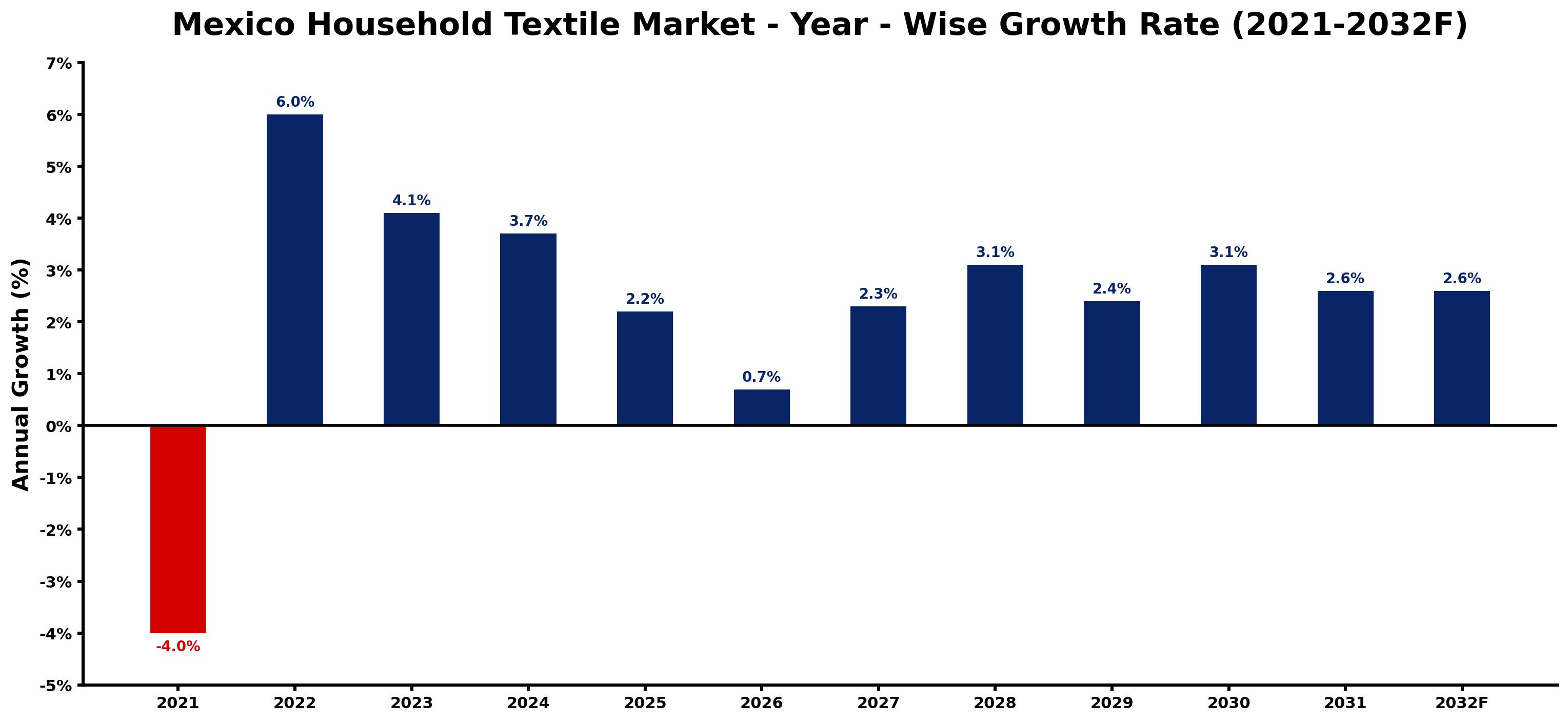
The table below presents the year wise growth rates along with the key drivers influencing the market
| Year | Growth Rate | Major Drivers |
| 2021 | -4.0% | Increased economic uncertainty during the pandemic diminished discretionary spending on household textiles. |
| 2022 | 6.0% | E-commerce platforms expanded, significantly improving accessibility for household textile products. |
| 2023 | 4.1% | Home renovation trends gained momentum, boosting demand for stylish textile solutions. |
| 2024 | 3.7% | Increased disposable income among Mexican households elevated spending on home textiles. |
| 2025 | 2.2% | Innovative designs and customization options drew interest among younger consumers. |
| 2026 | 0.7% | Collaborations between local artisans and brands enhanced cultural appeal of textiles. |
| 2027 | 2.3% | Urbanization trends contributed to a stronger market for luxury household textiles. |
| 2028 | 3.1% | Promotional campaigns focusing on heritage textiles encouraged pride in local craftsmanship. |
| 2029 | 2.4% | The shift towards remote work fostered a demand for comfortable home environments. |
| 2030 | 3.1% | Sustainability certifications gained importance, influencing purchasing decisions among conscious consumers. |
| 2031 | 2.6% | Technological advancements in production increased efficiency and reduced costs for manufacturers. |
| 2032 | 2.6% | Market consolidation trends emerged, leading to fewer but more influential textile brands. |
Note - Market size estimations and growth projections presented in this report are based on 6Wresearch's advanced forecasting approach, validated with industry datasets as of June 2026.
Mexico Household Textile Market Synopsis
The Mexico Household Textile Market is projected to reach 0.7% and witness significant growth during the forecast period (2026-2032). This market encompasses a diverse array of products, including bedding, towels, and curtains, reflecting the evolving preferences of consumers who increasingly prioritize both comfort and aesthetics within their home environments. As the demand for high-quality household textiles rises, manufacturers are strategically adapting to these shifts by introducing innovative products that blend functionality with contemporary design.
Mexico Household Textile Market Growth Drivers
Several key factors are driving the expansion of the Mexico Household Textile market. The growing focus on home aesthetics is one of the primary influences, with consumers increasingly investing in textiles that enhance the visual appeal of their living spaces. Additionally, the shift towards comfort in home environments has resulted in heightened demand for products such as:
- Bedding items that ensure comfort and support, catering to consumer preferences for better sleep quality.
- Towels that deliver superior absorbency and softness, aligning with the increasing emphasis on personal care.
- Curtains that not only provide privacy but also contribute to the overall interior design theme.
- Textiles featuring traditional Mexican designs, appealing to those seeking to incorporate cultural heritage into modern decor.
- Innovative textiles integrating technology for functionalities like thermal regulation and stain resistance.
Mexico Household Textile Market Challenges and Restraints
Despite the robust growth prospects, the Mexico Household Textile market faces several challenges. One significant issue is the volatility in raw material prices, particularly within the cotton and synthetic fiber segments. Such fluctuations can place pressure on manufacturers' margins and overall pricing strategies. Moreover, increasing environmental concerns demand a shift toward sustainable practices:
- The necessity for eco-friendly production processes requires substantial investment in technology and materials.
- Balancing affordability with sustainability poses a challenge, particularly for lower-income demographics.
- Consumer awareness regarding the environmental impact of textile production drives demand for transparency in sourcing and manufacturing.
- The need for continual product innovation to keep pace with dynamic consumer trends can strain resources.
- Competition from low-cost imports can pressure local manufacturers, creating a challenging market landscape.
Mexico Household Textile Market Government Investment and Initiatives
The government plays a crucial role in supporting the Mexico Household Textile market through various policies and initiatives aimed at enhancing competitiveness. Trade agreements facilitate access to international markets, fostering a favorable environment for manufacturers to export their products. Additionally, government support for sustainable practices and the establishment of quality standards bolster consumer trust and enhance product reputation. Key initiatives include:
- Investment in research and development to spur innovation within the household textiles sector.
- Incentives for manufacturers that adopt eco-friendly practices and materials to encourage sustainable production.
- Support for local textiles through funding programs aimed at promoting cultural heritage and craftsmanship.
- Collaboration with industry stakeholders to establish best practices and improve overall market standards.
- Promotion of educational initiatives focusing on sustainable textiles and consumer awareness.
Mexico Household Textile Market Latest Developments (May 2025 - June 2026)
Recent developments in the Mexico Household Textile market from May 2025 to June 2026 indicate a strong emphasis on sustainability and innovation. Manufacturers are increasingly adopting eco-friendly materials in response to consumer demand for sustainable products. Additionally, there has been a noticeable trend toward collaboration among industry players to enhance supply chain transparency and reduce environmental footprints. This period also witnessed the introduction of smart textiles that offer added functionalities, reflecting ongoing technological advancements within the market.
Mexico Household Textile Market - Key Attractiveness of the Report
- 10 Years of Market Numbers
- Historical Data Starting from 2022 to 2025
- Base Year: 2025
- Forecast Data until 2032
- Key Performance Indicators Impacting the Market
- Major Upcoming Developments and Projects
Key Highlights of the Report:
- Mexico Household Textile Market Outlook
- Market Size of Mexico Household Textile Market, 2025
- Forecast of Mexico Household Textile Market, 2032
- Historical Data and Forecast of Mexico Household Textile Revenues & Volume for the Period 2022-2032F
- Mexico Household Textile Market Trend Evolution
- Mexico Household Textile Market Drivers and Challenges
- Mexico Household Textile Price Trends
- Mexico Household Textile Porter's Five Forces
- Mexico Household Textile Industry Life Cycle
- Historical Data and Forecast of Mexico Household Textile Market Revenues & Volume By Type for the Period 2022-2032F
- Historical Data and Forecast of Mexico Household Textile Market Revenues & Volume By Non-woven Textile for the Period 2022-2032F
- Historical Data and Forecast of Mexico Household Textile Market Revenues & Volume By Woven Textile for the Period 2022-2032F
- Historical Data and Forecast of Mexico Household Textile Market Revenues & Volume By Application for the Period 2022-2032F
- Historical Data and Forecast of Mexico Household Textile Market Revenues & Volume By Bed for the Period 2022-2032F
- Historical Data and Forecast of Mexico Household Textile Market Revenues & Volume By Furniture for the Period 2022-2032F
- Historical Data and Forecast of Mexico Household Textile Market Revenues & Volume By Door & Window for the Period 2022-2032F
- Historical Data and Forecast of Mexico Household Textile Market Revenues & Volume By Dining & Wash for the Period 2022-2032F
- Historical Data and Forecast of Mexico Household Textile Market Revenues & Volume By Ground for the Period 2022-2032F
- Mexico Household Textile Import Export Trade Statistics
- Market Opportunity Assessment By Type
- Market Opportunity Assessment By Application
- Mexico Household Textile Top Companies Market Share
- Mexico Household Textile Competitive Benchmarking By Technical and Operational Parameters
- Mexico Household Textile Company Profiles
- Mexico Household Textile Key Strategic Recommendations






































