Morocco Fish Market Size, Share & Growth Rate
The Morocco Fish Market was estimated at USD 355 Million in 2025 and is projected to reach USD 470 Million by 2032, growing at a CAGR of 4.1% from 2026 to 2032. This growth trajectory is fueled by increasing consumer interest in sustainably sourced seafood, alongside a robust demand for traditional Moroccan fish varieties. The market is also benefiting from tourism growth, as more visitors seek out authentic culinary experiences featuring the regions rich marine offerings.
Morocco Fish Market Year-wise Growth Rate and Key Drivers
This graph highlights how the Morocco Fish Market has steadily grown over the years, supported by major growth factors.
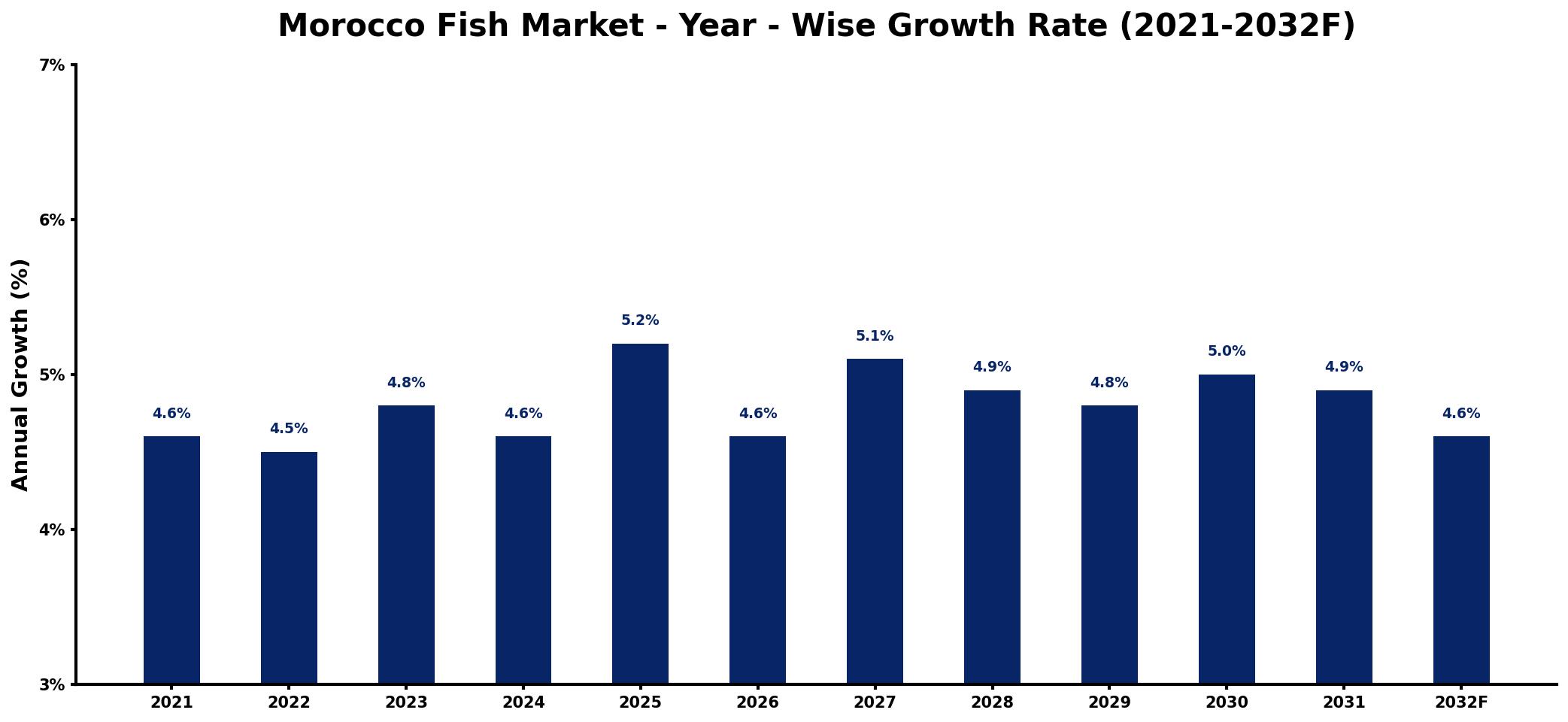
The table below presents the year‑wise growth rates along with the key drivers influencing the market
| Year | Growth Rate | Major Drivers |
| 2021 | 4.6% | Rising consumer health awareness |
| 2022 | 4.5% | Increased export market opportunities |
| 2023 | 4.8% | Growing tourism and hospitality sector |
| 2024 | 4.6% | Expansion of aquaculture facilities |
| 2025 | 5.2% | Investment in sustainable practices |
| 2026 | 4.6% | Enhanced distribution channels efficiency |
| 2027 | 5.1% | Development of new processing technologies |
| 2028 | 4.9% | Increased domestic consumption trends |
| 2029 | 4.8% | Strengthened regulatory support initiatives |
| 2030 | 5.0% | Emerging market diversification strategies |
| 2031 | 4.9% | Growing demand for convenience products |
| 2032 | 4.6% | Rising interest in local sourcing |
Note: Market size estimations and growth projections presented in this report are based on 6Wresearch's proprietary forecasting methodology, utilizing the latest available industry data, government publications, and primary research inputs.
Morocco Fish Market Synopsis
The vibrant ambiance of the Morocco Fish Market, particularly in coastal cities such as Casablanca and Agadir, showcases the rich variety of fresh seafood available. With bustling stalls filled with local catches like sardines and swordfish, the market serves as both a commercial and cultural hub, drawing locals and tourists alike.
As consumers increasingly lean towards sustainability, the market reflects a shift in purchasing behaviors. The fusion of traditional fishing methods with modern consumer trends creates an engaging atmosphere, providing a unique insight into Morocco's culinary heritage.
Morocco Fish Market Key Takeaways
- The market is experiencing significant growth driven by rising consumer demand for ethically sourced seafood.
- Traditional fish varieties are gaining popularity as consumers seek to support local fishermen.
- Value-added seafood products are becoming more prevalent, catering to convenience-driven buyers.
- Government policies focus on regulating fishing practices to ensure sustainability and quality.
- Investment opportunities in processing facilities and cold chain infrastructure are abundant.
Evaluation of Restraints in Morocco Fish Market
The Morocco Fish Market faces notable challenges that hinder its growth potential. Inconsistent supply, primarily due to overfishing and environmental conditions affecting fish populations, results in price volatility and reduced availability. Infrastructure deficiencies also pose risks, as inadequate storage facilities lead to quality deterioration of seafood. Furthermore, competition from imported seafood threatens local vendors, making it imperative for stakeholders to navigate these complexities effectively. Addressing illegal fishing practices through proper regulation enforcement remains a critical issue for the market's sustainability.
Morocco Fish Market Trends
The Morocco Fish Market is witnessing emerging trends that are reshaping consumer preferences and industry practices. A growing demand for sustainably caught seafood is evident, as consumers increasingly prioritize environmental impact. Additionally, theres a rising interest in local fish varieties, reflecting a broader movement towards preserving cultural culinary traditions. Convenience-oriented products such as pre-marinated and ready-to-cook options are gaining traction, catering to busy lifestyles while enhancing the dining experience.
Morocco Fish Market Opportunities
The market presents promising investment opportunities, particularly in seafood processing facilities aimed at meeting the burgeoning demand for processed products. By modernizing existing plants or establishing new facilities with advanced technology, stakeholders can significantly enhance product quality and efficiency. Moreover, the development of sustainable fishing practices and aquaculture offers a pathway to ensure a consistent supply of seafood. The establishment of robust cold chain infrastructure is critical for improving transportation and storage, minimizing post-harvest losses, and maintaining product integrity.
Government Initiatives in the Morocco Fish Market
The government of Morocco is actively involved in regulating the fish market through various policies aimed at promoting sustainable fishing practices. Oversight by the Ministry of Agriculture, Fisheries, Rural Development, Water, and Forests ensures compliance with fishing quotas and licensing requirements. Regular inspections are conducted to maintain seafood safety and quality, while support for aquaculture initiatives aims to alleviate pressure on wild fish stocks. These efforts underscore a commitment to balancing economic interests with environmental sustainability.
Future Insights of the Morocco Fish Market
Looking ahead, the Morocco Fish Market is poised for steady growth from 2026 to 2032, bolstered by rising local and international consumer demands for seafood products. The strategic location of Morocco along the Atlantic Ocean ensures ample fishing opportunities, providing a consistent supply. Continued government initiatives to modernize the industry, enhance infrastructure, and advocate for sustainable practices are set to catalyze further growth. As the market expands its export capabilities, the region's seafood offerings are likely to gain recognition in the global arena, fostering economic development.
Morocco Fish Market Latest Developments (2025 - 2026)
Recent developments in the Morocco Fish Market indicate a strong push towards sustainability, with local initiatives aimed at promoting eco-friendly fishing methods gaining traction. Infrastructure projects are being discussed to enhance cold chain logistics, aiming to reduce waste and improve seafood quality. The sector is also witnessing increased collaboration between government bodies and private stakeholders to address the challenges of overfishing, contributing to a more resilient market framework.
Morocco Fish Market - Key Attractiveness of the Report
- 10 Years of Market Numbers
- Historical Data Starting from 2022 to 2025
- Base Year: 2025
- Forecast Data until 2032
- Key Performance Indicators Impacting the Market
- Major Upcoming Developments and Projects
Key Highlights of the Report:
- Morocco Fish Market Outlook
- Market Size of Morocco Fish Market, 2025
- Forecast of Morocco Fish Market, 2032
- Historical Data and Forecast of Morocco Fish Revenues & Volume for the Period 2022-2032F
- Morocco Fish Market Trend Evolution
- Morocco Fish Market Drivers and Challenges
- Morocco Fish Price Trends
- Morocco Fish Porter's Five Forces
- Morocco Fish Industry Life Cycle
- Historical Data and Forecast of Morocco Fish Market Revenues & Volume By Fish Type for the Period 2022-2032F
- Historical Data and Forecast of Morocco Fish Market Revenues & Volume By Inland Fishes for the Period 2022-2032F
- Historical Data and Forecast of Morocco Fish Market Revenues & Volume By Marine Fishes for the Period 2022-2032F
- Historical Data and Forecast of Morocco Fish Market Revenues & Volume By Shrimps for the Period 2022-2032F
- Historical Data and Forecast of Morocco Fish Market Revenues & Volume By Scampi for the Period 2022-2032F
- Historical Data and Forecast of Morocco Fish Market Revenues & Volume By Product Type for the Period 2022-2032F
- Historical Data and Forecast of Morocco Fish Market Revenues & Volume By Fresh for the Period 2022-2032F
- Historical Data and Forecast of Morocco Fish Market Revenues & Volume By Frozen for the Period 2022-2032F
- Historical Data and Forecast of Morocco Fish Market Revenues & Volume By Canned for the Period 2022-2032F
- Historical Data and Forecast of Morocco Fish Market Revenues & Volume By Others for the Period 2022-2032F
- Historical Data and Forecast of Morocco Fish Market Revenues & Volume By Distribution Channel for the Period 2022-2032F
- Historical Data and Forecast of Morocco Fish Market Revenues & Volume By Retail for the Period 2022-2032F
- Historical Data and Forecast of Morocco Fish Market Revenues & Volume By Institutional for the Period 2022-2032F
- Historical Data and Forecast of Morocco Fish Market Revenues & Volume By Sector for the Period 2022-2032F
- Historical Data and Forecast of Morocco Fish Market Revenues & Volume By Organised for the Period 2022-2032F
- Historical Data and Forecast of Morocco Fish Market Revenues & Volume By Unorganised for the Period 2022-2032F
- Morocco Fish Import Export Trade Statistics
- Market Opportunity Assessment By Fish Type
- Market Opportunity Assessment By Product Type
- Market Opportunity Assessment By Distribution Channel
- Market Opportunity Assessment By Sector
- Morocco Fish Top Companies Market Share
- Morocco Fish Competitive Benchmarking By Technical and Operational Parameters
- Morocco Fish Company Profiles
- Morocco Fish Key Strategic Recommendations






































