Morocco Sports Nutrition Market Size, Share & Growth Rate
The Morocco Sports Nutrition Market was estimated at USD 439 Million in 2025 and is projected to reach USD 588 Million by 2032, growing at a CAGR of 4.3% from 2026 to 2032. This upward trajectory is primarily fueled by the heightened awareness regarding health and fitness, which is motivating a larger segment of the Moroccan population to engage in physical activities and sports. As sports and fitness become integral to daily life, the demand for supplements and nutritional products is set to rise significantly.
Morocco Sports Nutrition Market Year-wise Growth Rate and Key Drivers
This graph highlights how the Morocco Sports Nutrition Market has steadily grown over the years, supported by major growth factors.
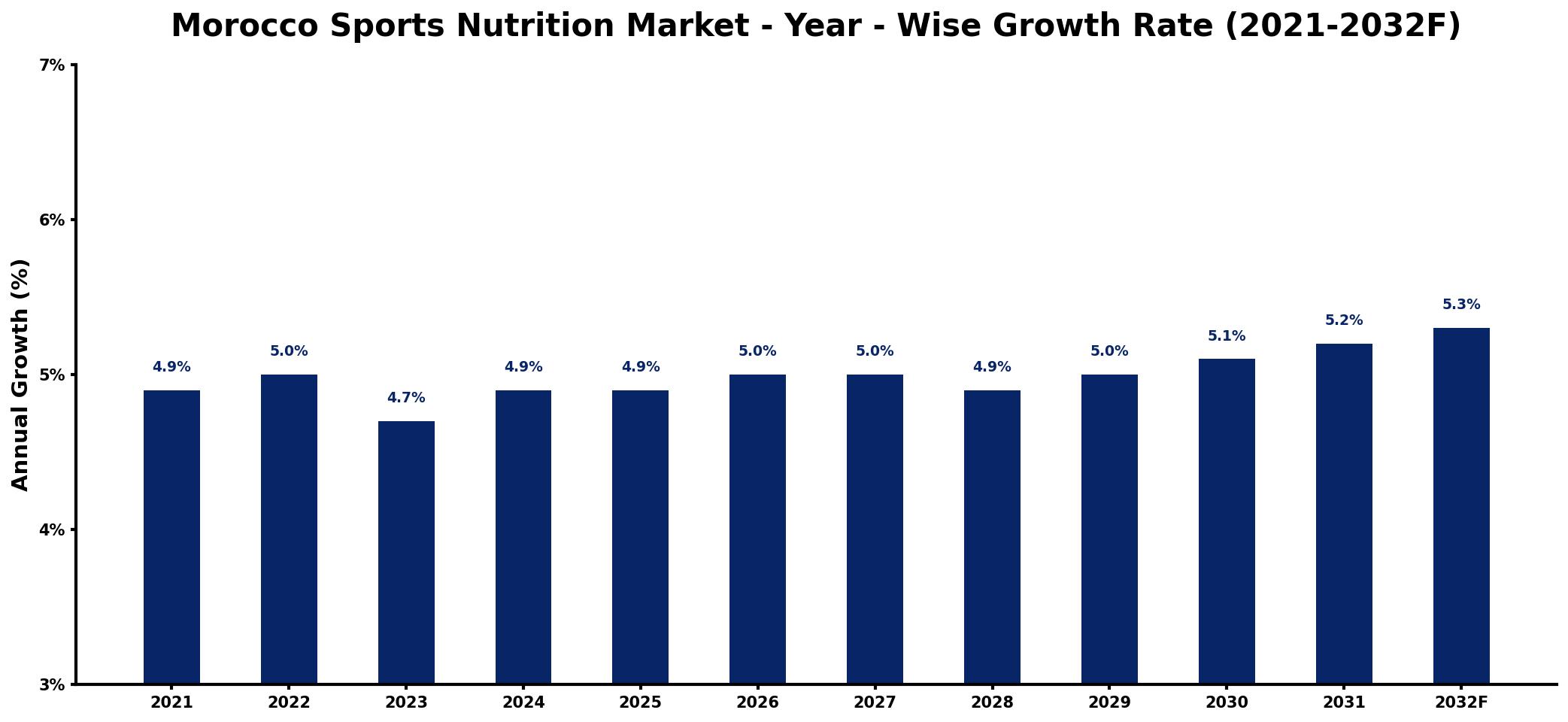
The table below presents the year‑wise growth rates along with the key drivers influencing the market
| Year | Growth Rate | Major Drivers |
| 2021 | 4.9% | Rising fitness consciousness among consumers |
| 2022 | 5.0% | Increased investments in health clubs |
| 2023 | 4.7% | Growing online retail platforms popularity |
| 2024 | 4.9% | Expansion of fitness influencer marketing |
| 2025 | 4.9% | Emergence of plant-based alternatives |
| 2026 | 5.0% | Surge in youth athletic participation |
| 2027 | 5.0% | Increase in corporate wellness programs |
| 2028 | 4.9% | growing downstream application demand |
| 2029 | 5.0% | Development of innovative health technologies |
| 2030 | 5.1% | Rising awareness of health benefits |
| 2031 | 5.2% | Increased focus on sustainable sourcing |
| 2032 | 5.3% | rising demand from electronics |
Note: Market size estimations and growth projections presented in this report are based on 6Wresearch's proprietary forecasting methodology, utilizing the latest available industry data, government publications, and primary research inputs.
Morocco Sports Nutrition Market Synopsis
The Moroccan sports nutrition landscape is marked by a growing appetite for functional and performance-oriented products. An increasing number of fitness enthusiasts and athletes are turning towards protein supplements and energy bars, reflecting a shift towards health-conscious consumption. This trend is further bolstered by the proliferation of international brands that cater to the specific nutritional needs of local consumers.
Additionally, the rise of e-commerce platforms is reshaping the distribution landscape, making a diverse array of sports nutrition products more accessible to consumers throughout the country. This accessibility is crucial as consumers seek convenient options that align with their busy lifestyles while prioritizing health and wellness.
Morocco Sports Nutrition Market Key Takeaways
- The market is experiencing a robust growth trajectory fueled by increased health awareness.
- Consumers are gravitating towards organic, natural, and clean-label sports nutrition products.
- The expansion of online retailing is enhancing product availability and consumer access.
- There is a growing segment of fitness enthusiasts seeking performance and recovery-enhancing products.
- Investment opportunities are ripe for both local and international players looking to enter this burgeoning market.
Evaluation of Restraints in Morocco Sports Nutrition Market
Despite the optimistic outlook, several constraints persist that could impede market expansion. A fundamental challenge lies in the limited awareness and understanding of sports nutrition among the broader population, which can result in reduced demand for these products. Moreover, the prevalence of counterfeit or low-quality products in the market diminishes consumer confidence. Strict import regulations may also create hurdles for foreign brands seeking to enter the Moroccan market. To overcome these barriers, strategic education campaigns and collaborations with local stakeholders are essential to enhance trust and credibility within the sector.
Morocco Sports Nutrition Market Trends
Key trends shaping the Morocco Sports Nutrition Market include a shift towards plant-based and organic products as consumers increasingly prioritize health and environmental sustainability. Clean labels and transparency in ingredient sourcing are becoming pivotal in product selection. Furthermore, the integration of technology in sports nutrition—such as personalized nutrition plans and digital fitness tracking—is on the rise, appealing to a tech-savvy consumer base seeking tailored solutions. These trends underline a transformation in the market, focusing on functional benefits and holistic wellness.
Morocco Sports Nutrition Market Opportunities
The Morocco Sports Nutrition Market is poised for lucrative investment opportunities, driven by the growing health and wellness movement. Increasingly, consumers are looking for products that promise enhanced performance and recovery, presenting avenues for product innovation. Companies that align their offerings with the demand for clean, natural ingredients and those that successfully utilize digital platforms for e-commerce can significantly expand their reach. Collaborative ventures with local distributors may also yield substantial market penetration.
Government Initiatives in the Morocco Sports Nutrition Market
The Moroccan government has recognized the significance of sports nutrition in promoting a healthier populace. Initiatives from the Ministry of Youth and Sports are focused on ensuring the quality and safety of sports nutrition products. Regulatory measures are in place to monitor product standards, alongside campaigns aimed at educating the public about the benefits of proper nutrition for athletes. These government policies create a supportive environment for the sports nutrition market, aiming to foster local manufacturing and innovation.
Future Insights of the Morocco Sports Nutrition Market
Looking ahead to 2026-2032, the Morocco Sports Nutrition Market is likely to witness sustained growth, influenced by a surge in fitness participation and a cultural shift towards health-conscious living. The expanding middle-class demographic, coupled with urbanization and rising disposable incomes, will further enhance the markets appeal. As consumers become more educated about the benefits of sports nutrition products, the landscape will become increasingly competitive, inviting both local innovation and international collaborations.
Morocco Sports Nutrition Market Latest Developments (2025 - 2026)
Recent developments in the Morocco Sports Nutrition Market indicate a shift towards greater consumer engagement through digital marketing and personalized nutrition offerings. Local businesses are increasingly utilizing social media platforms to promote awareness and drive sales, leveraging the trend of health-focused influencers. Additionally, there is an ongoing effort to establish partnerships with health clubs and fitness centers to facilitate product sampling and education, thereby enhancing market penetration and brand loyalty.
Morocco Sports Nutrition Market - Key Attractiveness of the Report
- 10 Years of Market Numbers
- Historical Data Starting from 2022 to 2025
- Base Year: 2025
- Forecast Data until 2032
- Key Performance Indicators Impacting the Market
- Major Upcoming Developments and Projects
Key Highlights of the Report:
- Morocco Sports Nutrition Market Outlook
- Market Size of Morocco Sports Nutrition Market, 2025
- Forecast of Morocco Sports Nutrition Market, 2032
- Historical Data and Forecast of Morocco Sports Nutrition Revenues & Volume for the Period 2022-2032F
- Morocco Sports Nutrition Market Trend Evolution
- Morocco Sports Nutrition Market Drivers and Challenges
- Morocco Sports Nutrition Price Trends
- Morocco Sports Nutrition Porter's Five Forces
- Morocco Sports Nutrition Industry Life Cycle
- Historical Data and Forecast of Morocco Sports Nutrition Market Revenues & Volume By Type for the Period 2022-2032F
- Historical Data and Forecast of Morocco Sports Nutrition Market Revenues & Volume By Sports Food for the Period 2022-2032F
- Historical Data and Forecast of Morocco Sports Nutrition Market Revenues & Volume By Sports Drinks for the Period 2022-2032F
- Historical Data and Forecast of Morocco Sports Nutrition Market Revenues & Volume By Sports Supplements for the Period 2022-2032F
- Historical Data and Forecast of Morocco Sports Nutrition Market Revenues & Volume By Distribution Channel for the Period 2022-2032F
- Historical Data and Forecast of Morocco Sports Nutrition Market Revenues & Volume By Supermarkets/Hypermarkets for the Period 2022-2032F
- Historical Data and Forecast of Morocco Sports Nutrition Market Revenues & Volume By Specialty Stores for the Period 2022-2032F
- Historical Data and Forecast of Morocco Sports Nutrition Market Revenues & Volume By Convenience Stores for the Period 2022-2032F
- Historical Data and Forecast of Morocco Sports Nutrition Market Revenues & Volume By Online Stores for the Period 2022-2032F
- Historical Data and Forecast of Morocco Sports Nutrition Market Revenues & Volume By Other Distribution Channels for the Period 2022-2032F
- Morocco Sports Nutrition Import Export Trade Statistics
- Market Opportunity Assessment By Type
- Market Opportunity Assessment By Distribution Channel
- Morocco Sports Nutrition Top Companies Market Share
- Morocco Sports Nutrition Competitive Benchmarking By Technical and Operational Parameters
- Morocco Sports Nutrition Company Profiles
- Morocco Sports Nutrition Key Strategic Recommendations






































