Mozambique Synthetic Rubber Market Growth Rate Analysis (2025 - 2031)
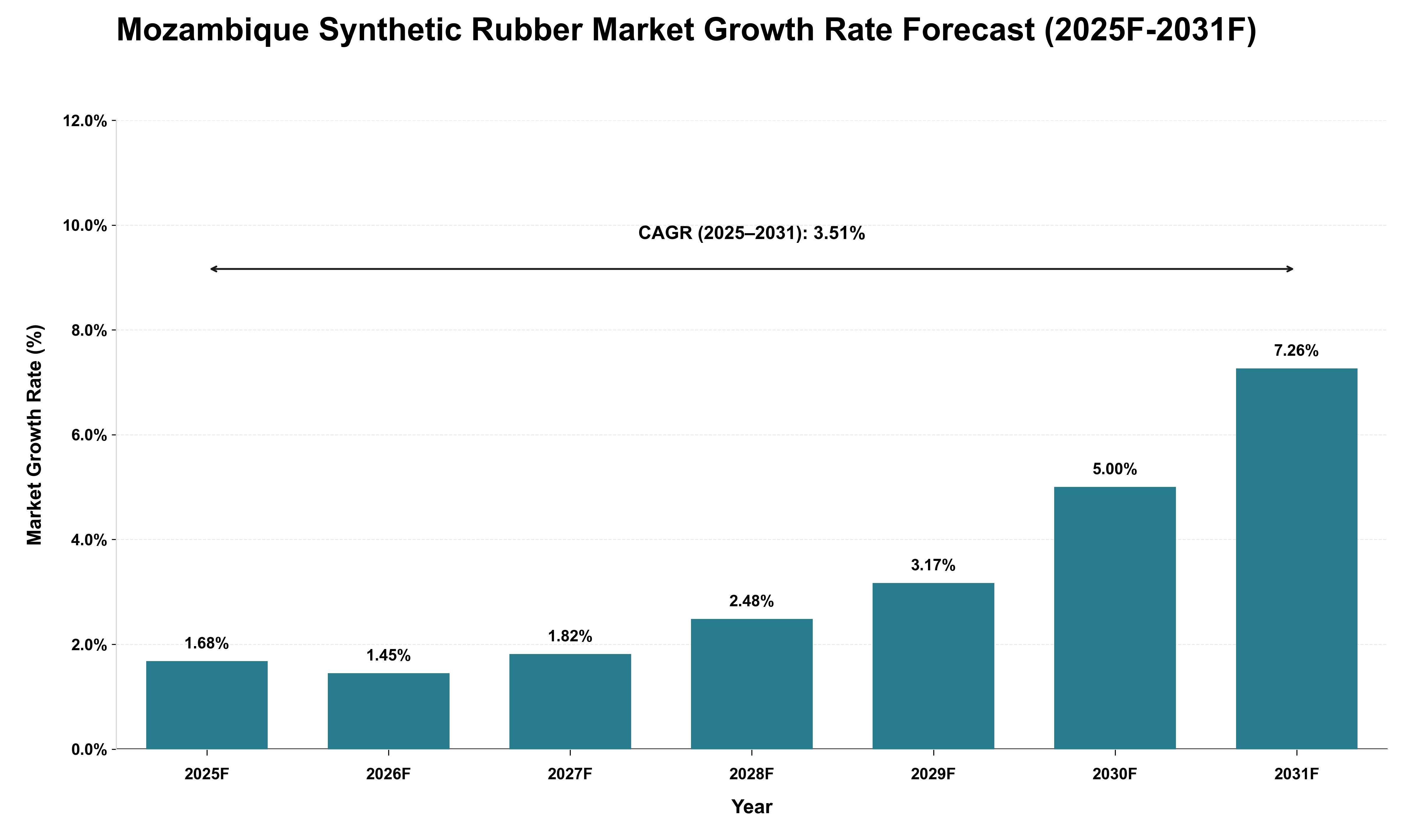
The Mozambique synthetic rubber market is poised for a gradual yet notable increase in demand from 2025 onward, driven by evolving end-use applications across various industries. The projected CAGR of 3.51% reflects a shift towards higher consumption rates, particularly as automotive and construction sectors expand their reliance on synthetic rubber for performance and durability. Initial growth rates will be modest, with increases of 1.68% in 2025 and 1.45% in 2026, but these figures will gain momentum as market dynamics evolve; by 2031, growth is expected to reach an impressive 7.26%. This trajectory suggests that import dependencies may influence pricing and availability, particularly as global supply chains adapt to meet rising local demand. Additionally, cyclical trends in manufacturing output and infrastructure development will likely amplify the need for synthetic rubber, reinforcing its critical role in Mozambique's economic landscape during this period.
Key Highlights of the Report:
- Mozambique Synthetic Rubber Market Outlook
- Market Size of Mozambique Synthetic Rubber Market, 2024
- Forecast of Mozambique Synthetic Rubber Market, 2031
- Historical Data and Forecast of Mozambique Synthetic Rubber Revenues & Volume for the Period 2021-2031
- Mozambique Synthetic Rubber Market Trend Evolution
- Mozambique Synthetic Rubber Market Drivers and Challenges
- Mozambique Synthetic Rubber Price Trends
- Mozambique Synthetic Rubber Porter`s Five Forces
- Mozambique Synthetic Rubber Industry Life Cycle
- Historical Data and Forecast of Mozambique Synthetic Rubber Market Revenues & Volume By Type for the Period 2021-2031
- Historical Data and Forecast of Mozambique Synthetic Rubber Market Revenues & Volume By Styrene Butadiene Rubber for the Period 2021-2031
- Historical Data and Forecast of Mozambique Synthetic Rubber Market Revenues & Volume By Nitrile Rubber for the Period 2021-2031
- Historical Data and Forecast of Mozambique Synthetic Rubber Market Revenues & Volume By Polybutadiene Rubber for the Period 2021-2031
- Historical Data and Forecast of Mozambique Synthetic Rubber Market Revenues & Volume By Butyl Rubber for the Period 2021-2031
- Historical Data and Forecast of Mozambique Synthetic Rubber Market Revenues & Volume By Others for the Period 2021-2031
- Historical Data and Forecast of Mozambique Synthetic Rubber Market Revenues & Volume By Application for the Period 2021-2031
- Historical Data and Forecast of Mozambique Synthetic Rubber Market Revenues & Volume By Tire for the Period 2021-2031
- Historical Data and Forecast of Mozambique Synthetic Rubber Market Revenues & Volume By Non-tire Automotive for the Period 2021-2031
- Historical Data and Forecast of Mozambique Synthetic Rubber Market Revenues & Volume By Industrial Rubber Goods for the Period 2021-2031
- Historical Data and Forecast of Mozambique Synthetic Rubber Market Revenues & Volume By Footwear for the Period 2021-2031
- Historical Data and Forecast of Mozambique Synthetic Rubber Market Revenues & Volume By Others for the Period 2021-2031
- Mozambique Synthetic Rubber Import Export Trade Statistics
- Market Opportunity Assessment By Type
- Market Opportunity Assessment By Application
- Mozambique Synthetic Rubber Top Companies Market Share
- Mozambique Synthetic Rubber Competitive Benchmarking By Technical and Operational Parameters
- Mozambique Synthetic Rubber Company Profiles
- Mozambique Synthetic Rubber Key Strategic Recommendations






































