Mozambique Wine Market Growth Rate Analysis (2025 - 2031)
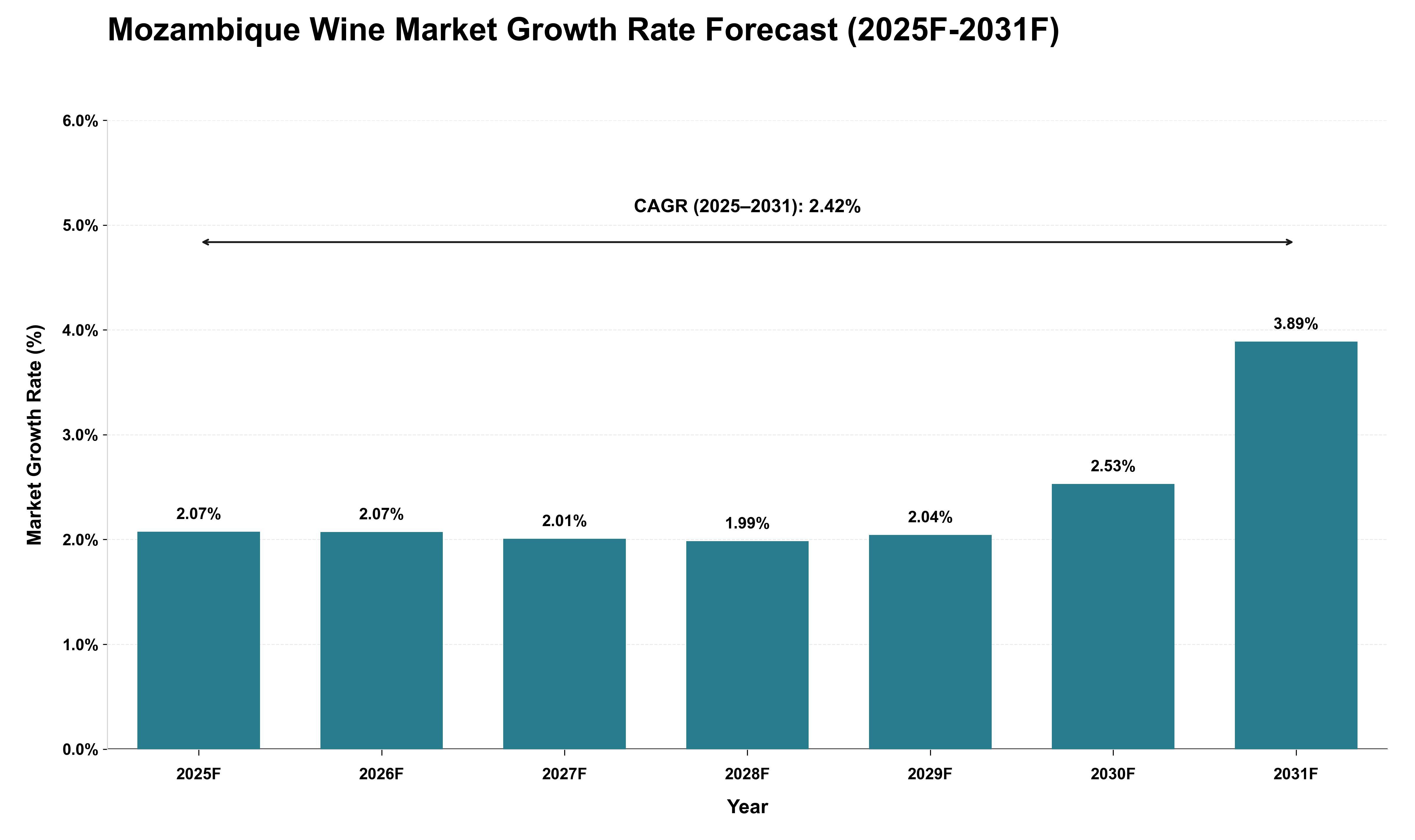
The Mozambique wine market will experience a gradual growth trajectory driven by evolving consumer preferences and increasing import dependencies. As the forecast period progresses, the compound annual growth rate (CAGR) of 2.42% will reflect a competitive landscape where local producers may struggle to keep pace with imported wines, particularly as global supply chains stabilize post-pandemic. The initial years will see modest growth rates around 2.07%, indicating a cautious consumer base, while slight declines in growth rates in 2027 and 2028 suggest potential price sensitivity or shifts in discretionary spending. However, as economic conditions improve and disposable incomes rise, the market is expected to gain momentum, culminating in a notable uptick to 3.89% by 2031. This trend underscores an anticipated cyclical rebound influenced by broader economic recovery and changing demographics favoring wine consumption over other alcoholic beverages.
Key Highlights of the Report:
- Mozambique Wine Market Outlook
- Market Size of Mozambique Wine Market, 2024
- Forecast of Mozambique Wine Market, 2031
- Historical Data and Forecast of Mozambique Wine Revenues & Volume for the Period 2021-2031
- Mozambique Wine Market Trend Evolution
- Mozambique Wine Market Drivers and Challenges
- Mozambique Wine Price Trends
- Mozambique Wine Porter`s Five Forces
- Mozambique Wine Industry Life Cycle
- Historical Data and Forecast of Mozambique Wine Market Revenues & Volume By Product Types for the Period 2021-2031
- Historical Data and Forecast of Mozambique Wine Market Revenues & Volume By Still Wine for the Period 2021-2031
- Historical Data and Forecast of Mozambique Wine Market Revenues & Volume By Sparkling Wine for the Period 2021-2031
- Historical Data and Forecast of Mozambique Wine Market Revenues & Volume By Dessert Wine for the Period 2021-2031
- Historical Data and Forecast of Mozambique Wine Market Revenues & Volume By Fortified Wine for the Period 2021-2031
- Historical Data and Forecast of Mozambique Wine Market Revenues & Volume By Colors for the Period 2021-2031
- Historical Data and Forecast of Mozambique Wine Market Revenues & Volume By Red Wine for the Period 2021-2031
- Historical Data and Forecast of Mozambique Wine Market Revenues & Volume By Rose Wine for the Period 2021-2031
- Historical Data and Forecast of Mozambique Wine Market Revenues & Volume By White Wine for the Period 2021-2031
- Historical Data and Forecast of Mozambique Wine Market Revenues & Volume By Other Colors for the Period 2021-2031
- Historical Data and Forecast of Mozambique Wine Market Revenues & Volume By Distribution Channel for the Period 2021-2031
- Historical Data and Forecast of Mozambique Wine Market Revenues & Volume By Offline for the Period 2021-2031
- Historical Data and Forecast of Mozambique Wine Market Revenues & Volume By Online for the Period 2021-2031
- Mozambique Wine Import Export Trade Statistics
- Market Opportunity Assessment By Product Types
- Market Opportunity Assessment By Colors
- Market Opportunity Assessment By Distribution Channel
- Mozambique Wine Top Companies Market Share
- Mozambique Wine Competitive Benchmarking By Technical and Operational Parameters
- Mozambique Wine Company Profiles
- Mozambique Wine Key Strategic Recommendations






































