Myanmar Data Center Market Size & Growth Rate (2026-2032)
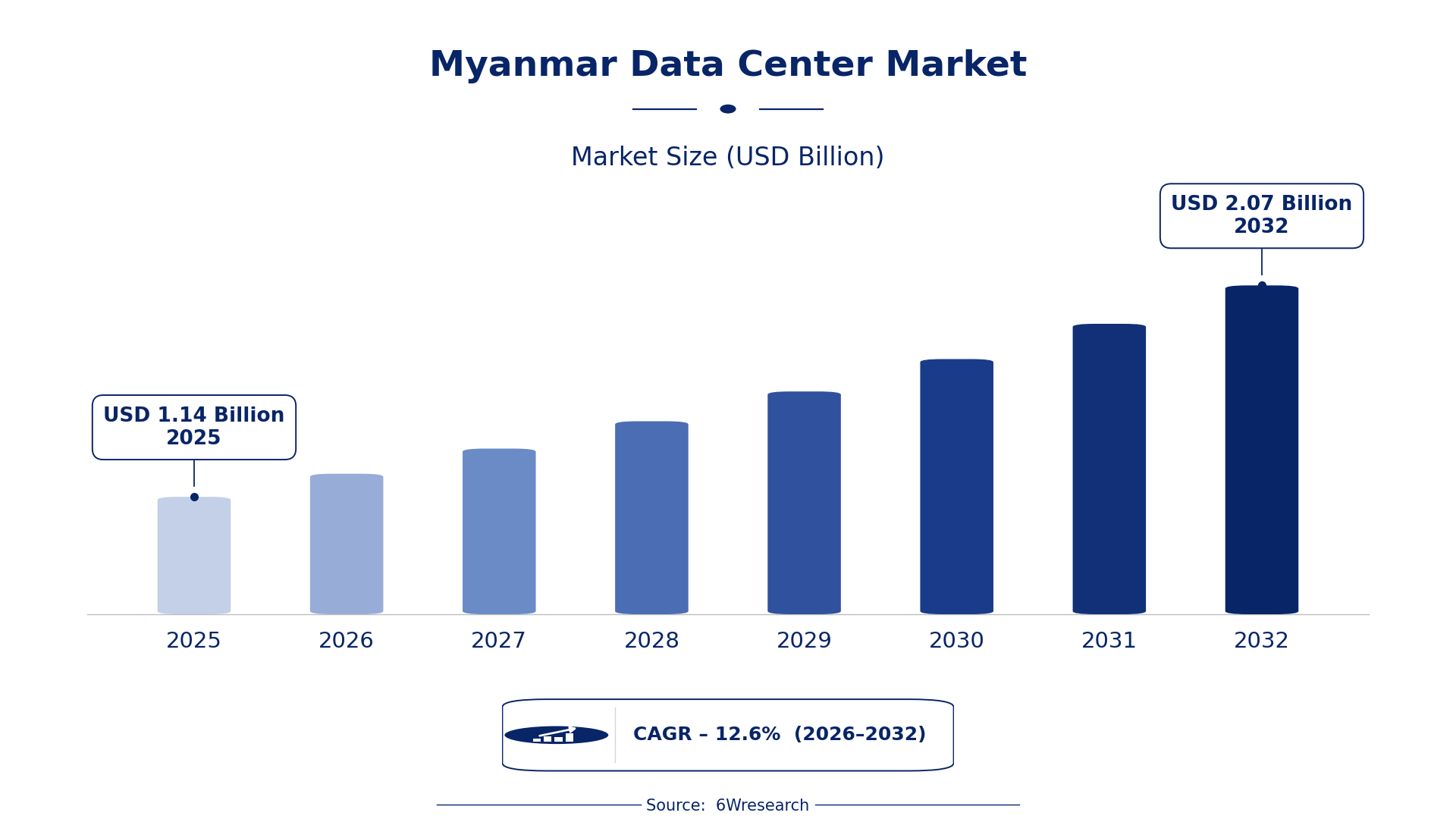
The Myanmar Data Center Market was estimated at USD 1142 Million in 2025 and is projected to reach USD 2067 Million by 2032, growing at a CAGR of 12.6% from 2026 to 2032.
Myanmar Data Center Market Synopsis
The Myanmar data center market is witnessing a dynamic shift as digital demands surge amidst ongoing economic reforms. As businesses increasingly adopt cloud technologies, the need for reliable data storage is becoming critical. This momentum contrasts with the historical limitations posed by infrastructure and regulatory hurdles that have traditionally stifled growth.
Looking ahead, the market is set for a transformative phase fueled by government initiatives and rising foreign investments. The expanding internet user base and the push towards digital transformation across sectors indicate that the momentum is not just a fleeting trend but a substantial shift in how data management is perceived in Myanmar.
Myanmar Data Center Market Year-wise Growth Rate and Key Drivers
This graph illustrates the annual growth rates of the Myanmar Data Center Market from 2021 to 2032, highlighting a steady upward trajectory and projected expansion over the forecast period.
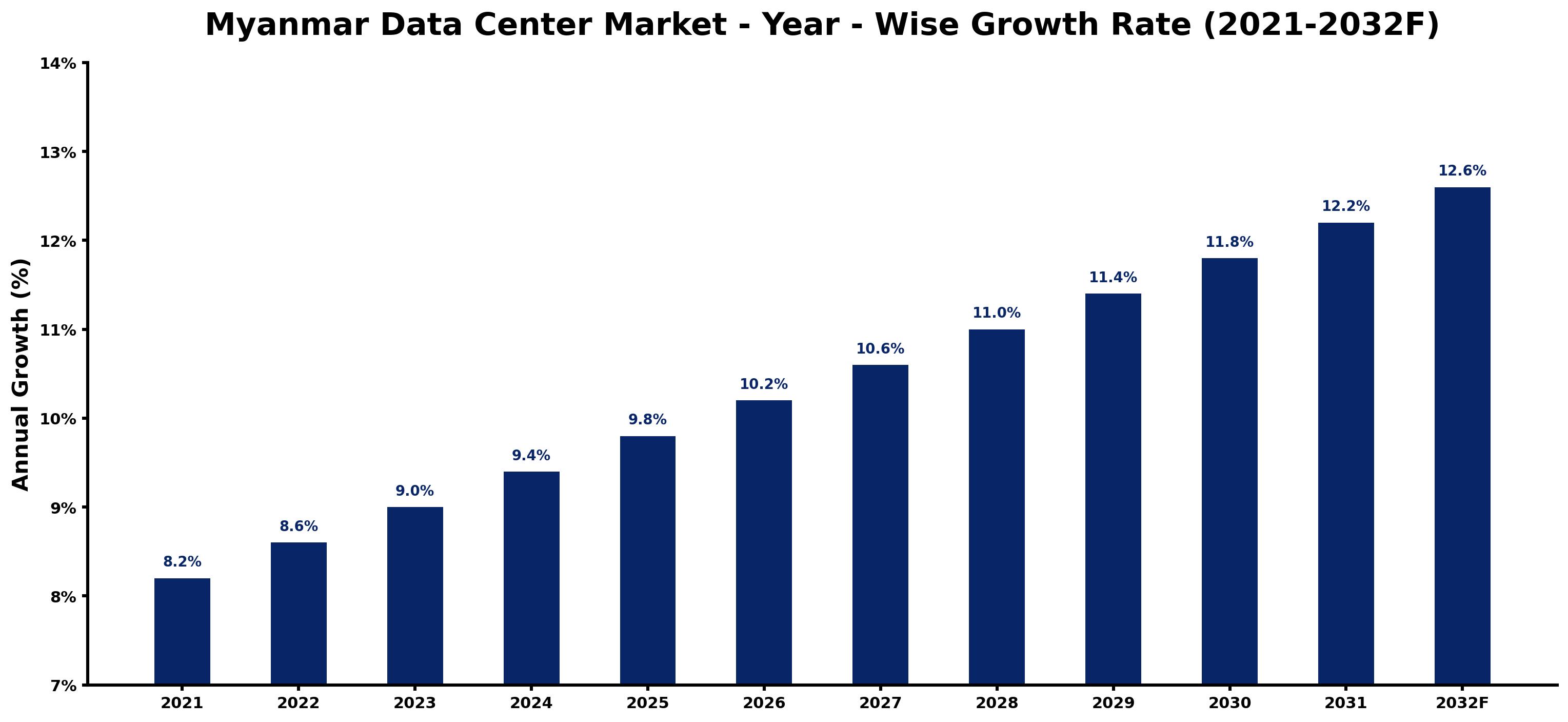
The table below presents the year‑wise growth rates along with the key drivers influencing the market
| Year | Growth Rate | Major Drivers |
| 2021 | 8.2% | Launch of Myanmar's National Data Center Development Plan. |
| 2022 | 8.6% | Increase in internet penetration driving data service needs. |
| 2023 | 9.0% | Government incentives for foreign data center investments. |
| 2024 | 9.4% | Emergence of fintech firms needing robust data infrastructure. |
| 2025 | 9.8% | Local enterprises transitioning to digital business operations. |
| 2026 | 10.2% | Regulatory support for green data center initiatives. |
| 2027 | 10.6% | Adoption of e-governance requiring enhanced data capabilities. |
| 2028 | 11.0% | Rise in mobile app usage boosting data demands. |
| 2029 | 11.4% | Strategic partnerships with global tech firms increasing capacity. |
| 2030 | 11.8% | Increased cybersecurity concerns heightening data center investments. |
| 2031 | 12.2% | Widespread digitalization across industries fueling data consumption. |
| 2032 | 12.6% | Growing local demand for big data analytics solutions. |
Note: Market size estimations and growth projections presented in this report are based on 6Wresearch's proprietary forecasting methodology, utilizing the latest available industry data, government publications, and primary research inputs.
Myanmar Data Center Market Key Takeaways
Below are some of the specific key takeaways from the market, including:
- The market is driven by a rising demand for cloud computing and digital services.
- Investment from both local and international players is increasing, fostering infrastructure development.
- Colocation services are gaining traction as businesses look to outsource IT infrastructure.
- The government is promoting digitalization and enhancing internet connectivity, further driving demand.
- Data security compliance is becoming a priority as regulations evolve in Myanmar.
Evaluation of Restraints in Myanmar Data Center Market
Several factors are currently restraining the growth of the Myanmar data center market. Limited infrastructure development remains a significant challenge, as does the unreliable power supply that hampers operations. High energy costs further exacerbate this issue, making it difficult for operators to maintain competitive pricing. Additionally, the lack of skilled IT professionals poses a barrier to the efficient management of data centers, impacting service quality. Regulatory restrictions also add complexity for both local and international players trying to navigate the market.
Myanmar Data Center Market Trends
A number of trends are shaping the Myanmar data center market. The shift towards cloud computing is becoming evident, with businesses increasingly recognizing the cost-efficiency and scalability it offers. Investments in data center infrastructure are on the rise, supported by initiatives aimed at enhancing digital capabilities across various sectors. The trend of outsourcing IT infrastructure to colocation providers is gaining momentum, reflecting a broader shift in corporate strategies towards focusing on core competencies. As digital transformation accelerates, compliance with data security regulations is also becoming a crucial factor for organizations operating in the region.
Myanmar Data Center Market Opportunities
The Myanmar data center market presents numerous investment opportunities, particularly as the country embraces digitalization. The growing internet user base and government efforts to improve digital infrastructure create a demand for modern data centers. Companies looking to enhance data security and comply with regulatory requirements will increasingly seek reliable data storage solutions. For early investors, the relatively underdeveloped market offers the chance to establish a competitive edge and capitalize on long-term growth potential in the digital economy.
Government Initiatives in the Myanmar Data Center Market
Government policy is actively shaping the Myanmar data center market, as officials recognize the need for improved digital infrastructure and regulatory frameworks. The focus is on enhancing internet connectivity and building trust through data security regulations. These initiatives are crucial for fostering an environment conducive to both local and foreign investment in data centers.
- A national digital infrastructure upgrade programme now in its rollout phase aims to enhance telecommunications and internet access.
- Regulations governing data privacy and security were introduced recently to build consumer and business trust.
- Ongoing efforts include tax incentives aimed at attracting foreign investors to establish data centers.
- A planned public-private initiative is expected to enhance connectivity and data center capabilities by 2028.
- The government has initiated a programme to train IT professionals, addressing the skills gap in the workforce.
Future Insights of the Myanmar Data Center Market
The Myanmar data center market is set to enter a growth phase from 2026 to 2032, driven by advancements in internet penetration and a growing emphasis on digital transformation across industries. As businesses continue to shift towards cloud-based solutions, the demand for secure and efficient data storage will only increase. Government initiatives aimed at enhancing connectivity and infrastructure will play a significant role in this growth trajectory, presenting abundant opportunities for investment and innovation in the sector.
Myanmar Data Center Market Latest Developments
Recent activity in the Myanmar data center market has been promising, with a surge in both local and international interest. Over the past year, several initiatives have been launched to enhance digital infrastructure and support the growing demand for data services. This momentum signifies a shift towards a more connected and data-driven economy.
- A major technology vendor launched a new cloud service in early 2025, catering specifically to local businesses.
- An ongoing partnership between regional operators aims to expand data center facilities in underserved areas, enhancing access to data services.
- A regulatory framework mandating data protection compliance was introduced in mid-2025, setting new standards for data management.
- A rollout of new energy-efficient technologies is expected to begin in late 2026, aimed at reducing operational costs for data centers.
- Upcoming projects include a data center development expected to break ground in Q1 2027, focusing on colocation services.
Myanmar Data Center Market - Key Attractiveness of the Report
- 10 Years of Market Numbers
- Historical Data Starting from 2022 to 2025
- Base Year: 2025
- Forecast Data until 2032
- Key Performance Indicators Impacting the Market
- Major Upcoming Developments and Projects
Key Highlights of the Report:
- Myanmar Data Center Market Outlook
- Market Size of Myanmar Data Center Market, 2025
- Forecast of Myanmar Data Center Market, 2032
- Historical Data and Forecast of Myanmar Data Center Revenues & Volume for the Period 2022-2032F
- Myanmar Data Center Market Trend Evolution
- Myanmar Data Center Market Drivers and Challenges
- Myanmar Data Center Price Trends
- Myanmar Data Center Porter's Five Forces
- Myanmar Data Center Industry Life Cycle
- Historical Data and Forecast of Myanmar Data Center Market Revenues & Volume By Component for the Period 2022-2032F
- Historical Data and Forecast of Myanmar Data Center Market Revenues & Volume By Electrical for the Period 2022-2032F
- Historical Data and Forecast of Myanmar Data Center Market Revenues & Volume By Mechanical for the Period 2022-2032F
- Historical Data and Forecast of Myanmar Data Center Market Revenues & Volume By Networking for the Period 2022-2032F
- Historical Data and Forecast of Myanmar Data Center Market Revenues & Volume By Racks for the Period 2022-2032F
- Historical Data and Forecast of Myanmar Data Center Market Revenues & Volume By Security Systems for the Period 2022-2032F
- Historical Data and Forecast of Myanmar Data Center Market Revenues & Volume By Fire Systems for the Period 2022-2032F
- Historical Data and Forecast of Myanmar Data Center Market Revenues & Volume By Vertical for the Period 2022-2032F
- Historical Data and Forecast of Myanmar Data Center Market Revenues & Volume By Banking Financial Services & Insurance (BFSI) for the Period 2022-2032F
- Historical Data and Forecast of Myanmar Data Center Market Revenues & Volume By Government for the Period 2022-2032F
- Historical Data and Forecast of Myanmar Data Center Market Revenues & Volume By IT & Telecom for the Period 2022-2032F
- Historical Data and Forecast of Myanmar Data Center Market Revenues & Volume By Media for the Period 2022-2032F
- Historical Data and Forecast of Myanmar Data Center Market Revenues & Volume By Retail for the Period 2022-2032F
- Historical Data and Forecast of Myanmar Data Center Market Revenues & Volume By Manufacturing for the Period 2022-2032F
- Historical Data and Forecast of Myanmar Data Center Market Revenues & Volume By Others for the Period 2022-2032F
- Myanmar Data Center Import Export Trade Statistics
- Market Opportunity Assessment By Component
- Market Opportunity Assessment By Vertical
- Myanmar Data Center Top Companies Market Share
- Myanmar Data Center Competitive Benchmarking By Technical and Operational Parameters
- Myanmar Data Center Company Profiles
- Myanmar Data Center Key Strategic Recommendations






































