Myanmar Gaming Market Size, Share & Growth Rate
The Myanmar Gaming Market was estimated at USD 474 Million in 2025 and is projected to reach USD 622 Million by 2032, growing at a CAGR of 4.0% from 2026 to 2032. This growth trajectory is primarily fueled by an influx of affordable smartphones and improved access to high-speed internet, particularly among the younger demographic. The rising engagement in mobile gaming, characterized by popular genres like strategy and role-playing, further underscores the market's potential.
Myanmar Gaming Market Year-wise Growth Rate and Key Drivers
This graph highlights how the Myanmar Gaming Market has steadily grown over the years, supported by major growth factors.
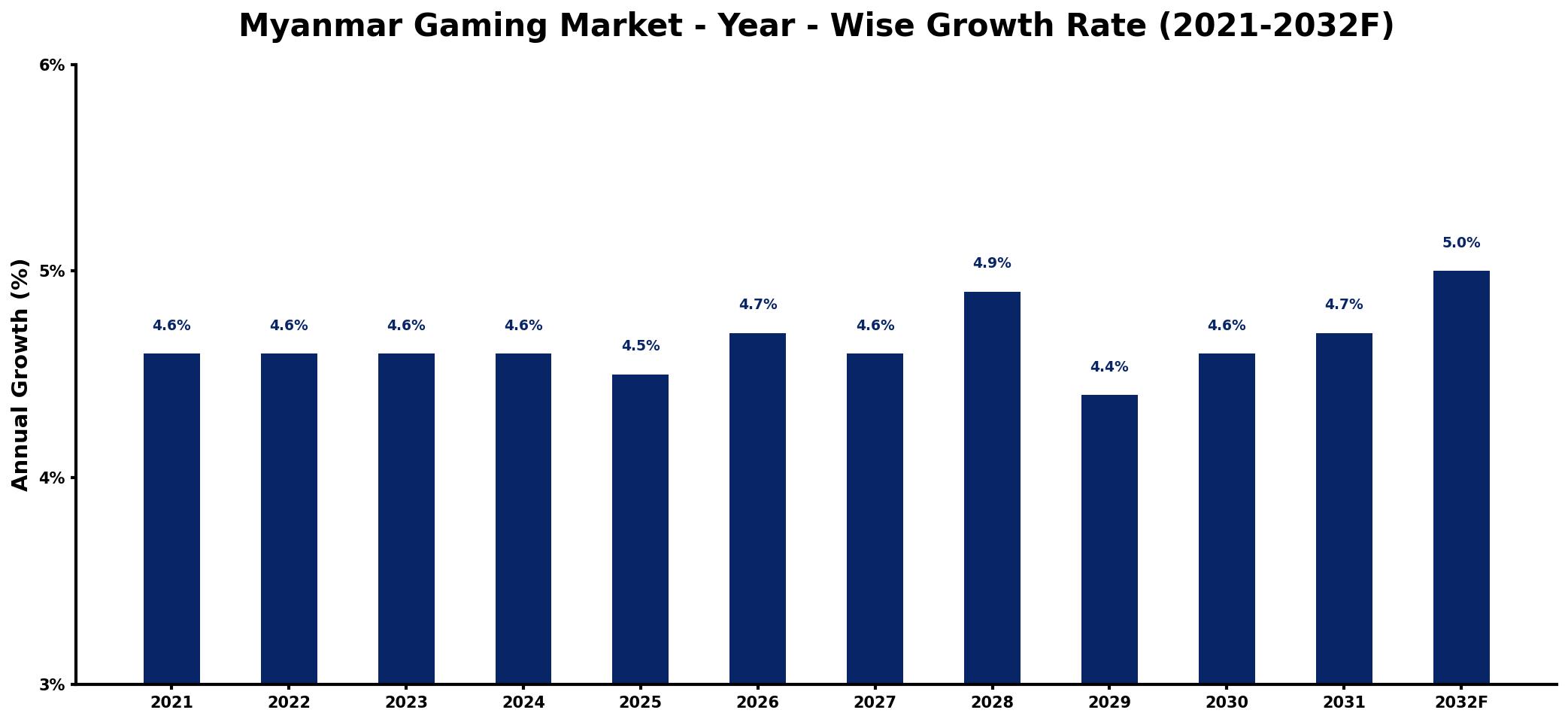
The table below presents the year‑wise growth rates along with the key drivers influencing the market
| Year | Growth Rate | Major Drivers |
| 2021 | 4.6% | Rise in mobile device ownership |
| 2022 | 4.6% | Increase in internet accessibility |
| 2023 | 4.6% | Growth of esports popularity |
| 2024 | 4.6% | Expansion of local content creation |
| 2025 | 4.5% | Emergence of new investment opportunities |
| 2026 | 4.7% | Development of digital payment solutions |
| 2027 | 4.6% | Surge in youth engagement levels |
| 2028 | 4.9% | Adoption of augmented reality experiences |
| 2029 | 4.4% | increased pharmaceutical industry usage |
| 2030 | 4.6% | Advancements in technology infrastructure |
| 2031 | 4.7% | Collaboration with international developers |
| 2032 | 5.0% | Integration of virtual reality platforms |
Note: Market size estimations and growth projections presented in this report are based on 6Wresearch's proprietary forecasting methodology, utilizing the latest available industry data, government publications, and primary research inputs.
Myanmar Gaming Market Synopsis
The gaming landscape in Myanmar is on the verge of transformation, driven largely by the youth's increasing affinity for mobile gaming. With a significant portion of the population engaging in gaming activities, the local market is witnessing a surge in both downloads and in-app purchases, making it a vibrant sector within the broader entertainment industry.
In addition to local game development, the growing interest in esports is reshaping the competitive scene, attracting a diverse audience to organized events. However, challenges such as regulatory hurdles and limited payment options remain critical factors that could impact the market's full potential.
Myanmar Gaming Market Key Takeaways
- The Myanmar gaming sector is largely mobile-centric, appealing to a tech-savvy young audience.
- Emerging local developers are tailoring content to reflect cultural preferences, enriching the gaming experience.
- Esports is gaining momentum, fostering community engagement and competitive spirit among gamers.
- Regulatory uncertainties and limited payment methods pose significant challenges for market expansion.
- Investment opportunities abound, particularly in mobile gaming and local partnerships.
Evaluation of Restraints in Myanmar Gaming Market
While the Myanmar gaming market shows promising signs of growth, several substantial restraints are impeding its progress. Limited internet access in rural areas constrains the potential gamer base, while strict government regulations on online gaming stifle industry innovation. Moreover, a prevailing lack of awareness about gaming and its economic impact among the general populace limits market engagement. The dual threats of piracy and counterfeit games further complicate the landscape, often deterring legitimate businesses from investing in the region.
Myanmar Gaming Market Trends
A few trends are shaping the Myanmar gaming market. Notably, the growing popularity of mobile gaming is supported by increased smartphone accessibility. The emergence of local game developers is fostering culturally relevant content creation, catering specifically to Myanmars unique preferences. Additionally, esports is evolving from a niche interest into a mainstream activity, with more competitive events and a rising spectator base. These trends collectively signal a dynamic environment ripe for innovation and engagement.
Myanmar Gaming Market Opportunities
Investment opportunities in the Myanmar gaming market are robust, especially given its relatively untapped nature compared to its Southeast Asian counterparts. Investors can explore avenues in game development studios that resonate with local audiences, esports tournaments that build community, and digital marketing strategies aimed at young gamers. Collaborations with local influencers can also enhance market penetration, offering a pathway to capture the interest of a growing gamer demographic.
Government Initiatives in the Myanmar Gaming Market
The Myanmar government maintains a firm stance against gambling, which profoundly influences the gaming landscape. Existing regulations prohibit gambling activities, effectively shaping the framework within which gaming operates. Although this policy approach is aimed at protecting the population from potential social issues related to gambling, it limits the scope for legal online gaming platforms and can hinder overall industry growth. The governments ongoing regulatory efforts reflect an emphasis on social responsibility, yet could benefit from broader discussions about fostering a healthy gaming ecosystem.
Future Insights of the Myanmar Gaming Market
Looking ahead to 2026-2032, the Myanmar gaming market appears set for substantial evolution, bolstered by advancements in technology and a burgeoning young consumer base. As internet and smartphone penetration continues to rise, opportunities for mobile gaming and innovative content are expected to expand significantly. However, to realize its full potential, the market will need to address regulatory hurdles and foster awareness about the positive impacts of gaming. With strategic investments and a collaborative approach, Myanmar's gaming landscape could thrive in the years to come.
Myanmar Gaming Market Latest Developments (2025 - 2026)
In recent months, the Myanmar gaming market has witnessed a flurry of activity, with local developers launching culturally resonant games that attract significant user engagement. Additionally, the esports sector is experiencing increased participation, with organized tournaments drawing attention from both players and sponsors. Efforts to enhance digital payment solutions are underway, aiming to streamline transactions for gamers and encourage more in-game purchases. This evolving environment signals a robust path forward for the industry.
Myanmar Gaming Market - Key Attractiveness of the Report
- 10 Years of Market Numbers
- Historical Data Starting from 2022 to 2025
- Base Year: 2025
- Forecast Data until 2032
- Key Performance Indicators Impacting the Market
- Major Upcoming Developments and Projects
Key Highlights of the Report:
- Myanmar Gaming Market Outlook
- Market Size of Myanmar Gaming Market, 2025
- Forecast of Myanmar Gaming Market, 2032
- Historical Data and Forecast of Myanmar Gaming Revenues & Volume for the Period 2022-2032F
- Myanmar Gaming Market Trend Evolution
- Myanmar Gaming Market Drivers and Challenges
- Myanmar Gaming Price Trends
- Myanmar Gaming Porter's Five Forces
- Myanmar Gaming Industry Life Cycle
- Historical Data and Forecast of Myanmar Gaming Market Revenues & Volume By Game Type for the Period 2022-2032F
- Historical Data and Forecast of Myanmar Gaming Market Revenues & Volume By Shooter for the Period 2022-2032F
- Historical Data and Forecast of Myanmar Gaming Market Revenues & Volume By Action for the Period 2022-2032F
- Historical Data and Forecast of Myanmar Gaming Market Revenues & Volume By Sports for the Period 2022-2032F
- Historical Data and Forecast of Myanmar Gaming Market Revenues & Volume By Role-Playing for the Period 2022-2032F
- Historical Data and Forecast of Myanmar Gaming Market Revenues & Volume By Others for the Period 2022-2032F
- Historical Data and Forecast of Myanmar Gaming Market Revenues & Volume By Device Type for the Period 2022-2032F
- Historical Data and Forecast of Myanmar Gaming Market Revenues & Volume By PC/MMO for the Period 2022-2032F
- Historical Data and Forecast of Myanmar Gaming Market Revenues & Volume By Tablet for the Period 2022-2032F
- Historical Data and Forecast of Myanmar Gaming Market Revenues & Volume By Mobile Phone for the Period 2022-2032F
- Historical Data and Forecast of Myanmar Gaming Market Revenues & Volume By TV/Console for the Period 2022-2032F
- Historical Data and Forecast of Myanmar Gaming Market Revenues & Volume By End-User for the Period 2022-2032F
- Historical Data and Forecast of Myanmar Gaming Market Revenues & Volume By Male for the Period 2022-2032F
- Historical Data and Forecast of Myanmar Gaming Market Revenues & Volume By Female for the Period 2022-2032F
- Myanmar Gaming Import Export Trade Statistics
- Market Opportunity Assessment By Game Type
- Market Opportunity Assessment By Device Type
- Market Opportunity Assessment By End-User
- Myanmar Gaming Top Companies Market Share
- Myanmar Gaming Competitive Benchmarking By Technical and Operational Parameters
- Myanmar Gaming Company Profiles
- Myanmar Gaming Key Strategic Recommendations






































