Myanmar Sports Nutrition Market Size, Share & Growth Rate
The Myanmar Sports Nutrition Market was estimated at USD 212 Million in 2025 and is projected to reach USD 278 Million by 2032, growing at a CAGR of 3.9% from 2026 to 2032. This growth trajectory is primarily fueled by the rising health consciousness among the population and a burgeoning fitness culture. More individuals are engaging in fitness activities, driving demand for various performance-enhancing supplements, including protein powders and energy bars.
Myanmar Sports Nutrition Market Year-wise Growth Rate and Key Drivers
This graph highlights how the Myanmar Sports Nutrition Market has steadily grown over the years, supported by major growth factors.
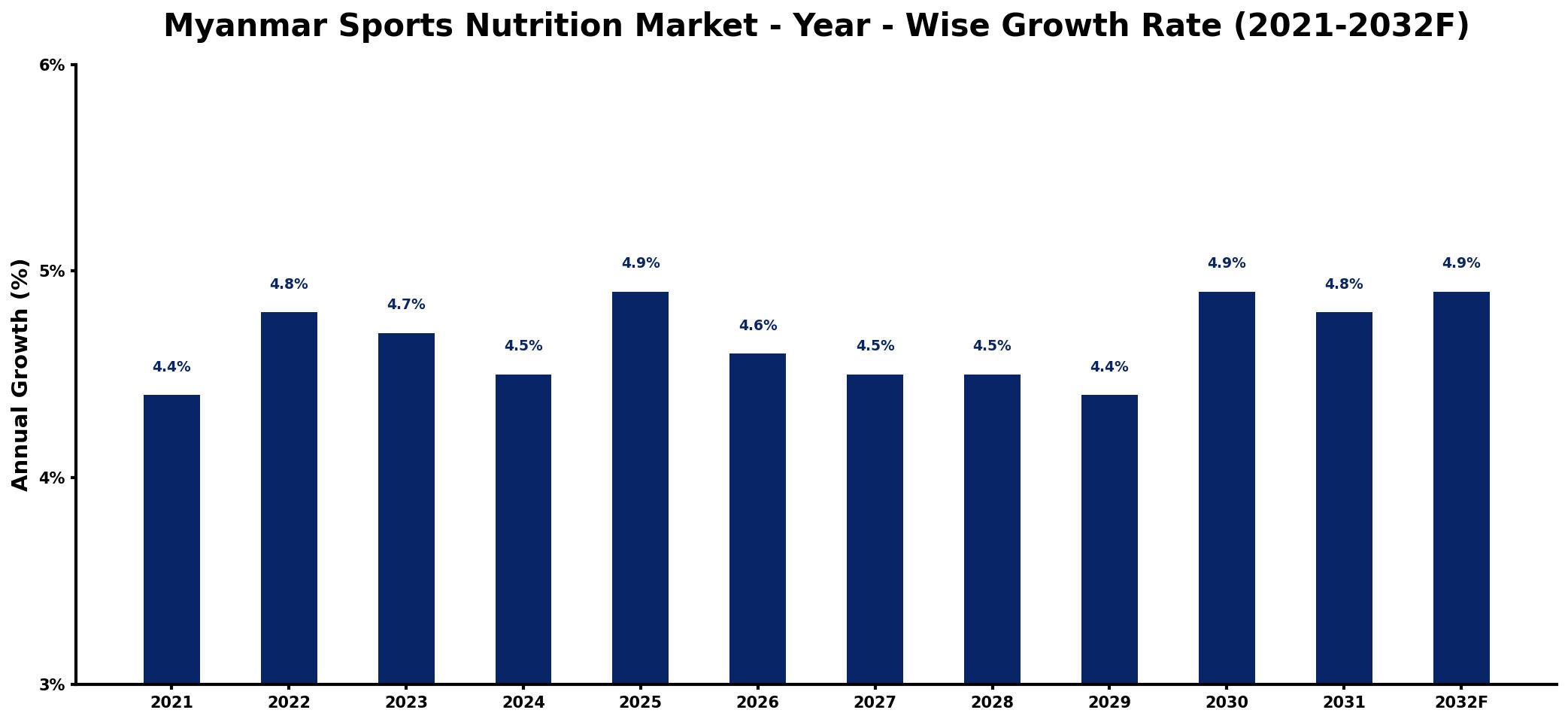
The table below presents the year‑wise growth rates along with the key drivers influencing the market
| Year | Growth Rate | Major Drivers |
| 2021 | 4.4% | Increased health awareness campaigns |
| 2022 | 4.8% | Growth in fitness center memberships |
| 2023 | 4.7% | Rise in online fitness classes |
| 2024 | 4.5% | Expansion of retail distribution channels |
| 2025 | 4.9% | Surge in fitness influencer marketing |
| 2026 | 4.6% | Increase in local manufacturing capabilities |
| 2027 | 4.5% | increased pharmaceutical industry usage |
| 2028 | 4.5% | increased capital investment inflows |
| 2029 | 4.4% | expanding manufacturing base activity |
| 2030 | 4.9% | strengthening underlying market demand |
| 2031 | 4.8% | rising end-use demand growth |
| 2032 | 4.9% | rising infrastructure development spending |
Note: Market size estimations and growth projections presented in this report are based on 6Wresearch's proprietary forecasting methodology, utilizing the latest available industry data, government publications, and primary research inputs.
Myanmar Sports Nutrition Market Synopsis
The Myanmar sports nutrition market has experienced recent momentum, spurred by a surge in fitness enthusiasts and athletes seeking high-quality supplements to enhance performance. As awareness around the significance of nutrition in sports and overall health continues to expand, the market is poised for sustained growth, indicating a positive shift toward a more health-conscious society.
Looking ahead, the market is expected to evolve, with opportunities for innovative product offerings and expanded consumer education on sports nutrition benefits. Local and international brands are increasingly focusing on consumer preferences, which will further contribute to market dynamics and growth potential.
Myanmar Sports Nutrition Market Key Takeaways
- The market is on a growth trajectory, driven by increasing fitness culture and health awareness among consumers.
- There is a burgeoning demand for a variety of sports nutrition products, including protein powders and energy supplements.
- Distribution channels are diversifying, with a strong presence of e-commerce platforms and specialty stores.
- Challenges persist, including limited consumer awareness and affordability issues affecting market accessibility.
- Investment opportunities exist through product innovation and enhanced distribution strategies.
Evaluation of Restraints in Myanmar Sports Nutrition Market
Several factors are impeding the growth of the Myanmar sports nutrition market. Primarily, there is a prevalent lack of awareness and understanding of sports nutrition products among the general populace, which hinders widespread adoption. The limited availability of specialized retailers further complicates access to quality products. Furthermore, affordability remains a critical issue, particularly with imported goods, which are subjected to high taxes, making them less accessible to many consumers. Lastly, the prevalence of counterfeit products exacerbates consumer distrust, which can hinder market expansion.
Myanmar Sports Nutrition Market Trends
The demand for sports nutrition products in Myanmar is witnessing robust growth, driven by a health-conscious population increasingly participating in fitness and sports activities. Consumers are leaning toward high-protein products, energy bars, and performance-enhancing supplements that promise to elevate their fitness journeys. Alongside this, there is a noticeable trend of increasing collaboration between local and international brands to meet the demand for quality and innovative offerings, reinforcing consumer trust and brand loyalty.
Myanmar Sports Nutrition Market Opportunities
Opportunities for genuine growth in the Myanmar sports nutrition market are vast, particularly as the awareness of healthy living continues to permeate society. Brands can capitalize on this trend by introducing localized products that cater specifically to Myanmar consumers' preferences and dietary needs. Additionally, enhancing online retail capabilities can further broaden market access. Effective marketing strategies that educate potential consumers on the benefits of sports nutrition will also play a critical role in expanding market reach and profitability.
Government Initiatives in the Myanmar Sports Nutrition Market
The Myanmar government has introduced various initiatives aimed at regulating and promoting the sports nutrition market. These policies focus on ensuring the safety and quality of products through strict regulations. By promoting research and development within the industry, the government seeks to foster innovation and improve the competitive landscape. Awareness campaigns targeting consumers about the benefits of safe and effective sports nutrition products are also underway to support overall market growth.
Future Insights of the Myanmar Sports Nutrition Market
The future outlook for the Myanmar sports nutrition market is optimistic, bolstered by an increasingly health-oriented populace. Rising disposable incomes are anticipated to enhance consumers ability to invest in sports nutrition products, driving demand. With international brands expanding their footprint and local players emerging with specialized offerings, the market is well-positioned for steady growth over the next several years. Addressing regulatory and distribution challenges will be essential to harness the full potential of this burgeoning industry.
Myanmar Sports Nutrition Market Latest Developments (2025 - 2026)
Recent developments within the Myanmar sports nutrition market indicate a strong inclination towards product diversification, with brands increasingly introducing specialized offerings to cater to specific consumer preferences. Moreover, e-commerce platforms have witnessed a surge in popularity, facilitating easier access to sports nutrition products. Simultaneously, public awareness initiatives are gaining momentum, contributing to a gradual increase in consumer education regarding sports nutrition.
Myanmar Sports Nutrition Market - Key Attractiveness of the Report
- 10 Years of Market Numbers
- Historical Data Starting from 2022 to 2025
- Base Year: 2025
- Forecast Data until 2032
- Key Performance Indicators Impacting the Market
- Major Upcoming Developments and Projects
Key Highlights of the Report:
- Myanmar Sports Nutrition Market Outlook
- Market Size of Myanmar Sports Nutrition Market, 2025
- Forecast of Myanmar Sports Nutrition Market, 2032
- Historical Data and Forecast of Myanmar Sports Nutrition Revenues & Volume for the Period 2022-2032F
- Myanmar Sports Nutrition Market Trend Evolution
- Myanmar Sports Nutrition Market Drivers and Challenges
- Myanmar Sports Nutrition Price Trends
- Myanmar Sports Nutrition Porter's Five Forces
- Myanmar Sports Nutrition Industry Life Cycle
- Historical Data and Forecast of Myanmar Sports Nutrition Market Revenues & Volume By Type for the Period 2022-2032F
- Historical Data and Forecast of Myanmar Sports Nutrition Market Revenues & Volume By Sports Food for the Period 2022-2032F
- Historical Data and Forecast of Myanmar Sports Nutrition Market Revenues & Volume By Sports Drinks for the Period 2022-2032F
- Historical Data and Forecast of Myanmar Sports Nutrition Market Revenues & Volume By Sports Supplements for the Period 2022-2032F
- Historical Data and Forecast of Myanmar Sports Nutrition Market Revenues & Volume By Distribution Channel for the Period 2022-2032F
- Historical Data and Forecast of Myanmar Sports Nutrition Market Revenues & Volume By Supermarkets/Hypermarkets for the Period 2022-2032F
- Historical Data and Forecast of Myanmar Sports Nutrition Market Revenues & Volume By Specialty Stores for the Period 2022-2032F
- Historical Data and Forecast of Myanmar Sports Nutrition Market Revenues & Volume By Convenience Stores for the Period 2022-2032F
- Historical Data and Forecast of Myanmar Sports Nutrition Market Revenues & Volume By Online Stores for the Period 2022-2032F
- Historical Data and Forecast of Myanmar Sports Nutrition Market Revenues & Volume By Other Distribution Channels for the Period 2022-2032F
- Myanmar Sports Nutrition Import Export Trade Statistics
- Market Opportunity Assessment By Type
- Market Opportunity Assessment By Distribution Channel
- Myanmar Sports Nutrition Top Companies Market Share
- Myanmar Sports Nutrition Competitive Benchmarking By Technical and Operational Parameters
- Myanmar Sports Nutrition Company Profiles
- Myanmar Sports Nutrition Key Strategic Recommendations






































