Myanmar Wallet Market Summary
The myanmar wallet market was estimated at USD 300 Million in 2025 and is projected to reach USD 431 Million by 2032, growing at a CAGR of 6.3% from 2026 to 2032.
Myanmar Wallet Market Year-wise Growth Rate and Key Drivers
This graph highlights how the Myanmar Wallet Market has steadily grown over the past five years, supported by major growth factors.
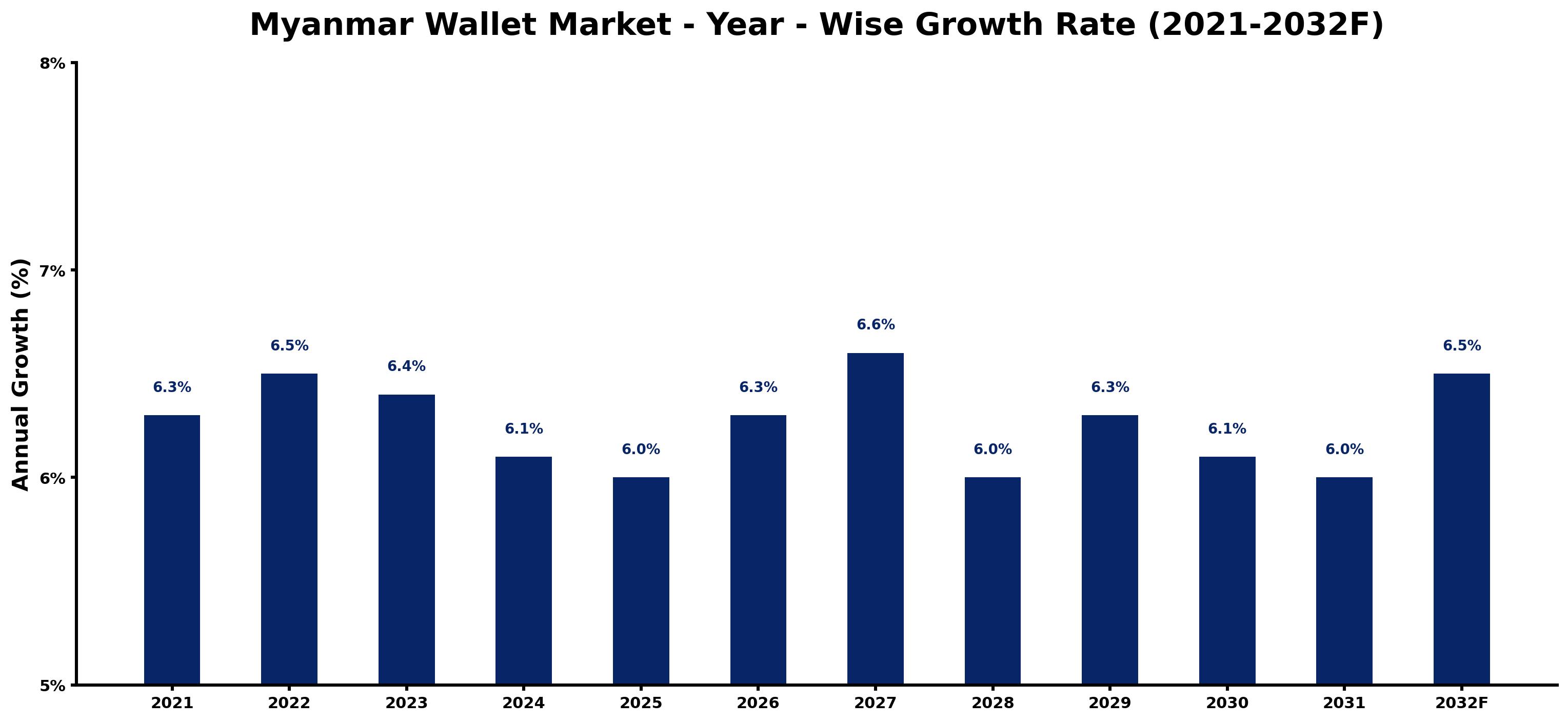
The table below presents the year wise growth rates along with the key drivers influencing the market
| Year | Growth Rate | Major Drivers |
| 2021 | 6.3% | Digital payment solutions gained traction amid ongoing economic recovery efforts. |
| 2022 | 6.5% | The pandemic accelerated mobile wallet usage as cash transactions dwindled significantly. |
| 2023 | 6.4% | Increased smartphone penetration provided wider access to digital financial services. |
| 2024 | 6.1% | Rural areas began embracing mobile wallets, shifting traditional payment behaviors. |
| 2025 | 6.0% | Local fintech startups emerged, enhancing competition and diversifying service offerings. |
| 2026 | 6.3% | Consumer preferences shifted towards cashless transactions, influenced by convenience and safety. |
| 2027 | 6.6% | Partnerships between banks and tech firms led to innovative wallet features and services. |
| 2028 | 6.0% | International remittances via digital wallets became crucial for many households' income. |
| 2029 | 6.3% | Enhanced cybersecurity measures built consumer trust in digital financial platforms. |
| 2030 | 6.1% | Integration of e-commerce and mobile wallets streamlined online shopping experiences. |
| 2031 | 6.0% | Government policies started to favor digital transactions, influencing market behavior positively. |
| 2032 | 6.5% | Cultural acceptance of digital payments solidified, marking a significant shift in finances. |
Note - Market size estimations and growth projections presented in this report are based on 6Wresearch's advanced forecasting approach, validated with industry datasets as of June 2026.
Myanmar Wallet Market Synopsis
The Myanmar Wallet Market is projected to reach 6.3% and witness significant growth during the forecast period (2026-2032). This market encompasses both physical wallets and the rapidly expanding digital wallet solutions, a segment that has gained particular traction as digital payments become increasingly prevalent across the country. The convergence of financial technology advancement and the growing preference for secure, convenient digital wallet applications is key to this expansion.
Myanmar Wallet Market Growth Drivers
The Myanmar Wallet Market is significantly driven by the increasing adoption of digital payment solutions amongst consumers and businesses alike. Some of the main factors contributing to this growth include:
- The rising penetration of smartphones has enhanced accessibility to digital wallet applications, enabling consumers to conduct transactions with ease.
- Advancements in financial technology have paved the way for innovative digital payment solutions that offer enhanced security and improved user experiences.
- The growing consumer preference for cashless transactions, particularly among younger demographics, is shifting the market landscape towards digital wallets.
- E-commerce expansion in Myanmar is compelling consumers to seek efficient payment solutions that seamlessly integrate with online shopping experiences.
- Increased awareness and acceptance of digital wallet benefits, such as convenience and time savings, are gradually transforming consumer behavior and preferences.
Myanmar Wallet Market Challenges and Restraints
Despite the promising growth prospects, the Myanmar Wallet Market faces several challenges that could hinder its full potential. These include:
- Limited consumer adoption of digital wallets remains a significant barrier, as many individuals still prefer traditional cash transactions due to familiarity and perceived security.
- Concerns surrounding data privacy and security issues continue to dissuade consumers from fully embracing digital wallet solutions, affecting market traction.
- The lack of robust financial infrastructure to support a widespread digital payment ecosystem hampers the growth of digital wallets.
- Regulatory hurdles and the need for standardized guidelines could slow down the pace of innovation within the digital wallet sector.
- Technological disparities between urban and rural populations may lead to unequal access to digital wallet services, exacerbating the adoption gap.
Myanmar Wallet Market Trends and Opportunities
Emerging trends within the Myanmar Wallet Market indicate substantial opportunities for growth. Key trends include:
- The integration of artificial intelligence and machine learning technologies into digital wallets is enhancing user experience through personalized services and fraud detection capabilities.
- Partnerships between fintech companies and traditional financial institutions are facilitating a more comprehensive approach to digital wallets, bolstering consumer confidence.
- Increased investment in infrastructure, particularly in urban areas, is expected to improve connectivity and accessibility to digital payment services.
- The rise of mobile commerce is prompting businesses to adopt digital wallet solutions to cater to customers who prefer to shop via mobile devices.
- Public awareness campaigns surrounding the benefits of digital wallets are fostering a more favorable environment for adoption, targeting segments that are currently underserved.
Myanmar Wallet Market Government Investment and Initiatives
The government of Myanmar plays a crucial role in fostering the growth of the wallet market through various initiatives aimed at promoting both digital and physical wallet usage. These initiatives include:
- Implementation of policies that provide financial incentives for wallet manufacturers, encouraging innovation and market entry.
- Support for research and development focusing on secure wallet technologies to enhance consumer trust and engagement.
- Public awareness campaigns aimed at educating citizens on the advantages of utilizing digital wallets for everyday transactions.
- Investment in the necessary infrastructure to support the seamless operation of digital payment systems across the country.
- Collaboration with international organizations to align local regulations with global best practices in digital payment frameworks.
Myanmar Wallet Market Latest Developments (May 2025 - June 2026)
Recent developments in the Myanmar Wallet Market indicate a dynamic shift towards integrated payment solutions. The period from May 2025 to June 2026 has seen an increase in the number of fintech startups entering the market, aimed at providing innovative wallet solutions. The government has intensified its efforts to enhance financial literacy among consumers, thereby promoting the adoption of digital wallets. Furthermore, there has been a notable push towards improving data security regulations, addressing consumer concerns over privacy and safety in digital transactions. The market is also witnessing collaborations between technology providers and traditional banks to create hybrid solutions that cater to a broader audience.
Myanmar Wallet Market - Key Attractiveness of the Report
- 10 Years of Market Numbers
- Historical Data Starting from 2022 to 2025
- Base Year: 2025
- Forecast Data until 2032
- Key Performance Indicators Impacting the Market
- Major Upcoming Developments and Projects
Key Highlights of the Report:
- Myanmar Wallet Market Outlook
- Market Size of Myanmar Wallet Market, 2025
- Forecast of Myanmar Wallet Market, 2032
- Historical Data and Forecast of Myanmar Wallet Revenues & Volume for the Period 2022-2032F
- Myanmar Wallet Market Trend Evolution
- Myanmar Wallet Market Drivers and Challenges
- Myanmar Wallet Price Trends
- Myanmar Wallet Porter's Five Forces
- Myanmar Wallet Industry Life Cycle
- Historical Data and Forecast of Myanmar Wallet Market Revenues & Volume By Product Type for the Period 2022-2032F
- Historical Data and Forecast of Myanmar Wallet Market Revenues & Volume By Short Wallet for the Period 2022-2032F
- Historical Data and Forecast of Myanmar Wallet Market Revenues & Volume By Long Wallet for the Period 2022-2032F
- Historical Data and Forecast of Myanmar Wallet Market Revenues & Volume By Material for the Period 2022-2032F
- Historical Data and Forecast of Myanmar Wallet Market Revenues & Volume By Leather for the Period 2022-2032F
- Historical Data and Forecast of Myanmar Wallet Market Revenues & Volume By Fabric for the Period 2022-2032F
- Historical Data and Forecast of Myanmar Wallet Market Revenues & Volume By Gender for the Period 2022-2032F
- Historical Data and Forecast of Myanmar Wallet Market Revenues & Volume By Men for the Period 2022-2032F
- Historical Data and Forecast of Myanmar Wallet Market Revenues & Volume By Women for the Period 2022-2032F
- Historical Data and Forecast of Myanmar Wallet Market Revenues & Volume By Kids for the Period 2022-2032F
- Historical Data and Forecast of Myanmar Wallet Market Revenues & Volume By Distribution Channel for the Period 2022-2032F
- Historical Data and Forecast of Myanmar Wallet Market Revenues & Volume By Online for the Period 2022-2032F
- Historical Data and Forecast of Myanmar Wallet Market Revenues & Volume By Offline for the Period 2022-2032F
- Myanmar Wallet Import Export Trade Statistics
- Market Opportunity Assessment By Product Type
- Market Opportunity Assessment By Material
- Market Opportunity Assessment By Gender
- Market Opportunity Assessment By Distribution Channel
- Myanmar Wallet Top Companies Market Share
- Myanmar Wallet Competitive Benchmarking By Technical and Operational Parameters
- Myanmar Wallet Company Profiles
- Myanmar Wallet Key Strategic Recommendations






































