Nepal Chlorine Market Size Growth Rate
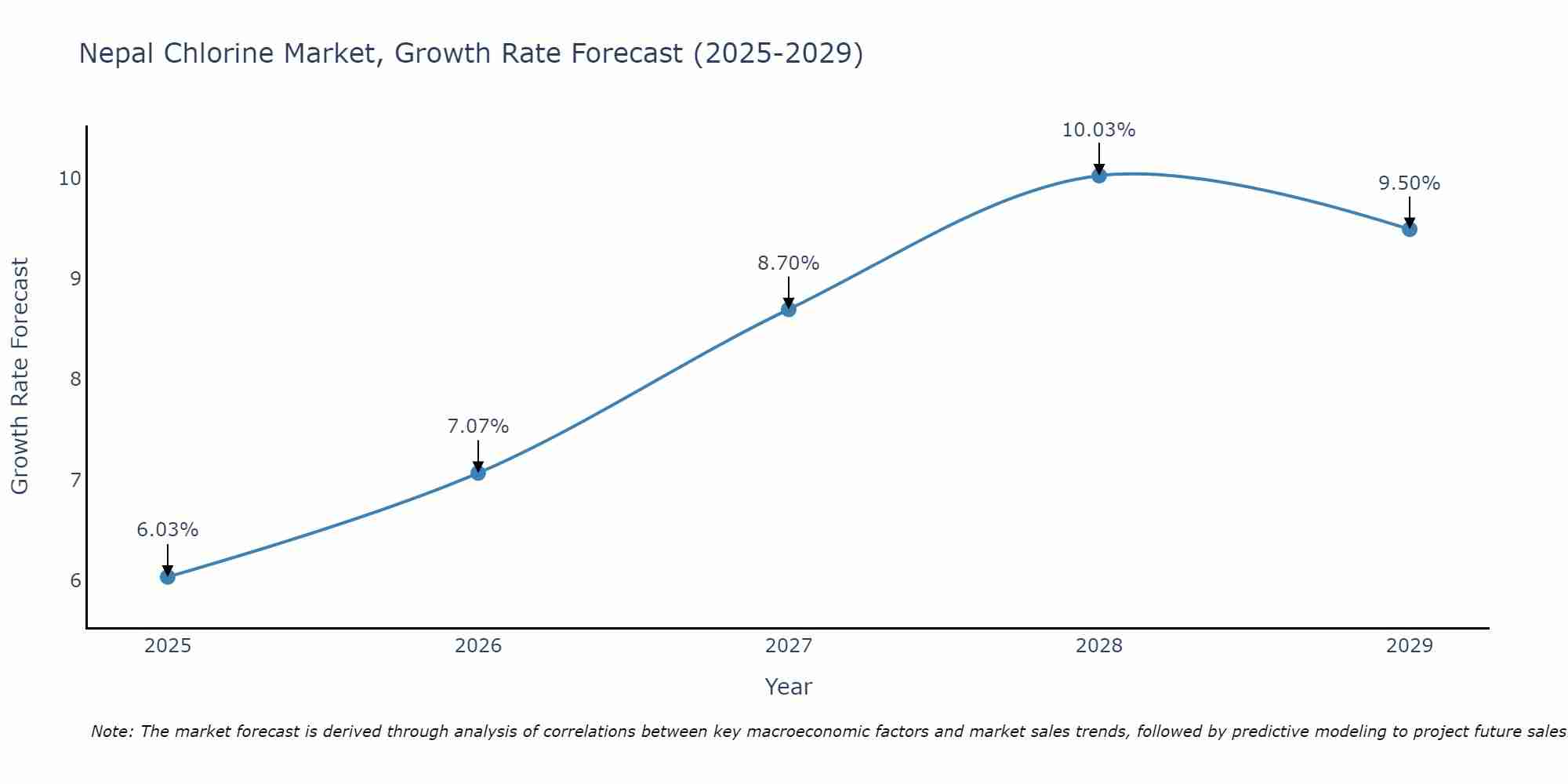
The Nepal Chlorine Market is projected to witness mixed growth rate patterns during 2025 to 2029. The growth rate begins at 6.03% in 2025, climbs to a high of 10.03% in 2028, and moderates to 9.50% by 2029.
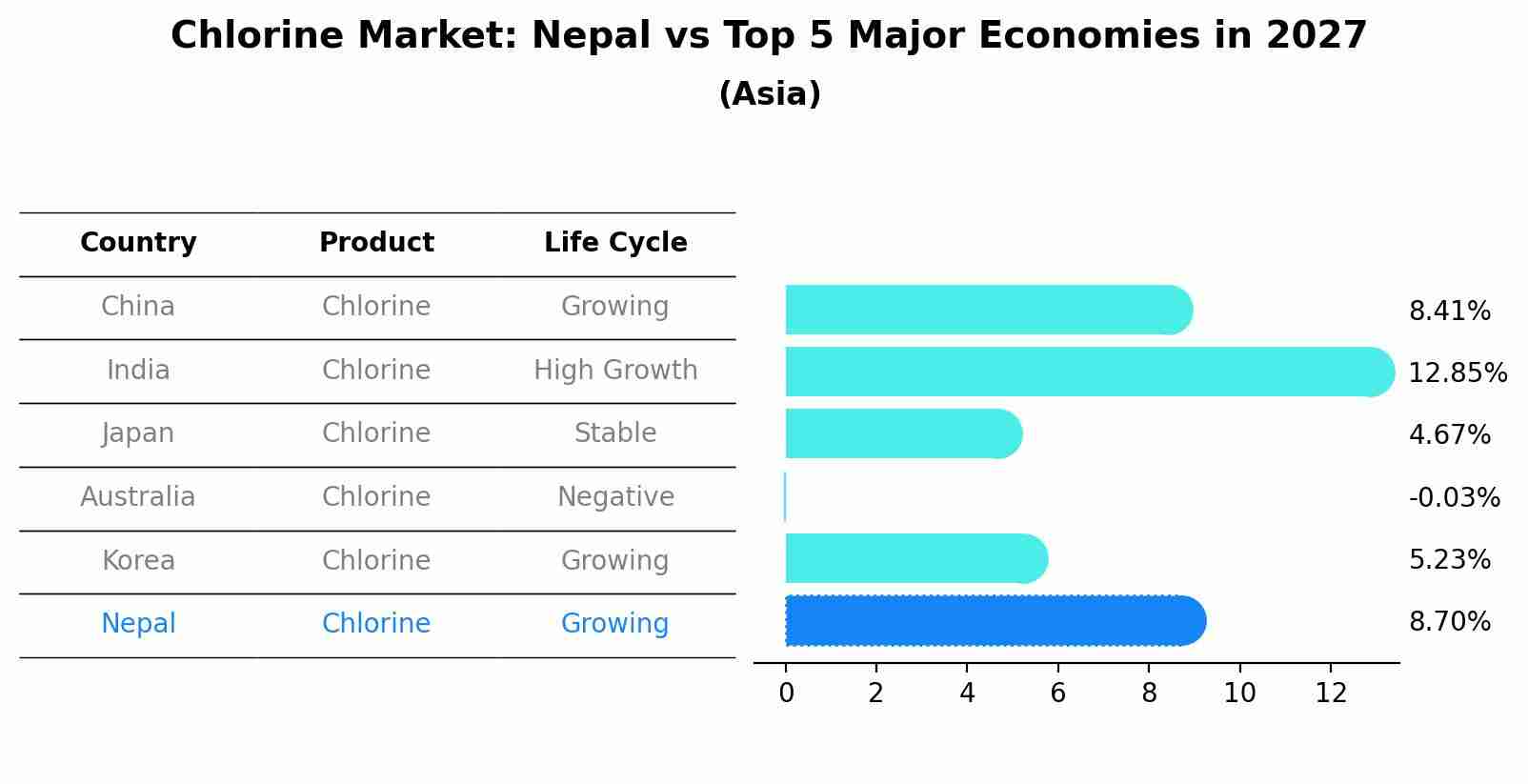
Chlorine Market: Nepal vs Top 5 Major Economies in 2027 (Asia)
By 2027, the Chlorine market in Nepal is anticipated to reach a growth rate of 8.70%, as part of an increasingly competitive Asia region, where China remains at the forefront, supported by India, Japan, Australia and South Korea, driving innovations and market adoption across sectors.
Nepal Chlorine Market Overview
The Nepal chlorine market is growing steadily due to increasing demand from various industries such as water treatment, pharmaceuticals, and agriculture. Chlorine is widely used for water disinfection to ensure safe drinking water supply, especially in rural areas. The agriculture sector also utilizes chlorine for crop protection and soil treatment. The pharmaceutical industry in Nepal relies on chlorine for the manufacturing of various drugs and medicinal products. With the government`s focus on improving water quality and sanitation infrastructure, the demand for chlorine is expected to rise further. Key players in the Nepal chlorine market include manufacturers like Tata Chemicals and Syngenta, along with local distributors and suppliers catering to the diverse needs of end-users across different sectors.
Nepal Chlorine Market Trends
Currently, the Nepal Chlorine Market is experiencing steady growth due to increasing demand from various sectors such as water treatment, pharmaceuticals, and agriculture. The emphasis on water purification and sanitation in the country has led to a rise in the use of chlorine for disinfection purposes. Additionally, the agriculture sector is utilizing chlorine for pest control and crop protection, further driving market growth. However, challenges such as fluctuating raw material prices and environmental concerns regarding the use of chlorine are being addressed by manufacturers through innovation and sustainable practices. Overall, the Nepal Chlorine Market is poised for continued expansion, with a focus on meeting the growing demand while ensuring environmental responsibility.
Nepal Chlorine Market Challenges
In the Nepal Chlorine Market, some of the challenges faced include inconsistent supply due to dependency on imports, fluctuating prices of raw materials, inadequate infrastructure for storage and distribution, and lack of awareness among consumers about the importance of water treatment. Additionally, regulatory issues and compliance with safety standards pose challenges for market players. The market is also impacted by the seasonality of demand, with higher consumption during the monsoon season. Addressing these challenges will require investments in improving supply chain efficiencies, building storage facilities, educating consumers about water quality, and ensuring compliance with regulations to foster a more stable and sustainable chlorine market in Nepal.
Nepal Chlorine Market Investment Opportunities
The Nepal Chlorine Market presents promising investment opportunities for companies involved in water treatment, sanitation, and industrial applications. With increasing focus on water quality and sanitation in Nepal, the demand for chlorine as a disinfectant is expected to rise. Investment in chlorine production facilities, distribution networks, and technology upgrades can help meet this growing demand. Additionally, the expanding industrial sector in Nepal, including manufacturing, agriculture, and healthcare, provides opportunities for chlorine usage in various processes. Collaborating with government agencies, NGOs, and local communities to promote safe water practices and sanitation can also create a sustainable market for chlorine products in Nepal. Overall, strategic investments in the Nepal Chlorine Market can yield long-term returns due to the country`s increasing awareness and emphasis on public health and industrial development.
Nepal Chlorine Market Government Policy
The Nepal government has implemented various policies related to the chlorine market to ensure safe handling, usage, and disposal of the chemical. These policies include regulations on the import, storage, and distribution of chlorine to prevent any potential hazards to public health and the environment. Additionally, there are guidelines in place for the proper labeling of chlorine containers, as well as training programs for workers involved in handling chlorine to minimize risks. The government also monitors and enforces compliance with these policies through regular inspections and audits of facilities that use chlorine. Overall, these policies aim to promote the responsible use of chlorine in Nepal while mitigating any adverse impacts on the population and the ecosystem.
Nepal Chlorine Market Future Outlook
The future outlook for the Nepal Chlorine Market appears promising with steady growth anticipated in the coming years. The increasing demand for chlorine in various industries such as water treatment, pharmaceuticals, and agriculture is expected to drive market expansion. Additionally, the government`s initiatives to improve water quality and sanitation in the country will further boost the demand for chlorine products. With a growing population and urbanization trends leading to higher consumption of clean water and sanitation facilities, the Nepal Chlorine Market is likely to witness sustained growth. However, market players will need to focus on innovation and sustainability to address environmental concerns and regulatory requirements, ensuring long-term success in this evolving market landscape.
Key Highlights of the Report:
- Nepal Chlorine Market Outlook
- Market Size of Nepal Chlorine Market, 2024
- Forecast of Nepal Chlorine Market, 2031
- Historical Data and Forecast of Nepal Chlorine Revenues & Volume for the Period 2021 - 2031
- Nepal Chlorine Market Trend Evolution
- Nepal Chlorine Market Drivers and Challenges
- Nepal Chlorine Price Trends
- Nepal Chlorine Porter's Five Forces
- Nepal Chlorine Industry Life Cycle
- Historical Data and Forecast of Nepal Chlorine Market Revenues & Volume By Application for the Period 2021 - 2031
- Historical Data and Forecast of Nepal Chlorine Market Revenues & Volume By EDC/PVC for the Period 2021 - 2031
- Historical Data and Forecast of Nepal Chlorine Market Revenues & Volume By Isocyanates and Oxygenates for the Period 2021 - 2031
- Historical Data and Forecast of Nepal Chlorine Market Revenues & Volume By Chloromethanes for the Period 2021 - 2031
- Historical Data and Forecast of Nepal Chlorine Market Revenues & Volume By Solvents and Epichlorohydrin for the Period 2021 - 2031
- Historical Data and Forecast of Nepal Chlorine Market Revenues & Volume By Inorganic Chemicals for the Period 2021 - 2031
- Historical Data and Forecast of Nepal Chlorine Market Revenues & Volume By Other Applications for the Period 2021 - 2031
- Historical Data and Forecast of Nepal Chlorine Market Revenues & Volume By End-user Industry for the Period 2021 - 2031
- Historical Data and Forecast of Nepal Chlorine Market Revenues & Volume By Water Treatment for the Period 2021 - 2031
- Historical Data and Forecast of Nepal Chlorine Market Revenues & Volume By Pharmaceutical for the Period 2021 - 2031
- Historical Data and Forecast of Nepal Chlorine Market Revenues & Volume By Chemicals for the Period 2021 - 2031
- Historical Data and Forecast of Nepal Chlorine Market Revenues & Volume By Paper and Pulp for the Period 2021 - 2031
- Historical Data and Forecast of Nepal Chlorine Market Revenues & Volume By Plastic for the Period 2021 - 2031
- Historical Data and Forecast of Nepal Chlorine Market Revenues & Volume By Pesticides for the Period 2021 - 2031
- Historical Data and Forecast of Nepal Chlorine Market Revenues & Volume By Other End-user Industries for the Period 2021 - 2031
- Nepal Chlorine Import Export Trade Statistics
- Market Opportunity Assessment By Application
- Market Opportunity Assessment By End-user Industry
- Nepal Chlorine Top Companies Market Share
- Nepal Chlorine Competitive Benchmarking By Technical and Operational Parameters
- Nepal Chlorine Company Profiles
- Nepal Chlorine Key Strategic Recommendations






































