Nepal Silk Yarn Market Size, Share & Growth Rate
The Nepal Silk Yarn Market was estimated at USD 393 Million in 2025 and is projected to reach USD 534 Million by 2032, growing at a CAGR of 4.5% from 2026 to 2032. This trajectory is primarily driven by the increasing global demand for high-quality, eco-friendly silk products and the rising popularity of handcrafted luxury textiles. As consumer preferences shift towards sustainable and ethically sourced materials, the Nepal Silk Yarn Market is well-positioned to capitalize on these trends.
Nepal Silk Yarn Market Year-wise Growth Rate and Key Drivers
This graph highlights how the Nepal Silk Yarn Market has steadily grown over the years, supported by major growth factors.
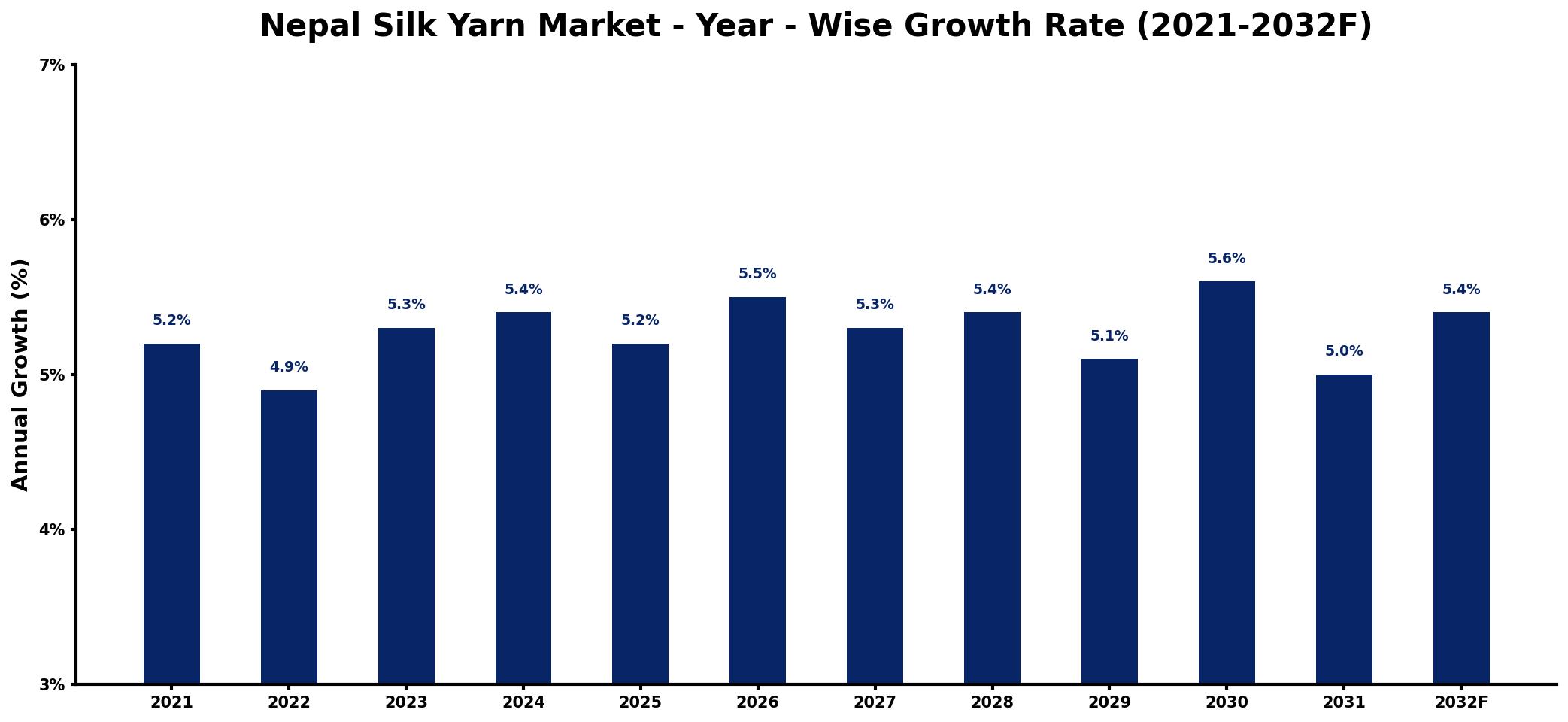
The table below presents the year‑wise growth rates along with the key drivers influencing the market
| Year | Growth Rate | Major Drivers |
| 2021 | 5.2% | Increase in textile manufacturing investments |
| 2022 | 4.9% | Growing demand for luxury textiles |
| 2023 | 5.3% | Expansion of local artisan networks |
| 2024 | 5.4% | Rising popularity of sustainable fabrics |
| 2025 | 5.2% | Boost in fashion industry collaborations |
| 2026 | 5.5% | Increased exports to international markets |
| 2027 | 5.3% | Growth in traditional craft revival |
| 2028 | 5.4% | Surge in online retail platforms |
| 2029 | 5.1% | Enhanced production technology adoption |
| 2030 | 5.6% | Growing interest in eco-friendly materials |
| 2031 | 5.0% | Strengthening of local supply chains |
| 2032 | 5.4% | Emergence of new design trends |
Note: Market size estimations and growth projections presented in this report are based on 6Wresearch's proprietary forecasting methodology, utilizing the latest available industry data, government publications, and primary research inputs.
Nepal Silk Yarn Market Synopsis
Nepal's unique heritage in silk yarn production, characterized by traditional cultivation and spinning methods, significantly distinguishes its offerings in the global market. The natural sheen and durability of Nepalese silk yarn make it a preferred choice for artisans and designers crafting premium products, such as sarees and shawls.
With an increasing emphasis on sustainable fashion, the demand for organic and naturally dyed silk yarns is witnessing a notable surge. This growing awareness among consumers regarding the environmental impacts of textile production is reshaping the supply dynamics in the Nepal Silk Yarn Market, creating a blend of tradition and modernity.
Nepal Silk Yarn Market Key Takeaways
- The market is uniquely positioned due to its rich heritage and high-quality silk production methods.
- Growing consumer demand for sustainable and ethically produced textiles is driving market expansion.
- Challenges like limited production capacity and infrastructure need to be addressed for better competitiveness.
- Investment opportunities are ripe as technology advancements enhance production efficiency and quality.
- Government policies aimed at boosting the silk industry play a pivotal role in market growth.
Evaluation of Restraints in Nepal Silk Yarn Market
The Nepal Silk Yarn Market faces several constraints that impede its growth potential. A significant barrier is the lack of modern infrastructure and technology necessary for effective silk production, which often results in inefficiencies and inconsistent quality. Furthermore, fluctuating raw silk prices can disrupt the production process, making it challenging for manufacturers to maintain stability. The availability of skilled labor is another concern, as traditional skills are increasingly difficult to pass on to younger generations. Competing against established silk-producing countries also places added pressure on Nepali producers, who must enhance their offerings to retain market share. Addressing these challenges is crucial for the market's sustained growth and competitiveness on the global stage.
Nepal Silk Yarn Market Trends
Current trends in the Nepal Silk Yarn Market reflect a significant shift towards sustainable production practices. Consumers are increasingly gravitating towards organic and handwoven silk yarns, leading to a surge in products that embody ethical sourcing and environmental consciousness. Moreover, there is a growing interest in innovative silk blends that include sustainable materials like bamboo or soy, allowing for unique textures and improved sustainability profiles. The market is also witnessing a rise in naturally dyed silk yarns, as artisans and consumers alike seek alternatives to synthetic dyes that carry a lower environmental footprint.
Nepal Silk Yarn Market Opportunities
The Nepal Silk Yarn Market presents considerable investment opportunities, particularly given the rising demand for high-quality silk products on a global scale. With a reputation for excellence in silk production, Nepal can attract investors looking to capitalize on the market's premium offerings. The incorporation of sustainable practices and advanced technologies can significantly enhance the market's competitiveness. Investors can benefit from entering this evolving landscape, provided they engage in thorough market research and remain updated on industry trends to identify key areas for growth.
Government Initiatives in the Nepal Silk Yarn Market
The Nepalese government has actively implemented policies to bolster the Silk Yarn Market, recognizing its potential for economic development. Financial incentives and subsidies have been extended to silk farmers and weavers, encouraging the continuation of traditional practices while enhancing productivity. Furthermore, government initiatives focus on promoting research and development in silk production techniques and improving access to credit for businesses within the silk sector. Efforts to promote Nepalese silk yarn at international trade fairs also reflect a strategic push to enhance export opportunities and showcase the market's unique offerings.
Future Insights of the Nepal Silk Yarn Market
Looking ahead to the period of 2026-2032, the Nepal Silk Yarn Market is expected to experience steady growth driven by rising disposable incomes and evolving consumer preferences towards sustainable textiles. The global shift towards natural fibers coupled with increased awareness of the health and environmental benefits of silk will further fuel demand. Continued government support and technological advancements in silk production methods will likely enhance the efficiency and quality of Nepalese silk yarns, positioning the market for sustained success in both domestic and international arenas.
Nepal Silk Yarn Market Latest Developments (2025 - 2026)
Recent developments within the Nepal Silk Yarn Market indicate a robust emphasis on sustainability and innovation. Initiatives aimed at promoting naturally dyed and organic silk yarns have gained traction, reflecting the changing consumer landscape. Additionally, various stakeholders within the industry are exploring collaborative efforts to modernize production techniques, thereby improving quality and efficiency. The governments ongoing commitment to enhancing the silk sector through supportive policies and marketing initiatives continues to foster a conducive environment for growth.
Nepal Silk Yarn Market - Key Attractiveness of the Report
- 10 Years of Market Numbers
- Historical Data Starting from 2022 to 2025
- Base Year: 2025
- Forecast Data until 2032
- Key Performance Indicators Impacting the Market
- Major Upcoming Developments and Projects
Key Highlights of the Report:
- Nepal Silk Yarn Market Outlook
- Market Size of Nepal Silk Yarn Market, 2025
- Forecast of Nepal Silk Yarn Market, 2032
- Historical Data and Forecast of Nepal Silk Yarn Revenues & Volume for the Period 2022-2032F
- Nepal Silk Yarn Market Trend Evolution
- Nepal Silk Yarn Market Drivers and Challenges
- Nepal Silk Yarn Price Trends
- Nepal Silk Yarn Porter's Five Forces
- Nepal Silk Yarn Industry Life Cycle
- Historical Data and Forecast of Nepal Silk Yarn Market Revenues & Volume By Production Analysis for the Period 2022-2032F
- Historical Data and Forecast of Nepal Silk Yarn Market Revenues & Volume By Volume for the Period 2022-2032F
- Historical Data and Forecast of Nepal Silk Yarn Market Revenues & Volume By Consumption Analysis for the Period 2022-2032F
- Historical Data and Forecast of Nepal Silk Yarn Market Revenues & Volume By Value for the Period 2022-2032F
- Historical Data and Forecast of Nepal Silk Yarn Market Revenues & Volume By Volume for the Period 2022-2032F
- Historical Data and Forecast of Nepal Silk Yarn Market Revenues & Volume By Export Analysis for the Period 2022-2032F
- Historical Data and Forecast of Nepal Silk Yarn Market Revenues & Volume By Value for the Period 2022-2032F
- Historical Data and Forecast of Nepal Silk Yarn Market Revenues & Volume By Volume for the Period 2022-2032F
- Historical Data and Forecast of Nepal Silk Yarn Market Revenues & Volume By Import Analysis for the Period 2022-2032F
- Historical Data and Forecast of Nepal Silk Yarn Market Revenues & Volume By Value for the Period 2022-2032F
- Historical Data and Forecast of Nepal Silk Yarn Market Revenues & Volume By Volume for the Period 2022-2032F
- Nepal Silk Yarn Import Export Trade Statistics
- Market Opportunity Assessment By Production Analysis
- Market Opportunity Assessment By Consumption Analysis
- Market Opportunity Assessment By Export Analysis
- Market Opportunity Assessment By Import Analysis
- Nepal Silk Yarn Top Companies Market Share
- Nepal Silk Yarn Competitive Benchmarking By Technical and Operational Parameters
- Nepal Silk Yarn Company Profiles
- Nepal Silk Yarn Key Strategic Recommendations






































