New Zealand Flavored Water Market Growth Rate Analysis (2025 - 2031)
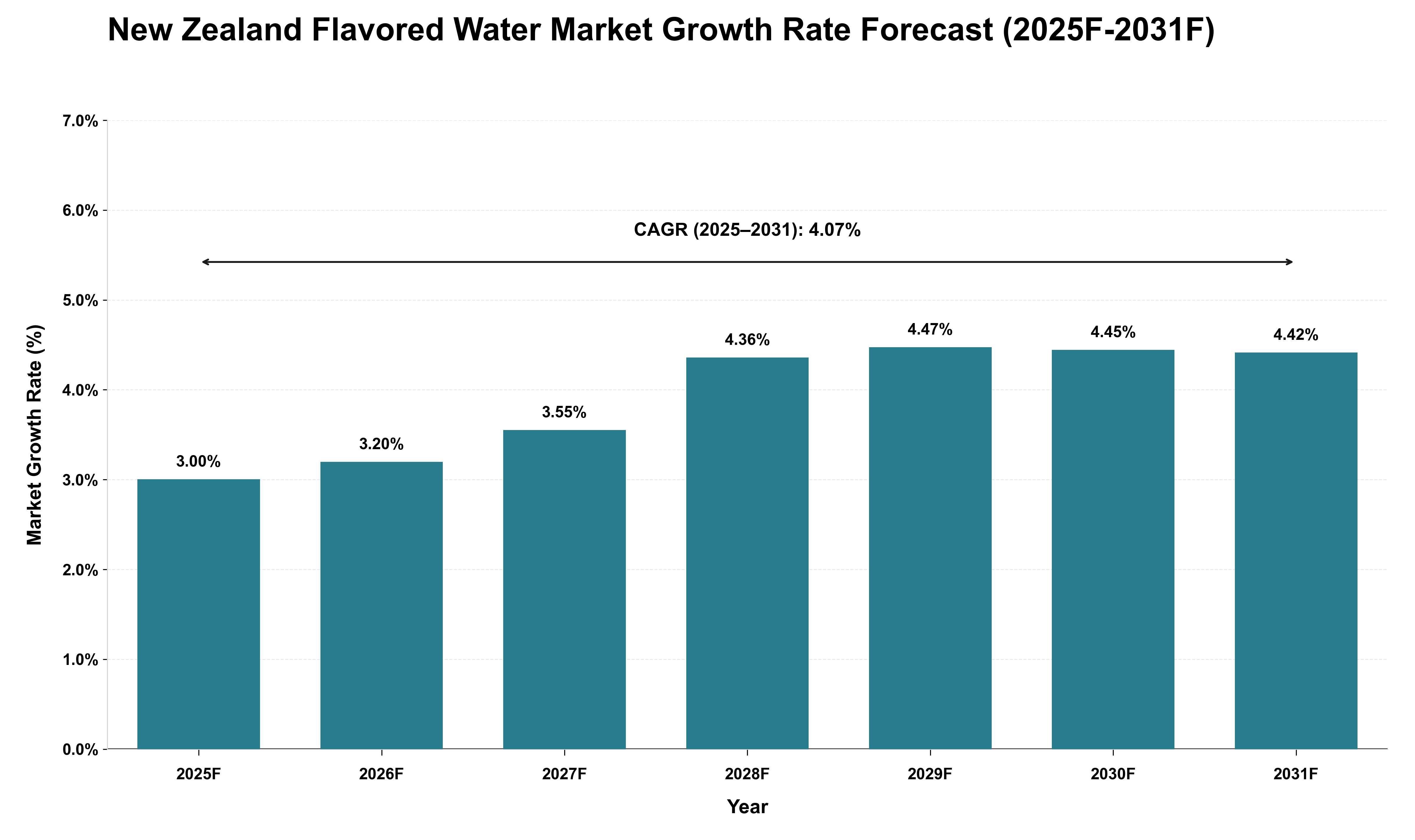
From 2025 onward, the New Zealand flavored water market will likely experience a steady growth trajectory, driven by evolving consumer preferences towards healthier beverage options and increasing awareness of hydration benefits. The projected CAGR of 4.07% reflects a gradual acceleration in annual growth rates, peaking at 4.47% in 2029 before stabilizing slightly thereafter. This trend will be influenced by macroeconomic factors such as rising disposable incomes and demographic shifts favoring health-conscious choices among younger consumers. Additionally, import dependencies on flavoring agents and packaging materials may introduce volatility in pricing, impacting margins but also encouraging local production initiatives. As global supply chains adapt to changing trade dynamics, the flavored water segment is expected to benefit from enhanced distribution networks and marketing strategies that resonate with sustainability trends, further bolstering its appeal in the competitive beverage landscape through 2031.
Key Highlights of the Report:
- New Zealand Flavored Water Market Outlook
- Market Size of New Zealand Flavored Water Market, 2025
- Forecast of New Zealand Flavored Water Market, 2032
- Historical Data and Forecast of New Zealand Flavored Water Revenues & Volume for the Period 2022 - 2032F
- New Zealand Flavored Water Market Trend Evolution
- New Zealand Flavored Water Market Drivers and Challenges
- New Zealand Flavored Water Price Trends
- New Zealand Flavored Water Porter`s Five Forces
- New Zealand Flavored Water Industry Life Cycle
- Historical Data and Forecast of New Zealand Flavored Water Market Revenues & Volume By Type for the Period 2022 - 2032F
- Historical Data and Forecast of New Zealand Flavored Water Market Revenues & Volume By Carbonated for the Period 2022 - 2032F
- Historical Data and Forecast of New Zealand Flavored Water Market Revenues & Volume By Still for the Period 2022 - 2032F
- Historical Data and Forecast of New Zealand Flavored Water Market Revenues & Volume By Packaging type for the Period 2022 - 2032F
- Historical Data and Forecast of New Zealand Flavored Water Market Revenues & Volume By Bottles for the Period 2022 - 2032F
- Historical Data and Forecast of New Zealand Flavored Water Market Revenues & Volume By Cans for the Period 2022 - 2032F
- Historical Data and Forecast of New Zealand Flavored Water Market Revenues & Volume By others for the Period 2022 - 2032F
- Historical Data and Forecast of New Zealand Flavored Water Market Revenues & Volume By Distribution Channel for the Period 2022 - 2032F
- Historical Data and Forecast of New Zealand Flavored Water Market Revenues & Volume By Store-Based for the Period 2022 - 2032F
- Historical Data and Forecast of New Zealand Flavored Water Market Revenues & Volume By Non-Store-Based for the Period 2022 - 2032F
- New Zealand Flavored Water Import Export Trade Statistics
- Market Opportunity Assessment By Type
- Market Opportunity Assessment By Packaging type
- Market Opportunity Assessment By Distribution Channel
- New Zealand Flavored Water Top Companies Market Share
- New Zealand Flavored Water Competitive Benchmarking By Technical and Operational Parameters
- New Zealand Flavored Water Company Profiles
- New Zealand Flavored Water Key Strategic Recommendations






































