New Zealand Leather Market Growth Rate Analysis (2025 - 2031)
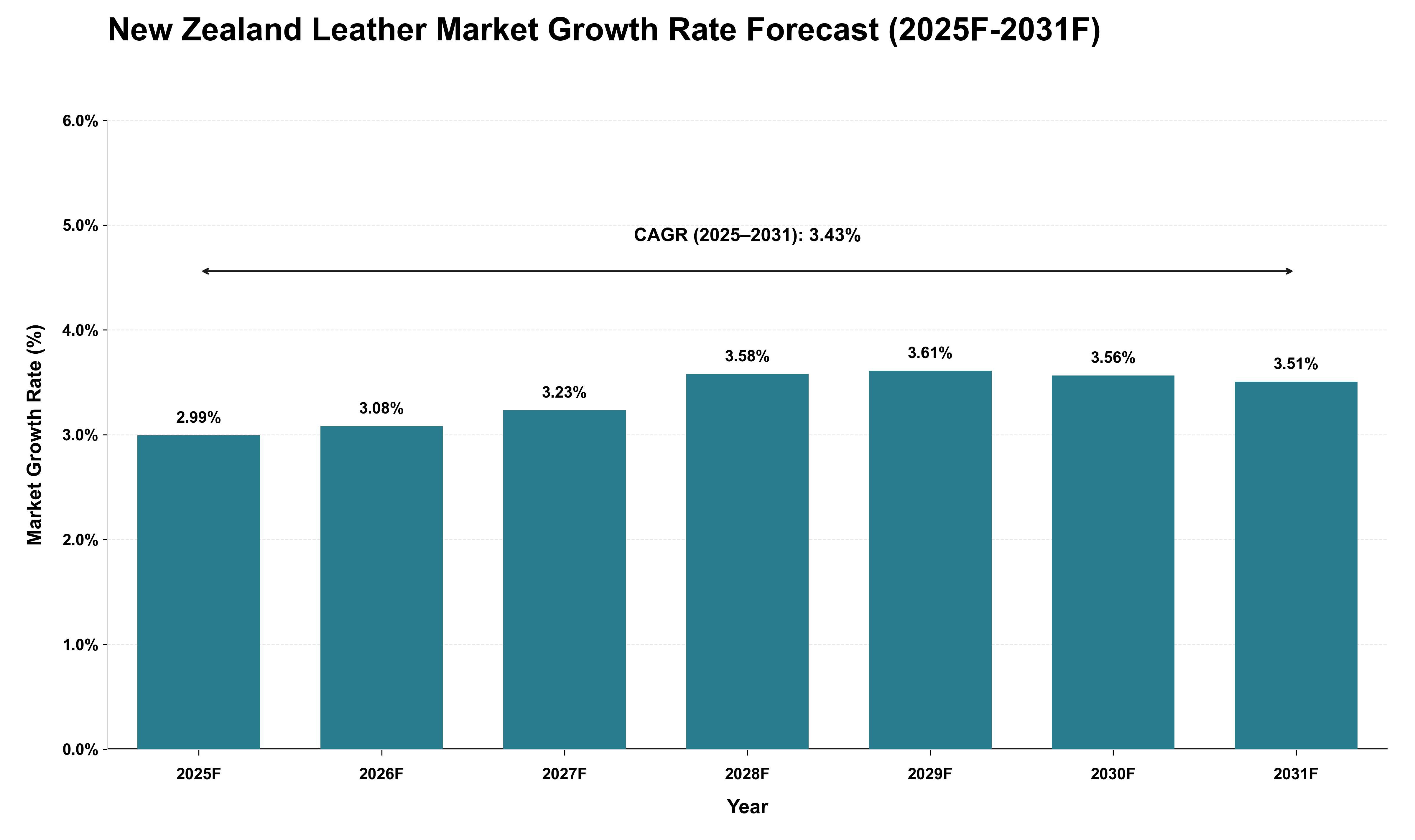
The New Zealand leather market will experience a steady growth trajectory from 2025 to 2031, driven by evolving consumer preferences and increasing demand for sustainable and ethically sourced materials. As global economic conditions improve, the anticipated CAGR of 3.43% will reflect a gradual uptick in production capabilities and import dependencies, particularly as New Zealand seeks to enhance its competitive edge in the international leather trade. The annual growth rates will likely show an upward trend initially, peaking in 2029 at 3.61%, before stabilizing slightly as market dynamics adjust to changing supply chain conditions and regulatory frameworks. This period will also witness fluctuations influenced by macroeconomic cycles, including shifts in disposable income levels and consumer spending patterns, which are expected to bolster demand for high-quality leather goods while fostering innovation within the sector.
Key Highlights of the Report:
- New Zealand Leather Market Outlook
- Market Size of New Zealand Leather Market, 2025
- Forecast of New Zealand Leather Market, 2032
- Historical Data and Forecast of New Zealand Leather Revenues & Volume for the Period 2022 - 2032F
- New Zealand Leather Market Trend Evolution
- New Zealand Leather Market Drivers and Challenges
- New Zealand Leather Price Trends
- New Zealand Leather Porter`s Five Forces
- New Zealand Leather Industry Life Cycle
- Historical Data and Forecast of New Zealand Leather Market Revenues & Volume By Type for the Period 2022 - 2032F
- Historical Data and Forecast of New Zealand Leather Market Revenues & Volume By Luggage for the Period 2022 - 2032F
- Historical Data and Forecast of New Zealand Leather Market Revenues & Volume By Footwear for the Period 2022 - 2032F
- Historical Data and Forecast of New Zealand Leather Market Revenues & Volume By Accessories for the Period 2022 - 2032F
- Historical Data and Forecast of New Zealand Leather Market Revenues & Volume By Distribution Channel for the Period 2022 - 2032F
- Historical Data and Forecast of New Zealand Leather Market Revenues & Volume By Online for the Period 2022 - 2032F
- Historical Data and Forecast of New Zealand Leather Market Revenues & Volume By Offline for the Period 2022 - 2032F
- New Zealand Leather Import Export Trade Statistics
- Market Opportunity Assessment By Type
- Market Opportunity Assessment By Distribution Channel
- New Zealand Leather Top Companies Market Share
- New Zealand Leather Competitive Benchmarking By Technical and Operational Parameters
- New Zealand Leather Company Profiles
- New Zealand Leather Key Strategic Recommendations






































