New Zealand Rattan Products Market Growth Rate Analysis (2025 - 2031)
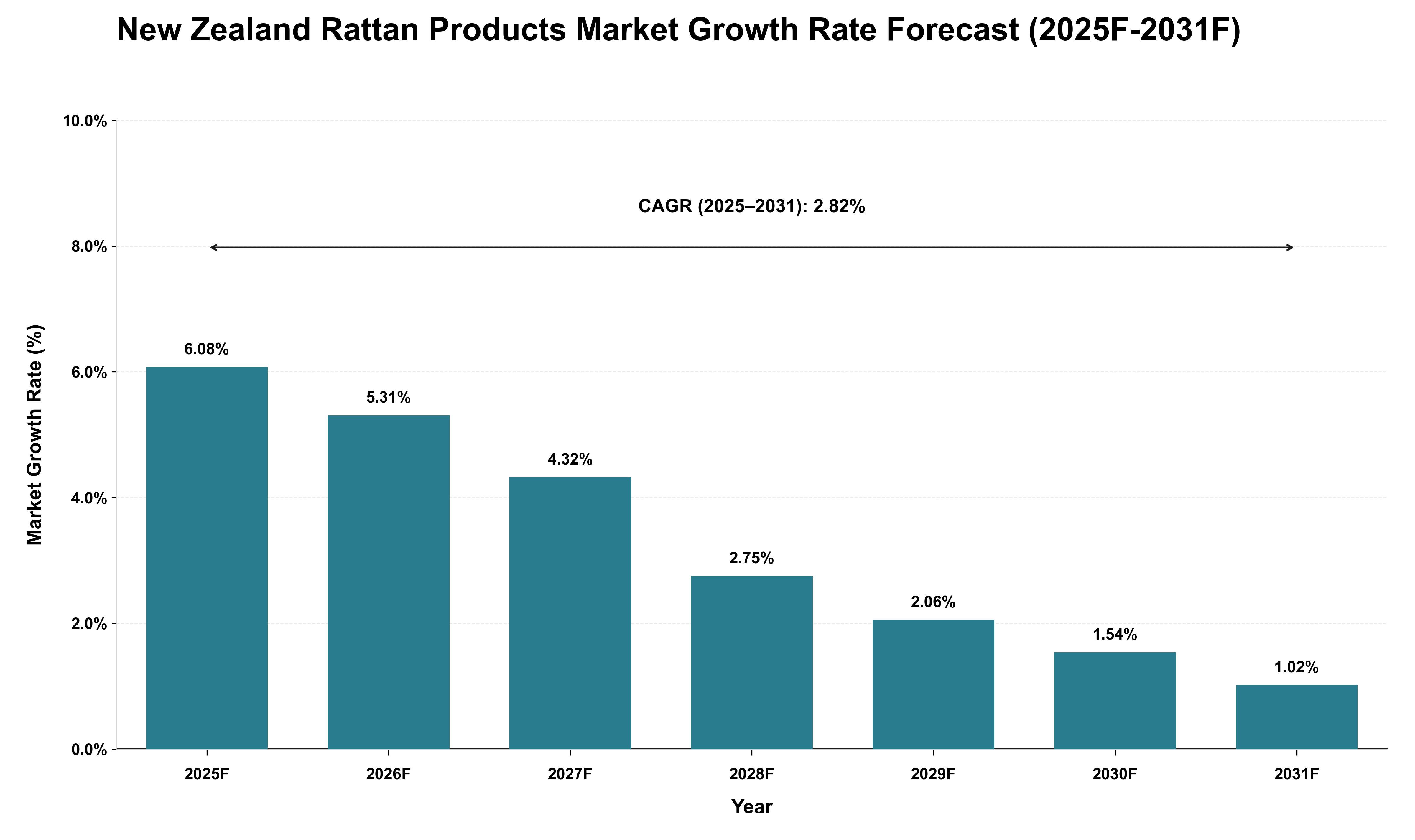
The New Zealand rattan products market will experience a gradual deceleration in growth rates, reflecting broader macroeconomic dynamics and evolving supply chain conditions. As the forecast period progresses, the initial robust growth of 6.08% in 2025 will likely be influenced by rising import dependencies on rattan materials, which could face volatility due to global supply chain disruptions and fluctuating input costs. The anticipated CAGR of 2.82% suggests that while demand for sustainable and eco-friendly products remains strong, increasing competition and potential tariff adjustments may exert downward pressure on prices and margins. By 2031, growth is projected to taper to just 1.02%, indicating that producers will need to navigate a landscape marked by cost management challenges and shifting consumer preferences towards alternative materials or substitutes, ultimately reshaping the competitive dynamics within this niche market segment.
Key Highlights of the Report:
- New Zealand Rattan Products Market Outlook
- Market Size of New Zealand Rattan Products Market, 2025
- Forecast of New Zealand Rattan Products Market, 2032
- Historical Data and Forecast of New Zealand Rattan Products Revenues & Volume for the Period 2022 - 2032F
- New Zealand Rattan Products Market Trend Evolution
- New Zealand Rattan Products Market Drivers and Challenges
- New Zealand Rattan Products Price Trends
- New Zealand Rattan Products Porter`s Five Forces
- New Zealand Rattan Products Industry Life Cycle
- Historical Data and Forecast of New Zealand Rattan Products Market Revenues & Volume By Type for the Period 2022 - 2032F
- Historical Data and Forecast of New Zealand Rattan Products Market Revenues & Volume By Chair for the Period 2022 - 2032F
- Historical Data and Forecast of New Zealand Rattan Products Market Revenues & Volume By Table for the Period 2022 - 2032F
- Historical Data and Forecast of New Zealand Rattan Products Market Revenues & Volume By Storage for the Period 2022 - 2032F
- Historical Data and Forecast of New Zealand Rattan Products Market Revenues & Volume By Bed for the Period 2022 - 2032F
- Historical Data and Forecast of New Zealand Rattan Products Market Revenues & Volume By Others for the Period 2022 - 2032F
- Historical Data and Forecast of New Zealand Rattan Products Market Revenues & Volume By Application for the Period 2022 - 2032F
- Historical Data and Forecast of New Zealand Rattan Products Market Revenues & Volume By Household for the Period 2022 - 2032F
- Historical Data and Forecast of New Zealand Rattan Products Market Revenues & Volume By Commerical for the Period 2022 - 2032F
- New Zealand Rattan Products Import Export Trade Statistics
- Market Opportunity Assessment By Type
- Market Opportunity Assessment By Application
- New Zealand Rattan Products Top Companies Market Share
- New Zealand Rattan Products Competitive Benchmarking By Technical and Operational Parameters
- New Zealand Rattan Products Company Profiles
- New Zealand Rattan Products Key Strategic Recommendations






































