New Zealand Toilet Paper Market Growth Rate Analysis (2025 - 2031)
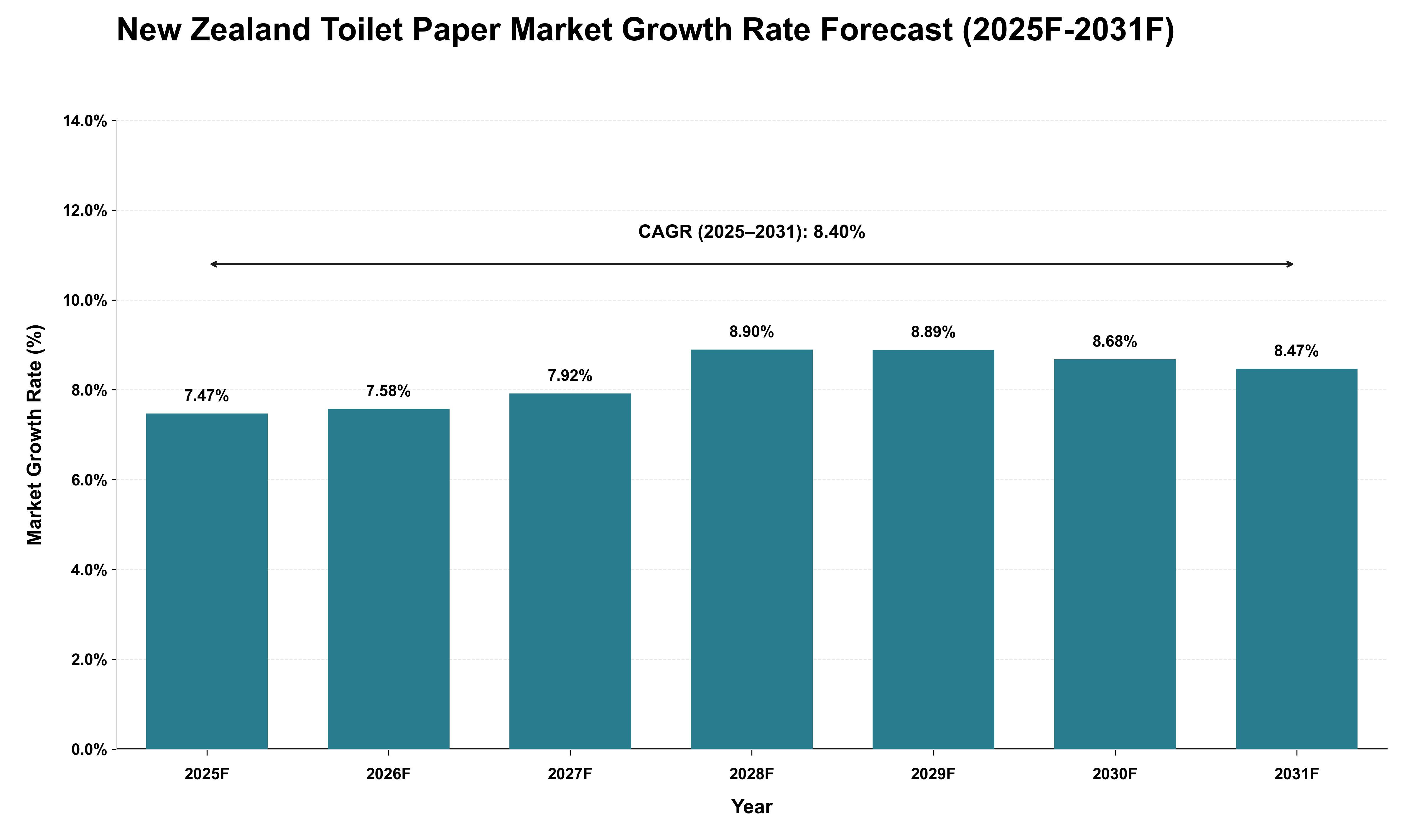
The New Zealand toilet paper market will experience a robust growth trajectory driven by several macroeconomic factors, including rising disposable incomes and increased consumer spending on hygiene products. The forecasted CAGR of 8.40% reflects a strong demand for quality sanitary products, which will be further bolstered by heightened awareness of health and cleanliness in the post-pandemic landscape. As annual growth rates gradually increase from 7.47% in 2025 to a peak of 8.90% in 2028, this trend indicates an expanding market that is likely to benefit from favorable import conditions and supply chain efficiencies. Additionally, cyclical trends in consumer behavior will support sustained demand, as households prioritize essential goods during economic fluctuations. Overall, the combination of these structural transitions will position the toilet paper sector for significant expansion through 2031, aligning with broader economic recovery patterns and evolving consumer preferences.
Key Highlights of the Report:
- New Zealand Toilet Paper Market Outlook
- Market Size of New Zealand Toilet Paper Market, 2025
- Forecast of New Zealand Toilet Paper Market, 2032
- Historical Data and Forecast of New Zealand Toilet Paper Revenues & Volume for the Period 2022 - 2032F
- New Zealand Toilet Paper Market Trend Evolution
- New Zealand Toilet Paper Market Drivers and Challenges
- New Zealand Toilet Paper Price Trends
- New Zealand Toilet Paper Porter`s Five Forces
- New Zealand Toilet Paper Industry Life Cycle
- Historical Data and Forecast of New Zealand Toilet Paper Market Revenues & Volume By Product Type for the Period 2022 - 2032F
- Historical Data and Forecast of New Zealand Toilet Paper Market Revenues & Volume By Pulp Paper for the Period 2022 - 2032F
- Historical Data and Forecast of New Zealand Toilet Paper Market Revenues & Volume By Recycled Paper for the Period 2022 - 2032F
- Historical Data and Forecast of New Zealand Toilet Paper Market Revenues & Volume By Application for the Period 2022 - 2032F
- Historical Data and Forecast of New Zealand Toilet Paper Market Revenues & Volume By Household for the Period 2022 - 2032F
- Historical Data and Forecast of New Zealand Toilet Paper Market Revenues & Volume By Commercial for the Period 2022 - 2032F
- New Zealand Toilet Paper Import Export Trade Statistics
- Market Opportunity Assessment By Product Type
- Market Opportunity Assessment By Application
- New Zealand Toilet Paper Top Companies Market Share
- New Zealand Toilet Paper Competitive Benchmarking By Technical and Operational Parameters
- New Zealand Toilet Paper Company Profiles
- New Zealand Toilet Paper Key Strategic Recommendations






































