Nigeria Hybrid Cloud Market Size & Growth Rate (2026-2032)
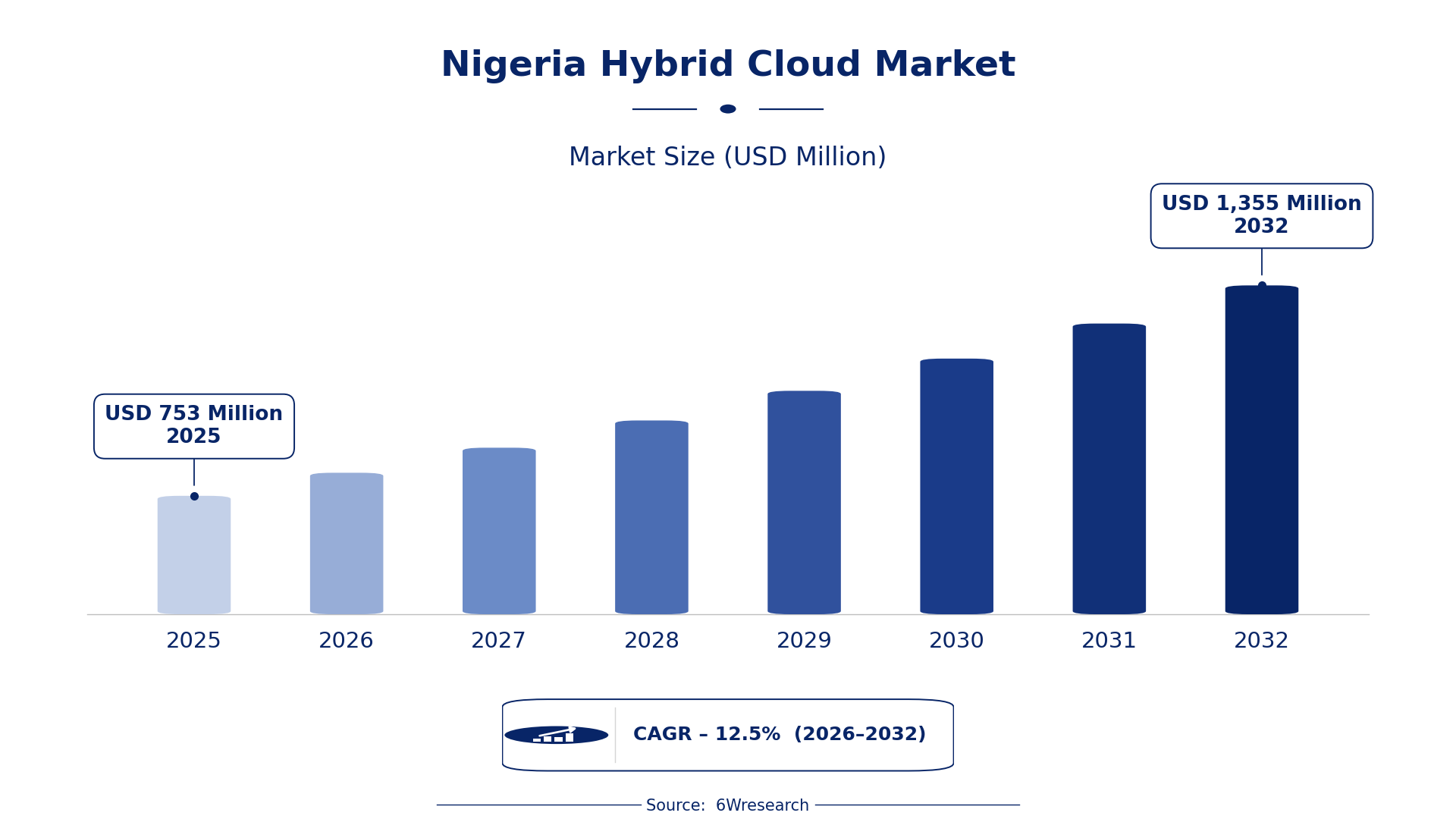
The Nigeria Hybrid Cloud Market was estimated at USD 753 Million in 2025 and is projected to reach USD 1355 Million by 2032, growing at a CAGR of 12.5% from 2026 to 2032.
Nigeria Hybrid Cloud Market Synopsis
The Nigeria hybrid cloud market is experiencing a transformative phase, driven by the need for flexibility and enhanced data security. As businesses pivot towards digital transformation, the hybrid cloud model provides an effective way to balance the demands of operational efficiency with cost management.
Looking ahead, the market is expected to see accelerated growth as more organizations across sectors like finance and healthcare recognize the advantages of hybrid cloud solutions. With government backing and increasing awareness of data compliance, the momentum is likely to continue.
Nigeria Hybrid Cloud Market Year-wise Growth Rate and Key Drivers
This graph illustrates the annual growth rates of the Nigeria Hybrid Cloud Market from 2021 to 2032, highlighting a steady upward trajectory and projected expansion over the forecast period.
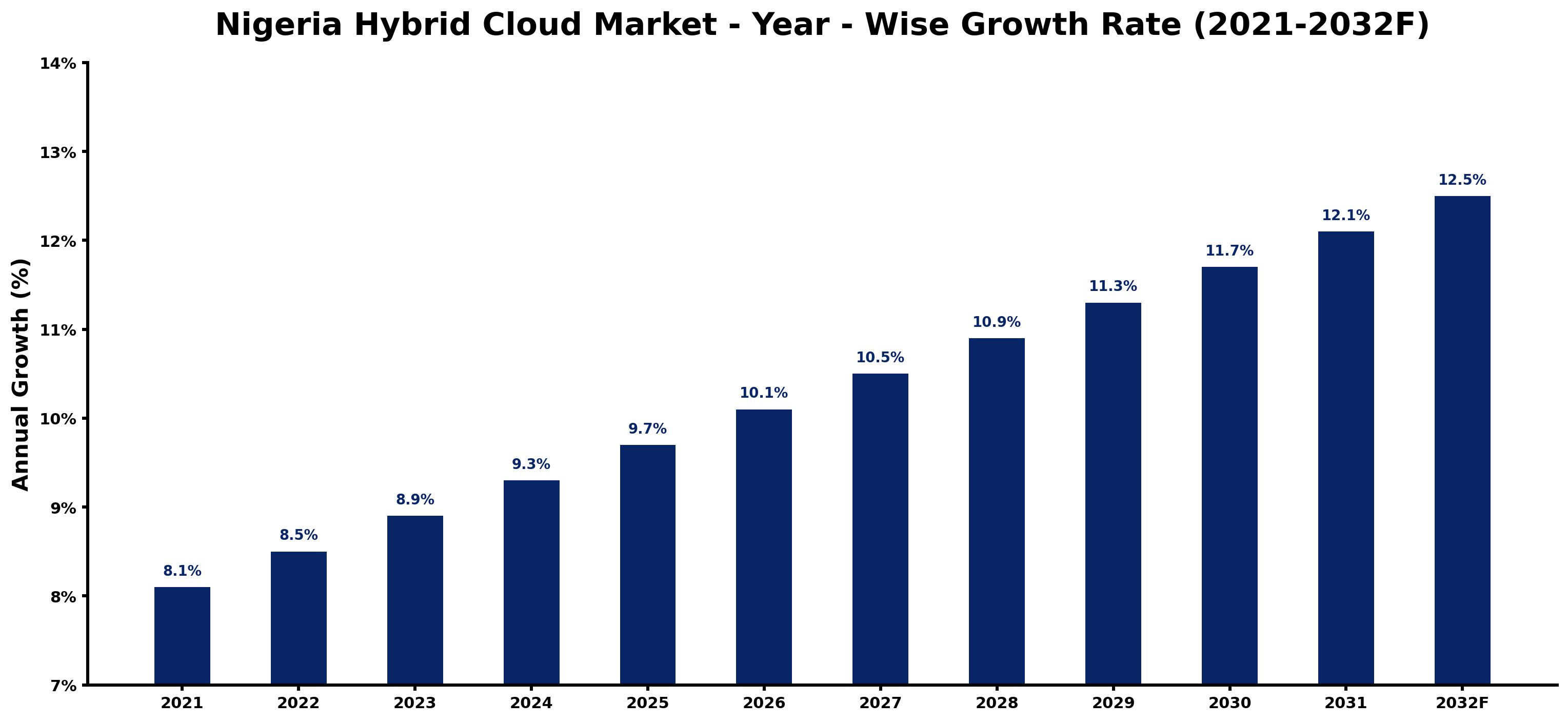
The table below presents the year‑wise growth rates along with the key drivers influencing the market
| Year | Growth Rate | Major Drivers |
| 2021 | 8.1% | NITDA's new cloud policy enhances local cloud adoption. |
| 2022 | 8.5% | Increased smartphone penetration drives demand for cloud services. |
| 2023 | 8.9% | Small business digitization initiatives boost hybrid cloud usage. |
| 2024 | 9.3% | Government grants support local data center developments. |
| 2025 | 9.7% | Rise in fintech companies fuels hybrid cloud infrastructure need. |
| 2026 | 10.1% | Growing remote work culture accelerates cloud migration projects. |
| 2027 | 10.5% | Educational institutions adopt hybrid cloud for digital learning. |
| 2028 | 10.9% | Regulatory compliance requirements promote cloud security investments. |
| 2029 | 11.3% | Increased internet access expands hybrid cloud user base. |
| 2030 | 11.7% | Local tech startups innovating on hybrid cloud solutions. |
| 2031 | 12.1% | National broadband plan enhances connectivity for cloud services. |
| 2032 | 12.5% | Growing AI adoption in enterprises increases hybrid cloud demands. |
Note: Market size estimations and growth projections presented in this report are based on 6Wresearch's proprietary forecasting methodology, utilizing the latest available industry data, government publications, and primary research inputs.
Nigeria Hybrid Cloud Market Key Takeaways
Below are some of the specific key takeaways from the market, including:
- The hybrid cloud model is increasingly favored for its blend of security and cost-effectiveness.
- Government initiatives are actively promoting digital transformation and cloud adoption.
- Small and medium-sized enterprises (SMEs) are crucial drivers of market growth.
- Concerns about data security and regulatory compliance are shaping adoption strategies.
- Major industries leveraging hybrid cloud include finance, healthcare, and telecommunications.
Evaluation of Restraints in Nigeria Hybrid Cloud Market
Several factors are constraining the growth of the hybrid cloud market in Nigeria. Limited broadband connectivity remains a significant barrier, hindering seamless access to cloud services. on top of that, businesses are often wary of cyber threats, resulting in hesitation to adopt hybrid models without robust cybersecurity measures in place. The skills gap in the workforce, particularly in IT professionals qualified to manage hybrid cloud environments, exacerbates these challenges. Until these issues are addressed, the market may face hurdles in achieving its full potential.
Nigeria Hybrid Cloud Market Trends
A number of trends are shaping the hybrid cloud market in Nigeria. The increasing digitization of business processes is pushing companies to seek cloud solutions that can scale with their growth. Additionally, the integration of artificial intelligence and machine learning technologies into hybrid cloud platforms is gaining traction, enhancing data analytics capabilities. As organizations prioritize sustainability, there is also a noticeable shift towards environmentally-friendly cloud solutions.
Nigeria Hybrid Cloud Market Opportunities
The hybrid cloud market in Nigeria is ripe with opportunities for growth and investment. Companies that can offer tailored cloud solutions to SMEs stand to benefit significantly as these businesses adopt digital technologies. on top of that, the push for enhanced cybersecurity services creates a demand for solutions that ensure data protection in hybrid environments. Investment in local data centers can also offer a competitive edge, addressing latency issues and compliance with local regulations.
Government Initiatives in the Nigeria Hybrid Cloud Market
Government policy is crucial in shaping the hybrid cloud market in Nigeria. With a clear focus on digital transformation, the government is implementing various initiatives aimed at enhancing the digital infrastructure. These policies not only facilitate cloud adoption but also address security and compliance concerns, making it a priority for both public and private sectors.
- A national digital infrastructure upgrade programme launched recently aims to improve broadband access and reliability.
- Current initiatives include tax incentives for companies adopting cloud technologies to stimulate market growth.
- Ongoing efforts to enhance cybersecurity frameworks are intended to protect data integrity in hybrid environments.
- A planned public-private initiative is expected to establish more data centers across the country by 2028.
Future Insights of the Nigeria Hybrid Cloud Market
From 2026 to 2032, the Nigeria hybrid cloud market is expected to flourish as the demand for flexible IT solutions continues to rise. As organizations increasingly prioritize digital transformation, the hybrid cloud model will become central to their strategies. With supportive government policies and a growing number of SMEs adopting cloud technologies, the market is set for sustained growth. Increased focus on cybersecurity will also play a pivotal role in shaping future investments and innovations within the sector.
Nigeria Hybrid Cloud Market Latest Developments
Recent activity in the Nigeria hybrid cloud market has shown a notable increase in investments and technological advancements. Companies are actively exploring innovative ways to enhance their cloud offerings, while government initiatives aim to bolster infrastructure and security frameworks. These developments reflect a strong commitment to advancing the hybrid cloud ecosystem.
- A major technology vendor announced the rollout of an advanced hybrid cloud platform in early 2025, designed specifically for SMEs.
- An ongoing partnership between local telecom providers and cloud service companies aims to enhance broadband services by mid-2026.
- A new cybersecurity initiative launched in late 2025 focuses on training IT professionals in hybrid cloud management.
- Upcoming plans for a cloud service expo in Q3 2026 will showcase innovations and encourage industry collaboration.
Nigeria Hybrid Cloud Market - Key Attractiveness of the Report
- 10 Years of Market Numbers
- Historical Data Starting from 2022 to 2025
- Base Year: 2025
- Forecast Data until 2032
- Key Performance Indicators Impacting the Market
- Major Upcoming Developments and Projects
Key Highlights of the Report:
- Nigeria Hybrid Cloud Market Outlook
- Market Size of Nigeria Hybrid Cloud Market, 2025
- Forecast of Nigeria Hybrid Cloud Market, 2032
- Historical Data and Forecast of Nigeria Hybrid Cloud Revenues & Volume for the Period 2022-2032F
- Nigeria Hybrid Cloud Market Trend Evolution
- Nigeria Hybrid Cloud Market Drivers and Challenges
- Nigeria Hybrid Cloud Price Trends
- Nigeria Hybrid Cloud Porter's Five Forces
- Nigeria Hybrid Cloud Industry Life Cycle
- Historical Data and Forecast of Nigeria Hybrid Cloud Market Revenues & Volume By Service Type for the Period 2022-2032F
- Historical Data and Forecast of Nigeria Hybrid Cloud Market Revenues & Volume By Cloud management and orchestration for the Period 2022-2032F
- Historical Data and Forecast of Nigeria Hybrid Cloud Market Revenues & Volume By Disaster recovery for the Period 2022-2032F
- Historical Data and Forecast of Nigeria Hybrid Cloud Market Revenues & Volume By Hybrid hosting for the Period 2022-2032F
- Historical Data and Forecast of Nigeria Hybrid Cloud Market Revenues & Volume By Component for the Period 2022-2032F
- Historical Data and Forecast of Nigeria Hybrid Cloud Market Revenues & Volume By Solution for the Period 2022-2032F
- Historical Data and Forecast of Nigeria Hybrid Cloud Market Revenues & Volume By Services for the Period 2022-2032F
- Historical Data and Forecast of Nigeria Hybrid Cloud Market Revenues & Volume By Organization Size for the Period 2022-2032F
- Historical Data and Forecast of Nigeria Hybrid Cloud Market Revenues & Volume By SMEs for the Period 2022-2032F
- Historical Data and Forecast of Nigeria Hybrid Cloud Market Revenues & Volume By Large Enterprises for the Period 2022-2032F
- Historical Data and Forecast of Nigeria Hybrid Cloud Market Revenues & Volume By Service Model for the Period 2022-2032F
- Historical Data and Forecast of Nigeria Hybrid Cloud Market Revenues & Volume By Infrastructure-as-a-Service for the Period 2022-2032F
- Historical Data and Forecast of Nigeria Hybrid Cloud Market Revenues & Volume By Platform-as-a-Service for the Period 2022-2032F
- Historical Data and Forecast of Nigeria Hybrid Cloud Market Revenues & Volume By Software-as-a-Service for the Period 2022-2032F
- Historical Data and Forecast of Nigeria Hybrid Cloud Market Revenues & Volume By Vertical for the Period 2022-2032F
- Historical Data and Forecast of Nigeria Hybrid Cloud Market Revenues & Volume By BFSI for the Period 2022-2032F
- Historical Data and Forecast of Nigeria Hybrid Cloud Market Revenues & Volume By IT and Telecommunications for the Period 2022-2032F
- Historical Data and Forecast of Nigeria Hybrid Cloud Market Revenues & Volume By Healthcare for the Period 2022-2032F
- Historical Data and Forecast of Nigeria Hybrid Cloud Market Revenues & Volume By Retail for the Period 2022-2032F
- Historical Data and Forecast of Nigeria Hybrid Cloud Market Revenues & Volume By Media and entertainment for the Period 2022-2032F
- Historical Data and Forecast of Nigeria Hybrid Cloud Market Revenues & Volume By Manufacturing for the Period 2022-2032F
- Historical Data and Forecast of Nigeria Hybrid Cloud Market Revenues & Volume By Government for the Period 2022-2032F
- Historical Data and Forecast of Nigeria Hybrid Cloud Market Revenues & Volume By Transportation for the Period 2022-2032F
- Nigeria Hybrid Cloud Import Export Trade Statistics
- Market Opportunity Assessment By Service Type
- Market Opportunity Assessment By Component
- Market Opportunity Assessment By Organization Size
- Market Opportunity Assessment By Service Model
- Market Opportunity Assessment By Vertical
- Nigeria Hybrid Cloud Top Companies Market Share
- Nigeria Hybrid Cloud Competitive Benchmarking By Technical and Operational Parameters
- Nigeria Hybrid Cloud Company Profiles
- Nigeria Hybrid Cloud Key Strategic Recommendations






































