Nigeria Interior Design Market Size, Share & Growth Rate
The Nigeria Interior Design Market was estimated at USD 394 Million in 2025 and is projected to reach USD 534 Million by 2032, growing at a CAGR of 4.4% from 2026 to 2032. This growth trajectory is being driven by a significant urbanization trend and an expanding middle class with increasing disposable incomes. As more Nigerians seek aesthetically pleasing and functional spaces, the demand for innovative interior design services is set to escalate.
Nigeria Interior Design Market Year-wise Growth Rate and Key Drivers
This graph highlights how the Nigeria Interior Design Market has steadily grown over the years, supported by major growth factors.
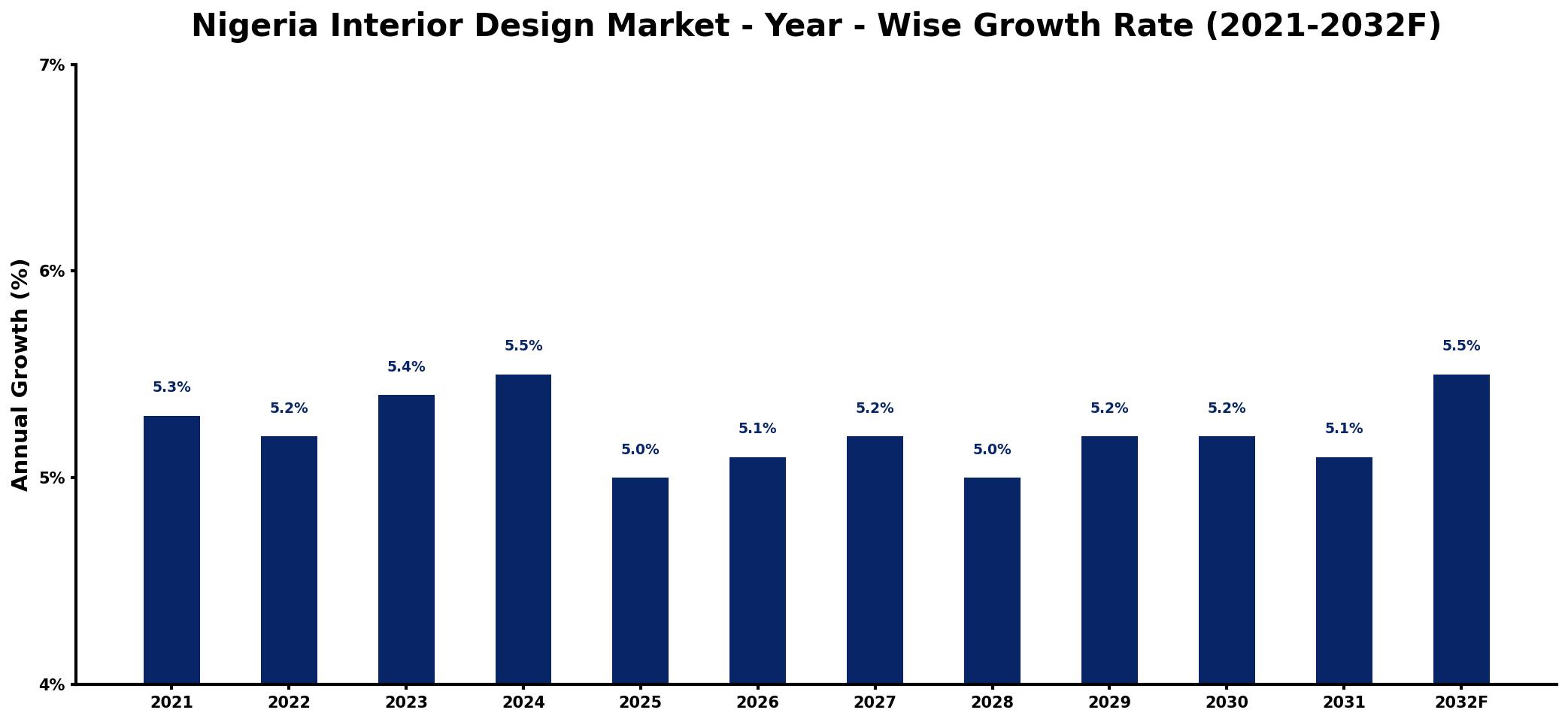
The table below presents the year‑wise growth rates along with the key drivers influencing the market
| Year | Growth Rate | Major Drivers |
| 2021 | 5.3% | Rising middle class disposable income |
| 2022 | 5.2% | Increased urbanization and migration |
| 2023 | 5.4% | Growth in real estate sector |
| 2024 | 5.5% | Expansion of retail market space |
| 2025 | 5.0% | Boost in tourism and hospitality |
| 2026 | 5.1% | Surge in construction activities |
| 2027 | 5.2% | Growing focus on sustainability practices |
| 2028 | 5.0% | Increased consumer awareness and preferences |
| 2029 | 5.2% | growing automotive sector requirements |
| 2030 | 5.2% | Increase in foreign investments influx |
| 2031 | 5.1% | Rising demand for innovative solutions |
| 2032 | 5.5% | increased capital investment inflows |
Note: Market size estimations and growth projections presented in this report are based on 6Wresearch's proprietary forecasting methodology, utilizing the latest available industry data, government publications, and primary research inputs.
Nigeria Interior Design Market Synopsis
Recent momentum in the Nigeria interior design market reflects a burgeoning interest in modern aesthetics, blending local cultural elements with international design trends. This evolving landscape is not only attracting established designers but also nurturing emerging talents who are bringing fresh perspectives to the sector.
As the market continues to mature, a stronger emphasis on sustainability and eco-friendly practices is expected to reshape the offerings in both residential and commercial spaces. This shift indicates a promising future where local artisans collaborate with designers to create unique, culturally infused designs that resonate with Nigerian consumers.
Nigeria Interior Design Market Key Takeaways
- The market is on a growth trajectory, with a projected value increase from USD 394 Million in 2025 to USD 534 Million by 2032.
- Sustainable design practices are becoming a priority, driving demand for eco-friendly materials and solutions.
- Local cultural influences are gaining prominence, with a demand for traditional elements integrated into modern designs.
- Technology is increasingly being integrated into interior design, including smart home systems and energy-efficient appliances.
- Collaborations between designers and local artisans are fostering unique offerings and promoting local craftsmanship.
Evaluation of Restraints in Nigeria Interior Design Market
Despite the promising outlook, the Nigeria interior design market faces significant restraints that could impede its progress. Limited access to high-quality materials and the challenges posed by unreliable supply chains can hinder project completion and elevate costs. Furthermore, inconsistent pricing and a lack of skilled labor make it difficult for interior designers to maintain quality standards. The presence of unregistered designers offering lower prices complicates the landscape further, as they may not adhere to professional ethics, affecting overall market credibility.
Nigeria Interior Design Market Trends
The Nigeria interior design market is currently witnessing a surge in demand for sustainable and eco-friendly designs. Consumers are increasingly favoring natural materials and green building practices as they become more aware of environmental issues. Additionally, there is a growing trend towards personalization, with clients seeking unique designs that reflect their individual preferences and lifestyles. Technology integration is also at the forefront, with innovations like smart home systems enhancing the functionality and appeal of living spaces.
Nigeria Interior Design Market Opportunities
Investment opportunities in the Nigeria interior design market are ripe for exploration. The burgeoning urban population and increasing disposable income levels create a demand for modern interior solutions across residential, commercial, and hospitality sectors. There's significant potential for businesses that focus on high-end interior design services and offer bespoke furniture and decor products tailored to local tastes. Collaborating with skilled local artisans can further enhance brand differentiation and cater to a wider customer base.
Government Initiatives in the Nigeria Interior Design Market
The Nigerian government has initiated several policies to promote the interior design industry. Campaigns like "Made in Nigeria" aim to bolster local production and consumption, thereby supporting domestic manufacturers. Import restrictions on specific goods are in place to encourage the use of locally sourced materials, while tax incentives and subsidies are provided to attract investment, facilitating economic development. These initiatives create a conducive environment for growth in the interior design sector.
Future Insights of the Nigeria Interior Design Market
Looking ahead to the period of 2026-2032, the Nigeria interior design market is expected to thrive. The rising urbanization and disposable incomes are key factors fueling demand for personalized living spaces. Awareness of the impact of well-designed interiors on overall well-being will likely continue to drive market growth. As e-commerce and social media become more integral to consumer decision-making, designers who adapt to these changes are poised to capture a larger share of the market.
Nigeria Interior Design Market Latest Developments (2025 - 2026)
Recent developments in the Nigeria interior design market reflect a strong inclination towards incorporating sustainable practices and local craftsmanship. Designers are increasingly focusing on eco-friendly materials and energy-efficient solutions to appeal to conscious consumers. Moreover, local exhibitions and trade shows have become platforms for emerging designers to showcase their work and connect with potential clients, enhancing visibility and promoting the industry.
Nigeria Interior Design Market - Key Attractiveness of the Report
- 10 Years of Market Numbers
- Historical Data Starting from 2022 to 2025
- Base Year: 2025
- Forecast Data until 2032
- Key Performance Indicators Impacting the Market
- Major Upcoming Developments and Projects
Key Highlights of the Report:
- Nigeria Interior Design Market Outlook
- Market Size of Nigeria Interior Design Market, 2025
- Forecast of Nigeria Interior Design Market, 2032
- Historical Data and Forecast of Nigeria Interior Design Revenues & Volume for the Period 2022-2032F
- Nigeria Interior Design Market Trend Evolution
- Nigeria Interior Design Market Drivers and Challenges
- Nigeria Interior Design Price Trends
- Nigeria Interior Design Porter's Five Forces
- Nigeria Interior Design Industry Life Cycle
- Historical Data and Forecast of Nigeria Interior Design Market Revenues & Volume By End Use for the Period 2022-2032F
- Historical Data and Forecast of Nigeria Interior Design Market Revenues & Volume By Commercial for the Period 2022-2032F
- Historical Data and Forecast of Nigeria Interior Design Market Revenues & Volume By Residential for the Period 2022-2032F
- Historical Data and Forecast of Nigeria Interior Design Market Revenues & Volume By Decoration Type for the Period 2022-2032F
- Historical Data and Forecast of Nigeria Interior Design Market Revenues & Volume By New for the Period 2022-2032F
- Historical Data and Forecast of Nigeria Interior Design Market Revenues & Volume By Renovations for the Period 2022-2032F
- Nigeria Interior Design Import Export Trade Statistics
- Market Opportunity Assessment By End Use
- Market Opportunity Assessment By Decoration Type
- Nigeria Interior Design Top Companies Market Share
- Nigeria Interior Design Competitive Benchmarking By Technical and Operational Parameters
- Nigeria Interior Design Company Profiles
- Nigeria Interior Design Key Strategic Recommendations






































