Nigeria Musical Instrument Market Top 5 Importing Countries and Market Competition (HHI) Analysis
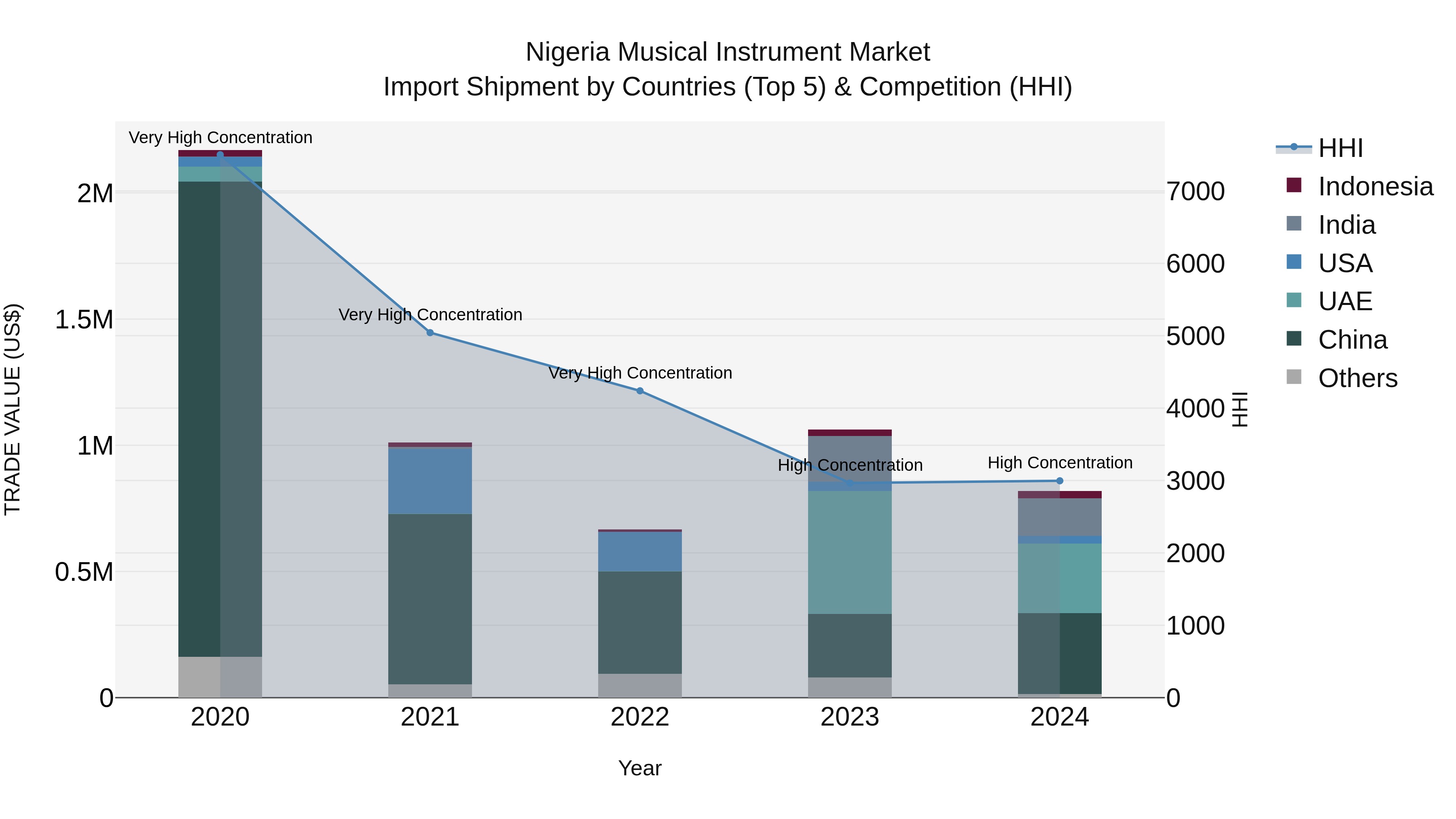
The Nigerian musical instrument import market saw a continued trend of high concentration in 2024, with top exporting countries being China, UAE, India, USA, and Indonesia. The Herfindahl-Hirschman Index (HHI) indicated a significant increase in market concentration from 2023 to 2024. Despite a negative Compound Annual Growth Rate (CAGR) of -21.61% from 2020 to 2024 and a declining growth rate of -22.86% from 2023 to 2024, the market remains reliant on key import sources, highlighting potential challenges and opportunities for stakeholders in the industry.
Nigeria Musical Instrument Market Overview
The musical instrument market in Nigeria is witnessing steady growth, driven by increasing interest in music education, entertainment, and cultural events. Traditional African instruments coexist alongside modern Western instruments, catering to a wide range of musical genres and preferences. The market encompasses a diverse array of instruments, including drums, guitars, keyboards, and traditional percussions, reflecting the country`s musical diversity.
Drivers of the market
In Nigeria, the musical instrument market is fueled by the rich cultural heritage and the importance of music in social and religious activities. The increasing interest in music education and the growing popularity of music competitions and talent shows also drive demand for musical instruments. Additionally, the rising disposable income and the expansion of the entertainment industry, which includes live performances and recordings, further contribute to market growth.
Challenges of the market
In the musical instrument market, challenges arise from the limited access to high-quality instruments and the high cost of imported products. Many aspiring musicians and music enthusiasts in Nigeria struggle to afford quality instruments, which inhibits their ability to pursue their passion and develop their skills. Additionally, the absence of comprehensive music education programs and training facilities further constrains the growth of the musical instrument market by limiting demand and investment in this sector.
Government Policy of the market
Government policies in Nigeria prioritize cultural preservation and creative industries development, driving initiatives to support the musical instrument market. Strategies such as arts funding programs and cultural heritage preservation efforts promote the production, distribution, and consumption of musical instruments. Furthermore, incentives such as tax breaks and grants stimulate investment in musical instrument manufacturing and distribution businesses. Additionally, regulatory frameworks ensure compliance with quality standards and consumer protection measures, fostering trust and confidence in Nigeria musical instruments.
Key Highlights of the Report:
- Nigeria Musical Instrument Market Outlook
- Market Size of Nigeria Musical Instrument Market, 2024
- Forecast of Nigeria Musical Instrument Market, 2031
- Historical Data and Forecast of Nigeria Musical Instrument Revenues & Volume for the Period 2021-2031
- Nigeria Musical Instrument Market Trend Evolution
- Nigeria Musical Instrument Market Drivers and Challenges
- Nigeria Musical Instrument Price Trends
- Nigeria Musical Instrument Porter's Five Forces
- Nigeria Musical Instrument Industry Life Cycle
- Historical Data and Forecast of Nigeria Musical Instrument Market Revenues & Volume By Product for the Period 2021-2031
- Historical Data and Forecast of Nigeria Musical Instrument Market Revenues & Volume By String Instruments for the Period 2021-2031
- Historical Data and Forecast of Nigeria Musical Instrument Market Revenues & Volume By Pianos And Keyboards for the Period 2021-2031
- Historical Data and Forecast of Nigeria Musical Instrument Market Revenues & Volume By Drums And Percussion Instruments for the Period 2021-2031
- Historical Data and Forecast of Nigeria Musical Instrument Market Revenues & Volume By Others for the Period 2021-2031
- Nigeria Musical Instrument Import Export Trade Statistics
- Market Opportunity Assessment By Product
- Nigeria Musical Instrument Top Companies Market Share
- Nigeria Musical Instrument Competitive Benchmarking By Technical and Operational Parameters
- Nigeria Musical Instrument Company Profiles
- Nigeria Musical Instrument Key Strategic Recommendations






































