Kenya Musical Instrument Market Size Growth Rate
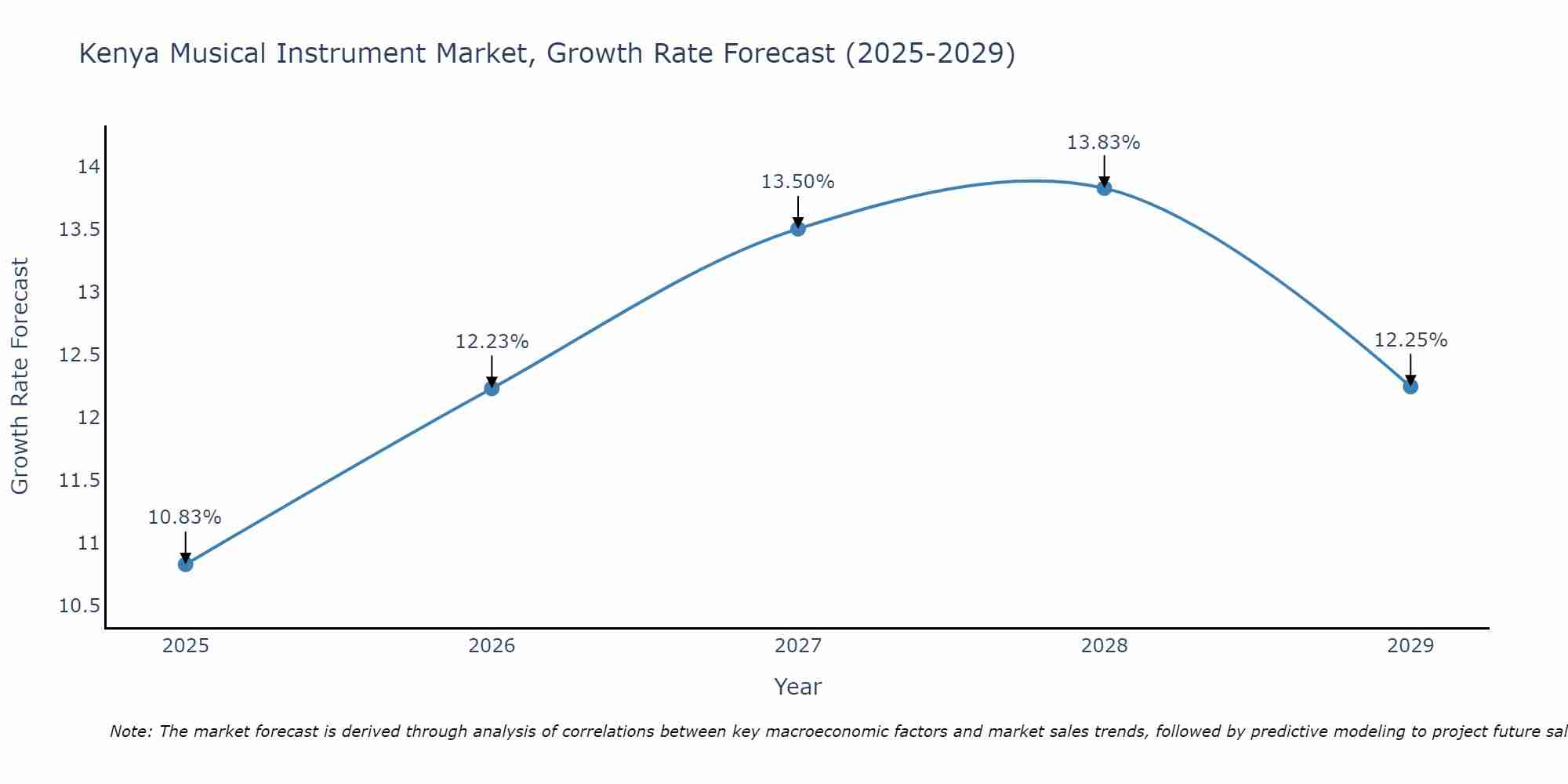
The Kenya Musical Instrument Market is projected to witness mixed growth rate patterns during 2025 to 2029. Growth accelerates to 13.83% in 2028, following an initial rate of 10.83%, before easing to 12.25% at the end of the period.
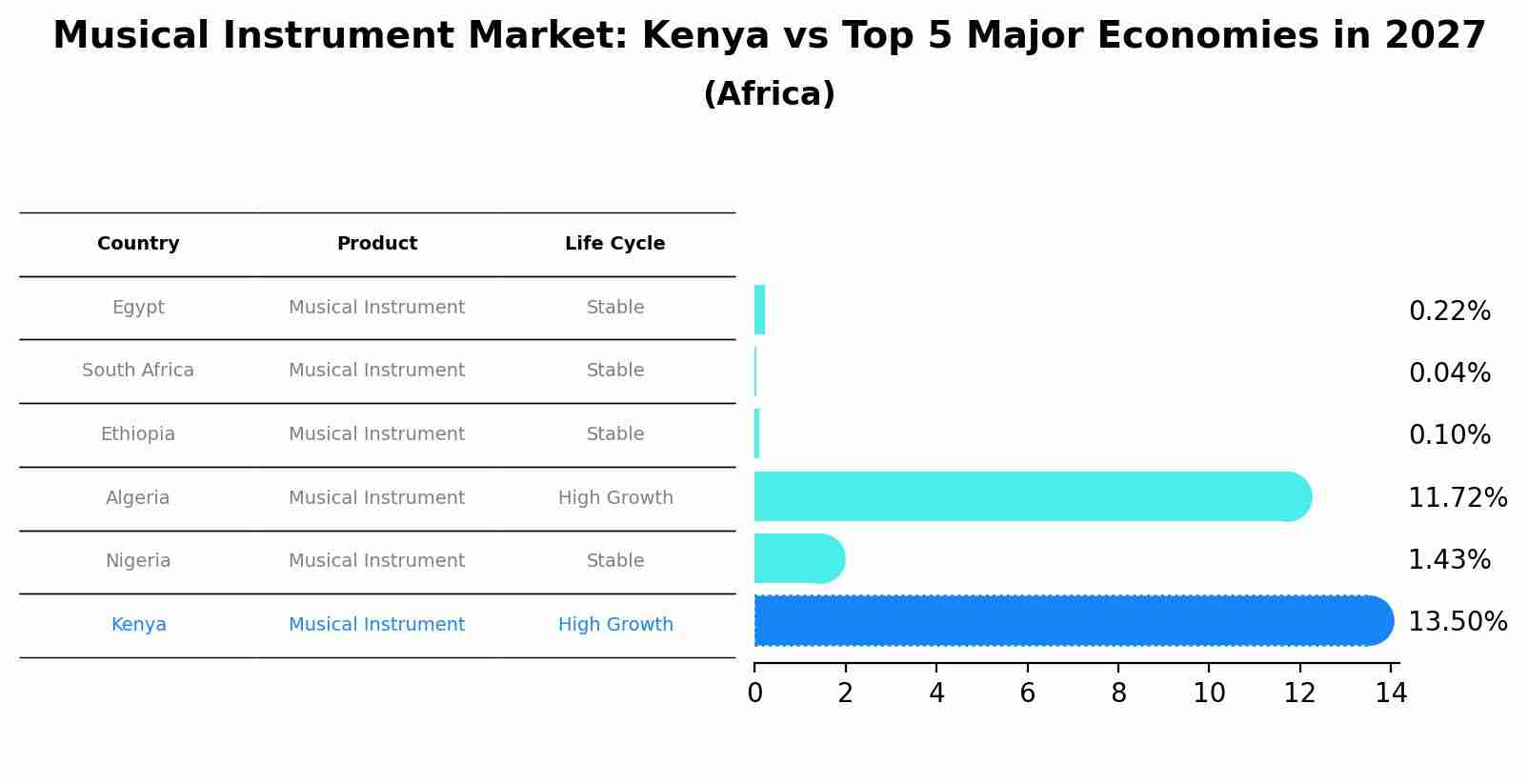
Musical Instrument Market: Kenya vs Top 5 Major Economies in 2027 (Africa)
Kenya's Musical Instrument market is anticipated to experience a high growth rate of 13.50% by 2027, reflecting trends observed in the largest economy Egypt, followed by South Africa, Ethiopia, Algeria and Nigeria.
Kenya Musical Instrument Market Overview
The Kenya musical instruments market is experiencing steady growth, driven by the country`s rich musical heritage and increasing interest in music education. Traditional instruments such as the Nyatiti and modern instruments like guitars and keyboards are in demand. The growth of live music venues, schools, and music festivals contributes to this market`s expansion. Additionally, the import of high-quality instruments and the rise of local manufacturing are enhancing accessibility and affordability for musicians across the country.
Drivers of the market
The musical instrument market in Kenya is influenced by factors such as cultural heritage, educational initiatives, and rising interest in music education and performance, driven by consumer preferences, technological advancements, and government support for arts and culture.
Challenges of the market
Challenges in the musical instrument market in Kenya include limited access to affordable instruments, reliance on imports, and low levels of music education and appreciation. Moreover, concerns regarding instrument quality, aftersales service, and cultural preferences impact market growth and the development of local musical talent.
Government Policy of the market
The musical instrument market in Kenya faces various challenges. A major issue is the high cost of imported musical instruments, which makes them unaffordable for many potential customers. There is also a lack of local manufacturing capabilities, leading to reliance on imports. Additionally, the market suffers from inadequate distribution networks and limited availability of a wide range of instruments. Furthermore, there is a lack of music education and awareness, which affects demand.
Key Highlights of the Report:
- Kenya Musical Instrument Market Outlook
- Market Size of Kenya Musical Instrument Market, 2021
- Forecast of Kenya Musical Instrument Market, 2028
- Historical Data and Forecast of Kenya Musical Instrument Revenues & Volume for the Period 2018 - 2028
- Kenya Musical Instrument Market Trend Evolution
- Kenya Musical Instrument Market Drivers and Challenges
- Kenya Musical Instrument Price Trends
- Kenya Musical Instrument Porter's Five Forces
- Kenya Musical Instrument Industry Life Cycle
- Historical Data and Forecast of Kenya Musical Instrument Market Revenues & Volume By Product for the Period 2018 - 2028
- Historical Data and Forecast of Kenya Musical Instrument Market Revenues & Volume By String Instruments for the Period 2018 - 2028
- Historical Data and Forecast of Kenya Musical Instrument Market Revenues & Volume By Pianos And Keyboards for the Period 2018 - 2028
- Historical Data and Forecast of Kenya Musical Instrument Market Revenues & Volume By Drums And Percussion Instruments for the Period 2018 - 2028
- Historical Data and Forecast of Kenya Musical Instrument Market Revenues & Volume By Others for the Period 2018 - 2028
- Kenya Musical Instrument Import Export Trade Statistics
- Market Opportunity Assessment By Product
- Kenya Musical Instrument Top Companies Market Share
- Kenya Musical Instrument Competitive Benchmarking By Technical and Operational Parameters
- Kenya Musical Instrument Company Profiles
- Kenya Musical Instrument Key Strategic Recommendations






































