Tunisia Musical Instrument Market Size Growth Rate
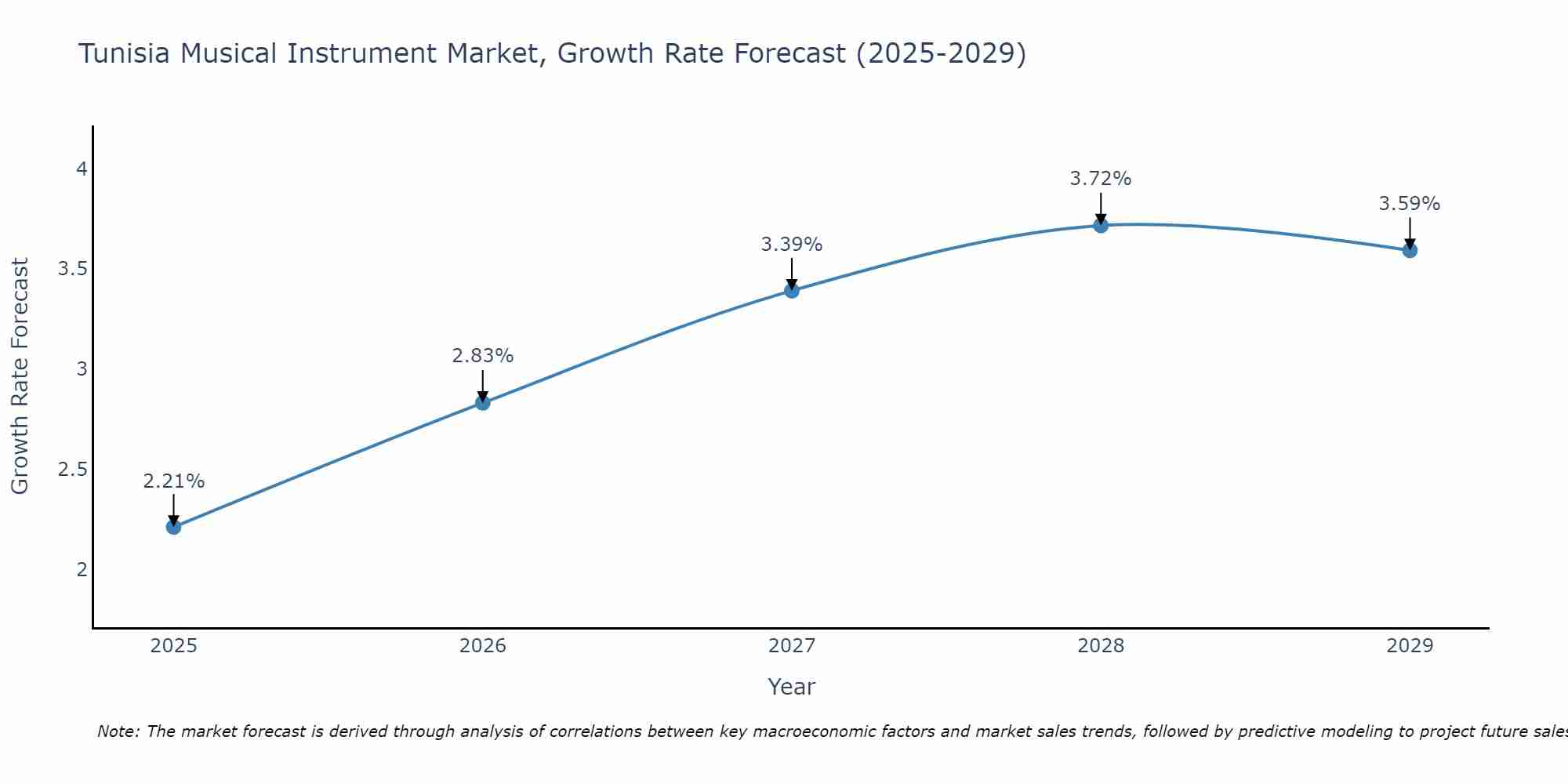
The Tunisia Musical Instrument Market is projected to witness mixed growth rate patterns during 2025 to 2029. Growth accelerates to 3.72% in 2028, following an initial rate of 2.21%, before easing to 3.59% at the end of the period.
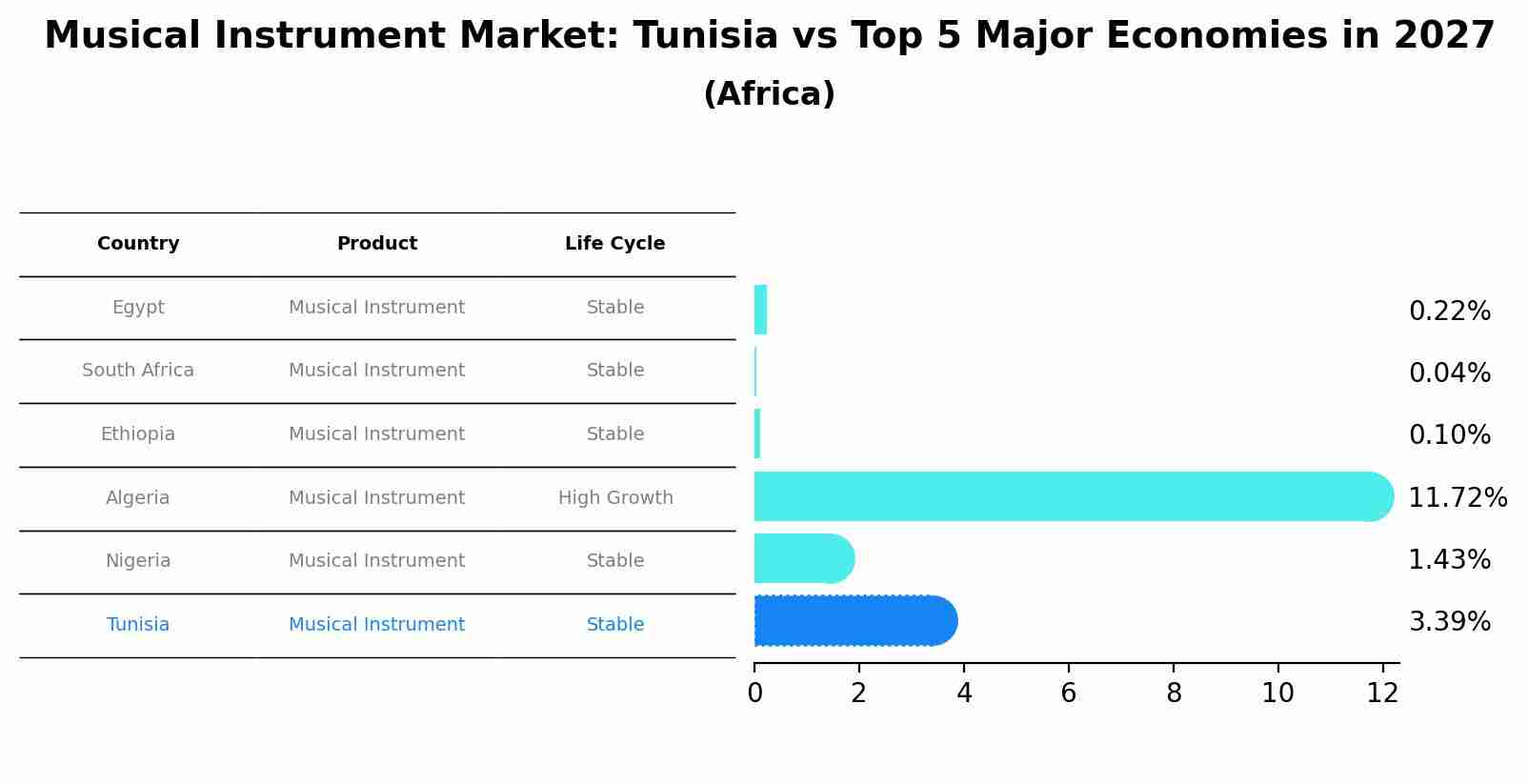
Musical Instrument Market: Tunisia vs Top 5 Major Economies in 2027 (Africa)
In the Africa region, the Musical Instrument market in Tunisia is projected to expand at a stable growth rate of 3.39% by 2027. The largest economy is Egypt, followed by South Africa, Ethiopia, Algeria and Nigeria.
Tunisia Musical Instrument Market Overview
The market for musical instruments in Tunisia reflects a blend of traditional craftsmanship and modern technological integration. Demand is driven by both educational institutions and individual musicians, with a notable trend towards digital and portable instruments. Local artisans play a crucial role in catering to niche demands for traditional instruments.
Drivers of the market
Rising disposable incomes and a growing interest in music education are fueling the demand for musical instruments in Tunisia. Cultural events and festivals further stimulate market growth.
Challenges of the market
The Tunisia musical instrument market encounters challenges due to fluctuations in consumer disposable income, impacting purchasing power for high-cost musical instruments. Moreover, limited local manufacturing capabilities and dependence on imports contribute to price volatility and supply chain disruptions.
Government Policy of the market
Tunisia encourages the development of its musical instrument market through subsidies for local manufacturers, import tariffs on competing products, and investments in music education programs. Policies emphasize quality standards, consumer protection, and fostering a vibrant domestic market.
Key Highlights of the Report:
- Tunisia Musical Instrument Market Outlook
- Market Size of Tunisia Musical Instrument Market, 2024
- Forecast of Tunisia Musical Instrument Market, 2031
- Historical Data and Forecast of Tunisia Musical Instrument Revenues & Volume for the Period 2018 - 2031
- Tunisia Musical Instrument Market Trend Evolution
- Tunisia Musical Instrument Market Drivers and Challenges
- Tunisia Musical Instrument Price Trends
- Tunisia Musical Instrument Porter's Five Forces
- Tunisia Musical Instrument Industry Life Cycle
- Historical Data and Forecast of Tunisia Musical Instrument Market Revenues & Volume By Product for the Period 2018 - 2031
- Historical Data and Forecast of Tunisia Musical Instrument Market Revenues & Volume By String Instruments for the Period 2018 - 2031
- Historical Data and Forecast of Tunisia Musical Instrument Market Revenues & Volume By Pianos And Keyboards for the Period 2018 - 2031
- Historical Data and Forecast of Tunisia Musical Instrument Market Revenues & Volume By Drums And Percussion Instruments for the Period 2018 - 2031
- Historical Data and Forecast of Tunisia Musical Instrument Market Revenues & Volume By Others for the Period 2018 - 2031
- Tunisia Musical Instrument Import Export Trade Statistics
- Market Opportunity Assessment By Product
- Tunisia Musical Instrument Top Companies Market Share
- Tunisia Musical Instrument Competitive Benchmarking By Technical and Operational Parameters
- Tunisia Musical Instrument Company Profiles
- Tunisia Musical Instrument Key Strategic Recommendations






































