Norway Mimosa Extract Market Growth Rate Analysis (2025 - 2031)
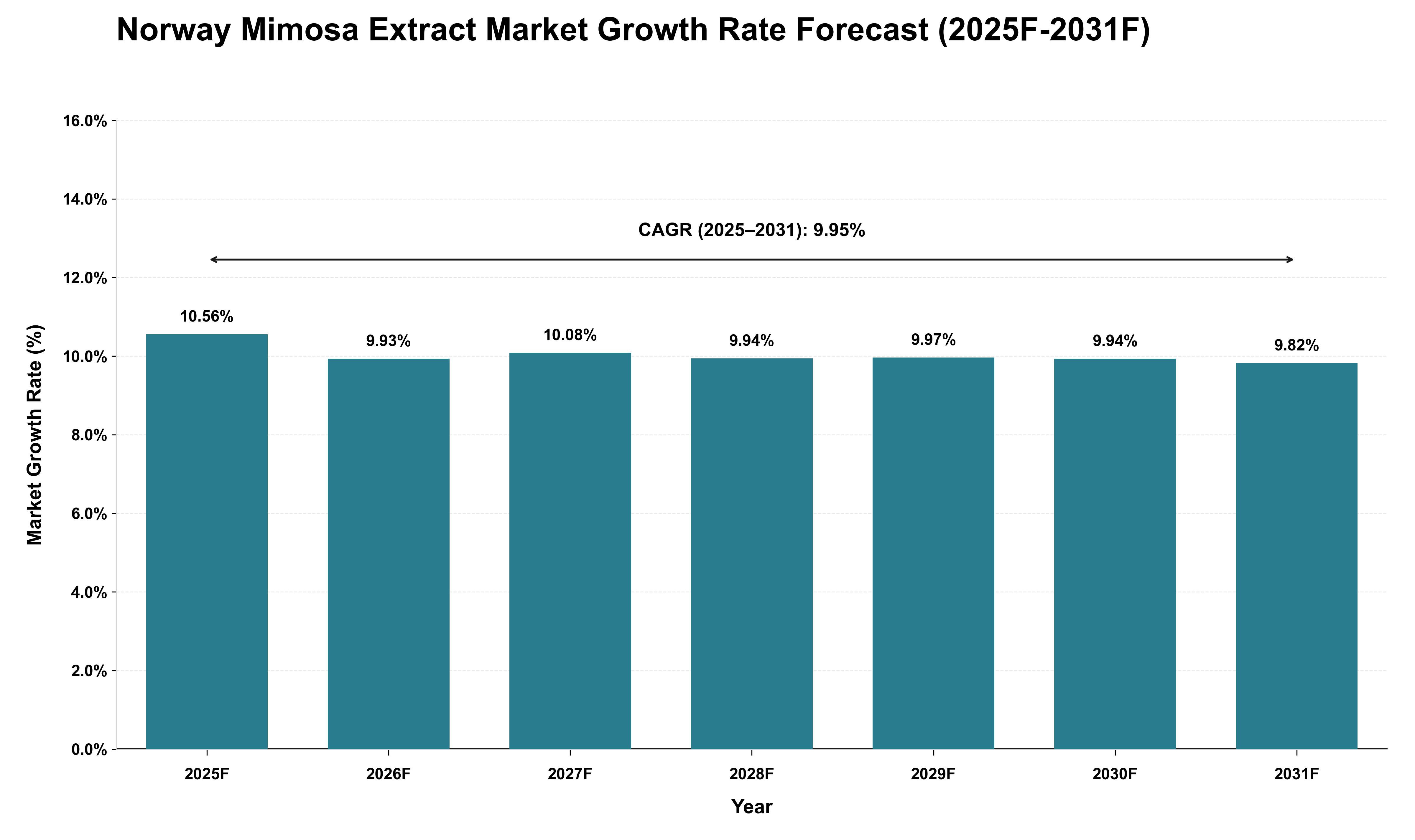
The Norway Mimosa Extract market is projected to experience a robust compound annual growth rate of 9.95% from 2025 to 2031, reflecting a strong demand driven by evolving consumer preferences and increasing applications in sectors such as cosmetics and wellness. The anticipated annual growth rates, peaking at 10.56% in 2025, indicate a dynamic market environment where technological advancements in extraction methods will likely enhance product quality and yield efficiency. As import dependencies persist, fluctuations in global supply chains could influence pricing strategies and availability, compelling local producers to innovate or substitute with alternative botanicals to maintain competitiveness. Furthermore, cyclical trends associated with consumer health consciousness will drive sustained interest in natural extracts, positioning the Norway Mimosa Extract market favorably within the broader landscape of botanical products during this forecast period.
Key Highlights of the Report:
- Norway Mimosa Extract Market Outlook
- Market Size of Norway Mimosa Extract Market, 2025
- Forecast of Norway Mimosa Extract Market, 2032
- Historical Data and Forecast of Norway Mimosa Extract Revenues & Volume for the Period 2022 - 2032F
- Norway Mimosa Extract Market Trend Evolution
- Norway Mimosa Extract Market Drivers and Challenges
- Norway Mimosa Extract Price Trends
- Norway Mimosa Extract Porter`s Five Forces
- Norway Mimosa Extract Industry Life Cycle
- Historical Data and Forecast of Norway Mimosa Extract Market Revenues & Volume By End User for the Period 2022 - 2032F
- Historical Data and Forecast of Norway Mimosa Extract Market Revenues & Volume By Forestry for the Period 2022 - 2032F
- Historical Data and Forecast of Norway Mimosa Extract Market Revenues & Volume By Paper & Wood Products for the Period 2022 - 2032F
- Norway Mimosa Extract Import Export Trade Statistics
- Market Opportunity Assessment By End User
- Norway Mimosa Extract Top Companies Market Share
- Norway Mimosa Extract Competitive Benchmarking By Technical and Operational Parameters
- Norway Mimosa Extract Company Profiles
- Norway Mimosa Extract Key Strategic Recommendations






































