Oman Digital Market Size & Growth Rate (2026-2032)
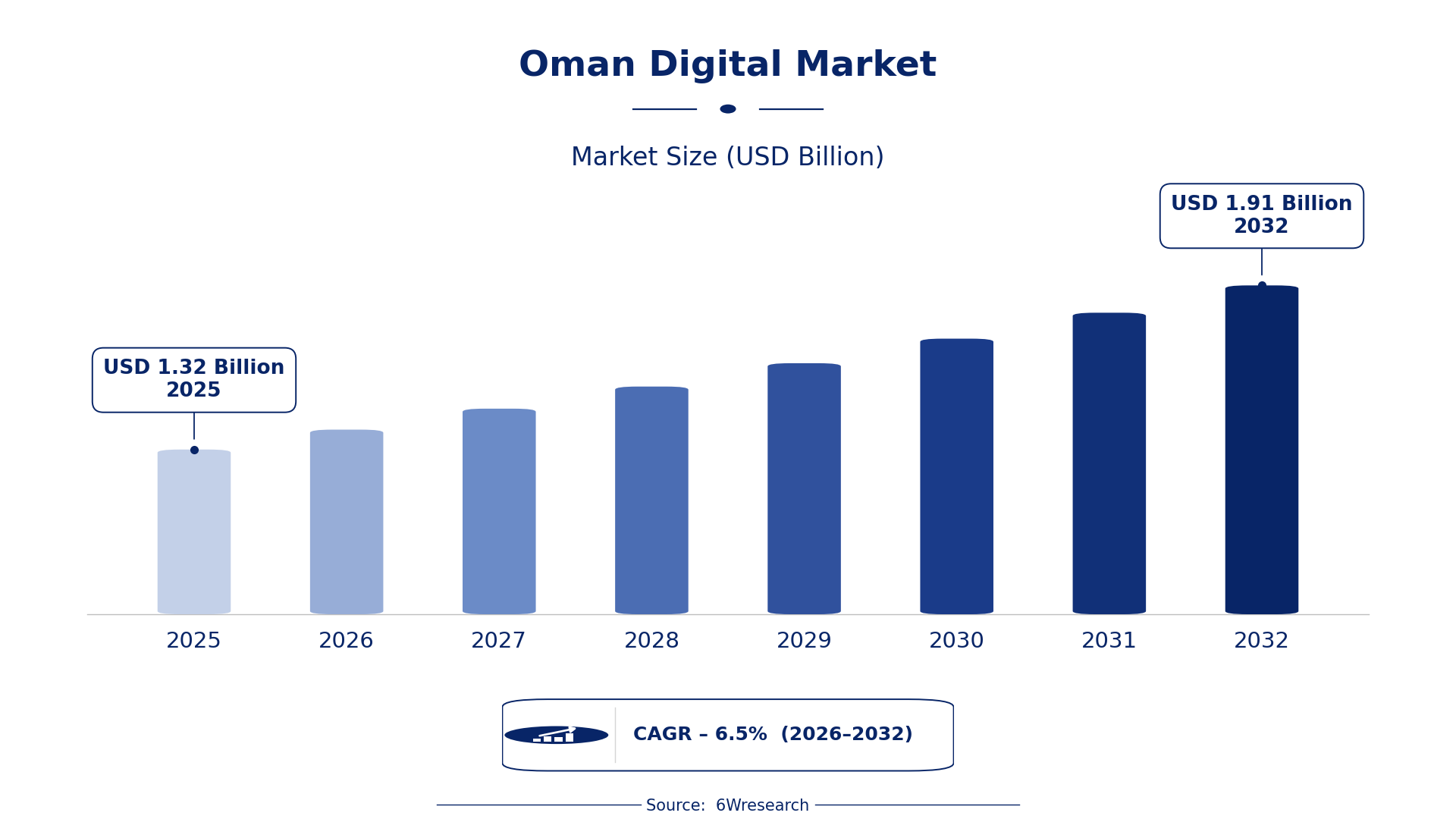
The Oman Digital Market was estimated at USD 1316 Million in 2025 and is projected to reach USD 1906 Million by 2032, growing at a CAGR of 6.5% from 2026 to 2032.
Oman Digital Market Synopsis
The Oman Digital Market has seen substantial momentum, driven by rising internet access and an increasing number of smartphone users. As more Omanis embrace digital solutions, the market is shifting towards a more integrated digital economy.
Looking ahead, the market is on a path of accelerated growth, especially in e-commerce and fintech sectors. Government initiatives supporting digital transformation are further solidifying this trajectory, creating a fertile ground for innovation and investment.
Oman Digital Market Year-wise Growth Rate and Key Drivers
This graph illustrates the annual growth rates of the Oman Digital Market from 2021 to 2032, highlighting a steady upward trajectory and projected expansion over the forecast period.
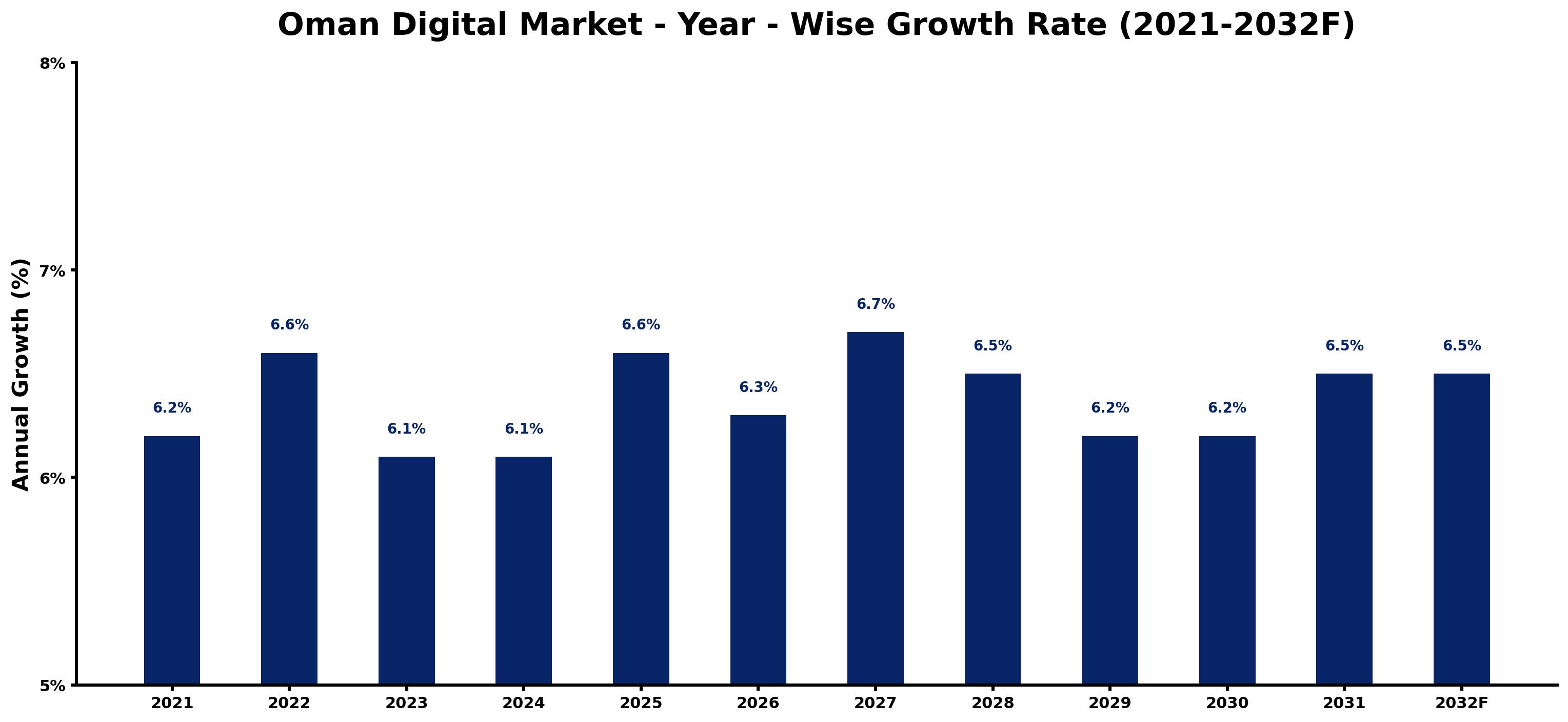
The table below presents the year‑wise growth rates along with the key drivers influencing the market
| Year | Growth Rate | Major Drivers |
| 2021 | 6.2% | Increased smartphone penetration driving online shopping growth. |
| 2022 | 6.6% | Rise of local e-commerce platforms attracting regional investments. |
| 2023 | 6.1% | Government's Cybersecurity Strategy promoting digital security advancements. |
| 2024 | 6.1% | Growing interest in fintech solutions among Omani startups. |
| 2025 | 6.6% | Emerging digital content creation trend among youth demographic. |
| 2026 | 6.3% | Increased government support for tech startups and innovators. |
| 2027 | 6.7% | Boost in digital literacy programs encouraging online engagement. |
| 2028 | 6.5% | Growing social media use influencing digital advertising strategies. |
| 2029 | 6.2% | Ongoing regulatory reforms enhancing digital business environment. |
| 2030 | 6.2% | Increased collaboration between telecoms and fintech sectors. |
| 2031 | 6.5% | Tech-savvy millennials driving demand for digital entertainment. |
| 2032 | 6.5% | Rising focus on remote work solutions among enterprises. |
Note: Market size estimations and growth projections presented in this report are based on 6Wresearch's proprietary forecasting methodology, utilizing the latest available industry data, government publications, and primary research inputs.
Oman Digital Market Key Takeaways
Below are some of the specific key takeaways from the market, including:
- The market is experiencing a rapid shift towards e-commerce, with more consumers preferring online shopping.
- Mobile payment systems are gaining popularity, enabling secure online transactions.
- Social media platforms are essential for businesses to engage with consumers effectively.
- Government policies are actively promoting digital literacy and infrastructure development.
- Investment opportunities are expanding in sectors like cybersecurity and digital marketing.
Evaluation of Restraints in Oman Digital Market
Despite its growth, the Oman Digital Market faces several limitations. Internet access remains inconsistent, particularly in remote areas, which hinders the reach of digital services. Additionally, a lack of awareness about online offerings among certain demographics can stifle growth potential. Concerns about data privacy and security also pose challenges, creating hesitation among consumers. The relatively small population can restrict market scalability, making it crucial for businesses to devise strategies that effectively address these barriers.
Oman Digital Market Trends
Several trends are shaping the Oman Digital Market. E-commerce continues to gain traction, with consumers increasingly favoring online platforms for their shopping needs. Social media is becoming a vital marketing tool, with brands utilizing influencer partnerships to reach target audiences. Additionally, the rise of mobile payment solutions is facilitating smoother transactions, while businesses are prioritizing digital transformation through investments in cloud computing and data analytics.
Oman Digital Market Opportunities
The digital market in Oman is ripe with opportunities, particularly in sectors like e-commerce and fintech. The increasing preference for online shopping indicates a growing demand for innovative retail solutions. In fintech, the government's push for cashless transactions and digital banking creates an environment for new services. Cybersecurity investments are also crucial as businesses seek to protect their digital operations. These sectors present lucrative avenues for investors looking to tap into Oman's digital evolution.
Government Initiatives in the Oman Digital Market
The Omani government is actively engaged in promoting digital transformation, recognizing its potential to drive economic growth. Various initiatives are being implemented to enhance digital infrastructure, increase online service accessibility, and foster digital literacy. The regulatory framework is evolving to support a secure and dynamic digital environment, which is essential for attracting investment and nurturing local businesses.
- A national digital infrastructure upgrade programme launched in 2023 aims to enhance connectivity across the country.
- The Digital Literacy Initiative, currently underway, focuses on educating citizens about digital services and online safety.
- Recent regulations introduced in early 2024 establish data protection protocols to safeguard consumer information.
- A planned public-private partnership expected to begin in late 2025 will expand access to digital payment solutions.
- The National Digital Strategy is set to evolve by 2026, incorporating new technologies to enhance e-government services.
Future Insights of the Oman Digital Market
The Oman Digital Market is expected to continue its upward trajectory from 2026 to 2032. With a tech-savvy youth population and increasing internet penetration, the potential for growth in e-commerce and fintech is substantial. The adoption of advanced technologies, such as artificial intelligence and blockchain, will drive innovation, enhancing service delivery and customer experiences. Continuous investments in cybersecurity and infrastructure are vital, ensuring a secure and efficient digital ecosystem for businesses and consumers alike.
Oman Digital Market Latest Developments
In the past year, the Oman Digital Market has seen a flurry of activity, reflecting its rapid growth and increasing importance in the region. Companies are innovating and expanding their digital offerings, while government initiatives are paving the way for a more integrated digital economy. This dynamic environment is fostering collaboration between the public and private sectors, setting the stage for significant advancements.
- A major technology vendor launched a new e-commerce platform in early 2024, aimed at local businesses looking to expand online.
- A leading regional operator is currently upgrading its mobile payment services to enhance user experience, with rollout expected by mid-2025.
- In Q1 2024, an initiative to improve digital literacy in schools was completed, focusing on integrating tech education into the curriculum.
- A cybersecurity framework is being developed, slated for completion in late 2025, to bolster consumer trust in online transactions.
- Plans are in motion for an upcoming digital marketing summit in 2026, aimed at connecting businesses with digital strategy experts.
Oman Digital Market - Key Attractiveness of the Report
- 10 Years of Market Numbers
- Historical Data Starting from 2022 to 2025
- Base Year: 2025
- Forecast Data until 2032
- Key Performance Indicators Impacting the Market
- Major Upcoming Developments and Projects
Key Highlights of the Report:
- Oman Digital Market Outlook
- Market Size of Oman Digital Market, 2025
- Forecast of Oman Digital Market, 2032
- Historical Data and Forecast of Oman Digital Revenues & Volume for the Period 2022-2032F
- Oman Digital Market Trend Evolution
- Oman Digital Market Drivers and Challenges
- Oman Digital Price Trends
- Oman Digital Porter's Five Forces
- Oman Digital Industry Life Cycle
- Historical Data and Forecast of Oman Digital Market Revenues & Volume By Software for the Period 2022-2032F
- Historical Data and Forecast of Oman Digital Market Revenues & Volume By CRM Software for the Period 2022-2032F
- Historical Data and Forecast of Oman Digital Market Revenues & Volume By Email Marketing Software for the Period 2022-2032F
- Historical Data and Forecast of Oman Digital Market Revenues & Volume By Social Media Advertising for the Period 2022-2032F
- Oman Digital Import Export Trade Statistics
- Market Opportunity Assessment By Software
- Oman Digital Top Companies Market Share
- Oman Digital Competitive Benchmarking By Technical and Operational Parameters
- Oman Digital Company Profiles
- Oman Digital Key Strategic Recommendations






































