Oman Nylon Market Size Growth Rate
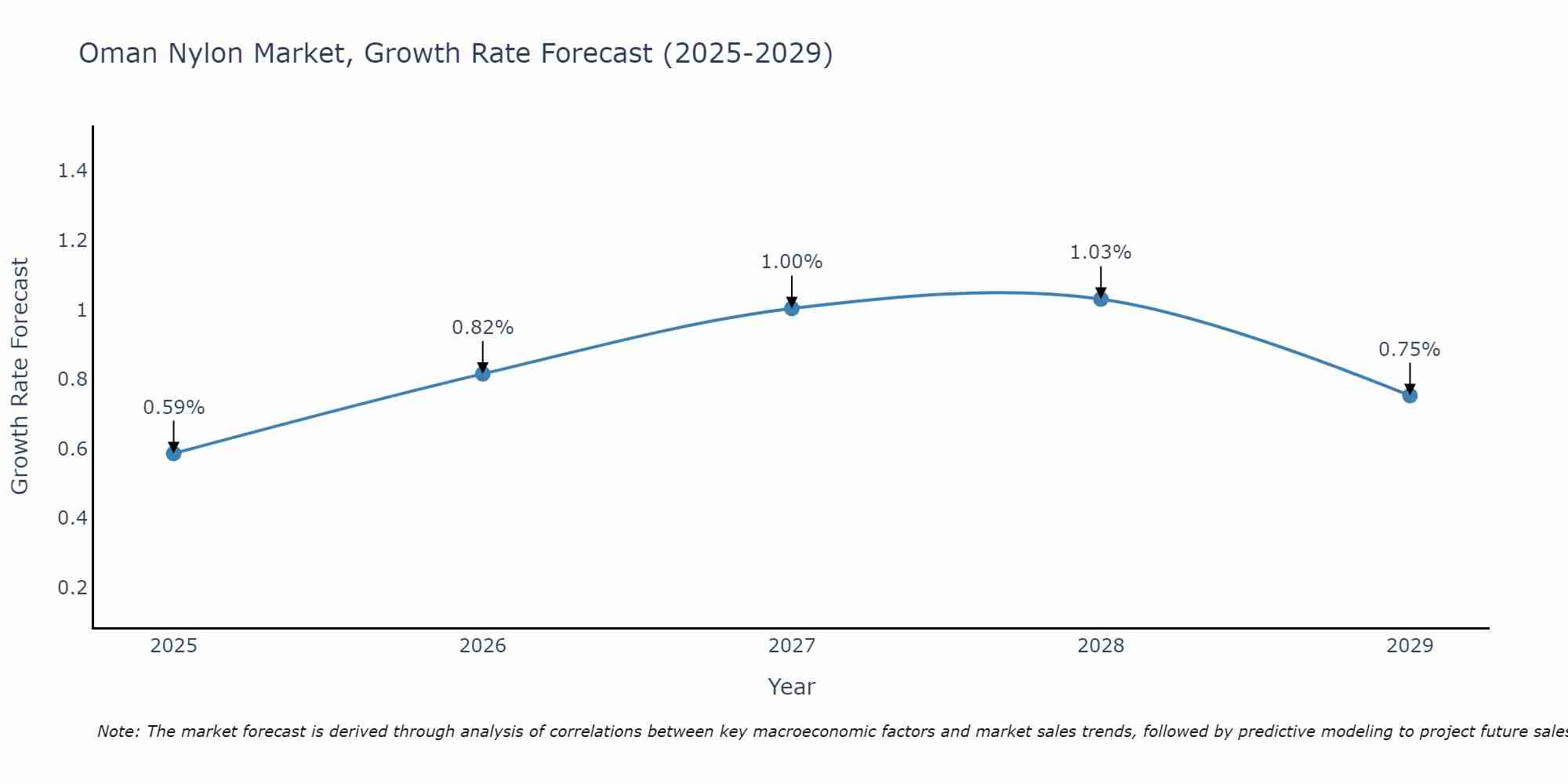
The Oman Nylon Market is projected to witness mixed growth rate patterns during 2025 to 2029. Growth accelerates to 1.03% in 2028, following an initial rate of 0.59%, before easing to 0.75% at the end of the period.
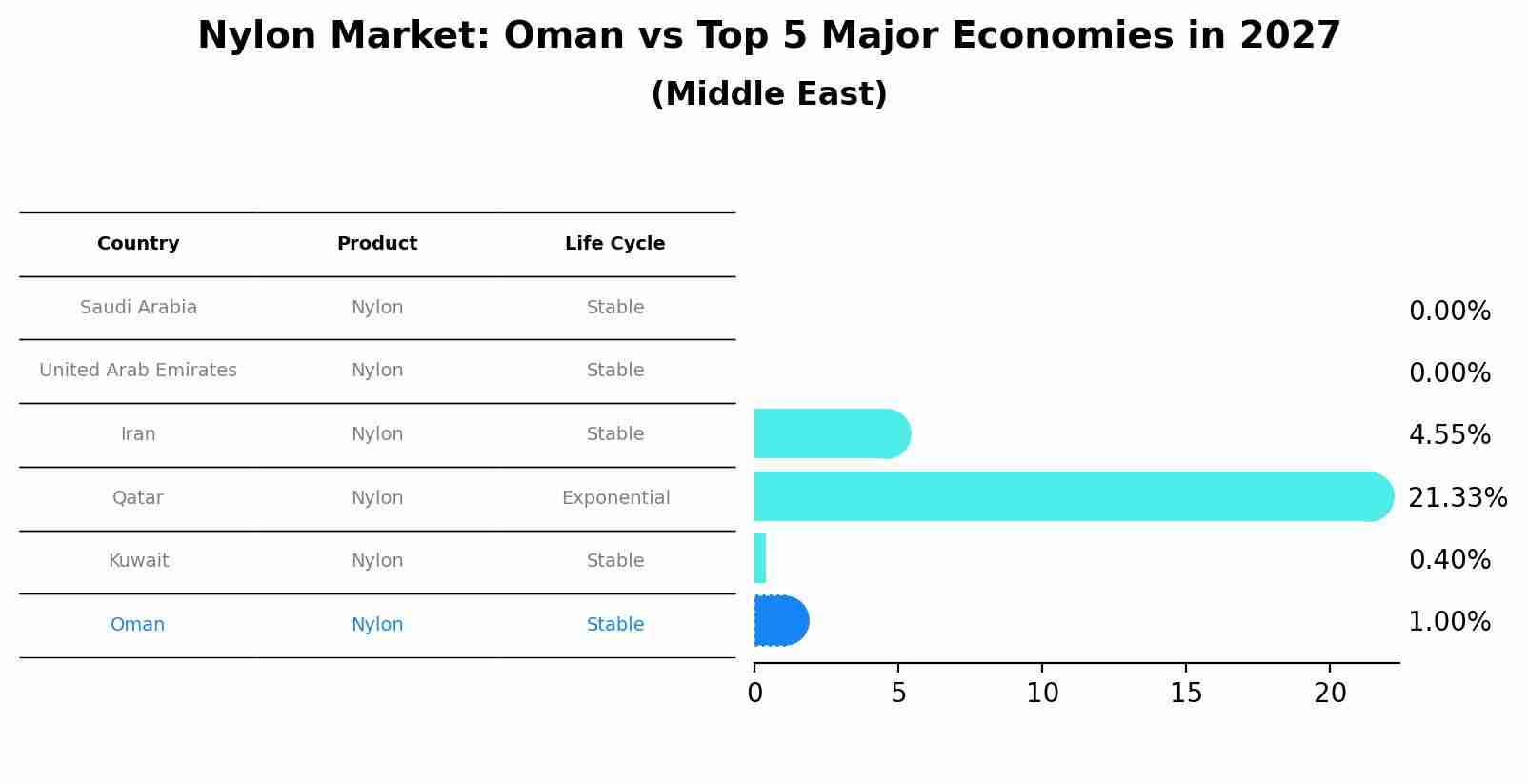
Nylon Market: Oman vs Top 5 Major Economies in 2027 (Middle East)
By 2027, the Nylon market in Oman is anticipated to reach a growth rate of 1.00%, as part of an increasingly competitive Middle East region, where Saudi Arabia remains at the forefront, supported by United Arab Emirates, Iran, Qatar and Kuwait, driving innovations and market adoption across sectors.
Oman Nylon Market Overview
The Oman nylon market is witnessing steady growth driven by factors such as increasing demand from various end-use industries including automotive, textiles, and packaging. The growth in the automotive sector, particularly the manufacturing of automotive components, is a key driver for the nylon market in Oman. Additionally, the expanding textile industry in the region is boosting the demand for nylon fibers. The packaging industry`s reliance on nylon for flexible and durable packaging solutions is further fueling market growth. Key players in the Oman nylon market are focusing on product innovations and strategic collaborations to gain a competitive edge. Overall, the market is poised for growth in the coming years due to the versatile applications of nylon across multiple industries in the country.
Oman Nylon Market Trends
The Oman Nylon Market is experiencing a shift towards sustainable and eco-friendly practices, with an increasing focus on recycling and reducing carbon footprint. Manufacturers are investing in innovative technologies to produce nylon materials that are more environmentally friendly and meet the growing demand for sustainable products. There is also a growing trend towards the use of bio-based nylon materials derived from renewable sources such as castor oil or cornstarch. Additionally, the market is witnessing a rise in demand for high-performance nylon fibers in sectors like automotive, construction, and textiles, driving the growth of the industry. Overall, sustainability, innovation, and performance are key trends shaping the Oman Nylon Market.
Oman Nylon Market Challenges
In the Oman Nylon Market, some of the key challenges include intense competition from other synthetic fibers like polyester and polypropylene, which offer similar properties at potentially lower costs. Additionally, fluctuations in raw material prices can impact the overall production costs for nylon manufacturers in Oman. Limited availability of skilled labor and technological expertise in the region could also pose challenges in terms of maintaining high-quality production processes. Furthermore, the market may face obstacles related to environmental concerns and sustainability as consumers are increasingly seeking eco-friendly alternatives to traditional synthetic fibers. Overall, navigating these challenges requires strategic planning, innovation, and a strong focus on meeting customer demands in order to sustain growth in the Oman Nylon Market.
Oman Nylon Market Investment Opportunities
The Oman Nylon Market presents promising investment opportunities due to the growing demand for nylon products in various industries such as automotive, construction, textiles, and consumer goods. With Oman`s strategic location, competitive production costs, and supportive government policies, investing in the production or distribution of nylon materials could be lucrative. Additionally, as the global trend towards sustainability and eco-friendly products continues to rise, there is potential for investments in the development of bio-based or recycled nylon materials to cater to environmentally conscious consumers. Collaborating with local manufacturers or establishing partnerships with key industry players in Oman can help investors capitalize on the growing market demand for nylon products in the region.
Oman Nylon Market Government Policy
The government of Oman has implemented policies to support the growth of the nylon market in the country. These policies focus on promoting domestic production of nylon products, encouraging investment in the sector, and fostering innovation and technology development. The government provides incentives such as tax breaks, subsidies, and grants to attract foreign investors and stimulate local manufacturing of nylon materials. Additionally, there are regulations in place to ensure environmental sustainability and quality standards in the production processes. Overall, the government`s policies aim to enhance the competitiveness of the Oman Nylon Market, create job opportunities, and contribute to the country`s economic diversification efforts.
Oman Nylon Market Future Outlook
The future outlook for the Oman Nylon Market appears promising with steady growth expected in the coming years. Factors such as increasing demand for nylon in various industries including automotive, textiles, and packaging, coupled with advancements in nylon production technology, are likely to drive market expansion. Additionally, the growing awareness about the benefits of nylon, such as its durability, lightweight nature, and versatility, is expected to further boost market growth. With the government`s focus on economic diversification and industrial development initiatives, the Oman Nylon Market is poised for sustained progress. However, challenges related to raw material availability and fluctuating prices may pose some hindrances. Overall, the market is anticipated to witness a positive trajectory in the foreseeable future.
Key Highlights of the Report:
- Oman Nylon Market Outlook
- Market Size of Oman Nylon Market, 2024
- Forecast of Oman Nylon Market, 2031
- Historical Data and Forecast of Oman Nylon Revenues & Volume for the Period 2021 - 2031
- Oman Nylon Market Trend Evolution
- Oman Nylon Market Drivers and Challenges
- Oman Nylon Price Trends
- Oman Nylon Porter's Five Forces
- Oman Nylon Industry Life Cycle
- Historical Data and Forecast of Oman Nylon Market Revenues & Volume By Product for the Period 2021 - 2031
- Historical Data and Forecast of Oman Nylon Market Revenues & Volume By Nylon 6 for the Period 2021 - 2031
- Historical Data and Forecast of Oman Nylon Market Revenues & Volume By Nylon 66 for the Period 2021 - 2031
- Historical Data and Forecast of Oman Nylon Market Revenues & Volume By Application for the Period 2021 - 2031
- Historical Data and Forecast of Oman Nylon Market Revenues & Volume By Automobile for the Period 2021 - 2031
- Historical Data and Forecast of Oman Nylon Market Revenues & Volume By Electrical & Electronics for the Period 2021 - 2031
- Historical Data and Forecast of Oman Nylon Market Revenues & Volume By Engineering Plastics for the Period 2021 - 2031
- Historical Data and Forecast of Oman Nylon Market Revenues & Volume By Textiles for the Period 2021 - 2031
- Historical Data and Forecast of Oman Nylon Market Revenues & Volume By Others for the Period 2021 - 2031
- Oman Nylon Import Export Trade Statistics
- Market Opportunity Assessment By Product
- Market Opportunity Assessment By Application
- Oman Nylon Top Companies Market Share
- Oman Nylon Competitive Benchmarking By Technical and Operational Parameters
- Oman Nylon Company Profiles
- Oman Nylon Key Strategic Recommendations






































