Oman Polyester Fabric Market Summary
The oman polyester fabric market was estimated at USD 1409 Million in 2025 and is projected to reach USD 2037 Million by 2032, growing at a CAGR of 6.0% from 2026 to 2032.
Oman Polyester Fabric Market Year-wise Growth Rate and Key Drivers
This graph highlights how the Oman Polyester Fabric Market has steadily grown over the past five years, supported by major growth factors.
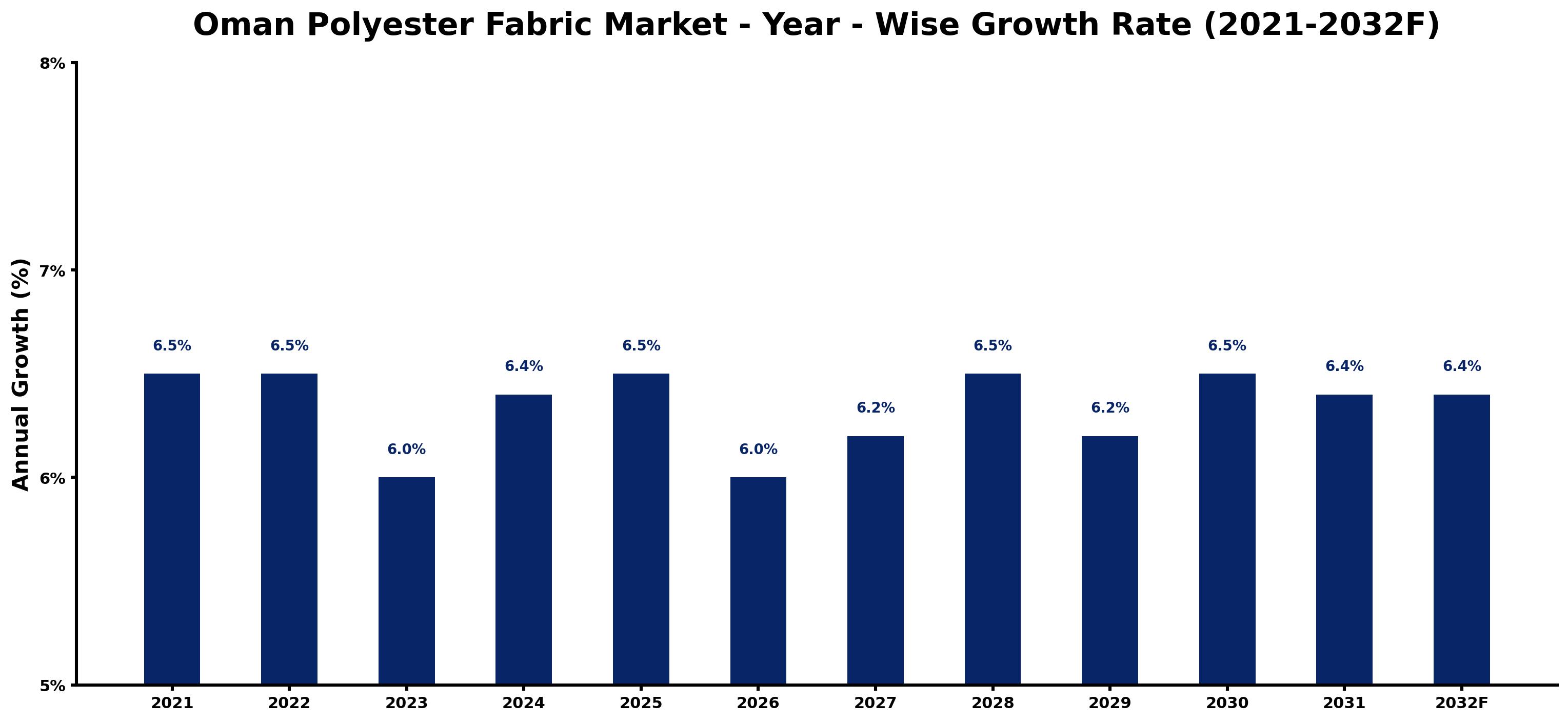
The table below presents the year wise growth rates along with the key drivers influencing the market
| Year | Growth Rate | Major Drivers |
| 2021 | 6.5% | Post-pandemic recovery boosted consumer interest in home textiles and furnishings. |
| 2022 | 6.5% | Local businesses expanded, fostering a competitive polyester fabric manufacturing environment. |
| 2023 | 6.0% | Increasing participation in global textile exhibitions enhanced brand visibility and networking. |
| 2024 | 6.4% | Sourcing materials locally reduces supply chain disruptions significantly in Oman. |
| 2025 | 6.5% | Emerging sustainability trends encouraged the development of eco-friendly polyester options. |
| 2026 | 6.0% | Investment in advanced manufacturing technologies improved production efficiencies for local firms. |
| 2027 | 6.2% | Oman's diversification goals initiated substantial infrastructural projects requiring durable textiles. |
| 2028 | 6.5% | Increased awareness of climate resilience pushed demand for temperature-regulating fabrics. |
| 2029 | 6.2% | Collaborations between local designers and fabric manufacturers spurred innovative product lines. |
| 2030 | 6.5% | E-commerce growth enabled wider distribution channels for polyester fabric products. |
| 2031 | 6.4% | A stronger focus on home aesthetics reshaped consumer preferences towards premium textiles. |
| 2032 | 6.4% | Regional events promoting craftsmanship elevated the status of Omani polyester fabrics. |
Note - Market size estimations and growth projections presented in this report are based on 6Wresearch's advanced forecasting approach, validated with industry datasets as of June 2026.
Oman Polyester Fabric Market Synopsis
The Oman Polyester Fabric Market is projected to reach 6.0% and witness significant growth during the forecast period (2026-2032). This market is experiencing rapid expansion driven by a multitude of factors. One of the primary drivers is the increasing demand for lightweight apparel fabrics. This demand is largely attributed to heightened health awareness among consumers, who prioritize comfort and functionality in their clothing choices. Additionally, the rise in disposable incomes among the growing middle-class population around the globe is enhancing spending power, further fuelling this demand.
Technological advancements also play a crucial role in shaping the Oman polyester fabric market. Innovations such as nanotechnology and the development of biodegradable polyester fibers are emerging trends that are set to redefine the fabric landscape. These advancements not only enhance the performance characteristics of polyester fabrics but also cater to the increasing consumer preference for sustainable products.
Furthermore, the growth of textile exports from key production hubs like China and India is anticipated to provide an additional impetus to the industry. As these countries continue to expand their textile manufacturing capabilities, they are likely to offer competitive pricing and diverse product offerings, thereby impacting the Oman polyester fabric market positively.
Oman Polyester Fabric Market Growth Drivers
Several growth drivers are propelling the Oman polyester fabric market forward, establishing a robust foundation for its future trajectory. Firstly, consumer trends are increasingly leaning towards the demand for lightweight and breathable fabrics, essential for activewear and leisurewear, which are key applications of polyester.
Secondly, the economic conditions in Oman and surrounding regions are fostering a rise in disposable incomes, allowing consumers to invest more in quality textile products. This increase in economic affluence is crucial for the expansion of the polyester fabric market.
Another significant driver is the heightened focus on sustainability within the textile industry. As consumers become more environmentally conscious, the demand for recycled and eco-friendly materials is surging. Innovations in biodegradable polyester fibers are responding to this demand and are likely to become mainstream in the coming years.
Additionally, advancements in textile production technology are enhancing the efficiency and quality of polyester fabrics. The implementation of automated processes and quality control systems has led to a significant increase in production capacity, thereby meeting the growing consumer demand.
Lastly, the global interconnectedness of markets allows for increased textile imports from countries with established manufacturing bases, which is further propelling the growth of the Oman polyester fabric market.
Oman Polyester Fabric Market Trends and Opportunities
The Oman polyester fabric market is currently influenced by several emerging trends that present unique opportunities for stakeholders. The increasing integration of smart textiles into fashion and athletic wear is one such trend. These high-tech fabrics offer features such as moisture-wicking, UV protection, and temperature regulation, making polyester a favorable choice for innovative applications.
In addition, the popularity of online shopping is reshaping the retail landscape for textile products, allowing consumers easier access to a variety of polyester fabric options. E-commerce platforms are creating a direct link between manufacturers and consumers, enhancing market reach.
The focus on personalization and customization in fashion is another area of opportunity. As brands seek to cater to individual consumer preferences, the flexibility of polyester fabrics allows for diverse design possibilities that can be tailored to unique styles and requirements.
Moreover, collaborations between textile manufacturers and fashion designers are becoming increasingly common, leading to the creation of exclusive collections that leverage the properties of polyester, further expanding the market's potential.
Lastly, investment in research and development to create advanced, high-performance polyester fabrics will be crucial in capturing emerging market segments and meeting evolving consumer demands, positioning stakeholders for growth in the years to come.
Oman Polyester Fabric Market Challenges and Restraints
While the Oman polyester fabric market is poised for growth, several challenges and restraints could impede its progress. The volatility of raw material prices, particularly crude oil, can impact the production costs of polyester fabrics, affecting profitability for manufacturers. This fluctuation can create uncertainty in pricing strategies and hinder long-term planning.
Additionally, the increasing regulation concerning environmental standards adds complexity to market operations. Manufacturers must navigate a growing array of compliance requirements, which can necessitate significant investment in sustainable practices and technologies.
There is also stiff competition from alternative materials, such as cotton and other natural fibers. If consumer preferences shift towards these alternatives, the polyester market may face challenges in retaining its market share.
Furthermore, fluctuations in demand due to global economic conditions can create instability within the market. A slowdown in economic growth can adversely affect consumer spending on non-essential items like fashion textiles, including polyester fabrics.
Lastly, the ongoing global focus on reducing plastic waste has led to rising scrutiny of synthetic fabrics, potentially impacting the perception of polyester as a desirable material among environmentally conscious consumers.
Oman Polyester Fabric Market Government Investment and Initiatives
The Omani government has recognized the strategic importance of the textile sector and is implementing various initiatives aimed at fostering growth within the Oman polyester fabric market. Investments in infrastructure development, including textile parks and manufacturing facilities, are on the rise, which supports the establishment of a robust textile manufacturing ecosystem.
Additionally, government policies aimed at attracting foreign investment are creating opportunities for international partnerships and collaborations that enhance local manufacturing capabilities. These initiatives are crucial to boosting competitiveness in the global textile market.
Furthermore, the government's commitment to sustainable development is encouraging investments in environmentally-friendly technologies and practices within the textile industry. This focus not only meets global sustainability standards but also aligns with local consumer preferences for eco-friendly products.
Incentives for skill development and training programs are also being prioritized to ensure that the workforce is adequately equipped with the skills necessary for modern textile manufacturing. This investment in human capital is essential for enhancing productivity and innovation in polyester fabric production.
Lastly, public spending on research and development initiatives is being directed towards advancing textile technology and material development. Such investments are crucial for keeping pace with global trends and consumer demands in the polyester fabric market.
Oman Polyester Fabric Market Latest Developments (May 2025 - June 2026)
The Oman polyester fabric market is currently witnessing transformative developments that are shaping its future direction. Between May 2025 and June 2026, there has been an increased focus on integrating advanced technology into textile manufacturing processes. This trend encompasses the adoption of automation and smart technologies, which enhance production efficiency and product quality.
Sustainability has also emerged as a focal point during this period, with more manufacturers exploring eco-friendly production methods. The introduction of biodegradable polyester fibers has gained traction, responding to consumer demand for more environmentally conscious textile options.
The period has also seen the growth of collaborations between textile manufacturers and academic institutions aimed at fostering innovation in fabric technology. These partnerships are crucial for exploring new materials and production techniques that align with market trends and consumer preferences.
In addition, there has been a marked increase in digital marketing and e-commerce strategies among textile producers, allowing them to reach a broader consumer base and adapt to changing purchasing behaviors.
Lastly, the ongoing exploration of global trade partnerships is expected to open new export markets for Omani polyester fabric, paving the way for potential growth in international sales.
Oman Polyester Fabric Market - Key Attractiveness of the Report
- 10 Years of Market Numbers
- Historical Data Starting from 2022 to 2025
- Base Year: 2025
- Forecast Data until 2032
- Key Performance Indicators Impacting the Market
- Major Upcoming Developments and Projects
Key Highlights of the Report:
- Oman Polyester Fabric Market Outlook
- Market Size of Oman Polyester Fabric Market, 2025
- Forecast of Oman Polyester Fabric Market, 2032F
- Historical Data and Forecast of Oman Polyester Fabric Revenues & Volume for the Period 2022-2032F
- Oman Polyester Fabric Market Trend Evolution
- Oman Polyester Fabric Market Drivers and Challenges
- Oman Polyester Fabric Price Trends
- Oman Polyester Fabric Porter's Five Forces
- Oman Polyester Fabric Industry Life Cycle
- Historical Data and Forecast of Oman Polyester Fabric Market Revenues & Volume By Type for the Period 2022-2032F
- Historical Data and Forecast of Oman Polyester Fabric Market Revenues & Volume By PET for the Period 2022-2032F
- Historical Data and Forecast of Oman Polyester Fabric Market Revenues & Volume By PCDT for the Period 2022-2032F
- Historical Data and Forecast of Oman Polyester Fabric Market Revenues & Volume By Applications for the Period 2022-2032F
- Historical Data and Forecast of Oman Polyester Fabric Market Revenues & Volume By Carpets & Rugs for the Period 2022-2032F
- Historical Data and Forecast of Oman Polyester Fabric Market Revenues & Volume By Non-Woven Fabrics Fiberfill for the Period 2022-2032F
- Historical Data and Forecast of Oman Polyester Fabric Market Revenues & Volume By Apparels for the Period 2022-2032F
- Historical Data and Forecast of Oman Polyester Fabric Market Revenues & Volume By Home Textiles for the Period 2022-2032F
- Historical Data and Forecast of Oman Polyester Fabric Market Revenues & Volume By Others? for the Period 2022-2032F
- Oman Polyester Fabric Import Export Trade Statistics
- Market Opportunity Assessment By Type
- Market Opportunity Assessment By Applications
- Oman Polyester Fabric Top Companies Market Share
- Oman Polyester Fabric Competitive Benchmarking By Technical and Operational Parameters
- Oman Polyester Fabric Company Profiles
- Oman Polyester Fabric Key Strategic Recommendations






































