Peru Chlorine Dioxide Market Size, Share & Growth Rate
The Peru Chlorine Dioxide Market was estimated at USD 1275 Million in 2025 and is projected to reach USD 1831 Million by 2032, growing at a CAGR of 5.3% from 2026 to 2032. This impressive growth is primarily fueled by the increasing recognition of chlorine dioxide as a safe and efficient alternative for water treatment and disinfection across multiple sectors. Additionally, the rising emphasis on environmental sustainability and health safety in Peru is promoting widespread adoption of chlorine dioxide in industrial applications.
Peru Chlorine Dioxide Market Year-wise Growth Rate and Key Drivers
This graph highlights how the Peru Chlorine Dioxide Market has steadily grown over the years, supported by major growth factors.
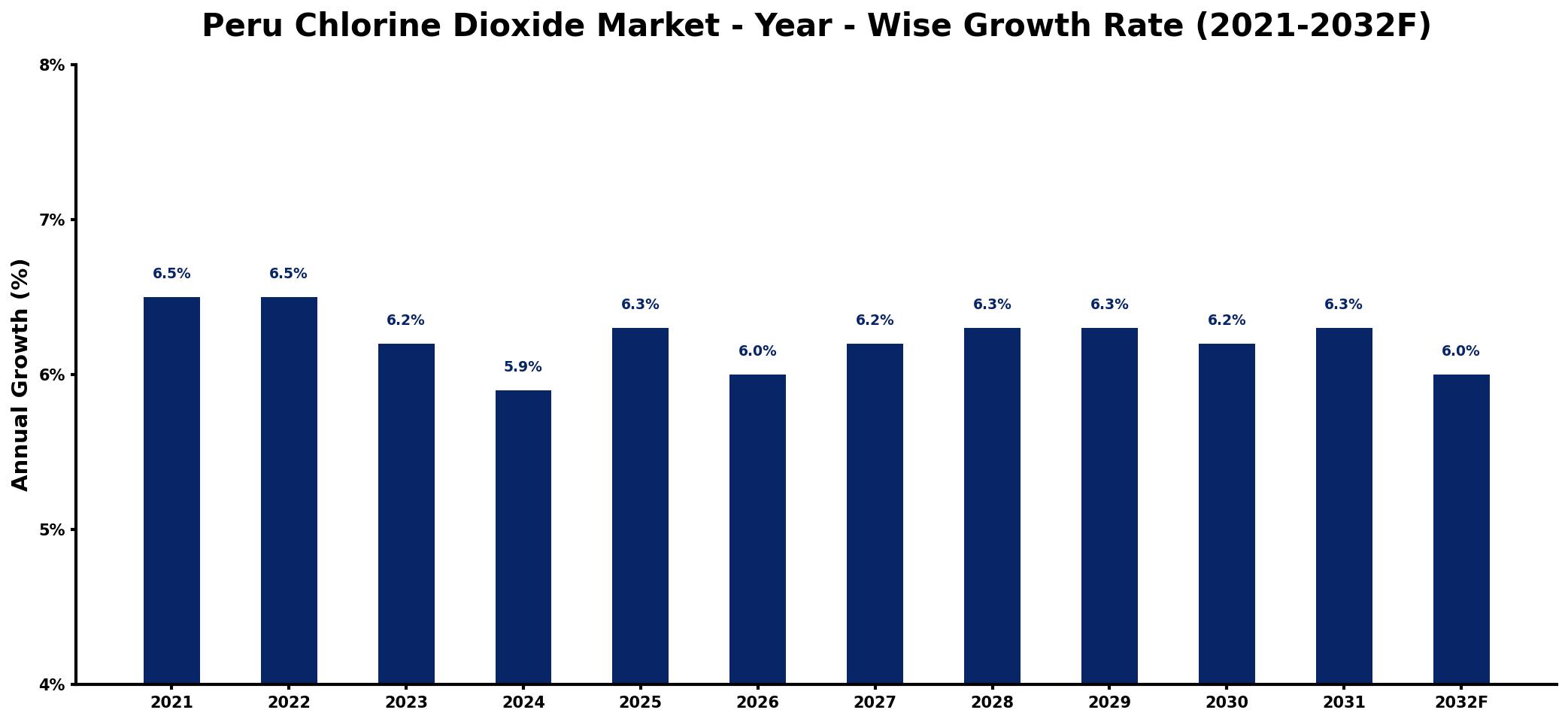
The table below presents the year‑wise growth rates along with the key drivers influencing the market
| Year | Growth Rate | Major Drivers |
| 2021 | 6.5% | Rising water treatment requirements |
| 2022 | 6.5% | Increased industrial application demand |
| 2023 | 6.2% | Growing healthcare sanitation needs |
| 2024 | 5.9% | Expanding agricultural safety regulations |
| 2025 | 6.3% | Boosted environmental protection initiatives |
| 2026 | 6.0% | Enhanced food safety standards |
| 2027 | 6.2% | Strengthened public health policies |
| 2028 | 6.3% | Surge in municipal investments |
| 2029 | 6.3% | Growing awareness of sanitation |
| 2030 | 6.2% | Rising global health concerns |
| 2031 | 6.3% | Increased research and development |
| 2032 | 6.0% | Heightened demand for eco-friendly solutions |
Note: Market size estimations and growth projections presented in this report are based on 6Wresearch's proprietary forecasting methodology, utilizing the latest available industry data, government publications, and primary research inputs.
Peru Chlorine Dioxide Market Synopsis
The most significant force currently shaping the Peru Chlorine Dioxide Market is the escalating need for effective and eco-friendly water treatment solutions. Industries are increasingly favoring chlorine dioxide due to its non-toxic nature and efficacy in eliminating harmful pathogens, positioning it as a crucial component for public health initiatives.
Furthermore, the healthcare sector is amplifying demand, driven by stringent sterilization protocols that require reliable disinfectants. The food processing industry is also a vital player, utilizing chlorine dioxide for both sanitization and preservation, which underscores the chemical's versatility and essential role in maintaining health standards across sectors.
Peru Chlorine Dioxide Market Key Takeaways
- The market is anticipated to grow significantly due to increased demand for effective disinfection methods in healthcare and food processing sectors.
- Chlorine dioxide is gaining traction as a safer alternative to traditional chlorine, aligning with environmental sustainability goals.
- Investment opportunities exist in innovative applications of chlorine dioxide, especially in water treatment and public sanitation solutions.
- Regulatory frameworks aim to safeguard public health while ensuring environmental compliance, impacting market dynamics.
- Awareness campaigns and educational initiatives are essential to overcome the existing knowledge gaps about chlorine dioxide's benefits.
Evaluation of Restraints in Peru Chlorine Dioxide Market
Despite the promising growth trajectory, the Peru Chlorine Dioxide Market faces significant challenges. One major restraint is the limited awareness and understanding of chlorine dioxide's advantages among potential users. Many industries remain hesitant to adopt these solutions due to misconceptions or lack of information. Additionally, the stringent regulatory landscape in Peru can serve as a barrier to entry for new products, complicating compliance for businesses. The competition from alternative disinfection technologies further heightens the pressure, necessitating strategic marketing and educational outreach to foster greater acceptance.
Peru Chlorine Dioxide Market Trends
Current trends in the Peru Chlorine Dioxide Market reveal a strong shift toward environmentally friendly disinfection solutions. Increasingly, industries are recognizing the benefits of chlorine dioxide not only for its effectiveness but also for its lower environmental impact compared to conventional disinfectants. Technological innovations are enhancing the applications of chlorine dioxide, particularly in air purification systems and advanced water treatment processes. Additionally, the COVID-19 pandemic has heightened the awareness of hygiene practices, resulting in a sustained demand for effective sanitation products, including chlorine dioxide.
Peru Chlorine Dioxide Market Opportunities
The market presents several lucrative investment opportunities. The ongoing demand for effective water treatment solutions in agriculture, mining, and public health sectors highlights the potential for growth in chlorine dioxide applications. Moreover, the heightened focus on sanitation due to the pandemic opens avenues for innovative products in both consumer and industrial markets. Research and development into new formulations and delivery methods for chlorine dioxide could also yield promising returns, establishing a competitive edge in a rapidly evolving landscape.
Government Initiatives in the Peru Chlorine Dioxide Market
The Peruvian government has instituted a regulatory framework governing the use of chlorine dioxide, particularly in the food and beverage industry. These regulations are designed to safeguard consumer health and ensure environmental protection. The Ministry of Health establishes maximum residue limits for chlorine dioxide in consumables, while the Ministry of Environment oversees environmental impacts related to its usage. Such initiatives reflect the government's commitment to public safety and ecological sustainability, creating a structured environment for market growth.
Future Insights of the Peru Chlorine Dioxide Market
Looking ahead to the years 2026-2032, the Peru Chlorine Dioxide Market is poised for robust expansion. With increasing awareness of the chemical's efficacy and safety, the market is expected to attract both domestic and international investments. The ongoing technological advancements will likely further enhance the applications of chlorine dioxide in diverse fields, including agriculture and waste management. As regulatory frameworks evolve, businesses that adapt and innovate will find themselves well-positioned to capitalize on the rising demand for effective disinfection solutions.
Peru Chlorine Dioxide Market Latest Developments (2025 - 2026)
Recent developments in the Peru Chlorine Dioxide Market have showcased increased collaboration among industry stakeholders to promote best practices in water treatment and disinfection. Educational initiatives aimed at raising awareness about the benefits of chlorine dioxide are becoming more prevalent, signaling a shift towards greater adoption. Additionally, advancements in formulation technologies are expected to enhance product efficacy and application versatility, further driving demand in key industries.
Peru Chlorine Dioxide Market - Key Attractiveness of the Report
- 10 Years of Market Numbers
- Historical Data Starting from 2022 to 2025
- Base Year: 2025
- Forecast Data until 2032
- Key Performance Indicators Impacting the Market
- Major Upcoming Developments and Projects
Key Highlights of the Report:
- Peru Chlorine Dioxide Market Outlook
- Market Size of Peru Chlorine Dioxide Market, 2025
- Forecast of Peru Chlorine Dioxide Market, 2032
- Historical Data and Forecast of Peru Chlorine Dioxide Revenues & Volume for the Period 2022-2032F
- Peru Chlorine Dioxide Market Trend Evolution
- Peru Chlorine Dioxide Market Drivers and Challenges
- Peru Chlorine Dioxide Price Trends
- Peru Chlorine Dioxide Porter's Five Forces
- Peru Chlorine Dioxide Industry Life Cycle
- Historical Data and Forecast of Peru Chlorine Dioxide Market Revenues & Volume By Application for the Period 2022-2032F
- Historical Data and Forecast of Peru Chlorine Dioxide Market Revenues & Volume By Industrial Water Treatment for the Period 2022-2032F
- Historical Data and Forecast of Peru Chlorine Dioxide Market Revenues & Volume By Pulp & Paper Processing for the Period 2022-2032F
- Historical Data and Forecast of Peru Chlorine Dioxide Market Revenues & Volume By Oil & Gas for the Period 2022-2032F
- Historical Data and Forecast of Peru Chlorine Dioxide Market Revenues & Volume By Medical for the Period 2022-2032F
- Historical Data and Forecast of Peru Chlorine Dioxide Market Revenues & Volume By Food & Beverages for the Period 2022-2032F
- Historical Data and Forecast of Peru Chlorine Dioxide Market Revenues & Volume By Others for the Period 2022-2032F
- Peru Chlorine Dioxide Import Export Trade Statistics
- Market Opportunity Assessment By Application
- Peru Chlorine Dioxide Top Companies Market Share
- Peru Chlorine Dioxide Competitive Benchmarking By Technical and Operational Parameters
- Peru Chlorine Dioxide Company Profiles
- Peru Chlorine Dioxide Key Strategic Recommendations






































