Peru Digital Education Market Size & Growth Rate (2026-2032)
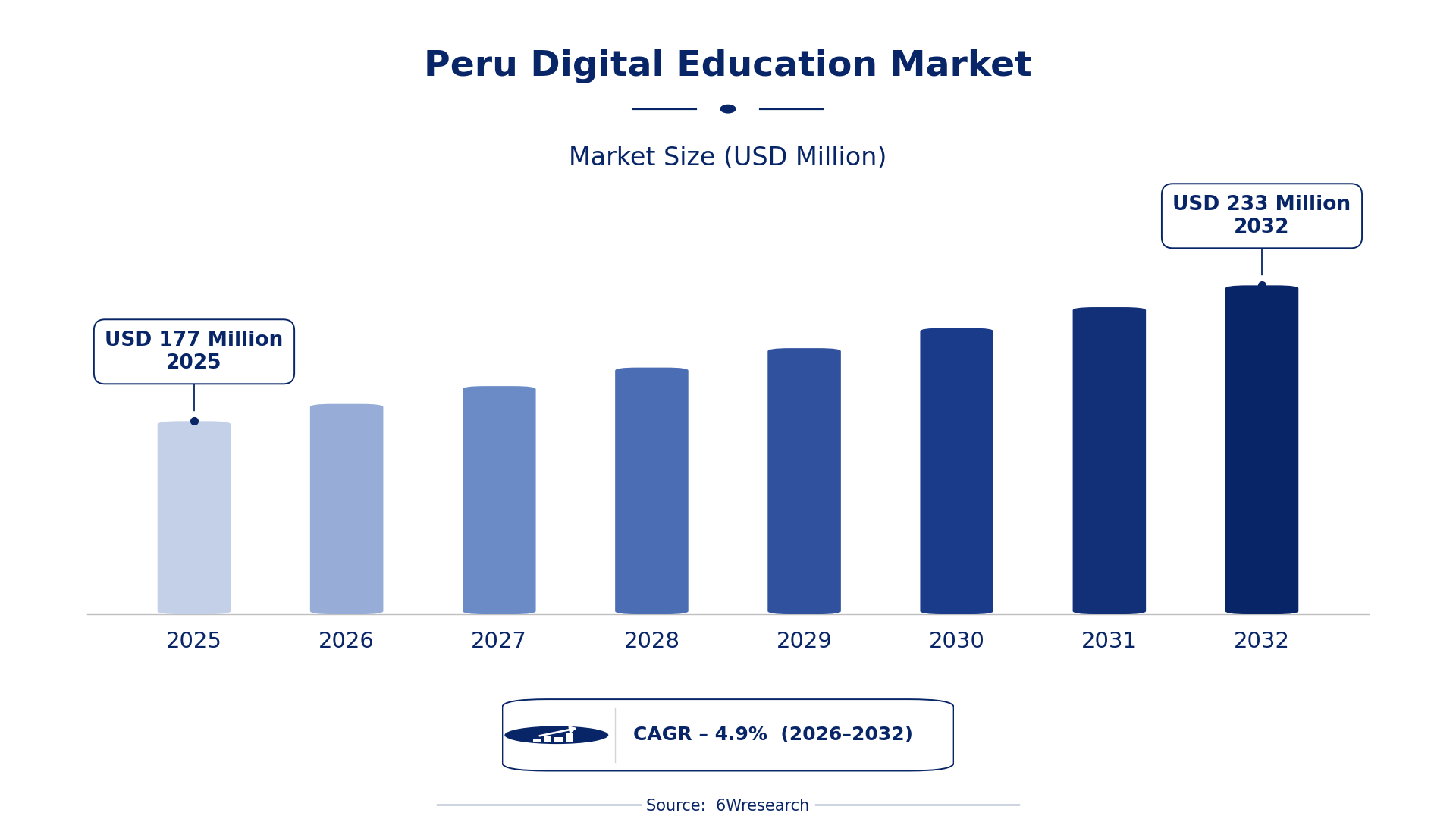
The Peru Digital Education Market was estimated at USD 177 Million in 2025 and is projected to reach USD 233 Million by 2032, growing at a CAGR of 4.9% from 2026 to 2032.
Peru Digital Education Market Synopsis
The digital education sector in Peru is gaining traction, propelled by a surge in internet accessibility and a growing appetite for online learning solutions. As traditional educational frameworks struggle to adapt, digital platforms are rapidly filling the gap, offering innovative approaches to learning.
With government backing and a shift in pedagogical focus, e-learning tools are becoming integral to the educational experience. Stakeholders are increasingly recognizing the potential of digital education to enhance learning outcomes and cater to diverse student needs.
Peru Digital Education Market Year-wise Growth Rate and Key Drivers
This graph illustrates the annual growth rates of the Peru Digital Education Market from 2021 to 2032, highlighting a steady upward trajectory and projected expansion over the forecast period.
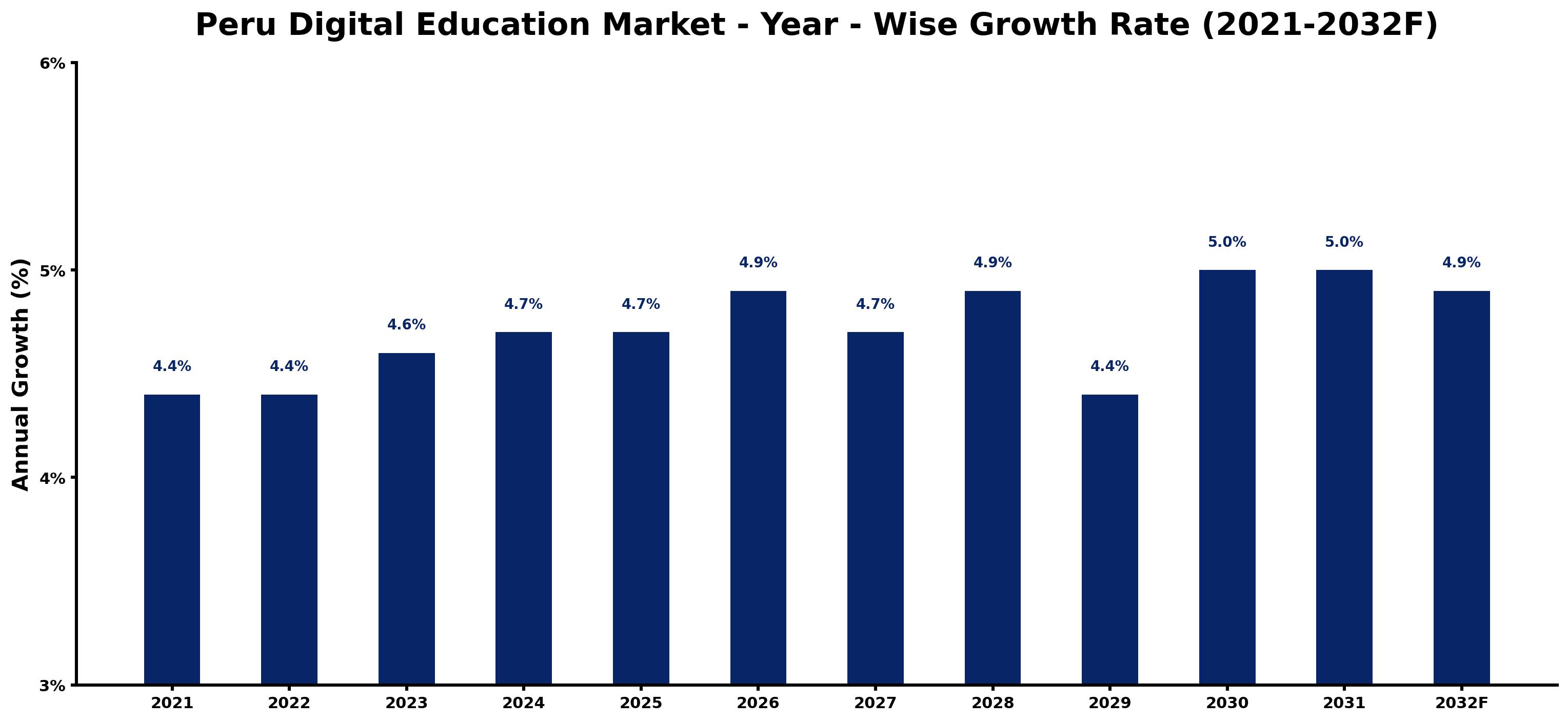
The table below presents the year‑wise growth rates along with the key drivers influencing the market
| Year | Growth Rate | Major Drivers |
| 2021 | 4.4% | Ministry of Education's digital learning initiatives launched |
| 2022 | 4.4% | Growth in internet accessibility across rural areas |
| 2023 | 4.6% | Increased demand for remote learning tools post-pandemic |
| 2024 | 4.7% | Government funding for technology in schools expanded |
| 2025 | 4.7% | Partnerships with tech firms for teacher training increased |
| 2026 | 4.9% | Rise in students enrolling in online courses surged |
| 2027 | 4.7% | Support for vocational digital education programs enhanced |
| 2028 | 4.9% | Boost in digital device ownership among students |
| 2029 | 4.4% | Adoption of blended learning models by educational institutions |
| 2030 | 5.0% | National push towards STEM education policies intensified |
| 2031 | 5.0% | Increased private investment in educational technology startups |
| 2032 | 4.9% | Focus on inclusive education technologies increased |
Note: Market size estimations and growth projections presented in this report are based on 6Wresearch's proprietary forecasting methodology, utilizing the latest available industry data, government publications, and primary research inputs.
Peru Digital Education Market Key Takeaways
Below are some of the specific key takeaways from the market, including:
- Growing internet penetration is a key driver of market expansion.
- Government initiatives are actively promoting digital literacy and accessibility.
- There is a rising demand for personalized learning experiences among students.
- Investment in EdTech is increasingly appealing to both local and foreign stakeholders.
- Challenges in technology access persist, particularly in rural areas.
Evaluation of Restraints in Peru Digital Education Market
Despite the promising growth, several restraints hinder the market's full potential. Access to technology remains uneven, especially in rural and underserved communities, limiting the ability of many students and educators to engage with digital platforms. Additionally, a lack of training and awareness surrounding the effective use of these tools further exacerbates the divide. Issues related to data privacy and security also cast a shadow over the market, necessitating robust measures to build user trust.
Peru Digital Education Market Trends
The trend towards online learning platforms continues to gain momentum, with a notable shift towards hybrid and blended learning models. The COVID-19 pandemic has accelerated the acceptance of digital education, prompting educational institutions to integrate technology into their curricula. Personalized learning tools, adaptive learning technologies, and the gamification of education are also emerging as key components shaping the market.
Peru Digital Education Market Opportunities
Opportunities abound for EdTech companies in Peru, particularly in areas such as vocational training and technical education. Catering to the diverse needs of students by providing tailored learning experiences is vital. Collaborations with educational institutions and government initiatives focused on enhancing access and quality can drive growth. Additionally, targeting remote areas with innovative solutions presents a significant avenue for expansion.
Government Initiatives in the Peru Digital Education Market
Government policy in Peru is actively shaping the digital education landscape through various initiatives aimed at enhancing educational access and quality. By prioritizing digital literacy, the government seeks to foster an inclusive educational system that bridges the technology gap. This commitment is crucial for developing a workforce equipped for the demands of the modern economy.
- The "Peru Digital" program, recently launched, aims to equip students and teachers with essential digital tools and resources.
- The "Aprendo en Casa" initiative, initiated during the pandemic, continues to provide online learning platforms and educational content for students nationwide.
- A current program focusing on digital literacy training for teachers is underway, enhancing their ability to integrate technology into their classrooms.
- A planned public-private partnership is expected to enhance telecom infrastructure access by 2028, further supporting digital education initiatives.
Future Insights of the Peru Digital Education Market
Looking ahead to 2026-2032, the Peru Digital Education Market is set for substantial growth. As internet connectivity improves and digital devices become more prevalent, demand for online education resources will continue to rise. A collaborative approach involving government, educational institutions, and EdTech companies will be crucial in shaping a more inclusive and technology-driven education system. This synergy will not only enhance learning outcomes but also prepare students for a competitive workforce.
Peru Digital Education Market Latest Developments
In the past year, the Peru Digital Education Market has witnessed significant activity, marked by various initiatives and partnerships aimed at enhancing digital learning. The focus on technology integration and accessibility is evident as stakeholders strive to improve educational outcomes across the country.
- A leading EdTech company launched a new online learning platform in early 2025, catering specifically to K-12 students.
- A collaborative project between local universities and tech firms is currently underway, aimed at developing customized educational content and tools.
- In mid-2025, the government initiated a nationwide awareness campaign focused on digital literacy for students and educators.
- An upcoming initiative is expected to begin in late 2026, targeting the expansion of virtual classrooms in rural areas.
Peru Digital Education Market - Key Attractiveness of the Report
- 10 Years of Market Numbers
- Historical Data Starting from 2022 to 2025
- Base Year: 2025
- Forecast Data until 2032
- Key Performance Indicators Impacting the Market
- Major Upcoming Developments and Projects
Key Highlights of the Report:
- Peru Digital Education Market Outlook
- Market Size of Peru Digital Education Market, 2025
- Forecast of Peru Digital Education Market, 2032
- Historical Data and Forecast of Peru Digital Education Revenues & Volume for the Period 2022-2032F
- Peru Digital Education Market Trend Evolution
- Peru Digital Education Market Drivers and Challenges
- Peru Digital Education Price Trends
- Peru Digital Education Porter's Five Forces
- Peru Digital Education Industry Life Cycle
- Historical Data and Forecast of Peru Digital Education Market Revenues & Volume By End User for the Period 2022-2032F
- Historical Data and Forecast of Peru Digital Education Market Revenues & Volume By Academic Institutions for the Period 2022-2032F
- Historical Data and Forecast of Peru Digital Education Market Revenues & Volume By Enterprises and Public Sector for the Period 2022-2032F
- Historical Data and Forecast of Peru Digital Education Market Revenues & Volume By Learning Type for the Period 2022-2032F
- Historical Data and Forecast of Peru Digital Education Market Revenues & Volume By Self-paced Online Education for the Period 2022-2032F
- Historical Data and Forecast of Peru Digital Education Market Revenues & Volume By Instructor-led Online Education for the Period 2022-2032F
- Historical Data and Forecast of Peru Digital Education Market Revenues & Volume By Course Type for the Period 2022-2032F
- Historical Data and Forecast of Peru Digital Education Market Revenues & Volume By Science and Technology Courses for the Period 2022-2032F
- Historical Data and Forecast of Peru Digital Education Market Revenues & Volume By Entrepreneurship and Business Management Courses for the Period 2022-2032F
- Historical Data and Forecast of Peru Digital Education Market Revenues & Volume By Other Courses for the Period 2022-2032F
- Peru Digital Education Import Export Trade Statistics
- Market Opportunity Assessment By End User
- Market Opportunity Assessment By Learning Type
- Market Opportunity Assessment By Course Type
- Peru Digital Education Top Companies Market Share
- Peru Digital Education Competitive Benchmarking By Technical and Operational Parameters
- Peru Digital Education Company Profiles
- Peru Digital Education Key Strategic Recommendations






































