Peru LTE IoT Market Size & Growth Rate (2026-2032)
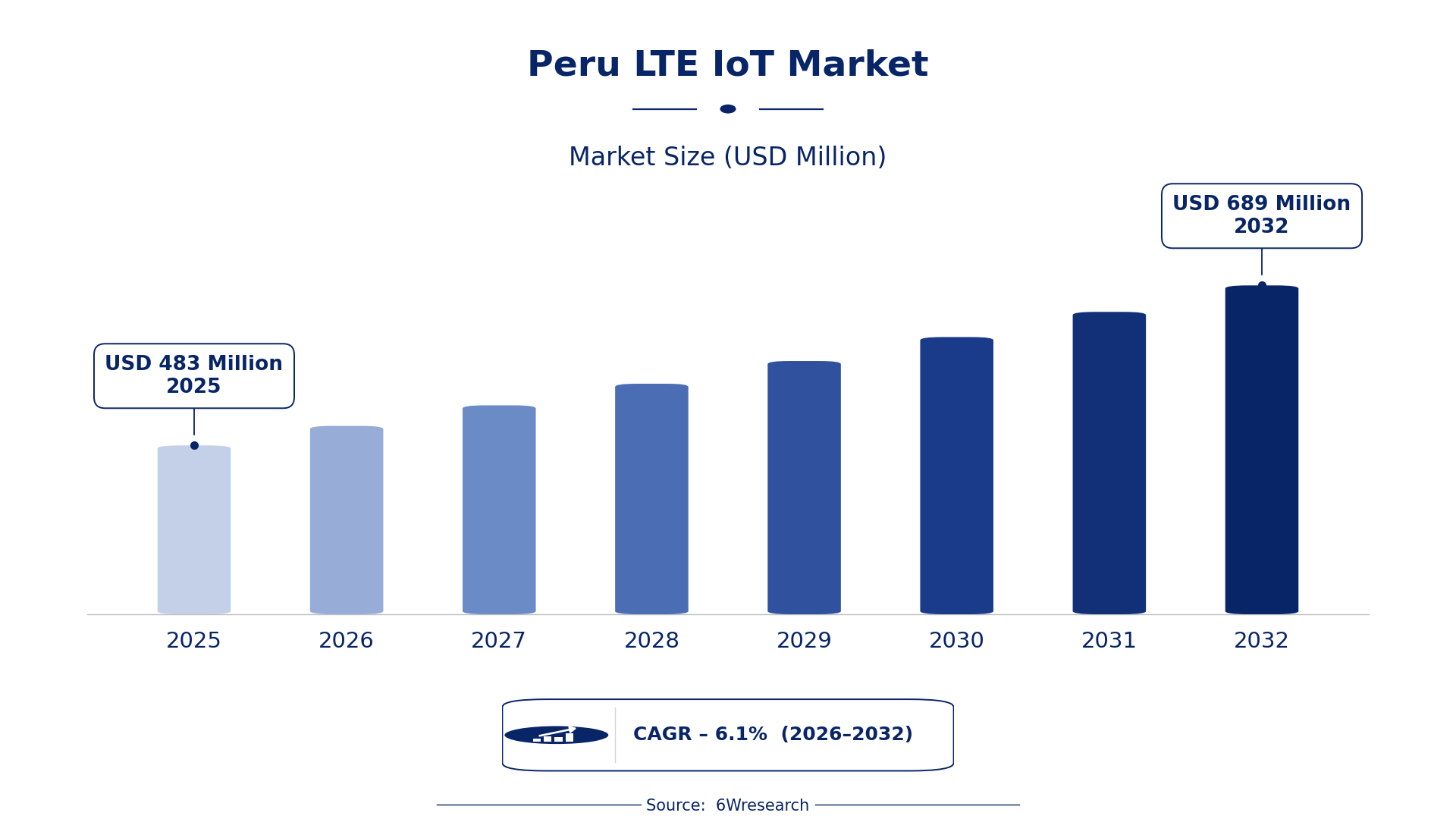
The Peru LTE IoT Market was estimated at USD 483 Million in 2025 and is projected to reach USD 689 Million by 2032, growing at a CAGR of 6.1% from 2026 to 2032.
Peru LTE IoT Market Synopsis
The adoption of LTE IoT technology in Peru is gaining momentum as various sectors increasingly integrate connected devices into their operations. With advancements in LTE infrastructure, businesses across agriculture, healthcare, and transportation are leveraging IoT solutions to enhance efficiency and optimize processes.
Government support is a critical factor propelling the market forward. Initiatives aimed at promoting digital transformation and smart city developments are laying the groundwork for a competitive environment. This blend of public and private investment is shaping a landscape ripe for innovation and growth.
Peru LTE IoT Market Year-wise Growth Rate and Key Drivers
This graph illustrates the annual growth rates of the Peru LTE IoT Market from 2021 to 2032, highlighting a steady upward trajectory and projected expansion over the forecast period.
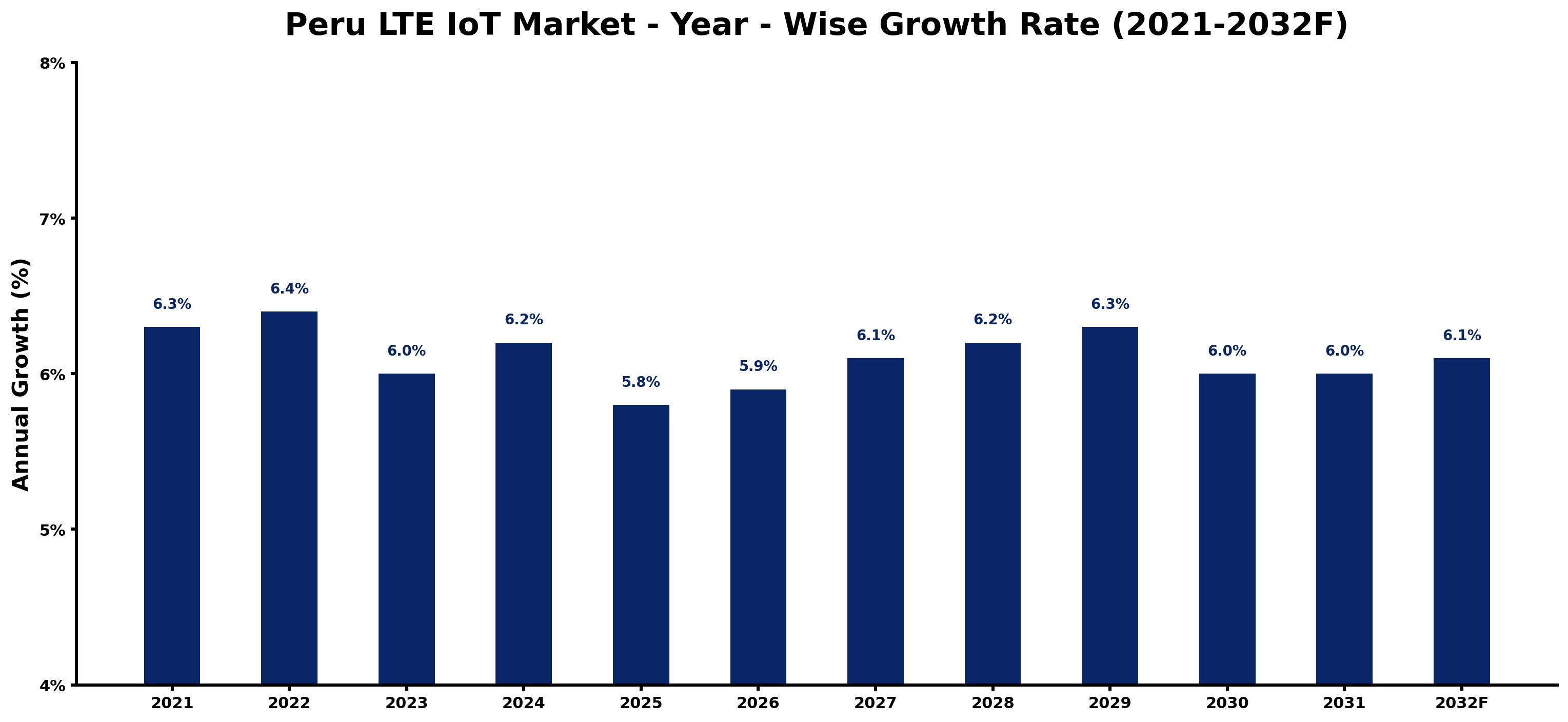
The table below presents the year‑wise growth rates along with the key drivers influencing the market
| Year | Growth Rate | Major Drivers |
| 2021 | 6.3% | Peru's regulatory push for digital connectivity expansion. |
| 2022 | 6.4% | Increased investments in smart city IoT infrastructure. |
| 2023 | 6.0% | Surge in telemedicine applications driving IoT usage. |
| 2024 | 6.2% | Growth of local IoT startups fostering innovation. |
| 2025 | 5.8% | Adoption of LTE technology in mining industries. |
| 2026 | 5.9% | Initiatives for smart water management systems implemented. |
| 2027 | 6.1% | Rising agricultural IoT applications boosting market demand. |
| 2028 | 6.2% | Local demand for enhanced logistics optimization solutions. |
| 2029 | 6.3% | Government policies supporting IoT in urban transportation. |
| 2030 | 6.0% | Increased digitalization of retail environments spurring growth. |
| 2031 | 6.0% | Telecom partnerships enhancing IoT connectivity in cities. |
| 2032 | 6.1% | Focus on sustainable energy monitoring technologies increasing. |
Note: Market size estimations and growth projections presented in this report are based on 6Wresearch's proprietary forecasting methodology, utilizing the latest available industry data, government publications, and primary research inputs.
Peru LTE IoT Market Key Takeaways
Below are some of the specific key takeaways from the market, including:
- Widespread adoption of IoT devices across multiple industries is driving market demand.
- Enhanced LTE network infrastructure is facilitating real-time data access and analysis.
- Government initiatives are fostering a conducive environment for market growth.
- Investment opportunities are emerging in sectors like smart cities and agricultural technology.
- Innovation from local and international players is reshaping the competitive landscape.
Evaluation of Restraints in Peru LTE IoT Market
Despite its promising trajectory, the Peru LTE IoT market faces several limitations that could impede its full potential. Limited network coverage, especially in rural areas, presents a significant barrier to entry for comprehensive IoT implementation. The high initial costs associated with setting up IoT infrastructure can deter businesses, particularly small and medium enterprises. Interoperability challenges among various devices and concerns about data security complicate the deployment of unified IoT solutions. Moreover, the need for skilled professionals to manage these technologies creates a skills gap that needs addressing to facilitate broader market adoption.
Peru LTE IoT Market Trends
The demand for IoT solutions in Peru is shaped by key trends that signal evolving business needs. There's a notable increase in the deployment of smart city initiatives, where technology is utilized to enhance urban living standards. This trend is closely linked with the rise of connected devices and sensors, critical for effective asset tracking and industrial automation.
In healthcare, the integration of IoT applications is transforming patient management, while in agriculture, data-driven solutions are optimizing productivity. These trends reflect a broader shift towards efficiency and connectivity, marking a pivotal phase in the Peru LTE IoT market.
Peru LTE IoT Market Opportunities
Investment opportunities in the Peru LTE IoT market are plentiful, particularly in sectors aligned with national development priorities. As the demand for connected devices continues to surge, companies have the chance to provide tailored solutions that meet local market needs. The government’s push for digital transformation and innovation further incentivizes investment, opening pathways for public-private partnerships that can accelerate growth in the IoT ecosystem.
Specific growth areas include advancements in smart agriculture technologies, where IoT can play a significant role in resource management, and healthcare innovations that enhance patient care through real-time monitoring. The burgeoning smart city initiatives also promise lucrative opportunities for IoT solutions that address urban challenges.
Government Initiatives in the Peru LTE IoT Market
The Peruvian government is actively nurturing the LTE IoT market through strategic initiatives that prioritize technology adoption and innovation. Policies designed to streamline regulatory processes and provide financial incentives are crucial to encouraging investment in IoT infrastructure. As the focus on digital transformation intensifies, these initiatives are fundamental for fostering a competitive market environment.
- A National IoT Plan was launched recently to promote IoT technology across economic sectors.
- Current efforts include regulatory reforms aimed at enhancing data security and privacy for IoT solutions.
- Tax incentives are available for businesses investing in IoT infrastructure and services.
- A public-private partnership program is currently underway to upgrade digital infrastructure in urban areas.
- Plans are in motion for an upcoming initiative targeting the expansion of LTE network coverage to underserved rural communities.
Future Insights of the Peru LTE IoT Market
From 2026 to 2032, the Peru LTE IoT market is expected to experience dynamic growth as businesses increasingly adopt IoT solutions. With continued enhancements in LTE infrastructure and expanding applications of IoT technology, sectors like agriculture, healthcare, and transportation are set to evolve dramatically. The alignment of government priorities with market needs will likely create a fertile environment for investment and innovation, ultimately leading to improved operational efficiencies and enhanced service delivery across industries.
Peru LTE IoT Market Latest Developments
Recent activities in the Peru LTE IoT market indicate an active pursuit of innovation and growth. As various stakeholders collaborate to push boundaries, developments are emerging that promise to reshape the landscape of connected technology. The commitment to enhance infrastructure and address local business needs highlights the increasing importance of the IoT sector in Peru.
- A major technology vendor announced a partnership in late 2025 to develop IoT solutions for smart agriculture applications.
- A regional operator is currently undertaking a network expansion project to improve LTE coverage in remote areas, expected to be completed by mid-2026.
- A service upgrade focused on enhancing data analytics capabilities for healthcare IoT applications is underway, anticipated to roll out in early 2026.
- New collaborations between technology startups and research institutions are taking place, aimed at developing innovative IoT applications for transportation.
- A planned initiative for 2027 will target the integration of IoT solutions into municipal infrastructure projects.
Peru LTE IoT Market - Key Attractiveness of the Report
- 10 Years of Market Numbers
- Historical Data Starting from 2022 to 2025
- Base Year: 2025
- Forecast Data until 2032
- Key Performance Indicators Impacting the Market
- Major Upcoming Developments and Projects
Key Highlights of the Report:
- Peru LTE IoT Market Outlook
- Market Size of Peru LTE IoT Market, 2025
- Forecast of Peru LTE IoT Market, 2032
- Historical Data and Forecast of Peru LTE IoT Revenues & Volume for the Period 2022-2032F
- Peru LTE IoT Market Trend Evolution
- Peru LTE IoT Market Drivers and Challenges
- Peru LTE IoT Price Trends
- Peru LTE IoT Porter's Five Forces
- Peru LTE IoT Industry Life Cycle
- Historical Data and Forecast of Peru LTE IoT Market Revenues & Volume By Technology for the Period 2022-2032F
- Historical Data and Forecast of Peru LTE IoT Market Revenues & Volume By NB-IoT for the Period 2022-2032F
- Historical Data and Forecast of Peru LTE IoT Market Revenues & Volume By LTE-M for the Period 2022-2032F
- Historical Data and Forecast of Peru LTE IoT Market Revenues & Volume By Service for the Period 2022-2032F
- Historical Data and Forecast of Peru LTE IoT Market Revenues & Volume By Professional Services for the Period 2022-2032F
- Historical Data and Forecast of Peru LTE IoT Market Revenues & Volume By Managed Services for the Period 2022-2032F
- Historical Data and Forecast of Peru LTE IoT Market Revenues & Volume By Industry for the Period 2022-2032F
- Historical Data and Forecast of Peru LTE IoT Market Revenues & Volume By Manufacturing for the Period 2022-2032F
- Historical Data and Forecast of Peru LTE IoT Market Revenues & Volume By Energy and utilities for the Period 2022-2032F
- Historical Data and Forecast of Peru LTE IoT Market Revenues & Volume By Transportation and logistics for the Period 2022-2032F
- Historical Data and Forecast of Peru LTE IoT Market Revenues & Volume By Healthcare for the Period 2022-2032F
- Historical Data and Forecast of Peru LTE IoT Market Revenues & Volume By Agriculture for the Period 2022-2032F
- Peru LTE IoT Import Export Trade Statistics
- Market Opportunity Assessment By Technology
- Market Opportunity Assessment By Service
- Market Opportunity Assessment By Industry
- Peru LTE IoT Top Companies Market Share
- Peru LTE IoT Competitive Benchmarking By Technical and Operational Parameters
- Peru LTE IoT Company Profiles
- Peru LTE IoT Key Strategic Recommendations






































