Peru Musical Instruments Market Growth Rate Analysis (2025 - 2031)
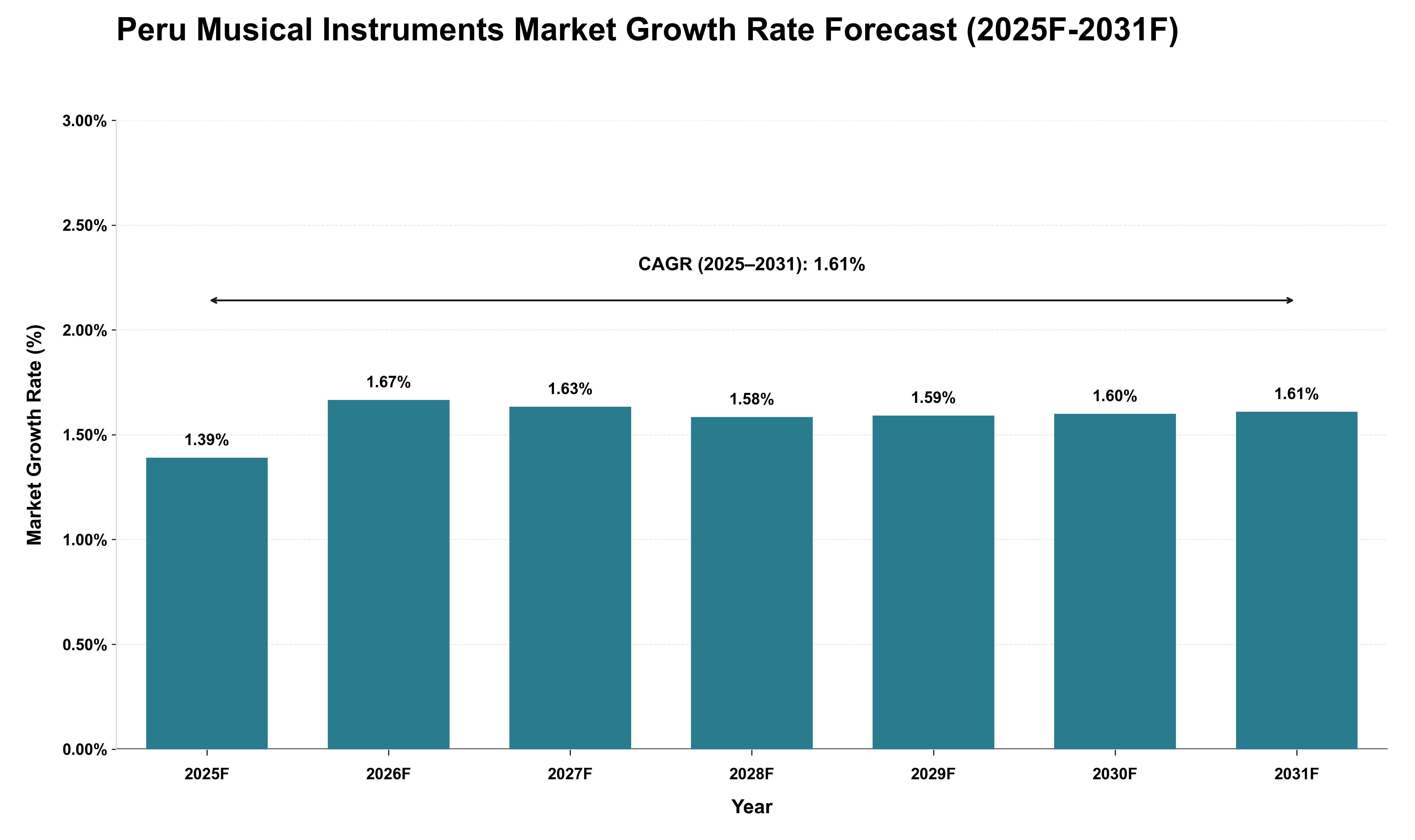
The forecast period for the Peru musical instruments market will reflect a gradual increase in end-use demand, driven by evolving consumer preferences and a growing interest in music education. The projected CAGR of 1.61% indicates a steady growth trajectory, with annual rates fluctuating slightly around this average, peaking at 1.67% in 2026. This growth will likely be supported by an expanding middle class that prioritizes cultural engagement and leisure activities, alongside increased accessibility to musical education resources. Additionally, import dependencies on foreign-made instruments may influence pricing dynamics and availability, potentially impacting local market competitiveness. As disposable incomes rise, consumers are expected to invest more in quality instruments, fostering a favorable environment for both established brands and emerging local manufacturers. Overall, the interplay of these macroeconomic factors will shape the market's evolution through 2031.
Key Highlights of the Report:
- Peru Musical Instruments Market Outlook
- Market Size of Peru Musical Instruments Market, 2025
- Forecast of Peru Musical Instruments Market, 2032
- Historical Data and Forecast of Peru Musical Instruments Revenues & Volume for the Period 2022 - 2032F
- Peru Musical Instruments Market Trend Evolution
- Peru Musical Instruments Market Drivers and Challenges
- Peru Musical Instruments Price Trends
- Peru Musical Instruments Porter's Five Forces
- Peru Musical Instruments Industry Life Cycle
- Historical Data and Forecast of Peru Musical Instruments Market Revenues & Volume By Type for the Period 2022 - 2032F
- Historical Data and Forecast of Peru Musical Instruments Market Revenues & Volume By Percussion Instruments for the Period 2022 - 2032F
- Historical Data and Forecast of Peru Musical Instruments Market Revenues & Volume By String Instruments for the Period 2022 - 2032F
- Historical Data and Forecast of Peru Musical Instruments Market Revenues & Volume By Piano & Key Instruments for the Period 2022 - 2032F
- Historical Data and Forecast of Peru Musical Instruments Market Revenues & Volume By Organs & Air Blown Instruments for the Period 2022 - 2032F
- Historical Data and Forecast of Peru Musical Instruments Market Revenues & Volume By Others for the Period 2022 - 2032F
- Historical Data and Forecast of Peru Musical Instruments Market Revenues & Volume By End-users for the Period 2022 - 2032F
- Historical Data and Forecast of Peru Musical Instruments Market Revenues & Volume By Commercial Events for the Period 2022 - 2032F
- Historical Data and Forecast of Peru Musical Instruments Market Revenues & Volume By Personal Use for the Period 2022 - 2032F
- Historical Data and Forecast of Peru Musical Instruments Market Revenues & Volume By Music Production/ Direction for the Period 2022 - 2032F
- Historical Data and Forecast of Peru Musical Instruments Market Revenues & Volume By Others for the Period 2022 - 2032F
- Peru Musical Instruments Import Export Trade Statistics
- Market Opportunity Assessment By Type
- Market Opportunity Assessment By End-users
- Peru Musical Instruments Top Companies Market Share
- Peru Musical Instruments Competitive Benchmarking By Technical and Operational Parameters
- Peru Musical Instruments Company Profiles
- Peru Musical Instruments Key Strategic Recommendations






































