Peru Perchloroethylene Market Size, Share & Growth Rate
The Peru Perchloroethylene Market was estimated at USD 491 Million in 2025 and is projected to reach USD 695 Million by 2032, growing at a CAGR of 5.1% from 2026 to 2032. This positive growth trajectory is largely attributed to the robust demand from the textile and dry cleaning sectors, where perchloroethylene serves as a critical solvent. The increase in disposable income among consumers, coupled with a growing interest in sustainable cleaning practices, is further bolstering this upward trend.
Peru Perchloroethylene Market Year-wise Growth Rate and Key Drivers
This graph highlights how the Peru Perchloroethylene Market has steadily grown over the years, supported by major growth factors.
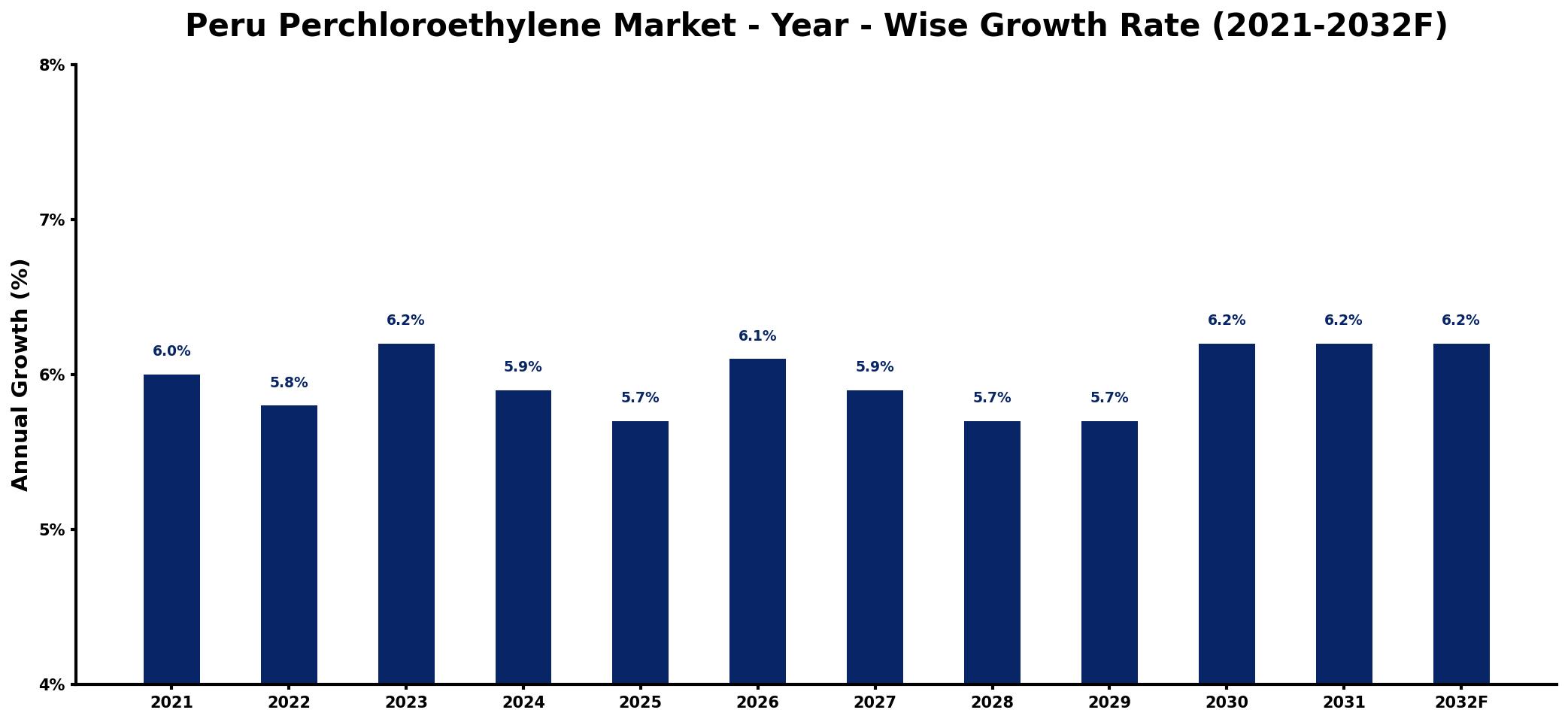
The table below presents the year‑wise growth rates along with the key drivers influencing the market
| Year | Growth Rate | Major Drivers |
| 2021 | 6.0% | Rising demand in cleaning applications |
| 2022 | 5.8% | Increased industrial solvent usage |
| 2023 | 6.2% | Expansion of manufacturing facilities |
| 2024 | 5.9% | Growth in automotive maintenance services |
| 2025 | 5.7% | Surge in textile processing needs |
| 2026 | 6.1% | Boost in electronics production activities |
| 2027 | 5.9% | Higher demand for metal degreasing |
| 2028 | 5.7% | increased pharmaceutical industry usage |
| 2029 | 5.7% | Increased investments in infrastructure projects |
| 2030 | 6.2% | Rising consumer awareness on sustainability |
| 2031 | 6.2% | increased domestic production output |
| 2032 | 6.2% | Increased regulation on environmental standards |
Note: Market size estimations and growth projections presented in this report are based on 6Wresearch's proprietary forecasting methodology, utilizing the latest available industry data, government publications, and primary research inputs.
Peru Perchloroethylene Market Synopsis
In Peru, the textile industry is a significant driver of the perchloroethylene market, with an expanding population that has elevated spending on clothing and related services. This demand is particularly strong in urban areas, where dry cleaning services are increasingly sought after due to busy lifestyles and changing fashion trends.
Moreover, stringent environmental regulations are pushing the industry toward safer alternatives. As awareness of the harmful effects of traditional solvents grows, perchloroethylene has been adopted for its effective cleaning properties while fulfilling regulatory requirements. This dual demand reinforces its position in the market.
Peru Perchloroethylene Market Key Takeaways
- The Peru Perchloroethylene market is anticipated to grow steadily, driven by the textile and dry cleaning industries.
- Increased disposable income among consumers is leading to higher demand for textile services.
- Government regulations are promoting safer chemical practices and a transition toward sustainable alternatives.
- Investments in research and development are focusing on creating eco-friendly formulations.
- Outsourcing of dry cleaning services is becoming more prevalent, further increasing demand for perchloroethylene.
Evaluation of Restraints in Peru Perchloroethylene Market
Despite the market's promising outlook, several restraints pose challenges to its growth. Regulatory pressures surrounding environmental safety and health risks related to perchloroethylene exposure are significant concerns for manufacturers. Compliance with strict environmental guidelines can drive up production costs and necessitate investments in safer technologies. Furthermore, shifting consumer preferences toward greener alternatives may impact the traditional usage of perchloroethylene, pushing stakeholders to adapt quickly to these changing market dynamics.
Peru Perchloroethylene Market Trends
Current trends indicate a strong movement toward sustainability within the Peru Perchloroethylene market. As environmental consciousness rises, manufacturers are increasingly investing in the development of eco-friendly cleaning solutions. This trend aligns with consumer demand for products that are both effective and safe for the environment. Additionally, the trend towards outsourcing dry cleaning services is expected to bolster demand, as businesses seek efficient and reliable cleaning solutions to meet customer needs.
Peru Perchloroethylene Market Opportunities
The Peru Perchloroethylene market presents multiple avenues for investment, especially as the textile and dry cleaning industries continue to expand. Opportunities exist in establishing production facilities and developing distribution networks tailored to meet the growing demand. Furthermore, there is a compelling need for R&D into innovative formulations that can replace traditional solvents with more sustainable options, presenting a clear opportunity for strategic investment in eco-friendly technologies.
Government Initiatives in the Peru Perchloroethylene Market
Peru's government has implemented various regulations aimed at managing the use of perchloroethylene in dry cleaning processes. The Ministry of Environment enforces stringent emission limits and mandates compliance monitoring to mitigate potential health risks. Additionally, initiatives to promote alternative solvents and sustainable practices through incentives and educational campaigns are part of the government's strategy to reduce the environmental impact associated with chemical use in the dry cleaning industry.
Future Insights of the Peru Perchloroethylene Market
Looking forward, the Peru Perchloroethylene market is set to experience consistent growth driven by increasing demand in both the textile and automotive sectors. The positive economic climate and rising infrastructure investments will likely enhance the need for perchloroethylene in degreasing and dry cleaning applications. Furthermore, ongoing regulatory support for sustainable practices will solidify its role as a preferred solvent, even as the market navigates the challenges posed by alternative products and fluctuating raw material costs.
Peru Perchloroethylene Market Latest Developments (2025 - 2026)
In recent months, the Peru Perchloroethylene market has seen a shift towards innovation as companies explore new formulations that align with environmental regulations. Several manufacturers are actively engaged in developing alternatives to traditional solvents, responding to market demands for sustainable options. Simultaneously, awareness campaigns regarding the safe handling of perchloroethylene are gaining traction, ensuring that compliance with government regulations remains a priority across the industry.
Peru Perchloroethylene Market - Key Attractiveness of the Report
- 10 Years of Market Numbers
- Historical Data Starting from 2022 to 2025
- Base Year: 2025
- Forecast Data until 2032
- Key Performance Indicators Impacting the Market
- Major Upcoming Developments and Projects
Key Highlights of the Report:
- Peru Perchloroethylene Market Outlook
- Market Size of Peru Perchloroethylene Market, 2025
- Forecast of Peru Perchloroethylene Market, 2032
- Historical Data and Forecast of Peru Perchloroethylene Revenues & Volume for the Period 2022-2032F
- Peru Perchloroethylene Market Trend Evolution
- Peru Perchloroethylene Market Drivers and Challenges
- Peru Perchloroethylene Price Trends
- Peru Perchloroethylene Porter's Five Forces
- Peru Perchloroethylene Industry Life Cycle
- Historical Data and Forecast of Peru Perchloroethylene Market Revenues & Volume By Type for the Period 2022-2032F
- Historical Data and Forecast of Peru Perchloroethylene Market Revenues & Volume By Ethylene Oxychlorination for the Period 2022-2032F
- Historical Data and Forecast of Peru Perchloroethylene Market Revenues & Volume By Acetylene Method for the Period 2022-2032F
- Historical Data and Forecast of Peru Perchloroethylene Market Revenues & Volume By Ethylene Direct Chlorination for the Period 2022-2032F
- Historical Data and Forecast of Peru Perchloroethylene Market Revenues & Volume By End-use for the Period 2022-2032F
- Historical Data and Forecast of Peru Perchloroethylene Market Revenues & Volume By Dry Cleaning Agent for the Period 2022-2032F
- Historical Data and Forecast of Peru Perchloroethylene Market Revenues & Volume By Solvent for the Period 2022-2032F
- Historical Data and Forecast of Peru Perchloroethylene Market Revenues & Volume By Others for the Period 2022-2032F
- Peru Perchloroethylene Import Export Trade Statistics
- Market Opportunity Assessment By Type
- Market Opportunity Assessment By End-use
- Peru Perchloroethylene Top Companies Market Share
- Peru Perchloroethylene Competitive Benchmarking By Technical and Operational Parameters
- Peru Perchloroethylene Company Profiles
- Peru Perchloroethylene Key Strategic Recommendations






































