Philippines Motorcycle Market Top 5 Importing Countries and Market Competition (HHI) Analysis
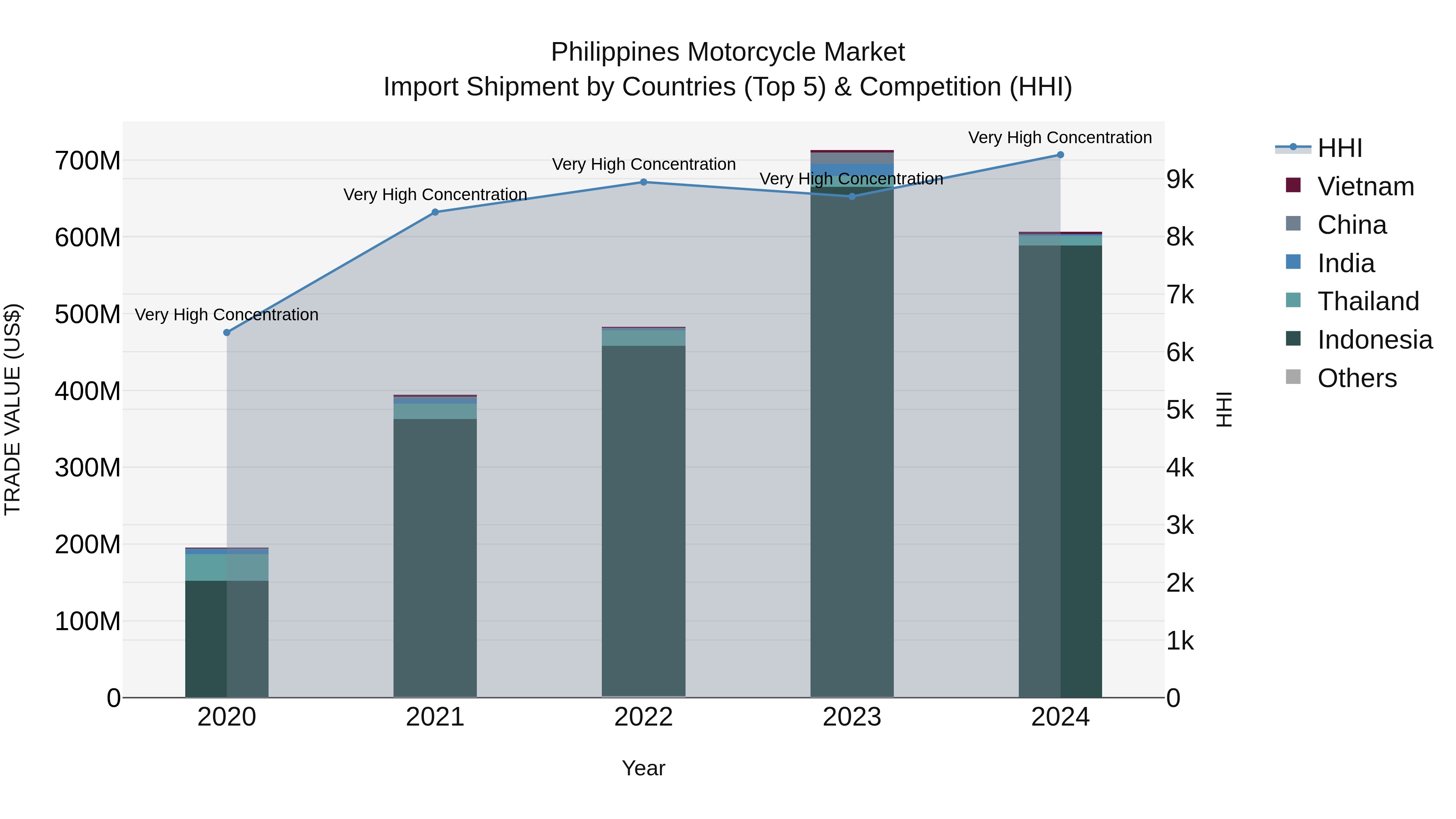
In 2024, the Philippines saw a significant increase in motorcycle import shipments from key exporting countries such as Indonesia, Thailand, Vietnam, India, and Japan. Despite high concentration levels indicated by the HHI, the market experienced a remarkable compound annual growth rate (CAGR) of 32.7% from 2020 to 2024. However, there was a slight decline in growth rate from 2023 to 2024, with a -14.93% change. This data suggests a dynamic and competitive market landscape for motorcycle imports in the Philippines, influenced by various factors impacting trade relationships with these key exporting nations.
Philippines Motorcycle Market Growth Rate
According to 6Wresearch internal database and industry insights, the Philippines Motorcycle Market is growing at a compound annual growth rate (CAGR) of 7.85% during the forecast period (2026-2032).
Topics Covered in the Philippines Motorcycle Market Report
Philippines Motorcycle Market report thoroughly covers the market by type and engine capacity. The market report provides an unbiased and detailed analysis of ongoing market trends, opportunities/high growth areas, and market drivers, which would help stakeholders devise and align their market strategies according to the current and future market dynamics.
Philippines Motorcycle Market Highlights
| Report Name | Philippines Motorcycle Market |
| Forecast period | 2026-2032 |
| CAGR | 7.85% |
| Growing Sector | Standard Motorcycles |
Philippines Motorcycle Market Synopsis
The Philippines Motorcycle Market is set for considerable growth as the demand for affordable personal transportation rises due to traffic congestion in urban areas. Motorcycles offer an affordable mobility solution, especially in cities like Manila, Cebu, and Davao. Also, the government support for the infrastructure development is encouraging motorcycle ownership. Additionally, the increasing use of motorcycles in organization, delivery services, and small business activities also contributes to the increasing demand for motorcycles across the country.
Evaluation of Growth Drivers in the Philippines Motorcycle Market
Below mentioned some growth drivers and their impact on market dynamics:
| Drivers | Primary Segments Affected | Why It Matters |
| Urban Mobility Demand | Type (Standard, Mopeds) | Supports daily commuting solutions. |
| Expansion of Delivery Services | Type (Mopeds, Standard) | Increases commercial motorcycle usage. |
| Affordable Financial Options | All Segments | Improves accessibility for buyers. |
| Growing Ride-Hailing Industry | Type (Standard, Sports) | Boosts rapid demand. |
| Infrastructure Development | Engine Capacity (151-300 CC) | Encourages vehicle ownership. |
The Philippines Motorcycle Market is projected to grow significantly, with a CAGR of 7.85% during the forecast period of 2026-2032. The increasing demand for affordable personal mobility, particularly from working professionals and delivery service providers is driving market expansion. Motorcycles shows a practical and budget-friendly option compared to cars, particularly in cities with heavy traffic. Also, banks and dealerships too, offer financing options, including flexible payment plans. The growing presence of motorcycles in ride-hailing and courier services is another driver of market’s growth. Together, these elements combination are fuelling the widespread adoption of motorcycles throughout the Philippines.
Evaluation of Restraints in the Philippines Motorcycle Market
Below mentioned are some major restraints and their influence on market dynamics:
| Restraints | Primary Segments Affected | What This Means |
| Road Safety Concerns | All Segments | Restricts consumer confidence. |
| Fuel Price Fluctuations | Engine Capacity Segments | Increases operational costs. |
| Traffic Regulations | Type Segments | Limits usage in some areas. |
| Limited Parking Infrastructure | Urban Markets | Creates ownership challenges. |
| Competition from Public Transport | Low-Capacity Motorcycles | Reduces demand in some regions |
Philippines Motorcycle Market Challenges
The motorcycle market in the Philippines grapples with several hurdles. Road safety issues and a high rate of accidents significantly influence how consumers view motorcycles and how regulations are shaped. Overall, the rising cost of fuel adds to the financial pressure experienced by both everyday riders and those running commercial operations. Other than that, less availability of parking areas and urban congestion present difficulties for motorcycle owners in major cities due to which the market expansion declines. Besides, strict traffic regulations and licensing requirements restrict the growth of motorcycle taxi services in certain regions, creating operational and regulatory issues for the market.
Philippines Motorcycle Market Trends
Some major trends contributing to the Philippines Motorcycle Market Growth are:
- Growing Popularity of Motorcycle Taxis: Services like Angkas and JoyRide have increased motorcycle demand for providing a quick transportation solution in congested urban cities.
- Rise in Electric Motorcycles: Rising environmental awareness and government support for electric mobility are motivating manufacturers to launch electric two-wheelers.
- Online Retail Platforms: An expansion of online retail platforms is pushing the market expansion by providing ease of accessibility and competitive pricing to the consumers.
Investment Opportunities in the Philippines Motorcycle Market
Here are some investment opportunities in the Philippines Motorcycle Industry:
- Electric Motorcycle Development: Investing in electric motorcycle production and charging infrastructure promotes the transition and supports the shift to eco-friendly transportation.
- Motorcycle Financial Services: Finance institutions can offer expanded loan and installment programs to attract first-time buyers and young consumers looking for motorcycles.
- Aftermarket and Spare Parts Industry: The increasing number of motorcycles creates opportunities for businesses to offer spare parts, maintenance services, and accessories to customers.
Top 5 Leading Players in the Philippines Motorcycle Market
Here are some top companies contributing to Philippines Motorcycle Market Share:
1. Honda Philippines Inc.
| Company Name | Honda Philippines Inc. |
|---|---|
| Established Year | 1973 |
| Headquarters | Batangas, Philippines |
| Official Website | Click Here |
Honda Philippines is one of the largest motorcycle manufacturers in the country, offering a wide range of commuter and performance motorcycles. The company is known for its durable and fuel-efficient models widely used for daily commuting and commercial activities.
2. Yamaha Motor Philippines Inc.
| Company Name | Yamaha Motor Philippines Inc. |
|---|---|
| Established Year | 2007 |
| Headquarters | Manila, Philippines |
| Official Website | Click Here |
Yamaha Motor Philippines produces motorcycles that combine innovative technology with stylish designs. The company is recognized for its strong presence in the sports and performance motorcycle segments.
3. Suzuki Philippines Inc.
| Company Name | Suzuki Philippines Inc. |
|---|---|
| Established Year | 1975 |
| Headquarters | Manila, Philippines |
| Official Website | Click Here |
Suzuki Philippines offers a diverse range of motorcycles designed for reliability and affordability. The company focuses on commuter motorcycles and entry-level models suitable for urban transportation.
4. Kawasaki Motors Philippines
| Company Name | Kawasaki Motors Philippines |
|---|---|
| Established Year | 1966 |
| Headquarters | Muntinlupa, Philippines |
| Official Website | Click Here |
Kawasaki Motors Philippines is known for producing both commuter motorcycles and high-performance models. The company emphasizes advanced engineering and durability in its motorcycle offerings.
5. Kymco Philippines
| Company Name | Kymco Philippines |
|---|---|
| Established Year | 1994 |
| Headquarters | Manila, Philippines |
| Official Website | Click Here |
Kymco Philippines specializes in producing scooters and motorcycles designed for urban mobility. The company focuses on comfort, fuel efficiency, and practical transportation solutions.
Government Regulations Introduced in the Philippines Motorcycle Market
According to Philippine government data, the Philippines Motorcycle Market is influenced by key transportation and mobility policies. The Department of Transportation (DOTr) and the Land Transportation Office (LTO) regulate vehicle registration, licensing, and safety measures to encourage responsible motorcycle use. Initiatives such as the Public Utility Motorcycle Program aim to regulate and validate motorcycle taxi services in major cities. Further, the Philippine Energy Plan promotes electric vehicles, including motorcycles, through infrastructure, development and incentives Together, these combined efforts make market grow while ensuring safety and sustainability in the transportation sector, fostering a more organized and eco-friendly industry.
Future Insights of the Philippines Motorcycle Market
The Philippines Motorcycle Market outlook remains positive due to city-led expansion and the growing need for affordable mobility solutions. The key growth drivers include the expansion of ride-hailing and delivery services and rising need for personal mobility solutions. The market landscape gets enhanced by advancements in vehicle technology and the introduction of electric motorcycles. Government investments in infrastructure and sustainable transportation policies will support the long-term industry expansion, ensuring further development and growth of the motorcycle sector.
Market Segmentation Analysis
The report offers a comprehensive study of the subsequent market segments and their leading categories.
Standard Motorcycles to Dominate the Market - By Type
According to Kanak Phartiyal, Senior Research Analyst, 6Wresearch, standard motorcycles lead the Philippines Motorcycle Market on account of their affordability, fuel economy, and utility for everyday commuters. These motorcycles are popular among city commuters, delivery service providers, and ride on demand operators.
151-300 CC to Dominate the Market – By Engine Capacity
Motorcycles with engine capacities between 151-300 CC are the fastest-growing category in the country offering a well-balanced mix of power and affordability. These motorcycles are perfect for both cities commuting and longer-distance travel.
Key attractiveness of the report
- 10 Years Market Numbers.
- Historical Data Starting from 2022 to 2025.
- Base Year: 2025
- Forecast Data until 2032.
- Key Performance Indicators Impacting the Market.
- Major Upcoming Developments and Projects.
Key Highlights of the Report:
- Philippines Motorcycle Market Outlook
- Market Size of Philippines Motorcycle Market, 2025
- Forecast of Philippines Motorcycle Market, 2032
- Historical Data and Forecast of Philippines Motorcycle Revenues & Volume for the Period 2022-2032
- Philippines Motorcycle Market Trend Evolution
- Philippines Motorcycle Market Drivers and Challenges
- Philippines Motorcycle Price Trends
- Philippines Motorcycle Porter`s Five Forces
- Philippines Motorcycle Industry Life Cycle
- Historical Data and Forecast of Philippines Motorcycle Market Revenues & Volume By Type for the Period 2022-2032
- Historical Data and Forecast of Philippines Motorcycle Market Revenues & Volume By Adventure for the Period 2022-2032
- Historical Data and Forecast of Philippines Motorcycle Market Revenues & Volume By Cruiser for the Period 2022-2032
- Historical Data and Forecast of Philippines Motorcycle Market Revenues & Volume By Mopeds for the Period 2022-2032
- Historical Data and Forecast of Philippines Motorcycle Market Revenues & Volume By Sports for the Period 2022-2032
- Historical Data and Forecast of Philippines Motorcycle Market Revenues & Volume By Standard for the Period 2022-2032
- Historical Data and Forecast of Philippines Motorcycle Market Revenues & Volume By Touring for the Period 2022-2032
- Historical Data and Forecast of Philippines Motorcycle Market Revenues & Volume By Engine Capacity for the Period 2022-2032
- Historical Data and Forecast of Philippines Motorcycle Market Revenues & Volume By 151-300 CC for the Period 2022-2032
- Historical Data and Forecast of Philippines Motorcycle Market Revenues & Volume By 301-500 CC for the Period 2022-2032
- Historical Data and Forecast of Philippines Motorcycle Market Revenues & Volume By 501-800 CC for the Period 2022-2032
- Historical Data and Forecast of Philippines Motorcycle Market Revenues & Volume By 801-1000 CC for the Period 2022-2032
- Historical Data and Forecast of Philippines Motorcycle Market Revenues & Volume By 1001-1600 CC for the Period 2022-2032
- Historical Data and Forecast of Philippines Motorcycle Market Revenues & Volume By Above 1600 CC for the Period 2022-2032
- Philippines Motorcycle Import Export Trade Statistics
- Market Opportunity Assessment By Type
- Market Opportunity Assessment By Engine Capacity
- Philippines Motorcycle Top Companies Market Share
- Philippines Motorcycle Competitive Benchmarking By Technical and Operational Parameters
- Philippines Motorcycle Company Profiles
- Philippines Motorcycle Key Strategic Recommendations
Market covered
The report subsequently covers the market by following segments and subsegments.
By Type
- Adventure
- Cruiser
- Mopeds
- Sports
- Standard
- Touring
By Engine Capacity
- 151-300 CC
- 301-500 CC
- 501-800 CC
- 801-1000 CC
- 1001-1600 CC
- Above 1600 CC






































