Philippines Online Grocery Market Size, Share & Growth Rate
The Philippines Online Grocery Market was estimated at USD 1164 Million in 2025 and is projected to reach USD 1654 Million by 2032, growing at a CAGR of 5.1% from 2026 to 2032. This growth trajectory is primarily driven by the rising internet and mobile penetration, coupled with a growing consumer preference for the convenience of online shopping. The demand for fresh produce and daily essentials continues to rise, particularly among younger demographics who value quick and efficient shopping experiences.
Philippines Online Grocery Market Year-wise Growth Rate and Key Drivers
This graph highlights how the Philippines Online Grocery Market has steadily grown over the years, supported by major growth factors.
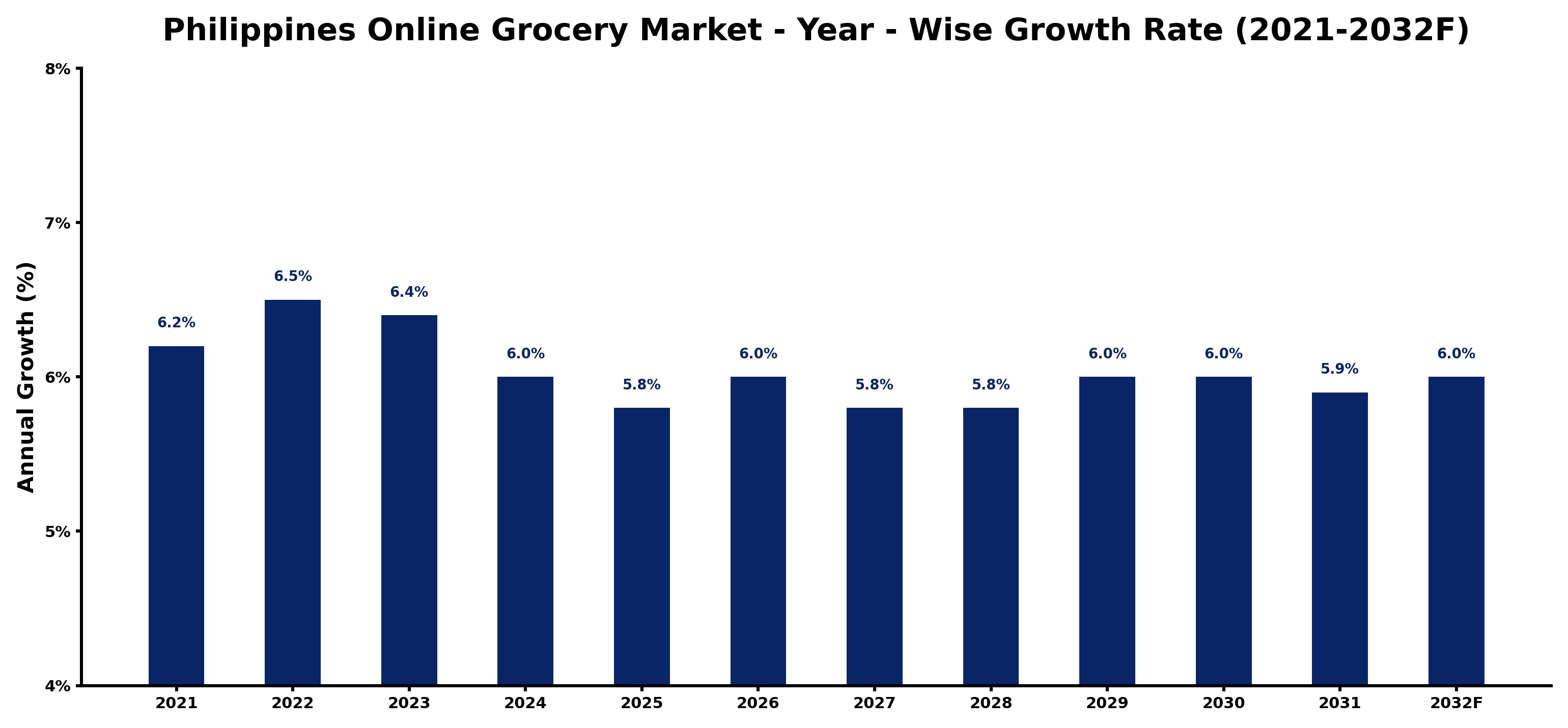
The table below presents the year‑wise growth rates along with the key drivers influencing the market
| Year | Growth Rate | Major Drivers |
| 2021 | 6.2% | E-commerce adoption accelerated rapidly |
| 2022 | 6.5% | Mobile payment options expanded usage |
| 2023 | 6.4% | Consumer convenience drove demand |
| 2024 | 6.0% | Delivery service options increased variety |
| 2025 | 5.8% | Subscription models gained popularity |
| 2026 | 6.0% | Local sourcing improved product freshness |
| 2027 | 5.8% | Health-conscious choices influenced purchases |
| 2028 | 5.8% | Sustainability initiatives attracted consumers |
| 2029 | 6.0% | Promotional campaigns enhanced visibility |
| 2030 | 6.0% | Social media marketing engaged shoppers |
| 2031 | 5.9% | Partnerships with local farmers expanded |
| 2032 | 6.0% | User-friendly interfaces improved experience |
Note - Market size estimations and growth projections presented in this report are based on 6Wresearch’s advanced forecasting approach, validated with industry datasets as of June 2026.
Philippines Online Grocery Market Synopsis
In recent years, the Philippines online grocery market has experienced significant momentum, spurred by increasing adoption of e-commerce platforms and changing consumer behavior. This shift towards online grocery shopping has not only accelerated due to the COVID-19 pandemic but is also expected to become a permanent aspect of modern retail in the Philippines.
While the market flourishes, challenges remain. The growing competition and logistical hurdles present obstacles that stakeholders must navigate. However, the trend towards online shopping is unlikely to slow, with the potential for robust growth in user-friendly platforms and enhanced delivery networks that cater to diverse consumer needs.
Philippines Online Grocery Market Key Takeaways
- The online grocery market is transforming shopping habits across the Philippines.
- Rising digital literacy among consumers enhances market penetration opportunities.
- Key drivers include convenience, accessibility, and changing demographics.
- Companies are increasingly investing in technology to improve delivery logistics.
- The pandemic has catalyzed a shift toward online grocery shopping, reshaping future retail strategies.
Evaluation of Restraints in Philippines Online Grocery Market
Despite the significant growth potential in the Philippines online grocery market, several factors act as restraints. One of the most pressing issues is the logistics infrastructure, which can hinder timely and reliable delivery across various regions. Areas with less developed transport networks experience challenges in distribution efficiency. Furthermore, low digital literacy in certain segments of the population can limit the customer base, as some potential consumers may find online platforms intimidating or untrustworthy. Building consumer trust and educating users on digital platforms is paramount for long-term success in this sector.
Philippines Online Grocery Market Trends
A notable trend in the Philippines online grocery market is the increasing demand for fresh produce, prompting online platforms to enhance their supply chains and customer engagement strategies. Sustainability practices are also gaining traction, as environmentally conscious consumers look for options that align with their values. Additionally, the rise of subscription-based models is reshaping how customers interact with grocery shopping, providing a predictable and convenient purchasing experience. Technology, including AI and machine learning, is being integrated to personalize shopping experiences, making them more engaging and user-friendly.
Philippines Online Grocery Market Opportunities
Emerging opportunities in the Philippines online grocery market include the expansion of localized delivery services tailored to community needs, which could further enhance consumer convenience and brand loyalty. The integration of innovative payment solutions, such as mobile wallets and cryptocurrencies, is also on the rise, providing additional avenues for market growth. Moreover, partnerships with local farmers and producers to source fresh products directly can create unique selling propositions that resonate with health-conscious consumers. This creates not only a competitive edge but also strengthens local economies.
Government Initiatives in the Philippines Online Grocery Market
The Philippine government has recognized the importance of e-commerce in its economic strategy, promoting various initiatives aimed at enhancing digital infrastructure and supporting local businesses. Programs encouraging digital literacy and entrepreneurship are being implemented, which serve to empower consumers and businesses alike. Additionally, public spending on logistics infrastructure improvements aims to boost the efficiency of delivery networks, facilitating the growth of online grocery services across the archipelago.
Future Insights of the Philippines Online Grocery Market
Looking ahead to 2026-2032, the Philippines online grocery market is poised for sustained growth, driven by technological advancements and changing consumer preferences. The proliferation of smartphones and internet access will continue to broaden the market base, allowing more consumers to engage with online platforms. Enhanced logistical solutions will improve delivery speed and reliability, further entrenching online grocery shopping as a staple in Filipino households. As the market matures, we can expect to see even more personalized experiences tailored to individual consumer needs, ensuring a dynamic and responsive retail environment.
Philippines Online Grocery Market Latest Developments (May 2025 - June 2026)
Recent developments in the Philippines online grocery market indicate a strategic shift towards improving customer experience and satisfaction. Companies are increasingly focusing on integrating advanced technology to streamline operations and enhance service delivery. Additionally, several platforms have begun implementing loyalty programs aimed at retaining customers and encouraging repeat purchases. The collaboration between grocery platforms and local suppliers is also gaining ground, facilitating fresher product availability and promoting local agriculture.
Philippines Online Grocery Market - Key Attractiveness of the Report
- 10 Years of Market Numbers
- Historical Data Starting from 2022 to 2025
- Base Year: 2025
- Forecast Data until 2032
- Key Performance Indicators Impacting the Market
- Major Upcoming Developments and Projects
Key Highlights of the Report:
- Philippines Online Grocery Market Outlook
- Market Size of Philippines Online Grocery Market, 2025
- Forecast of Philippines Online Grocery Market, 2032
- Historical Data and Forecast of Philippines Online Grocery Revenues & Volume for the Period 2022-2032F
- Philippines Online Grocery Market Trend Evolution
- Philippines Online Grocery Market Drivers and Challenges
- Philippines Online Grocery Price Trends
- Philippines Online Grocery Porter's Five Forces
- Philippines Online Grocery Industry Life Cycle
- Historical Data and Forecast of Philippines Online Grocery Market Revenues & Volume By Product Type for the Period 2022-2032F
- Historical Data and Forecast of Philippines Online Grocery Market Revenues & Volume By Food Grains for the Period 2022-2032F
- Historical Data and Forecast of Philippines Online Grocery Market Revenues & Volume By Bread, Bakery and Dairy Products for the Period 2022-2032F
- Historical Data and Forecast of Philippines Online Grocery Market Revenues & Volume By Fruits and Vegetables for the Period 2022-2032F
- Historical Data and Forecast of Philippines Online Grocery Market Revenues & Volume By Personal Care for the Period 2022-2032F
- Historical Data and Forecast of Philippines Online Grocery Market Revenues & Volume By Dry and Baking Products for the Period 2022-2032F
- Historical Data and Forecast of Philippines Online Grocery Market Revenues & Volume By Household Products for the Period 2022-2032F
- Historical Data and Forecast of Philippines Online Grocery Market Revenues & Volume By Meat and Meat Products for the Period 2022-2032F
- Historical Data and Forecast of Philippines Food Grains Online Grocery Market Revenues & Volume By Others for the Period 2022-2032F
- Historical Data and Forecast of Philippines Online Grocery Market Revenues & Volume By Platform for the Period 2022-2032F
- Historical Data and Forecast of Philippines Online Grocery Market Revenues & Volume By App-based for the Period 2022-2032F
- Historical Data and Forecast of Philippines Online Grocery Market Revenues & Volume By Web-based for the Period 2022-2032F
- Philippines Online Grocery Import Export Trade Statistics
- Market Opportunity Assessment By Product Type
- Market Opportunity Assessment By Platform
- Philippines Online Grocery Top Companies Market Share
- Philippines Online Grocery Competitive Benchmarking By Technical and Operational Parameters
- Philippines Online Grocery Company Profiles
- Philippines Online Grocery Key Strategic Recommendations






































