Philippines Soybean Oil Market Size Growth Rate
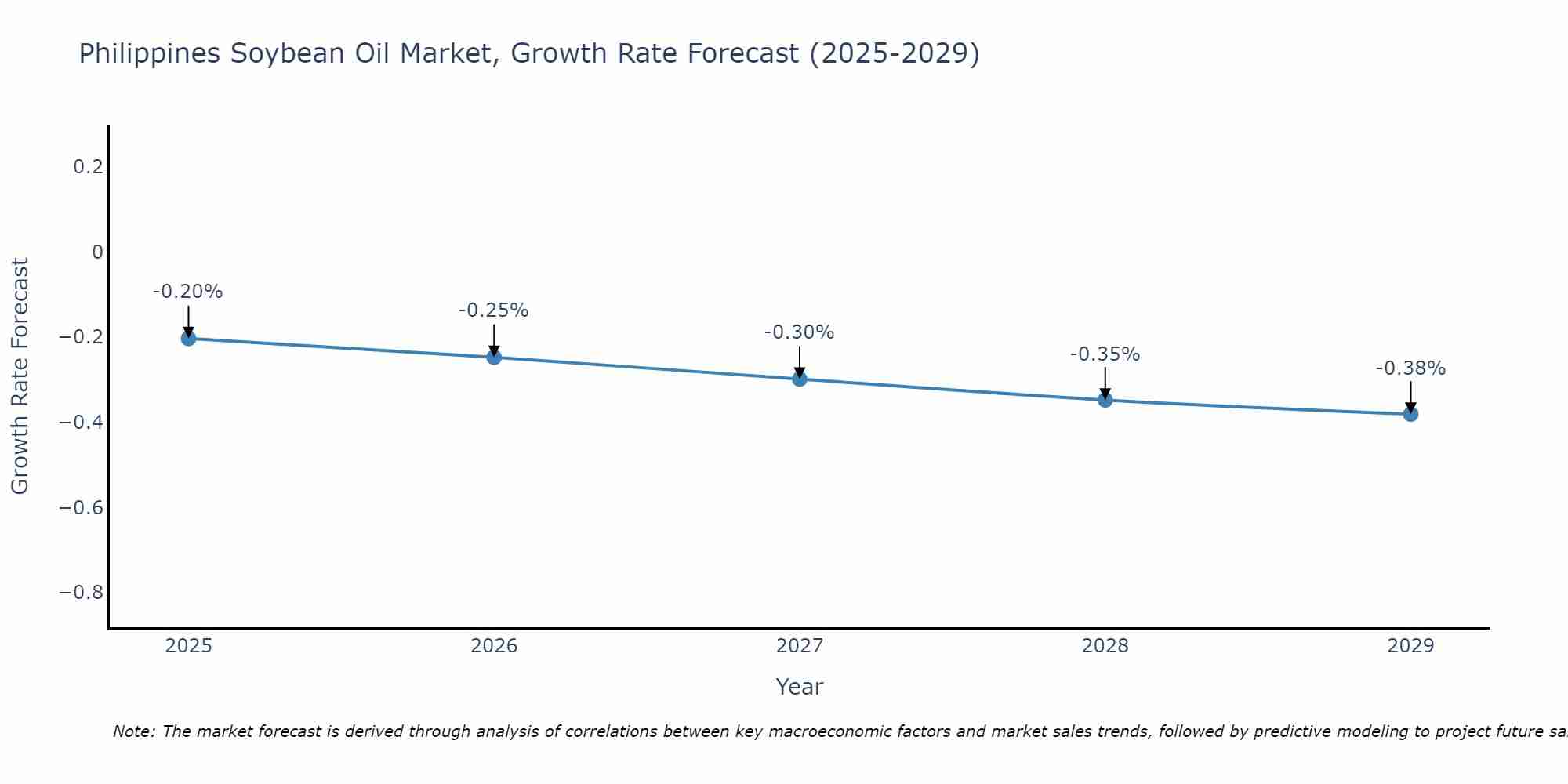
The Philippines Soybean Oil Market may undergo a gradual slowdown in growth rates between 2025 and 2029. Beginning strongly at -0.20% in 2025, growth softens to -0.38% in 2029.
Soybean Oil Market: Philippines vs Top 5 Major Economies in 2027 (Asia)
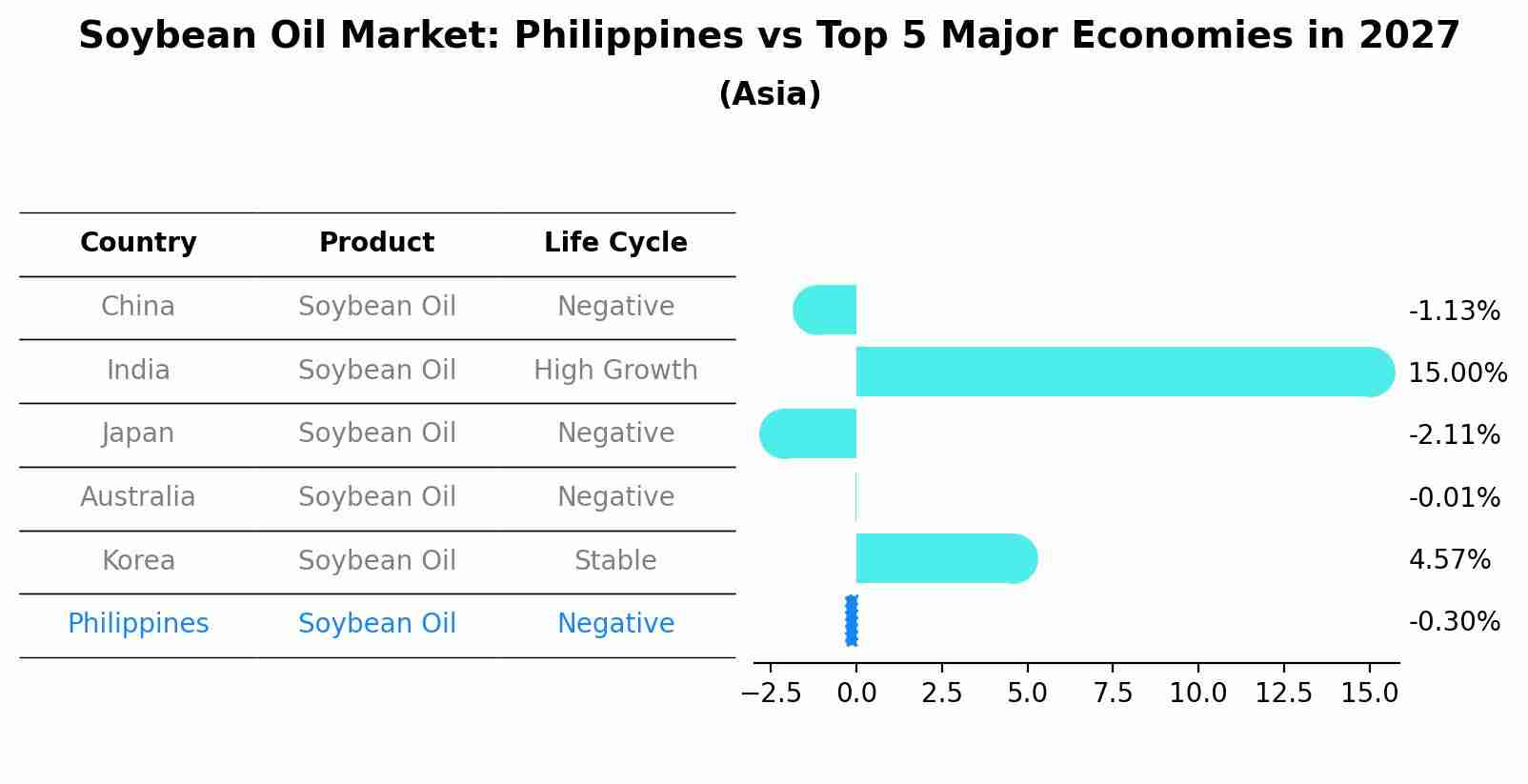
Philippines's Soybean Oil market is anticipated to experience a negative growth rate of -0.30% by 2027, reflecting trends observed in the largest economy China, followed by India, Japan, Australia and South Korea.
philippines soybean oil market Synopsis
In the realm of agriculture and food products, the Philippines soybean oil market holds a significant place. Soybean oil, a widely used cooking oil and ingredient, commands attention due to its versatility and health-conscious consumer base.
Drivers of the Market
The soybean oil market is closely linked to the agricultural and food processing sectors. The rising consumer awareness of healthy cooking oils, coupled with the versatility of soybean oil, drives its demand. The market`s growth is also shaped by trends in the food industry, such as the demand for plant-based products.
Challenges of the Market
The Philippines soybean oil market faces challenges related to competition from other edible oils and the need for domestic soybean production. While soybean oil is widely used for cooking and food preparation, consumers` preferences for other types of cooking oils, such as palm oil and coconut oil, present challenges for market growth. Additionally, the Philippines heavily relies on soybean oil imports, making the market susceptible to fluctuations in global soybean prices. Efforts to promote domestic soybean cultivation and reduce import dependency are hindered by factors like land availability, agricultural practices, and climate-related constraints.
COVID-19 Impact on the Market
The COVID-19 pandemic influenced the Philippines soybean oil market as changes in consumer behavior and economic conditions impacted demand. Lockdowns and reduced economic activities initially led to decreased demand from the foodservice sector. However, as home cooking increased, there was a shift in demand towards retail-sized packaging. The market also faced challenges related to supply chain disruptions. The recovery of the foodservice sector and shifts in consumer preferences will continue to shape the market`s trajectory.
Key Players in the Market
Soybean oil is a widely used cooking oil in the Philippines. Key players in this market include San Miguel Corporation and JNJ Oil Industries, which produce and distribute soybean oil products. These companies contribute to fulfilling the culinary needs of Filipino households and food service establishments.
Key Highlights of the Report:
- Philippines Soybean Oil Market Outlook
- Market Size of Philippines Soybean Oil Market, 2024
- Forecast of Philippines Soybean Oil Market, 2031
- Historical Data and Forecast of Philippines Soybean Oil Revenues & Volume for the Period 2021-2031
- Philippines Soybean Oil Market Trend Evolution
- Philippines Soybean Oil Market Drivers and Challenges
- Philippines Soybean Oil Price Trends
- Philippines Soybean Oil Porter's Five Forces
- Philippines Soybean Oil Industry Life Cycle
- Historical Data and Forecast of Philippines Soybean Oil Market Revenues & Volume By End-Use for the Period 2021-2031
- Historical Data and Forecast of Philippines Soybean Oil Market Revenues & Volume By Food for the Period 2021-2031
- Historical Data and Forecast of Philippines Soybean Oil Market Revenues & Volume By Feed for the Period 2021-2031
- Historical Data and Forecast of Philippines Soybean Oil Market Revenues & Volume By Industrial for the Period 2021-2031
- Philippines Soybean Oil Import Export Trade Statistics
- Market Opportunity Assessment By End-Use
- Philippines Soybean Oil Top Companies Market Share
- Philippines Soybean Oil Competitive Benchmarking By Technical and Operational Parameters
- Philippines Soybean Oil Company Profiles
- Philippines Soybean Oil Key Strategic Recommendations






































