Poland Art and Sculpture Market Size, Share & Growth Rate
The Poland Art and Sculpture Market was estimated at USD 395 Million in 2025 and is projected to reach USD 518 Million by 2032, growing at a CAGR of 3.9% from 2026 to 2032. This growth trajectory is fueled by a renewed interest in traditional Polish art forms, as well as a vibrant contemporary scene that attracts both domestic and international attention. The increasing demand for unique and locally crafted pieces signifies a shift towards authenticity in art consumption, further stimulating market expansion.
Poland Art and Sculpture Market Year-wise Growth Rate and Key Drivers
This graph highlights how the Poland Art and Sculpture Market has steadily grown over the years, supported by major growth factors.
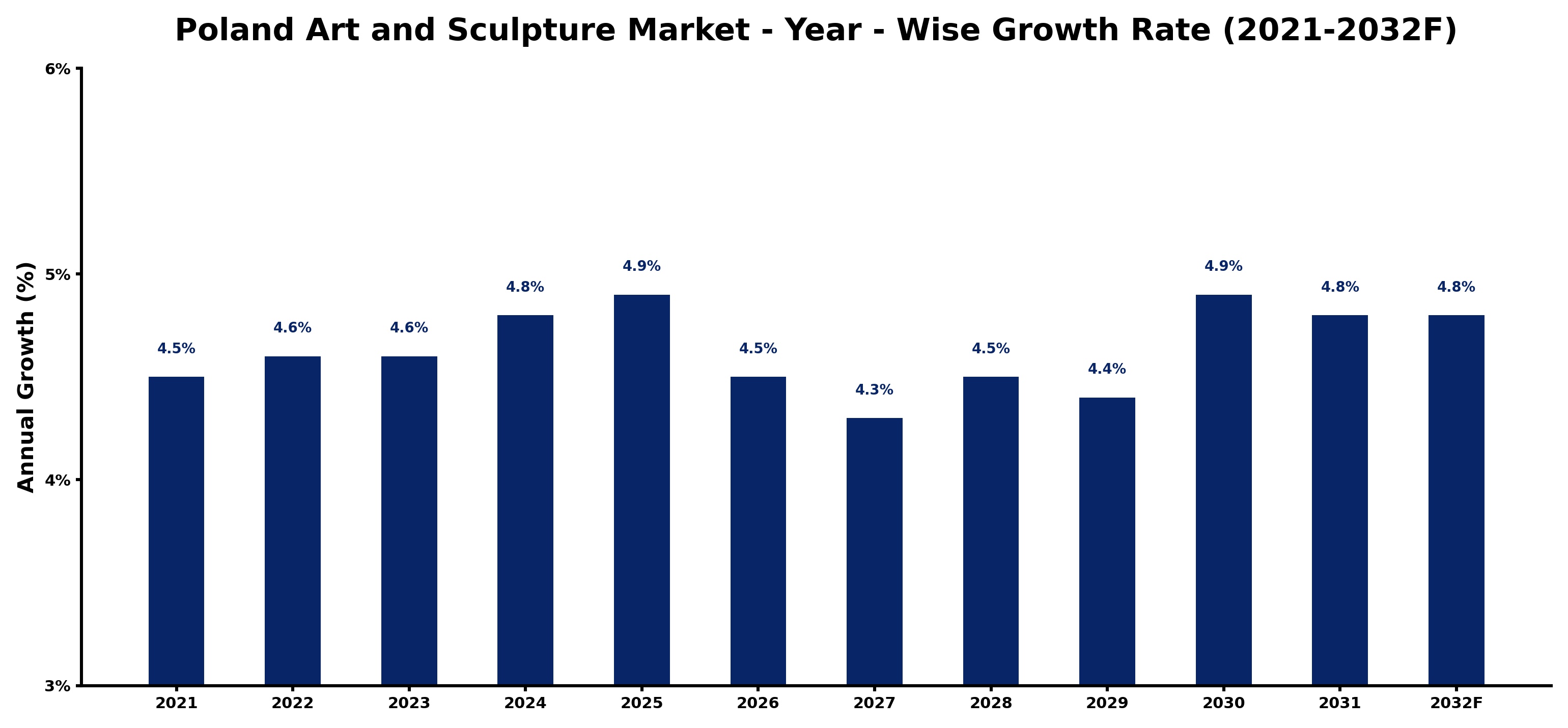
The table below presents the year‑wise growth rates along with the key drivers influencing the market
| Year | Growth Rate | Major Drivers |
| 2021 | 4.5% | Increasing smart city development projects |
| 2022 | 4.6% | Rising electricity demand across industries |
| 2023 | 4.6% | Growing renewable energy integration projects |
| 2024 | 4.8% | Growing renewable energy integration projects |
| 2025 | 4.9% | Government infrastructure modernization initiatives |
| 2026 | 4.5% | Expansion of transportation and logistics networks |
| 2027 | 4.3% | Increasing industrial infrastructure investments |
| 2028 | 4.5% | Increasing industrial infrastructure investments |
| 2029 | 4.4% | Government infrastructure modernization initiatives |
| 2030 | 4.9% | Expansion of transportation and logistics networks |
| 2031 | 4.8% | Expansion of commercial construction activities |
| 2032 | 4.8% | Increasing adoption of advanced technologies |
Note - Market size estimations and growth projections presented in this report are based on 6Wresearch’s advanced forecasting approach, validated with industry datasets as of June 2026.
Poland Art and Sculpture Market Synopsis
The most significant force currently shaping the Poland Art and Sculpture Market is the blending of traditional and contemporary artistic expressions. Traditional forms, such as folk art and religious iconography, coexist harmoniously with innovative modern artworks, creating a dynamic cultural tapestry. This blending fosters an environment ripe for exploration and creative risk-taking, attracting both seasoned collectors and new art enthusiasts alike.
In addition to the rich historical influences, emerging Polish artists are leveraging modern techniques and platforms to push their boundaries, further enriching the market landscape. Supported by an increasing number of galleries and art fairs, they are gaining visibility on both a national and international scale, making Poland a burgeoning hub for diverse artistic expression.
Poland Art and Sculpture Market Key Takeaways
- Renewed focus on cultural heritage combined with modern artistic innovation is driving market growth.
- Increased demand for locally crafted and unique art pieces reflects a shift towards authenticity.
- The flourishing gallery and art fair scene provides vital platforms for emerging and established artists.
- Public art installations are gaining popularity, enhancing the cultural landscape of Poland.
- Investment in emerging artists presents lucrative opportunities for collectors and investors alike.
Evaluation of Restraints in Poland Art and Sculpture Market
Despite its vibrant nature, the Poland Art and Sculpture Market faces significant restraints. Limited financial support for artists and institutions can stifle creativity and the promotion of new works. Emerging artists often struggle to gain recognition amidst a competitive landscape dominated by established names. Furthermore, a lack of comprehensive infrastructure for art education may hinder the development of future talent, posing a challenge to the market's sustainability. Adapting to the rise of digital platforms also presents a dual-edged sword; while these avenues can offer greater exposure, they require traditional galleries and artists to rethink their strategies.
Poland Art and Sculpture Market Trends
Current trends indicate a growing appreciation for public art and outdoor sculptures, as urban spaces are increasingly being transformed into interactive art environments. The rise of eco-consciousness among artists is also influencing materials and themes, leading to innovative approaches that resonate with contemporary societal values. Additionally, online platforms are emerging as crucial venues for exhibiting art, allowing for greater accessibility and visibility of Polish artists to a global audience.
Poland Art and Sculpture Market Opportunities
The market offers a plethora of investment opportunities, particularly in backing emerging Polish artists who are gaining recognition for their unique styles and narratives. Engaging with local art fairs and auctions can yield valuable acquisitions for collectors, while also supporting the vibrant community of artists. The intersection of art with technology also opens new avenues, such as virtual galleries and NFTs, presenting innovative ways to connect artists with their audiences.
Government Initiatives in the Poland Art and Sculpture Market
The Polish government plays a proactive role in bolstering the Art and Sculpture Market through various policies aimed at promoting cultural growth. The Ministry of Culture and National Heritage provides essential funding and support to artists and cultural institutions, facilitating exhibitions and events that showcase the richness of Polish art. Tax incentives for private investments in the arts further encourage donations to cultural organizations, helping to secure the financial health of the creative sector.
Future Insights of the Poland Art and Sculpture Market
Looking ahead to 2026-2032, the Poland Art and Sculpture Market is set to flourish, buoyed by an increasing inclination towards contemporary artistic expressions and innovations. The anticipated rise in international interest in Polish art promises to elevate its global stature. Coupled with a strong domestic appreciation for unique artworks, these factors will likely contribute to ongoing market expansion. Moreover, the integration of digital platforms into the art ecosystem will further enhance accessibility, allowing artists to showcase their work to broader audiences.
Poland Art and Sculpture Market Latest Developments (May 2025 - June 2026)
Recent developments in the Poland Art and Sculpture Market indicate a vibrant atmosphere characterized by an increased number of local exhibitions and collaborations among artists. Several key art fairs have seen heightened participation, showcasing the works of both established masters and emerging talents. Additionally, public art initiatives have gained traction, enriching urban spaces and inviting community engagement. This period is marked by a shift towards sustainability in art practices, with many artists exploring eco-friendly materials and themes.
Poland Art and Sculpture Market - Key Attractiveness of the Report
- 10 Years of Market Numbers
- Historical Data Starting from 2022 to 2025
- Base Year: 2025
- Forecast Data until 2032
- Key Performance Indicators Impacting the Market
- Major Upcoming Developments and Projects
Key Highlights of the Report:
- Poland Art and Sculpture Market Outlook
- Market Size of Poland Art and Sculpture Market, 2025
- Forecast of Poland Art and Sculpture Market, 2032
- Historical Data and Forecast of Poland Art and Sculpture Revenues & Volume for the Period 2022-2032F
- Poland Art and Sculpture Market Trend Evolution
- Poland Art and Sculpture Market Drivers and Challenges
- Poland Art and Sculpture Price Trends
- Poland Art and Sculpture Porter's Five Forces
- Poland Art and Sculpture Industry Life Cycle
- Historical Data and Forecast of Poland Art and Sculpture Market Revenues & Volume By Types for the Period 2022-2032F
- Historical Data and Forecast of Poland Art and Sculpture Market Revenues & Volume By Artifacts for the Period 2022-2032F
- Historical Data and Forecast of Poland Art and Sculpture Market Revenues & Volume By Sculpture for the Period 2022-2032F
- Historical Data and Forecast of Poland Art and Sculpture Market Revenues & Volume By Sales Channel for the Period 2022-2032F
- Historical Data and Forecast of Poland Art and Sculpture Market Revenues & Volume By Auction Houses for the Period 2022-2032F
- Historical Data and Forecast of Poland Art and Sculpture Market Revenues & Volume By Dealers for the Period 2022-2032F
- Historical Data and Forecast of Poland Art and Sculpture Market Revenues & Volume By Galleries for the Period 2022-2032F
- Historical Data and Forecast of Poland Art and Sculpture Market Revenues & Volume By Art Fairs for the Period 2022-2032F
- Historical Data and Forecast of Poland Art and Sculpture Market Revenues & Volume By Online Sales for the Period 2022-2032F
- Historical Data and Forecast of Poland Art and Sculpture Market Revenues & Volume By Retail Outlets for the Period 2022-2032F
- Historical Data and Forecast of Poland Art and Sculpture Market Revenues & Volume By Artists Studios for the Period 2022-2032F
- Historical Data and Forecast of Poland Art and Sculpture Market Revenues & Volume By Others for the Period 2022-2032F
- Historical Data and Forecast of Poland Art and Sculpture Market Revenues & Volume By End-user for the Period 2022-2032F
- Historical Data and Forecast of Poland Art and Sculpture Market Revenues & Volume By Private Collectors for the Period 2022-2032F
- Historical Data and Forecast of Poland Art and Sculpture Market Revenues & Volume By Museums for the Period 2022-2032F
- Historical Data and Forecast of Poland Art and Sculpture Market Revenues & Volume By Real Estate Developers for the Period 2022-2032F
- Historical Data and Forecast of Poland Art and Sculpture Market Revenues & Volume By Interior Designers for the Period 2022-2032F
- Historical Data and Forecast of Poland Art and Sculpture Market Revenues & Volume By Residential Individual Buyers for the Period 2022-2032F
- Historical Data and Forecast of Poland Art and Sculpture Market Revenues & Volume By Other Professionals for the Period 2022-2032F
- Poland Art and Sculpture Import Export Trade Statistics
- Market Opportunity Assessment By Types
- Market Opportunity Assessment By Sales Channel
- Market Opportunity Assessment By End-user
- Poland Art and Sculpture Top Companies Market Share
- Poland Art and Sculpture Competitive Benchmarking By Technical and Operational Parameters
- Poland Art and Sculpture Company Profiles
- Poland Art and Sculpture Key Strategic Recommendations






































