Poland Flooring Market: Import Trend Analysis
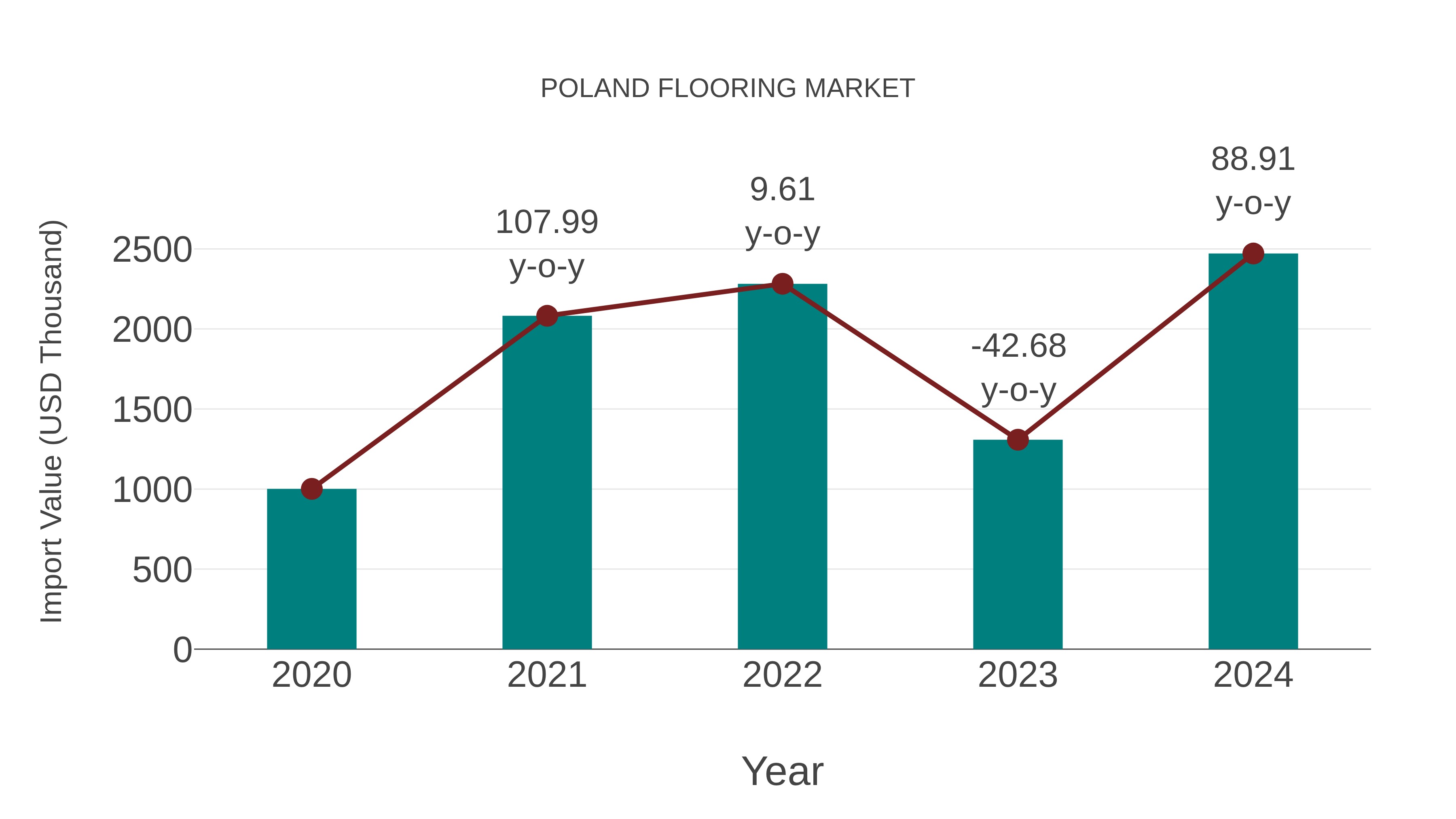
In the Poland flooring market, imports experienced a notable upsurge from 2023 to 2024, with a growth rate of 88.91%. The compound annual growth rate (CAGR) for imports between 2020 and 2024 stood at 25.35%. This significant increase in import momentum can be attributed to a shift in demand towards higher-quality flooring products, indicating a growing market preference for imported flooring materials over domestic options.
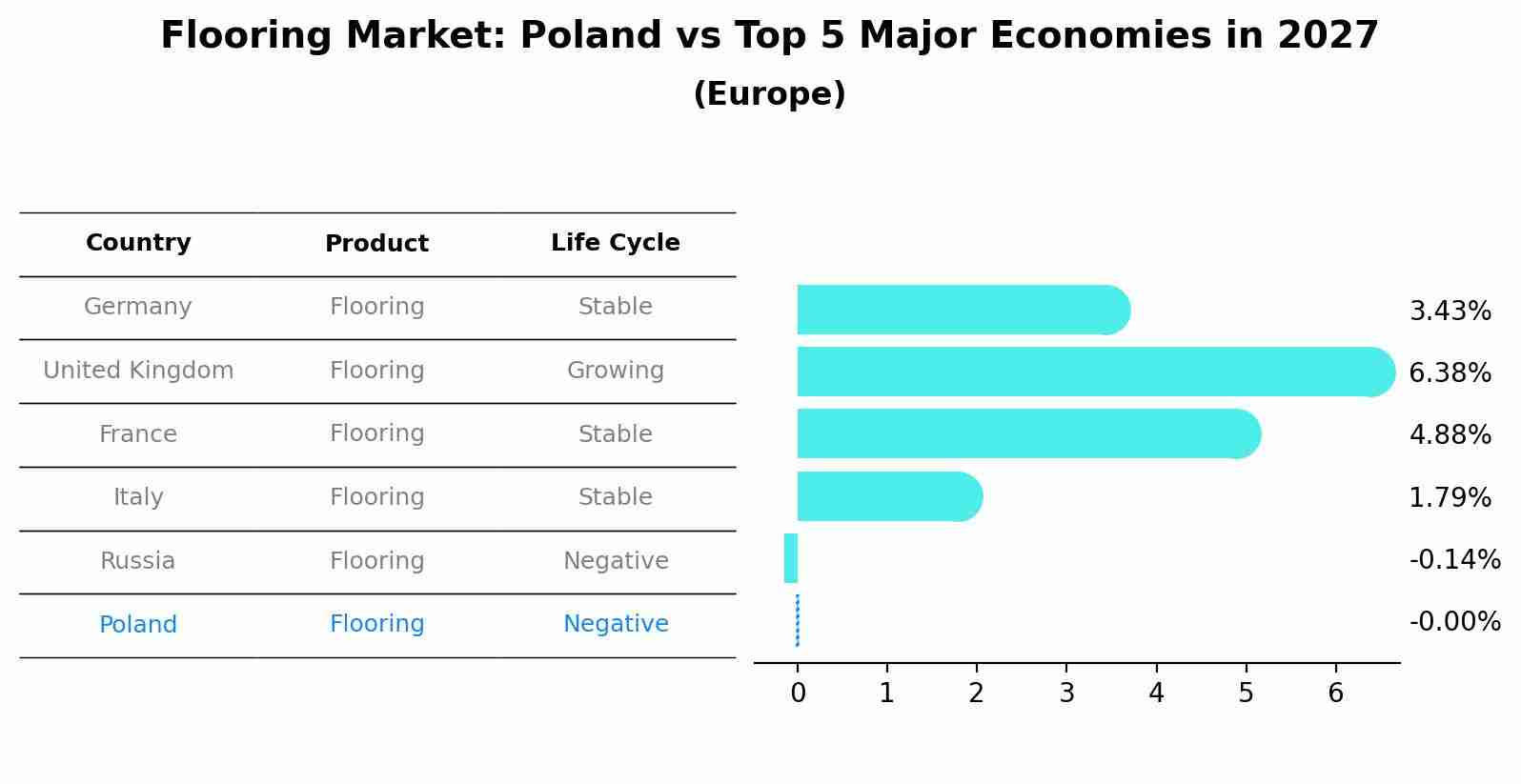
Flooring Market: Poland vs Top 5 Major Economies in 2027 (Europe)
The Flooring market in Poland is projected to grow at a negative growth rate of -0.00% by 2027, highlighting the country's increasing focus on advanced technologies within the Europe region, where Germany holds the dominant position, followed closely by United Kingdom, France, Italy and Russia, shaping overall regional demand.
Poland Flooring Market Synopsis
The Poland flooring market is expected to witness significant growth during the forecast period (2020-2026). This can be attributed to increasing disposable income, rising urbanization, technological advancements in construction and interior design industries, and growing number of residential projects. The demand for wood flooring products has been increasing as they are considered durable, cost-effective and aesthetically pleasing. Increasing environmental awareness among customers has led them to prefer green alternatives such as bamboo or cork floorings. Furthermore, the adoption of luxury vinyl tile (LVT) and laminate floors have also increased significantly due to their higher durability than other types of flooring materials.
According to 6Wresearch in 2019, around 48% respondents said that they had used ceramic/porcelain tiles for remodeling their homes over the last five years while 46% had opted for wooden floors. In addition to this, 60% respondents claimed that they were willing to pay more if it guarantees better quality product while 66% stated comfortability was an important factor when selecting any type of home furnishing products including carpets & rugs and wooden/laminated floors etc.
Due to rising competition from international players present in the market coupled with government initiatives towards promoting sustainable building practices will further propel growth in the Poland Flooring Market during 2020-2026.
Key Highlights of the Report:
- Poland Flooring Market Outlook
- Market Size of Poland Flooring Market, 2019
- Forecast of Poland Flooring Market, 2026
- Historical Data and Forecast of Poland Flooring Revenues & Volume for the Period 2016 - 2026
- Poland Flooring Market Trend Evolution
- Poland Flooring Market Drivers and Challenges
- Poland Flooring Price Trends
- Poland Flooring Porter's Five Forces
- Poland Flooring Industry Life Cycle
- Historical Data and Forecast of Poland Flooring Market Revenues & Volume By Product Type for the Period 2016 - 2026
- Historical Data and Forecast of Poland Flooring Market Revenues & Volume By Soft Coverings for the Period 2016 - 2026
- Historical Data and Forecast of Poland Flooring Market Revenues & Volume By Resilient Flooring for the Period 2016 - 2026
- Historical Data and Forecast of Poland Flooring Market Revenues & Volume By Non-Resilient Flooring for the Period 2016 - 2026
- Historical Data and Forecast of Poland Flooring Market Revenues & Volume By Seamless Flooring for the Period 2016 - 2026
- Historical Data and Forecast of Poland Flooring Market Revenues & Volume By Applications for the Period 2016 - 2026
- Historical Data and Forecast of Poland Flooring Market Revenues & Volume By Residential for the Period 2016 - 2026
- Historical Data and Forecast of Poland Flooring Market Revenues & Volume By Commercial for the Period 2016 - 2026
- Historical Data and Forecast of Poland Flooring Market Revenues & Volume By Industrial for the Period 2016 - 2026
- Poland Flooring Import Export Trade Statistics
- Market Opportunity Assessment By Product Type
- Market Opportunity Assessment By Applications
- Poland Flooring Top Companies Market Share
- Poland Flooring Competitive Benchmarking By Technical and Operational Parameters
- Poland Flooring Company Profiles
- Poland Flooring Key Strategic Recommendations






































